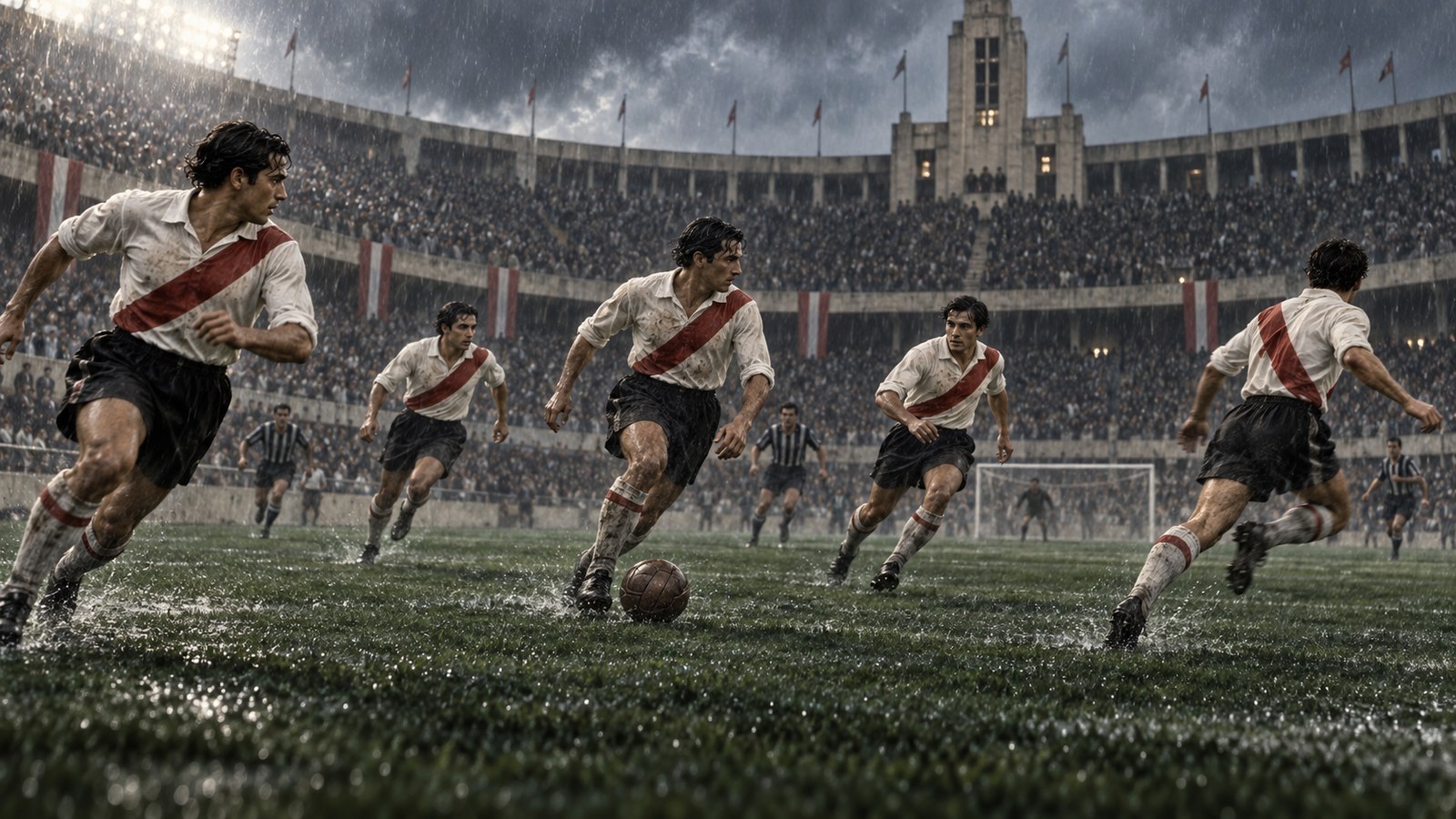
Two Matches Put Numbers on English Footballers’ Backs in 1928
How two matches in 1928 introduced a viewing aid that became football’s enduring positional language.
The Lancashire coach who built his work around the ball helped shape Central European football, then watched the lessons return to Wembley in 1953.
A multilingual dismissal at Wembley sent Ken Aston looking for a visible language that every player, official and crowd could understand.
The Jules Rimet Trophy vanished from a guarded exhibition in March 1966. A week later, a collie called Pickles noticed a newspaper parcel beneath a hedge.
Arthur Wharton’s sprint record, unusual goalkeeping and professional football career reveal a pioneer whose achievements were measured in very different ways.
The 1994 Caribbean Cup rule that made a deliberate own goal rational and forced Barbados to protect both ends of the pitch.
Wembley’s first final became a test of crowd movement, improvised boundaries and the mounted policeman whose grey horse made the chaos visible.
The golden goal promised more attacking extra time. Bierhoff, Blanc and Trezeguet showed its drama, but the rule also made every risk irreversible.
Arthur Rowe traced a seven-pass goal with sugar on a train table. Thirteen years later, the same idea guided Tottenham from the second tier to its first league championship.
Cameroon lost two players to red cards against Diego Maradona’s Argentina. Between the dismissals, they scored the goal that changed the opening night of Italia 90.