

Manuel Rosas left two opposite marks on football’s first World Cup. Against Chile, the Mexican defender put the ball into his own net. Three days later, facing Argentina, he scored from the penalty spot and then added another goal after a second penalty was saved. The tournament’s early record book placed him on both sides of the same line: the first World Cup own goal and the first converted World Cup penalty.
Those labels can make Rosas sound like a collection of trivia. The scorecards tell a better story. Mexico’s three matches in Montevideo moved from a difficult opening against France to a damaging defeat by Chile and finally to a nine-goal contest with Argentina. Rosas stayed in the side throughout. His week shows how quickly the new competition accumulated precedents, and how one 18-year-old defender could be caught inside several of them.
Thirteen Teams Began Writing a New Record Book
The first World Cup opened in Uruguay in July 1930 with 13 teams. There had been no qualifying tournament. Seven entrants came from South America, four from Europe and two from North America, and every match was played in Montevideo. The first round was divided into four groups, with only each group winner moving into the semi-finals.
Mexico entered Group 1 alongside Argentina, Chile and France. Its opening match against France on 13 July was one of the competition’s first two fixtures. The setting was Pocitos, a smaller Montevideo ground used before the new Estadio Centenario was ready for the centre of the tournament.
Rosas started in defence. In the 19th minute, Lucien Laurent gave France the lead with what became the first goal in World Cup history. Marcel Langiller and André Maschinot increased the margin before half-time. Juan Carreño answered in the 70th minute, giving Mexico its own first World Cup goal, but Maschinot scored again and France won 4–1.
The match supplied a famous first for Laurent, yet it also established Mexico’s immediate problem. The team had joined a tournament whose format allowed almost no recovery. With one group place available, a heavy opening defeat made every later incident carry more weight.
A Header Against Chile Entered the Wrong Net
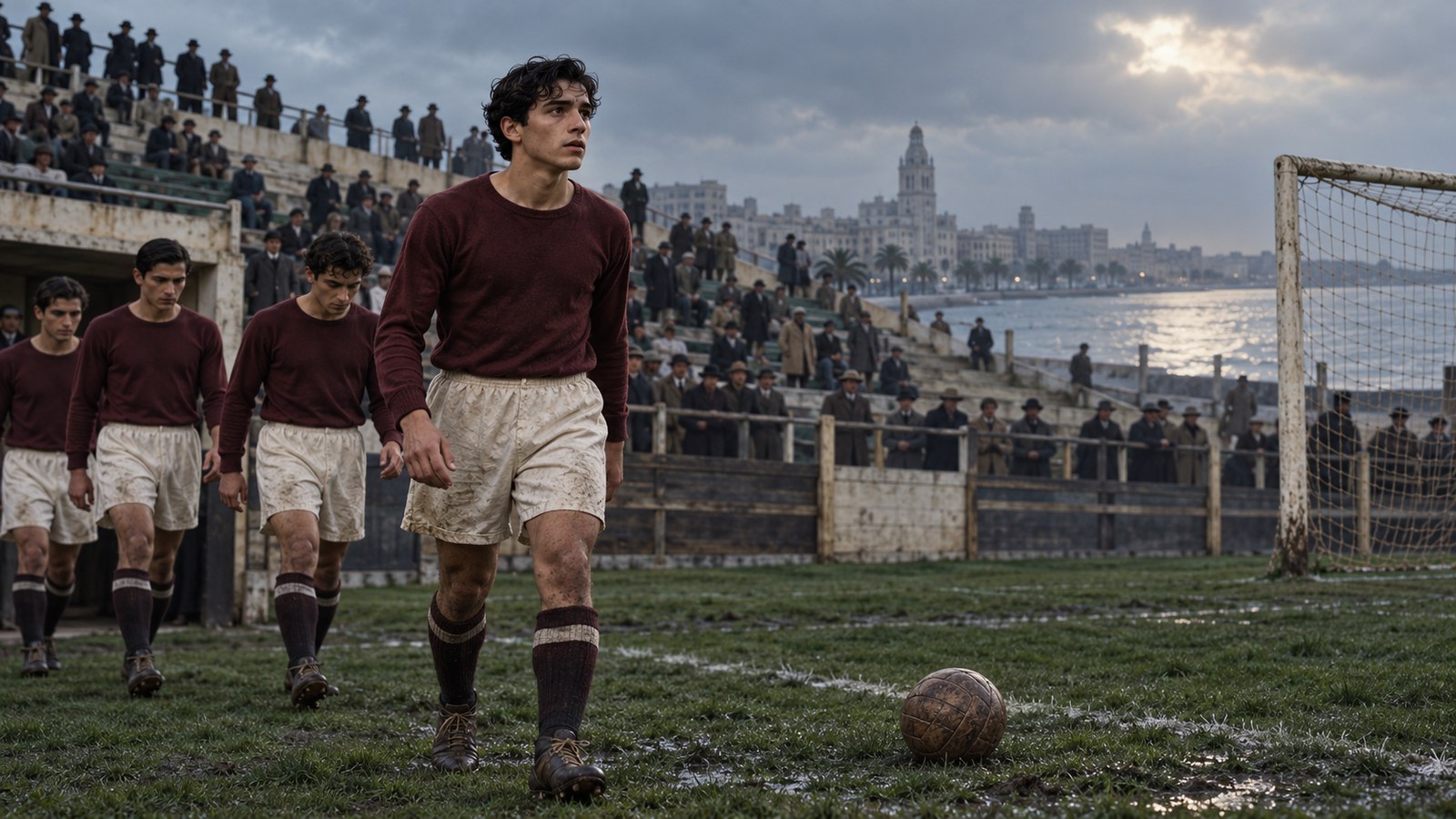
Mexico met Chile at Parque Central on 16 July before a listed crowd of about 7,000. Chile attacked the match quickly. Guillermo Subiabre scored in the third minute, forcing Mexico to chase from almost the opening whistle.
The score remained 1–0 into the second half. Then, in the 52nd minute, Rosas was credited with an own goal. A defender’s intervention had carried the ball past his own goalkeeper, and the incident became the first own goal recorded at a World Cup. Carlos Vidal added Chile’s third in the 65th minute.
There is a temptation to treat an own goal as a complete portrait of the player who conceded it. The scorecard resists that shortcut. Rosas was a defender trying to control danger in a match Mexico was already losing. The action mattered, but it did not remove him from responsibility in the next game. Mexico kept him in the side for the hardest fixture of the group.
The 3–0 defeat also ended any realistic path out of the section. Argentina and Chile were still heading toward their decisive meeting, while Mexico had conceded seven goals in two matches. Its final assignment was Argentina at the Centenario.
Argentina Scored Three Before the Seventeenth Minute Ended
About 50,000 spectators were listed for Argentina against Mexico on 19 July. The larger ground and crowd changed the scale, but the opening was even less forgiving than Mexico’s previous match. Guillermo Stábile scored after eight minutes, Adolfo Zumelzú after 12, and Stábile again after 17. Argentina had built a 3–0 lead before the match was 18 minutes old.
The scoring sequence suggests a contest already settled. The details that followed made it stranger. Argentina had a penalty in the 23rd minute, but Mexico goalkeeper Óscar Bonfiglio saved Fernando Paternoster’s kick. The first World Cup penalty had therefore produced no goal.
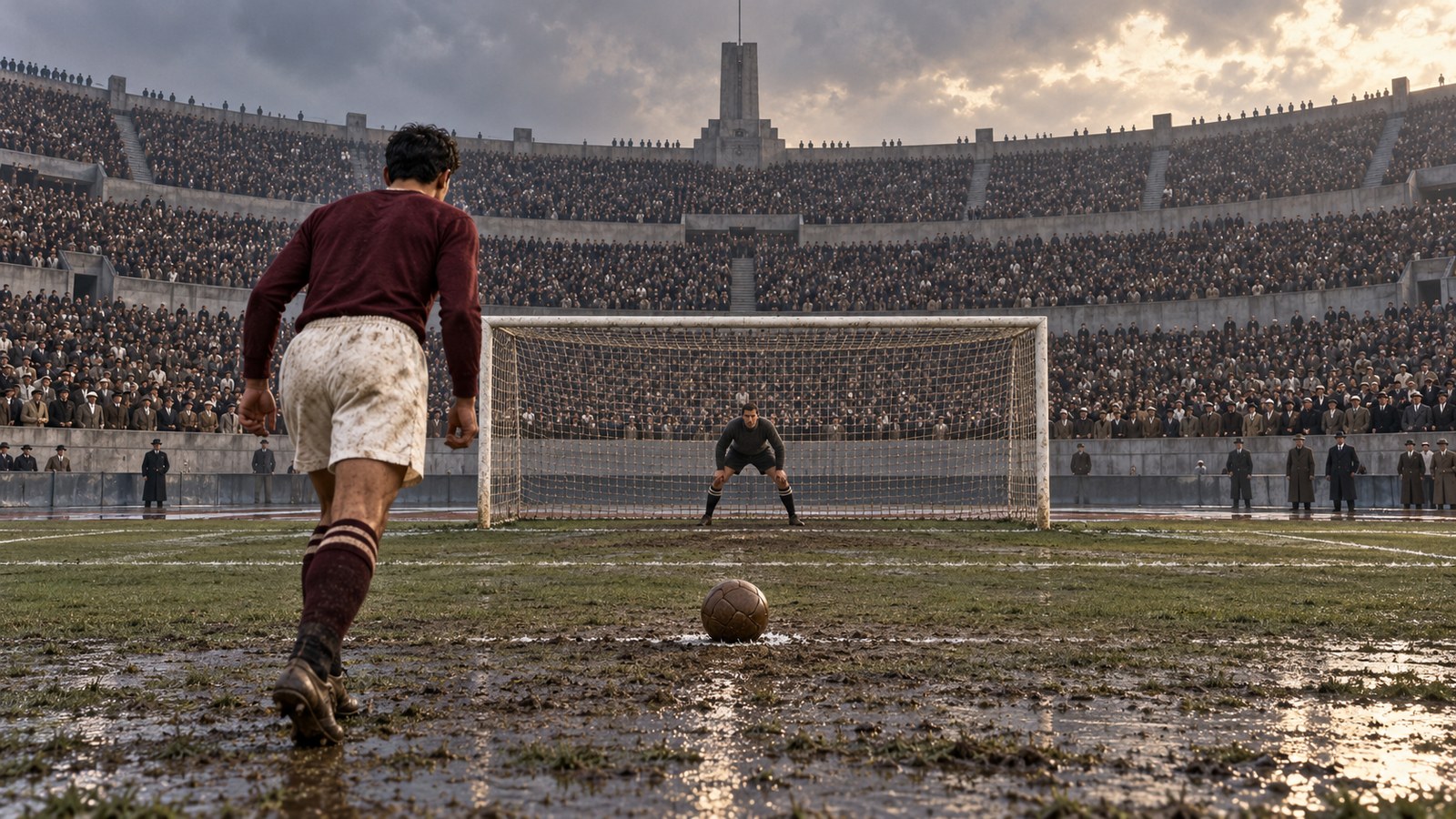
Nineteen minutes later, Mexico received a penalty of its own. Rosas took it. The defender who had scored into his own net against Chile now stood over a dead ball with a chance to interrupt Argentina’s rush. He converted in the 42nd minute, sending Mexico to half-time at 3–1 and becoming the first player to score a penalty in World Cup play.
The contrast came from consecutive appearances rather than a long redemption arc. Three days separated the own goal and the successful penalty. Rosas had no time to disappear from the record or rebuild his reputation elsewhere; the schedule put him immediately back into another match.
The Second Penalty Created a Different Kind of Goal
Argentina restored its advantage after the interval. Francisco Varallo scored in the 53rd minute, and Zumelzú made it 5–1 two minutes later. At 18, Rosas was playing inside a game that had already produced six goals and one saved penalty.
Mexico then received another spot kick in the 65th minute. Rosas took this one too. Argentina goalkeeper Ángel Bossio stopped the penalty, but the ball remained live. Rosas followed the rebound and scored. The distinction matters: his first goal was a converted penalty; his second came from the next action after a save.
Roberto Gayón reduced the score to 5–3 in the 75th minute. Stábile completed his hat-trick five minutes later, ending the match at 6–3. Mexico had lost again, but it had scored three times against the team that would reach the final.
Viewed only as a list, Rosas’s tournament looks contradictory: own goal, penalty, missed penalty, rebound goal. Viewed as play, the sequence is coherent. A defender remained willing to take responsibility after a costly mistake. When Bossio saved the second kick, Rosas continued his run and acted before the chance disappeared.
Mexico’s Four Goals Carried Several Different Firsts
Mexico finished fourth in the group with three defeats, four goals scored and 13 conceded. Argentina won all three matches and advanced. Chile finished second after beating France and Mexico, while France placed third.
The standings were severe, but Mexico’s four goals had their own variety. Carreño scored the country’s first against France. Rosas supplied two against Argentina through different mechanisms. Gayón completed the scoring in the same match. In a tournament still producing an inaugural version of almost everything, even a last-place side helped define the competition’s vocabulary.
Rosas also shared the occasion with his brother Felipe, another member of Mexico’s squad. Both played club football with Atlante. Their presence connected the distant new tournament to an existing football life in Mexico City, rather than making the national team appear from nowhere for three July matches.
The competition around them was still discovering its scale. The opening game at Pocitos drew only a few thousand spectators; the Argentina match brought a crowd listed at about 50,000 into the Centenario. The physical journey between those settings mirrored the pressure inside Mexico’s week.
Rosas’s Week Survives Beyond the Trivia
The first World Cup naturally attracts searches for beginnings. Laurent’s 19th-minute volley has a fixed place as the competition’s first goal, while the final between Uruguay and Argentina supplied the first champion. Rosas belongs in that history for a more complicated reason.
His records point in opposite directions, but neither should erase the match around it. The own goal happened while Mexico trailed Chile. The successful penalty came after Argentina had scored three times in 17 minutes. The rebound goal arrived with Mexico four behind. Each action had a score, a minute and a consequence.
That context changes the tone. Rosas was not merely unlucky against Chile or fearless against Argentina. He was both a defender exposed by a difficult tournament and a designated taker trusted to face the same pressure again. His second penalty was saved, yet his reaction still produced a goal.
Football’s record books usually separate firsts into clean categories. Rosas’s three-match World Cup refuses that neatness. He put the ball into the wrong goal, then scored twice at the right end, all before Mexico’s first appearance at the tournament was over. The line connecting those events is not irony. It is responsibility carried from one match to the next.
Sources
RSSSF 1930 World Cup match records; FIFA World Cup historical records; Manuel Rosas biographical record; 1930 World Cup Group 1 match record.