
Hamburg’s scoreboard still showed 0–0 when Jürgen Sparwasser turned toward a dropping pass in the 77th minute. One defender was tight behind him and another was closing from the side. Sparwasser cushioned the ball forward, carried it between them and struck high past Sepp Maier. The scorer did not sprint toward a tactical revolution or a new tournament favourite. He had just supplied East Germany with the one goal that would decide the only senior international ever played between the two German states.
The date was 22 June 1974. West Germany was hosting the World Cup, and both teams already knew they would survive the first group stage. The match joined a football table to a divided country, then sent the winner into the harsher half of the next round. East Germany owned the result. West Germany absorbed it and, fifteen days later, owned the trophy.
A group decider after qualification was settled
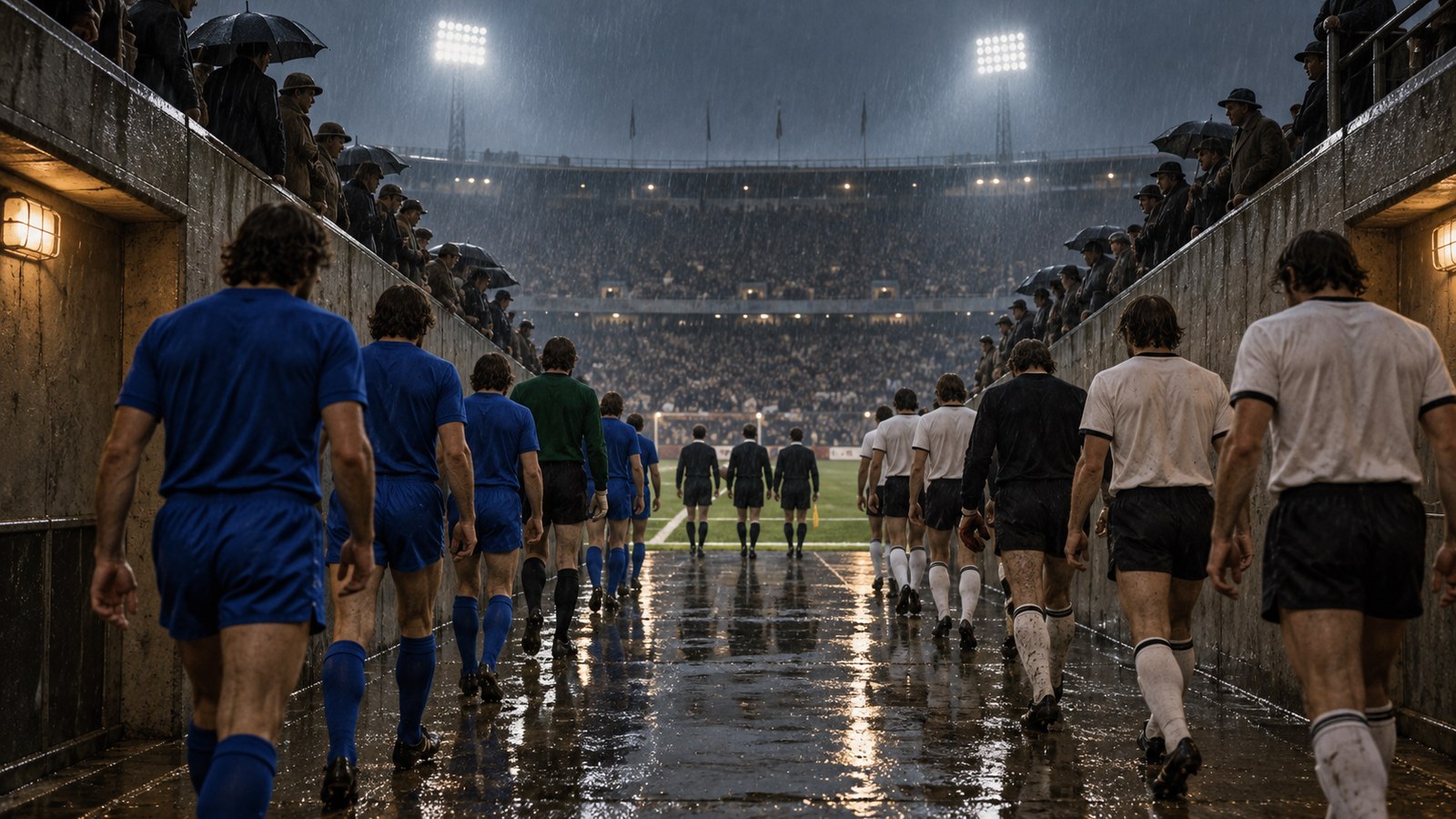
The draw had placed West Germany, East Germany, Chile and tournament newcomer Australia in Group 1. The hosts opened with a 1–0 victory over Chile and then beat Australia 3–0. East Germany defeated Australia 2–0 before drawing 1–1 with Chile. By the time the German teams walked out at Hamburg’s Volksparkstadion, both had four points under the two-points-for-a-win system and both were through.
There was still a group to win, and the arithmetic gave the hosts an advantage. West Germany’s superior goal difference meant a draw would leave Helmut Schön’s side first. Georg Buschner’s East Germany needed the victory. That difference mattered because the 1974 format did not move directly into quarter-finals. The eight survivors entered two more groups of four, with only each group winner reaching the final.
East Germany had qualified for its first World Cup and would never appear in another as a separate state. The West had won in 1954 and arrived with Franz Beckenbauer, Gerd Müller, Uli Hoeneß and Maier. A fixture made almost impossible by political division was suddenly a group decider in front of 60,200 spectators.
The match stayed compressed until one direct run
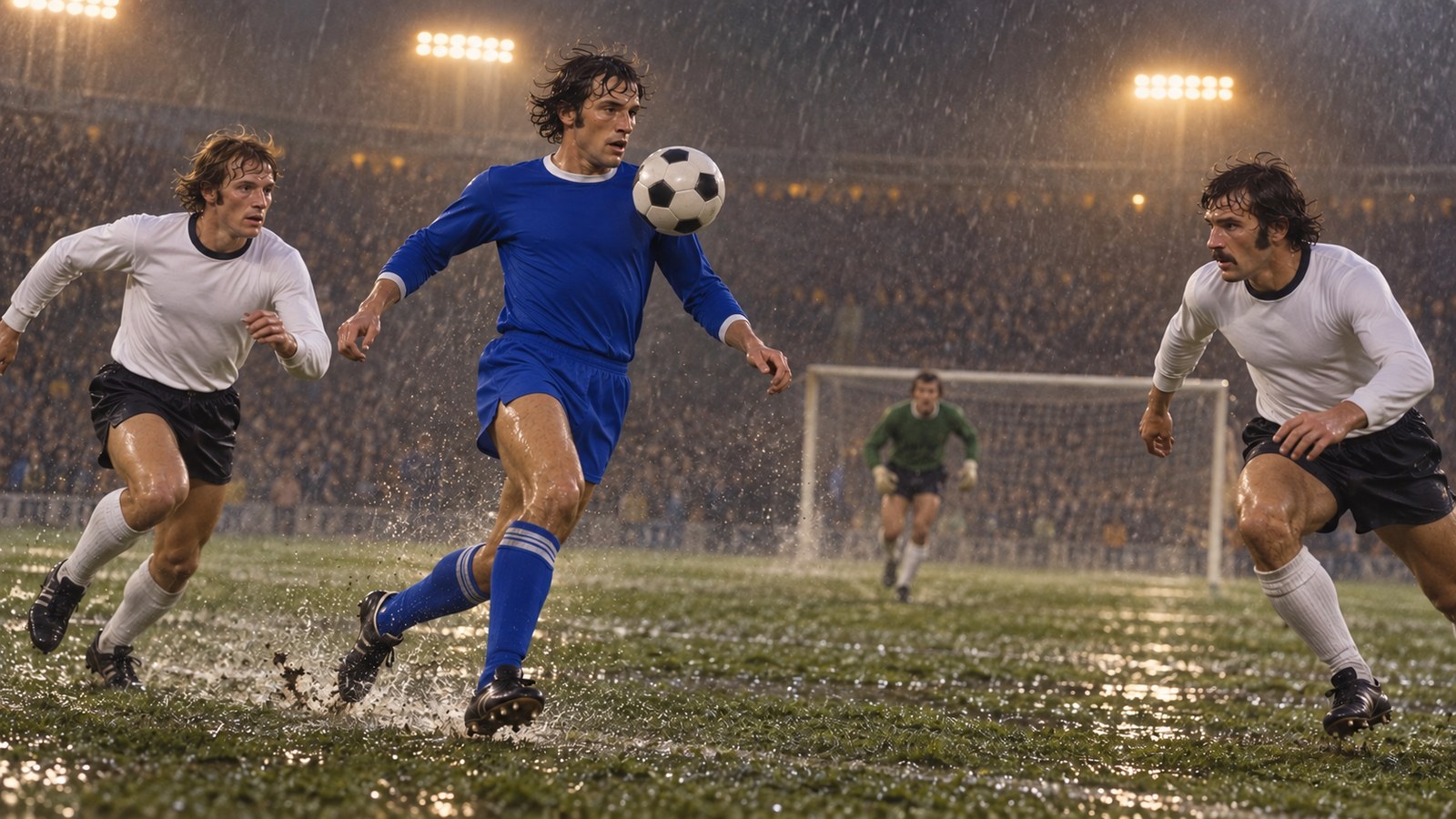
The famous names did not produce a flowing exhibition. West Germany had more recognised attacking talent, yet East Germany protected the central ground and kept the game narrow. Buschner’s side could wait because the hosts carried the expectation to force an opening. Schön introduced Günter Netzer from the bench during the second half, adding a celebrated passer without changing the score.
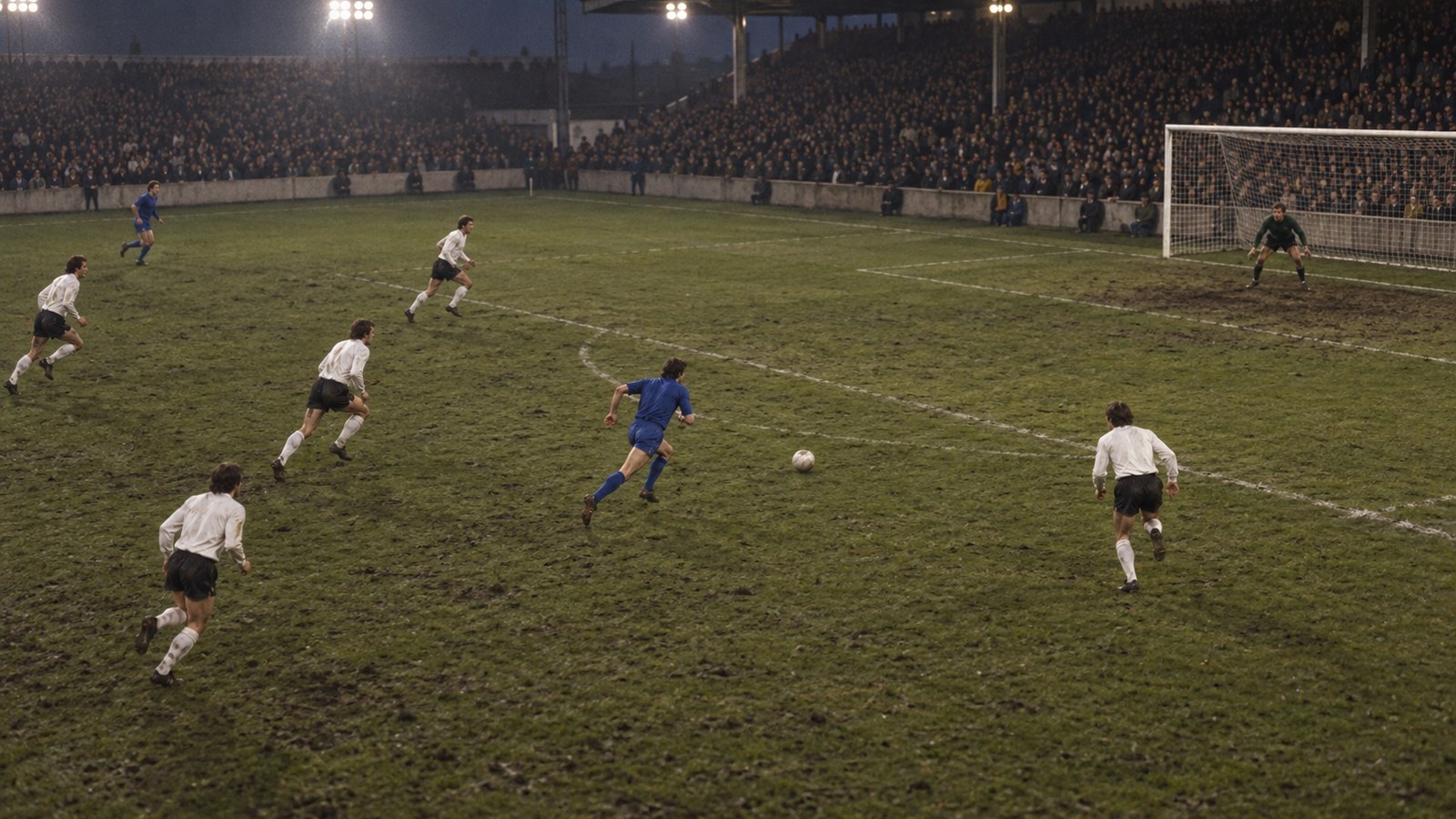
East Germany’s chance arrived from a route simple enough to survive the pressure around it. Erich Hamann sent a long diagonal ball toward the right side of the penalty area. Sparwasser brought it under control while moving across the defenders rather than stopping to receive with his back to goal. His next touch took him into the gap. Maier advanced, and the finish rose over him into the net.
The first touch prevented the ball from running away. The second took Sparwasser beyond one challenge and inside the other. The shot came before the goalkeeper could close the angle. East Germany had spent the match denying useful space, then attacked the unguarded strip behind the line at exactly the right moment.
West Germany had thirteen minutes to answer. It could not. The final whistle fixed a 1–0 score and placed Sparwasser’s name inside a national story far larger than his run. The temptation is to treat the goal as a magical interruption to the tournament. Its more revealing feature is how little magic it needed: defensive patience, one accurate pass, three controlled contacts and a finish before the shape could recover.
First place opened the more punishing route
The victory gave East Germany first place. Under another format, that prize might have promised the easier opponent. In 1974 it delivered the Netherlands, Brazil and Argentina in the second-round group. The Dutch were revealing their version of Total Football, Brazil was the defending champion, and Argentina remained a major tournament side. East Germany lost 1–0 to Brazil, lost 2–0 to the Netherlands and closed with a 1–1 draw against Argentina.
Second place sent West Germany into a group with Yugoslavia, Sweden and Poland. None was harmless: Poland would finish third and Grzegorz Lato would lead the tournament with seven goals. The hosts nevertheless recovered in sequence. They beat Yugoslavia 2–0, came through a six-goal match against Sweden 4–2, and edged Poland 1–0 on a waterlogged Frankfurt pitch.
East Germany earned its landmark victory and then met three formidable sides. West Germany had to win every remaining match and did. The defeat in Hamburg did not guarantee a path to the final. It changed the route, forced Schön’s squad to confront its performance and left no margin for drift.
That path also separates this story from the West German comeback against England in 1970. In León, the recovery happened inside one match. In 1974, it happened across an entire fortnight: selection, mood and execution had to be reset before the next kickoff.
Two legacies emerged from the same night
For Sparwasser, the goal became the permanent headline attached to a substantial career. He played 49 times for East Germany and scored 14 international goals. At club level he spent his senior career with 1. FC Magdeburg, recording 111 goals in 271 league matches. Only weeks before the World Cup, Magdeburg had beaten AC Milan in Rotterdam to win the European Cup Winners’ Cup, the only European club trophy secured by an East German side.
Sparwasser was an experienced scorer from a successful club, not an unknown who wandered into history. Politics magnified the replay and its memory; football skill created the goal.
West Germany’s response produced a different sort of permanence. On 7 July in Munich, the Netherlands scored from a penalty before a West German player had touched the ball. Paul Breitner equalised from another penalty, and Müller made it 2–1 before half-time. The hosts defended that lead and lifted the new FIFA World Cup Trophy. A team beaten by its eastern neighbour ended the competition as world champion.
East Germany’s subsequent football history remained shorter. The national side never returned to the World Cup before reunification in 1990. Sparwasser ended his playing career in 1979 after a hip injury and defected to West Germany in 1988 while attending a veterans’ event. The political uses of his 1974 goal changed over time, but the sequence on the grass remained stubbornly precise.
Hamburg was a complete result, not a false verdict
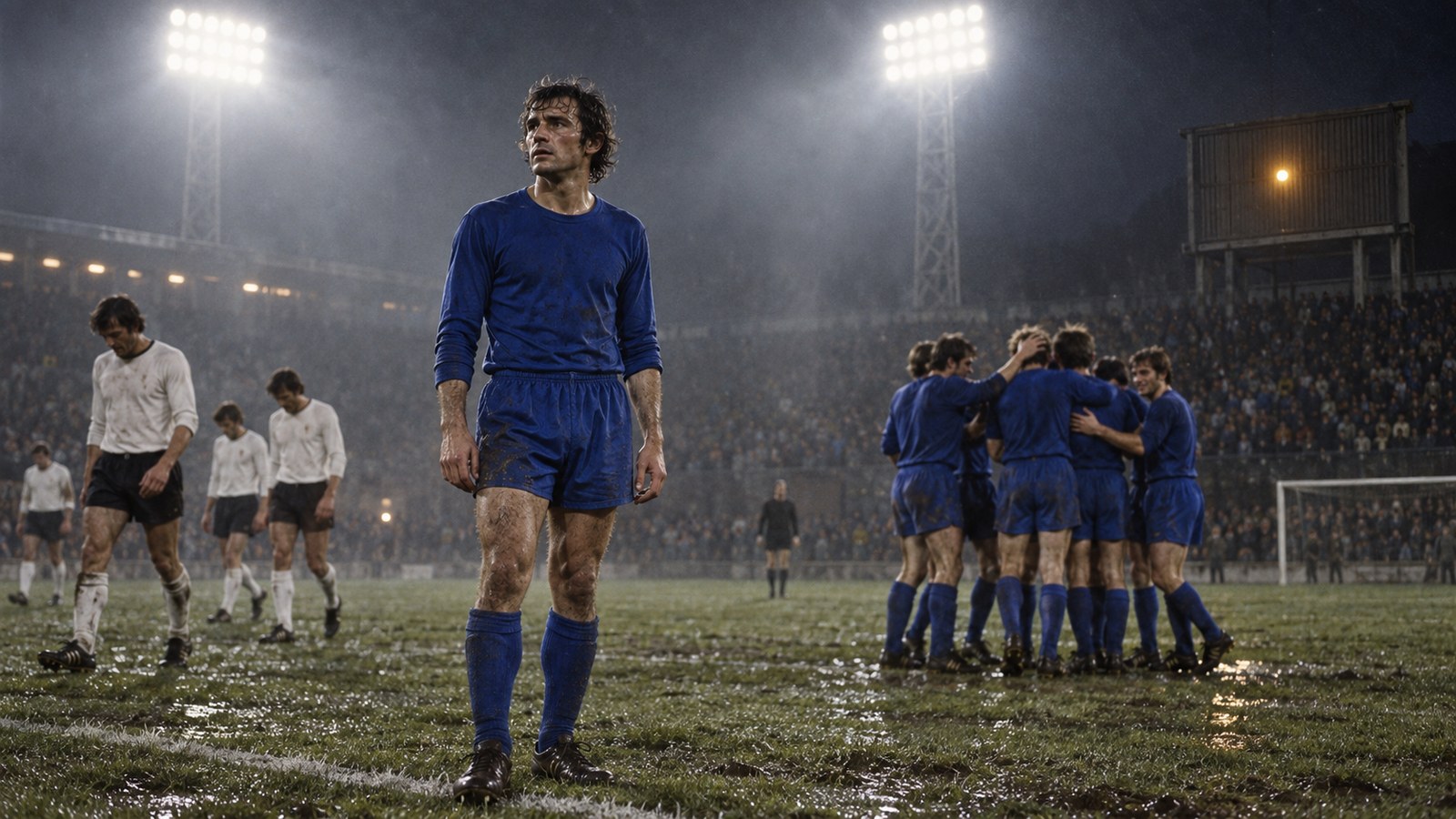
It is easy to tell this match backwards from the final. West Germany became champion, so the loss is recast as a useful shock. East Germany met stronger second-round opponents, so the win is treated as a poisoned prize. Both readings flatten the evening. A World Cup match does not become less real because later matches changed the hierarchy.
East Germany solved the contest it was given. Its defenders restricted the hosts, Hamann recognised the direct pass, and Sparwasser executed the difficult part at speed. The 1–0 result decided the group and supplied a divided country’s most famous football score. It deserves to stand without being reduced to a footnote in someone else’s recovery.
West Germany’s achievement began after that fact, not instead of it. Schön’s players navigated three second-round opponents and then beat the Netherlands in the final. They showed that a tournament can contain a legitimate defeat without making the eventual champion fraudulent. East Germany showed that one meeting can define sporting memory even when no sequel arrives.
The two German teams left Hamburg carrying different truths. One had won the only direct senior encounter the states would ever play. The other had lost control of the group but still retained control of its response. Fifteen days separated Sparwasser’s raised shot from Beckenbauer lifting the trophy. Neither image cancels the other.
Sources
- FIFA, 1974 World Cup tournament archive
- RSSSF, World Cup 1974 finals match records
- Planet World Cup, East Germany–West Germany match report
- Wikipedia, 1974 FIFA World Cup and Jürgen Sparwasser reference pages