

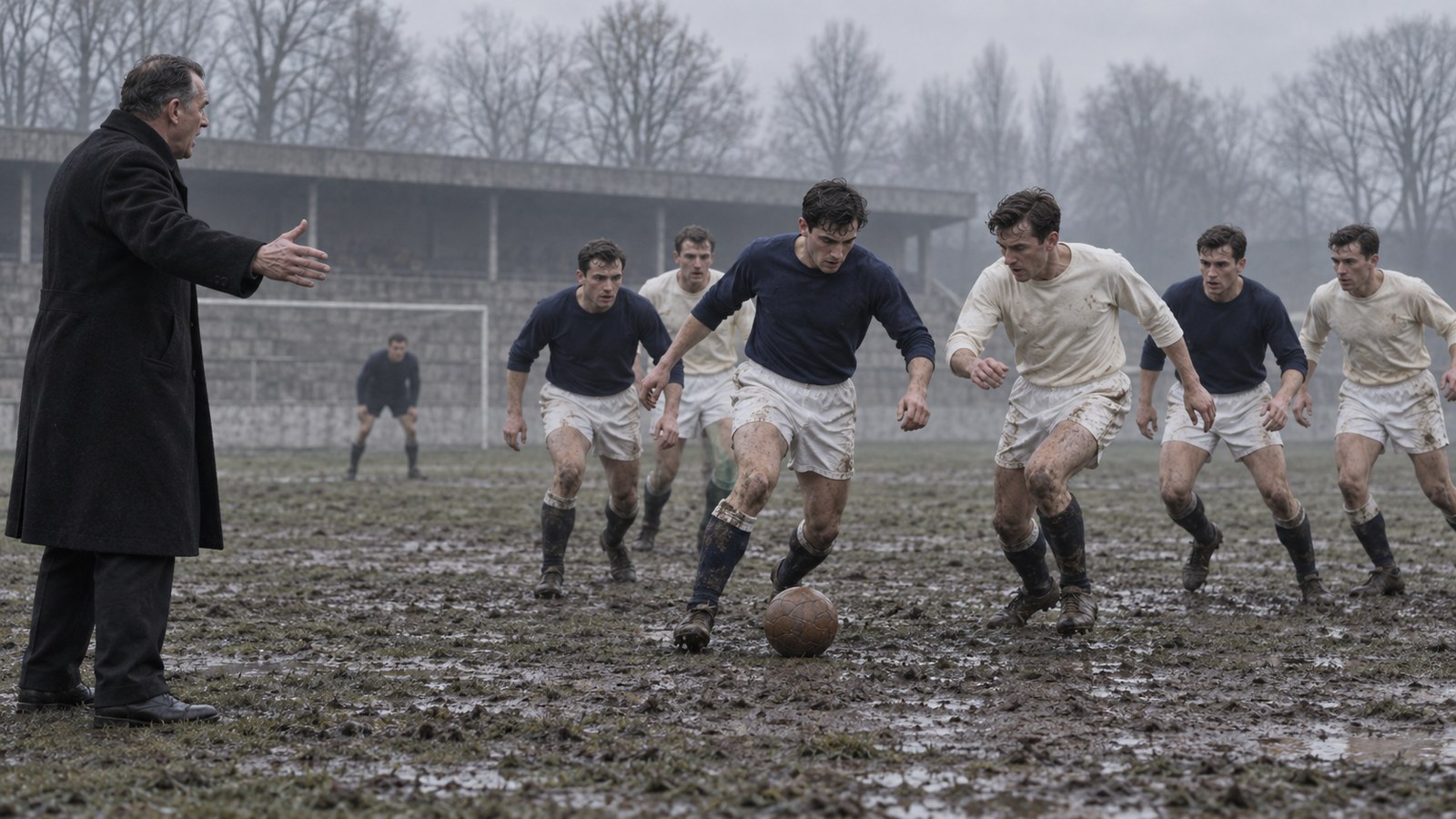
At Meidericher SV in 1963, Rudi Gutendorf gave his players a signal they could read from the touchline. He pulled most of the side back, left one forward high, and waited. When the opponent grew impatient, he stood and spread both arms. Defenders and midfielders drove forward together. The newly created Bundesliga expected the established powers to set its order. Meiderich finished second.
That runner-up season could have anchored an ordinary German coaching career. Gutendorf chose the opposite. Over nearly half a century, he took 55 coaching jobs in 32 countries across five continents. Eighteen senior national teams appointed him, along with Olympic sides, clubs and development assignments. The numbers earned a Guinness World Record, but the count conceals the more interesting question: what could one coach actually carry from Duisburg to Sydney, Kigali, Kathmandu and Apia?
The Bundesliga Supplied a Portable Starting Point
Gutendorf had played on the right wing, but his early reputation came from organisation rather than romance. His Meiderich side defended in numbers and attacked on a visible cue. The approach was simple enough to communicate quickly and flexible enough to surprise opponents who expected a newly promoted club to retreat permanently. Finishing behind only Köln in the Bundesliga’s first season gave him a credential that could travel.
German clubs continued to employ him. He coached Stuttgart, Schalke, Kickers Offenbach, 1860 Munich, Fortuna Köln, Tennis Borussia Berlin, Hamburg and Hertha. At Schalke, he tried to connect football labour with the people watching it. He called the squad to a coal mine at five in the morning so the players could see the conditions familiar to many Ruhr supporters. It was theatre, discipline and local education in one exercise.
Yet Gutendorf rarely treated the German league as the complete map of coaching. Some later assignments were supported by the German government and football authorities as technical missions. He entered countries where facilities, competition structures and player pools could differ sharply from those of the Bundesliga. A famous domestic title was not waiting at the end of most contracts. The work might instead involve assembling a national side, training local coaches, identifying young players or simply making a short programme function.
Fifty-Five Jobs Did Not Mean One Repeated Method
The headline total invites the wrong image: a coach carrying one formation around the world and applying it everywhere. Gutendorf’s appointments were too different for that. RSSSF can identify 77 official internationals across nine senior national teams, while appointment histories list many more countries. Several sides played no official match during his tenure. His record therefore contains competitive campaigns, friendlies, Olympic work, club seasons and development projects that cannot be measured by one table.
The constant was speed of orientation. A travelling coach had to learn who selected players, how often they could gather, which pitches were usable, where equipment came from and what the employer considered success. At a club, he might shape a defence over a season. With a national side, he could receive players only days before a qualifier. On a development assignment, a training session could matter more than the next score.
That helps explain why Gutendorf called the work a mission. It did not mean every stop produced progress, nor did it turn a restless career into a tidy heroic journey. Contracts ended, teams lost and cultural misunderstandings remained possible. His official international record includes 22 wins, 21 draws and 34 defeats. The useful skill was not permanent victory. It was entering a new football environment without assuming that the last one had supplied every answer.
The record also depended on appetite. Gutendorf kept accepting distance, uncertainty and another first training session. Blue Stars Zurich gave him his opening management role in the 1950s. Samoa gave him his last in 2003. Between them, the itinerary crossed Europe, Africa, Asia, Oceania and the Americas.
Australia Made Youth the Centre of the Assignment
Australia hired Gutendorf in 1979. He had been impressed by the country’s appearance at the 1974 World Cup and wanted to work with Australian-born players rather than treating the national side only as a collection of footballers developed elsewhere. Historian Roy Hay later described him as being at the vanguard of youth development.
The choice became visible at the 1980 Oceania Cup. Gutendorf used a squad built largely from under-20 players and won the tournament. Football Australia credits his wider spell through 1981 with 37 A and B internationals: 15 victories, 10 draws and 12 defeats.
Australia also demonstrates why the 55-job total should not be read as shallow tourism. Selection policy could leave a residue after the coach departed. Giving young local players senior responsibility made a claim about who the national team belonged to and how its next generation should be prepared. The trophy offered proof that the experiment could survive competition.

Rwanda Changed the Meaning of a Result
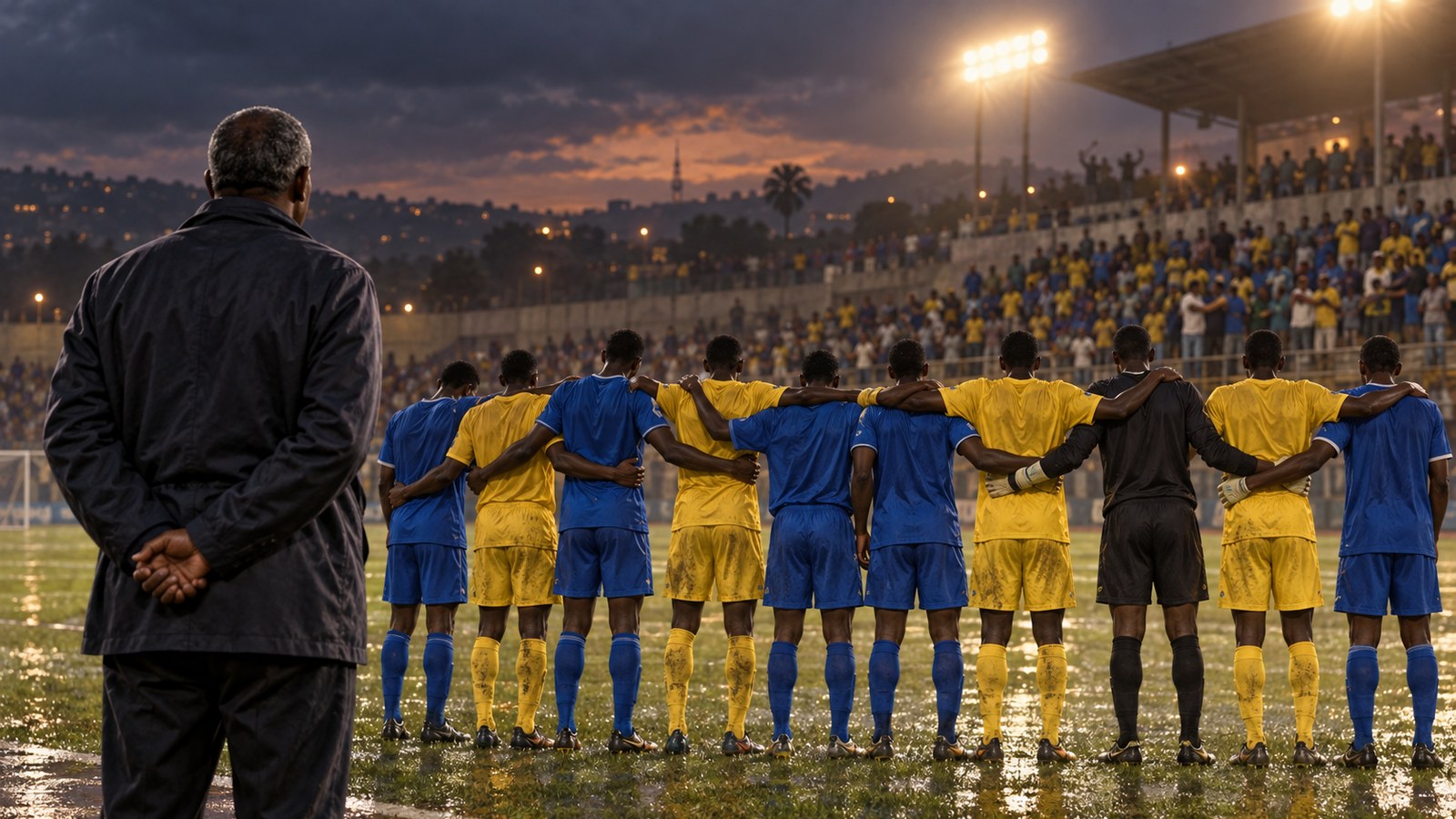
Gutendorf reached Rwanda near the end of the 1990s, when the country was still living with the aftermath of genocide. His brief, as he later recalled it, placed social work before a narrow demand to win. He said he mixed Hutu and Tutsi players around evening campfires after training and spoke about forgiveness, cooperation and the identity of being teammates.
A coach cannot repair a country’s trauma, and a football match cannot prove reconciliation. Gutendorf’s account matters because it shows how sharply the purpose of his job had shifted. The tactical question was still present, but the working group itself carried memories and divisions that no formation could erase. Training had to create a routine in which players could share space, instruction and responsibility.
On 8 April 2000, Rwanda drew 2–2 with Ivory Coast in a World Cup qualifier in Kigali. Gutendorf remembered spectators who had entered with communal identities embracing as the home team played well. He called it the most beautiful moment of his career. That judgment is striking from a coach who had finished second in the Bundesliga and won an international tournament in Oceania.
The score did not become valuable because it solved history. It mattered because, for one afternoon, the team’s performance offered a shared object of attention. Gutendorf had spent decades chasing results in unfamiliar settings. In Kigali, he measured the event partly by what happened between people in the stands.
The Record Was Built From Different Definitions of Success
Gutendorf’s coaching map resists a conventional honours list. Meiderich’s second place in 1964 required an efficient tactical cue. Australia’s 1980 title required trust in youth. Rwanda’s draw with Ivory Coast carried a social meaning that exceeded a qualifying point. Elsewhere, success could be a functioning training camp, a group of local coaches with new exercises or a national team completing a difficult fixture programme.
This variety also explains why sources count parts of the career differently. A federation may include A and B internationals. A statistical archive may include only recognised senior matches. Olympic teams add another category. Countries that appointed him but played no official fixture still belong to his employment history. The Guinness figure of 55 teams in 32 countries records the breadth of the work, not 55 equivalent seasons.
Why the Journey Started Again Until 2003
By 2011, Germany had awarded Gutendorf the Officer’s Cross of the Federal Cross of Merit. He was still speaking publicly about taking another coaching job. Age ended the appointments more decisively than satisfaction did. Samoa in 2003 became the final stop of a managerial career that had begun as a player-coach almost five decades earlier.
The easy summary is that “Restless Rudi” collected countries. The stronger reading is that each move forced him to redefine the unit of coaching. Sometimes it was a back line responding to two raised arms. Sometimes it was a youth cohort being trusted early. Sometimes it was a mixed group sitting beside a campfire after training. Those settings shared a ball and little else.
Gutendorf’s world record survives because modern elite coaching usually rewards depth in one market, not repeated entry into new ones. His route belonged partly to an era of federation missions and looser international appointments. Even then, few coaches accepted so many beginnings. Fifty-five teams are impressive as arithmetic. They become meaningful when read as 55 attempts to discover what the job required before the first whistle.
Sources
BBC Sport; UEFA archive; Football Australia; Rec.Sport.Soccer Statistics Foundation.