
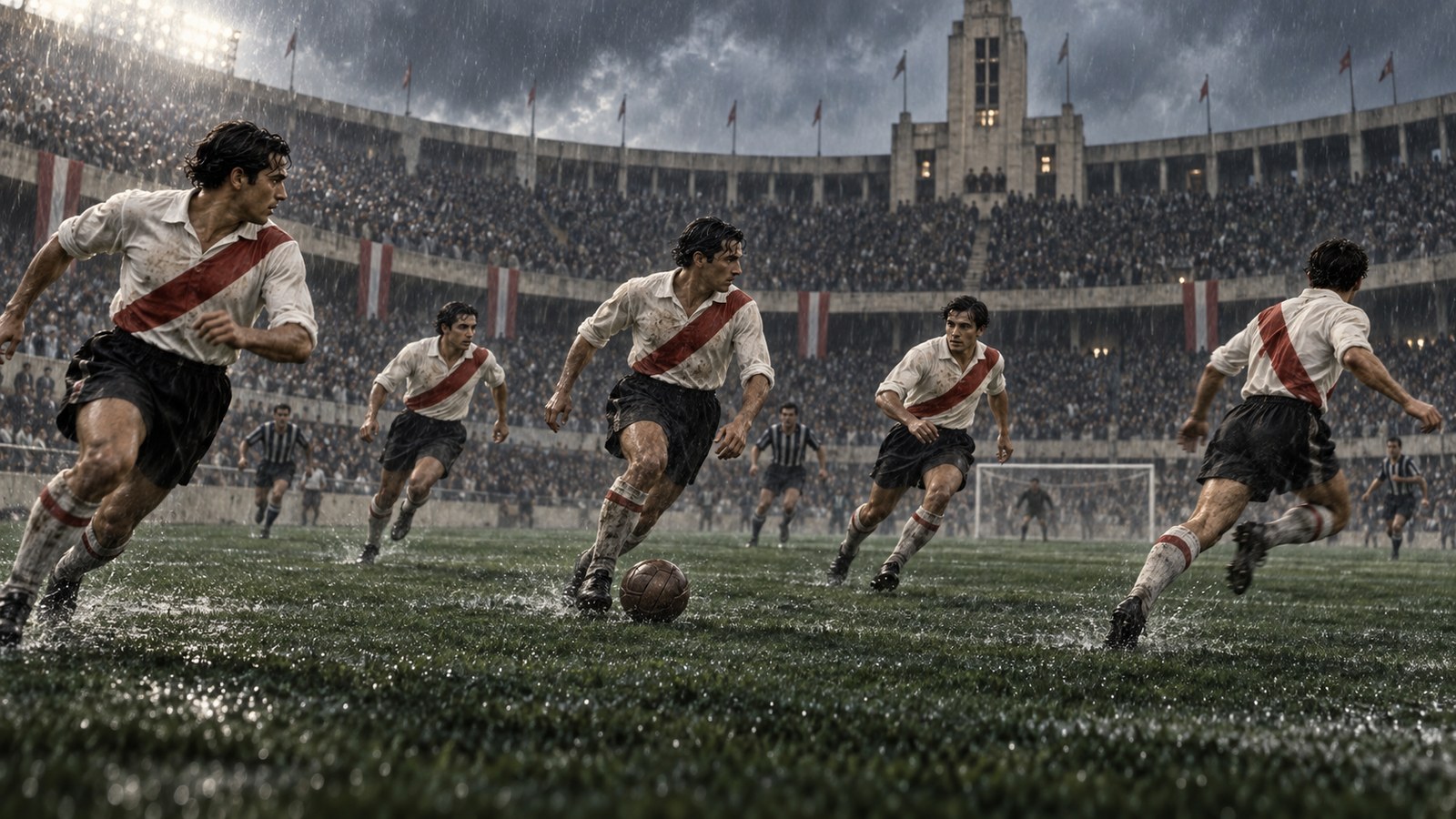
Five names define River Plate’s most romantic attacking side: Juan Carlos Muñoz, José Manuel Moreno, Adolfo Pedernera, Ángel Labruna and Félix Loustau. They are often remembered as if they moved together through an entire era. In fact, the complete forward line appeared together only 18 times.
That small number explains rather than diminishes the legend. River’s football in the early 1940s was not a trick available only when five specific names filled five fixed positions. The decisive change began before Loustau completed the group, when Pedernera moved away from the conventional center-forward station and started receiving deeper. His withdrawal rearranged the space for everyone around him.
The famous quintet supplied a perfect image of the idea: the ball circulated, forwards exchanged lanes, and attacks could pause in midfield before suddenly reaching Labruna near goal. Eighteen matches were enough because spectators were not only memorizing a lineup. They were watching a different way for a forward line to organize itself.
The Tactical Change Began With One Step Back
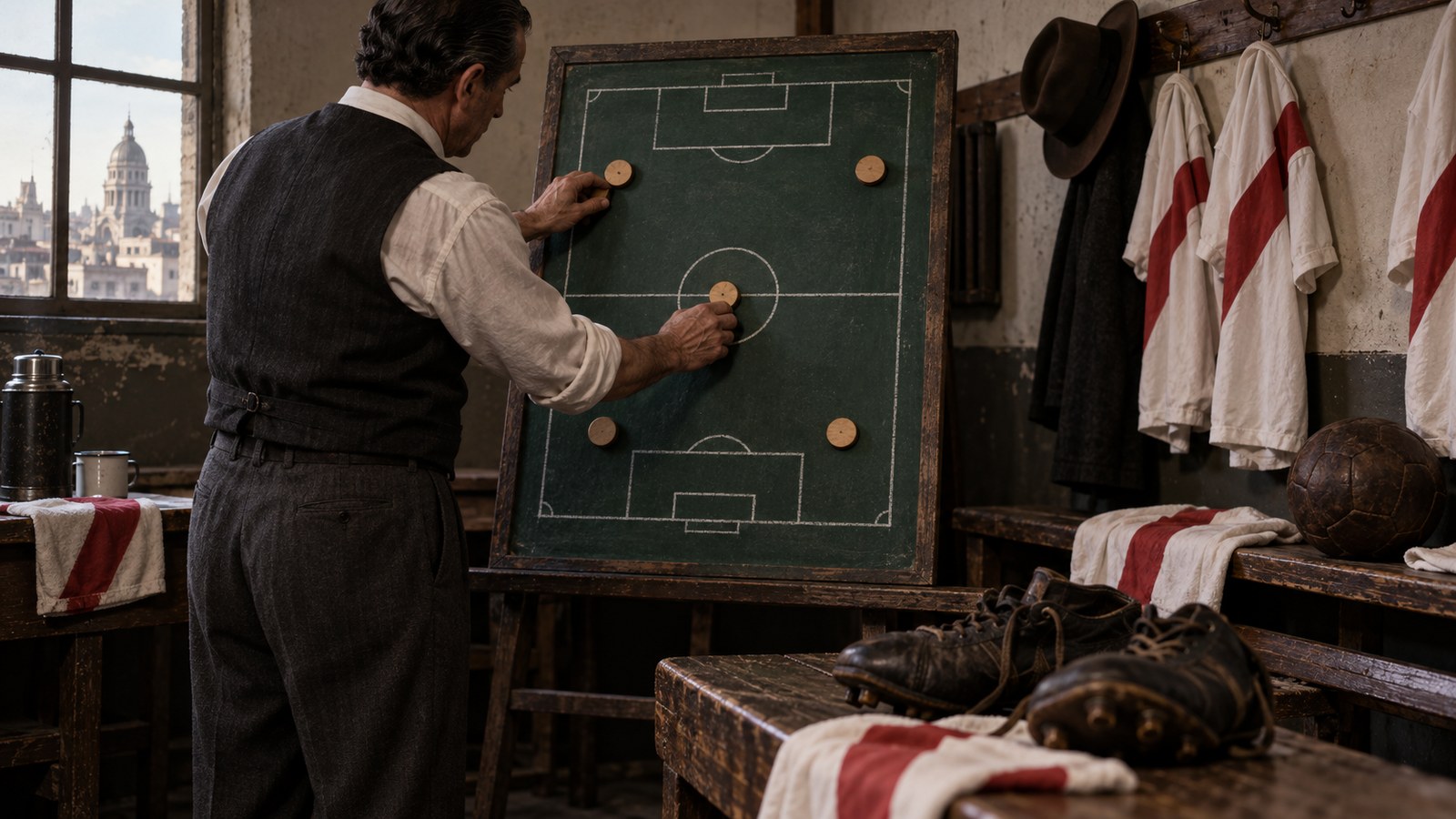
River’s best-known five did not simply arrive at once. During 1941, Carlos Peucelle pressed coach Renato Cesarini to reposition Pedernera. Instead of waiting high as a fixed central striker, he would retreat into a deeper zone and participate in constructing the move.
The experiment was not accepted immediately. Cesarini shifted Pedernera between roles and occasionally left him out for other options. A trial against Independiente produced a 2–1 win with a Pedernera goal, yet the idea did not instantly become permanent. When the teams met again, River won 4–0 and Pedernera scored three. Repetition made the spatial effect harder to ignore.
A defender expecting a direct duel with the number nine now faced a decision. Follow Pedernera away from the back line and leave room behind, or hold position and allow him to receive facing forward. Meanwhile, Moreno and the wide attackers could enter the gaps created by that hesitation. Labruna retained the instinct to finish, but the route to him no longer had to be direct.
This was the mechanism beneath the later mythology. The center did not disappear; it moved. River gained an extra link where opposing defenders expected a target, and the whole front line could react to the new reference point.
Loustau Completed the Famous Five
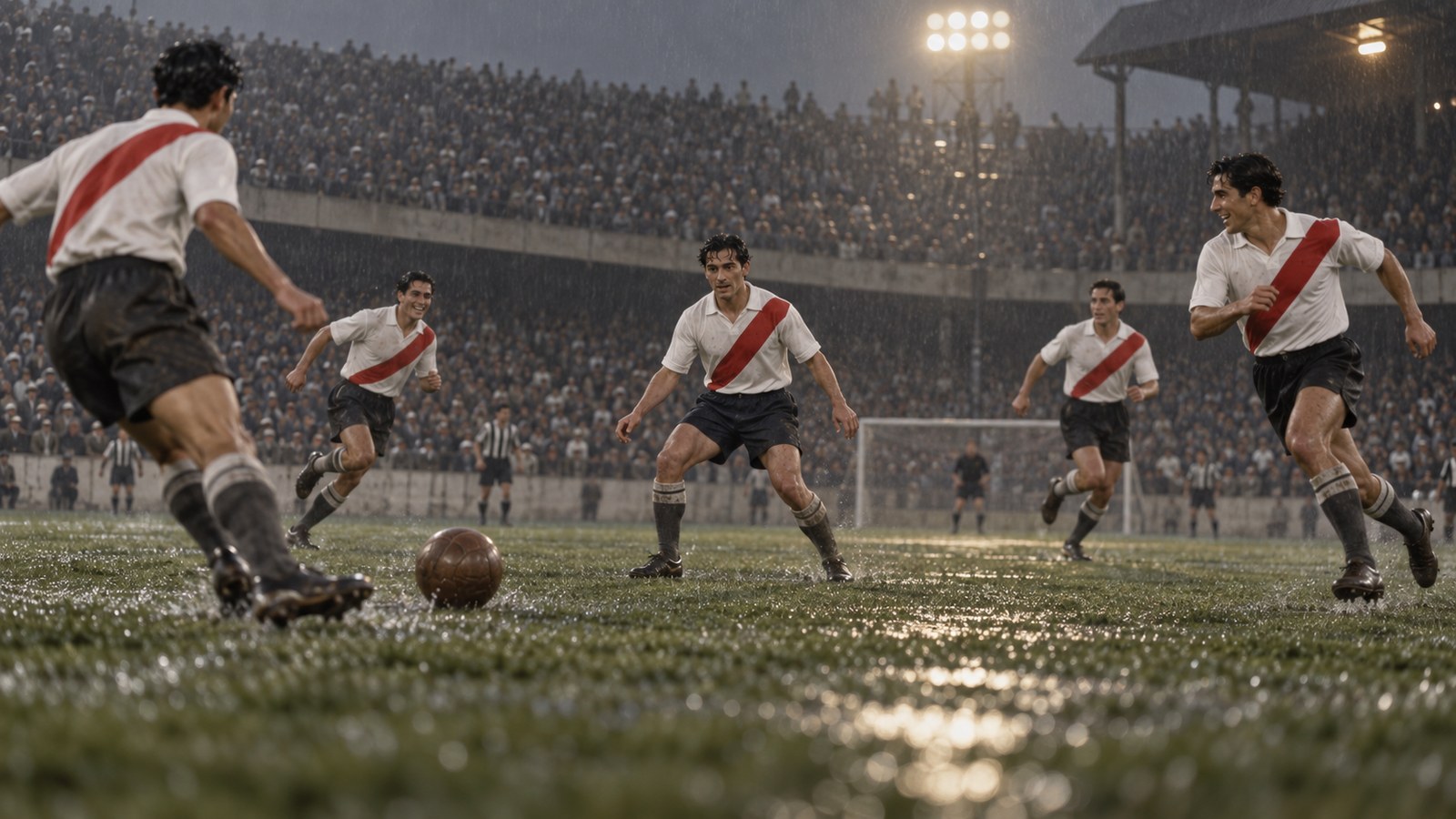
Félix Loustau’s arrival in 1942 completed the lineup that entered football memory. The five first appeared together at the Monumental against Platense on 28 June. Muñoz, Moreno, Pedernera, Labruna and Loustau offered width, dribbling, combination play and finishing without behaving like five isolated specialists.
The nickname followed River’s 6–2 victory over Chacarita. Journalist Eduardo Lorenzo “Borocotó” heard the description of a machine and fixed it to the side. A contemporary El Gráfico account praised River for playing without a weak point and for the understanding that had grown since the previous season’s recovery.
The word can suggest mechanical repetition, but the football described in the sources was playful. Pedernera and Muñoz could initiate. Moreno and Loustau could create or arrive. Labruna supplied the clearest finishing reference. The roles existed, yet passes and movement continually altered who occupied the dangerous space.
That flexibility differs from eleven players simply roaming wherever they please. Movement worked because another player recognized the vacancy and the ball connected the exchange. The freedom was coordinated through relationships developed in training and competition. River’s fluency depended on each forward reading the same invitation.
The five also offered different kinds of threat. Muñoz could stretch the right, Loustau supplied width and acceleration on the left, Moreno could carry or combine, and Labruna attacked the scoring spaces. Pedernera’s retreat did not make those distinctions disappear. It brought them into contact, allowing one player’s movement to trigger the next instead of leaving each forward isolated in a corridor.
Patience Earned Them an Anxious Nickname
The group acquired another name: the Caballeros de la Angustia, the Knights of Anguish. Muñoz explained the joke through their rhythm. River could exchange passes, dribble and enjoy possession in midfield without rushing the goal. The breakthrough often arrived late enough to make the crowd nervous.
That recollection reveals a tactical choice. Patient combination was not ornamental waiting. It asked defenders to step, turn and exchange assignments. Every extra pass could move an opponent a little farther from the shape he wanted to protect. Once River entered the penalty area, the intention sharpened; the earlier circulation had prepared the opening.
The contrast between pleasure and anxiety made the side memorable. Players seemed to be entertaining themselves while supporters wondered when control would become a score. The delay increased the emotional force of the final acceleration.
The approach offers an early South American reference point for ideas later associated with positional exchange and the disciplined freedoms of Total Football. The historical lines are not identical, and River did not need a later label to validate its football. What connects them is the use of movement to change an opponent’s reference points rather than merely outrun them.
It also explains why possession could feel dangerous before a shot appeared. The ball was measuring the defence. A center-half who advanced toward Pedernera altered the space behind him; a full-back who narrowed toward Moreno exposed a wing. River’s circulation kept asking those questions until one answer opened the route to goal.
The Perfect Lineup Was Rare Even in Its Own Era
The complete five shared the field only 18 times and never started a clásico against Boca Juniors together. Their principal overlap lasted from 1942 to 1944, a period in which River won two championships. Those facts resist the neat image of an unchanged lineup dominating every major occasion.
River’s success depended on a deeper squad. Goalkeeper and captain José Soriano, defender José Manuel Vaghi and marker Norberto Yácono belonged to the side’s functioning even if aesthetic memory concentrated on the forwards. A team cannot sustain attacking freedom unless players behind the ball manage the risks it creates. Their positioning recovered possession, protected the open lanes and allowed the front five to begin another patient sequence.
The 1942 title also produced drama outside the ideal five-man portrait. River secured the championship with a draw at La Bombonera while reduced to ten players. Adaptation mattered as much as the famous attacking diagram.
Individual career totals further show why the legend cannot be reduced to 18 afternoons. Marca credits Muñoz with 184 River matches and 39 goals, Moreno with 321 and 179, Pedernera with 288 and 130, Labruna with 514 and 292, and Loustau with 367 and 101. Their relationships were built through many combinations, not only the occasions when all five names appeared together.
A Short Alignment Left a Long Shadow
Football memory compresses. It selects one forward line, one nickname and one shape, then uses them to represent several seasons of experimentation. That compression can mislead if it suggests the five were permanent. It can also preserve something true: the complete unit expressed River’s attacking idea with unusual clarity.
The number 18 forces attention back onto the mechanism. If the lineup’s reputation depended only on accumulated appearances, it would be a statistical curiosity. Instead, it survived because the deeper center-forward, short combinations and positional exchange could be recognized and retold. Coaches and writers could extract an argument about space from the spectacle.
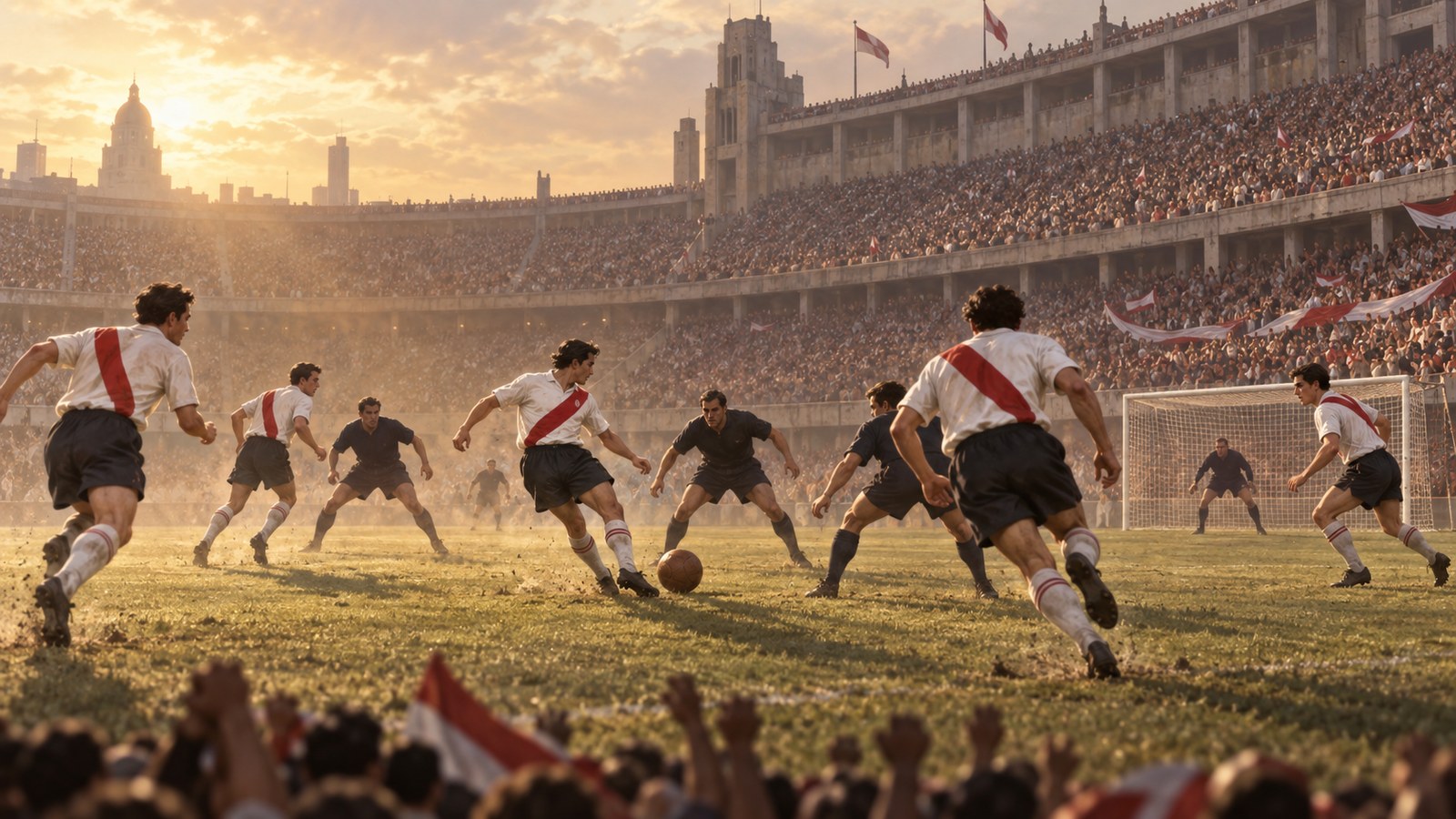
River’s five were also vivid characters. Moreno’s swagger, Labruna’s goals and Loustau’s unlikely path into the side gave supporters personalities to attach to the pattern. The football was sophisticated without becoming bloodless. It carried humour, delay and the tension of waiting for a controlled game to produce its decisive moment.
The complete front line did not need hundreds of matches to become a tactical landmark. It needed enough time to demonstrate an idea at full resolution. Pedernera stepped away from the expected place, the others read the space he created, and River showed how an attack could be ordered by movement rather than by staying still.
Sources
Marca; El Gráfico historical archive; Goal tactical history.