
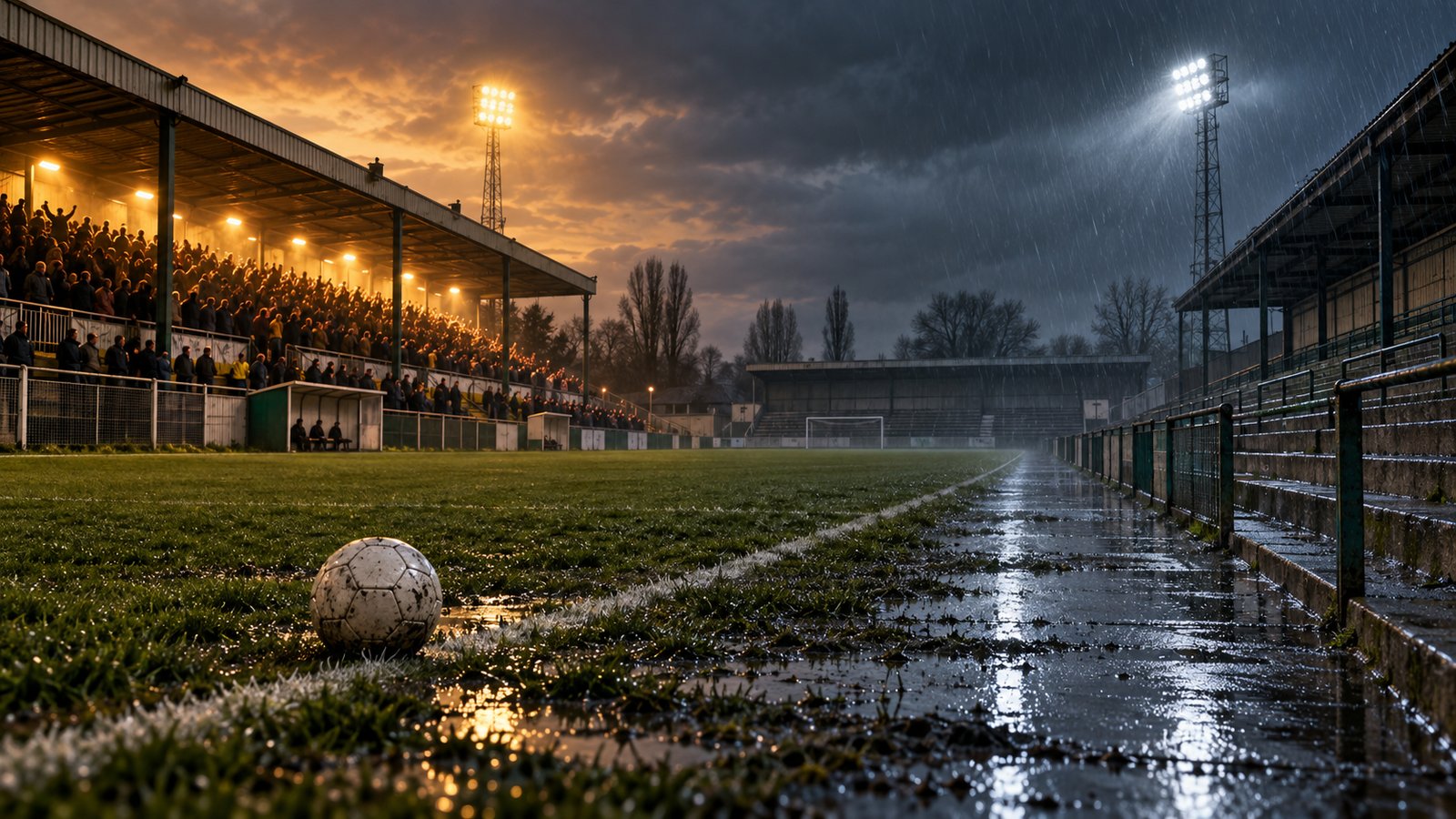
On 11 June 2011, Rushden & Diamonds went to the Football Conference’s annual meeting with a winding-up petition waiting on the following Monday. The club presented its case for remaining in the division. The board refused it. Its statement said it had no confidence that Rushden could pay creditors, remain viable or meet the obligations of another season.
Eight years earlier, the same club had finished top of Division Three with 87 points. Eleven years before that title, it had not existed at all. The distance between those dates makes Rushden & Diamonds look like a simple warning about climbing too quickly. Nene Park tells a more precise story. A patron did not only finance a better squad. His backing enlarged the ground, professionalised the surroundings and carried a merger through four divisions. When he withdrew, giving away the club and its physical assets could not reproduce the income and direction that had built them.
Two Local Clubs Entered One Ground
Rushden Town and Irthlingborough Diamonds occupied different places in the Northamptonshire football map. Rushden played in the Southern League; Irthlingborough were in the United Counties League. Both faced limits. Rushden’s Hayden Road ground had failed the standard required for the Southern League Premier Division, while Irthlingborough had the Nene Park site but played lower down the pyramid.
Max Griggs, whose family business owned the Dr. Martens and AirWair footwear brands, proposed a merger. Reservations did not disappear merely because the balance sheet appeared logical. Two sets of supporters were being asked to accept that separate histories could share one future. The agreement went through at the end of the 1991–92 season, and Nene Park was upgraded for the new club.
The first Rushden & Diamonds league match in 1992 attracted 315 people. That modest number is important. The club did not begin with the audience or status its later stadium suggested. It began as a Southern League Midland Division entrant with a new name, a combined player pool and an owner prepared to construct the conditions for growth.
Nene Park Advanced Ahead of the Team
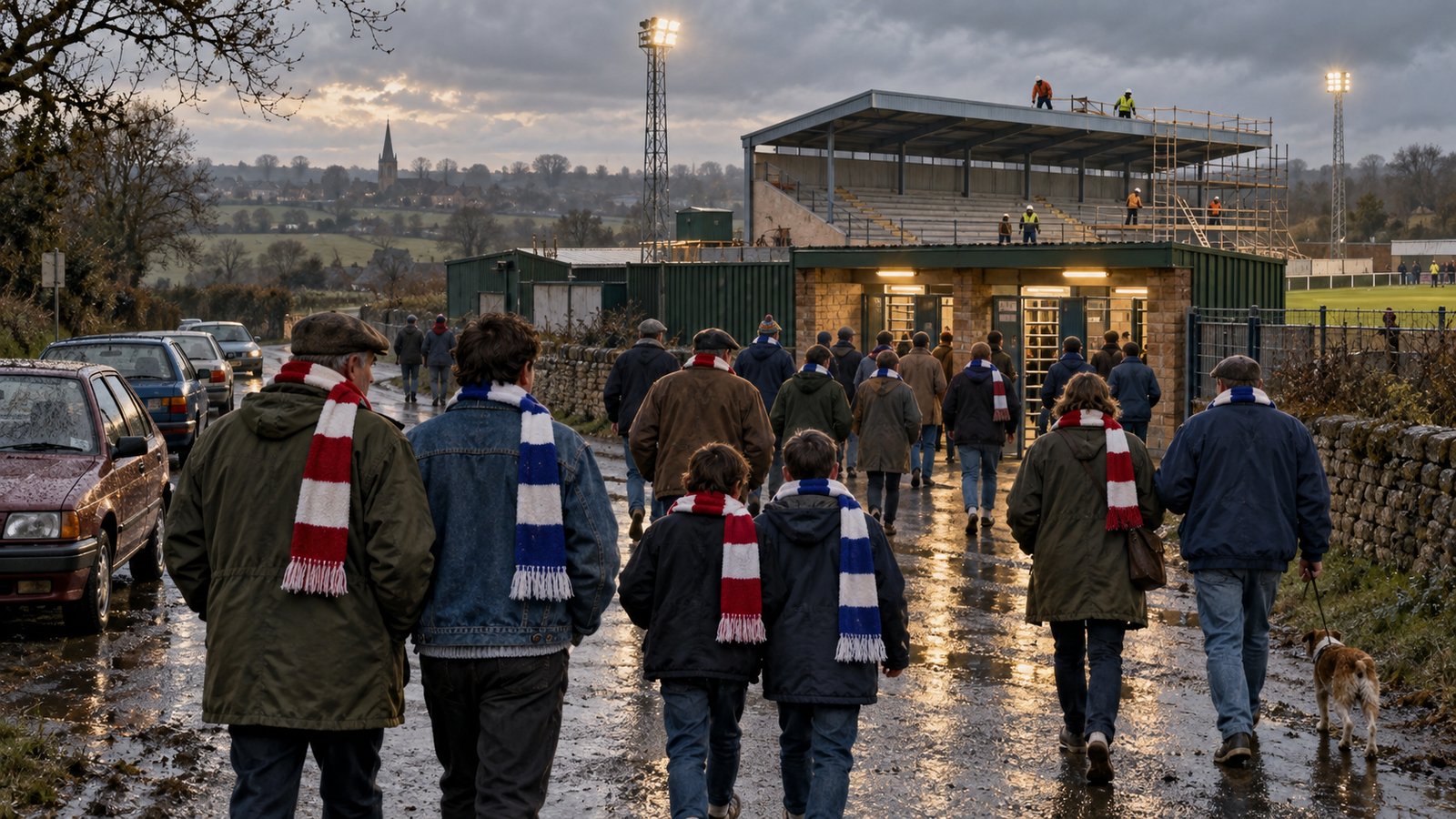
Griggs’s backing was visible before the Football League arrived. A 1,000-seat North Stand was operating for the 1993–94 season. Rushden won the Midland Division that year. In 1996, the first phase of an East Stand raised official capacity to 6,572 as the Southern League Premier champions prepared to join the Conference.
This was not a chairman periodically paying a transfer fee and leaving everything else unchanged. The R Griggs Group and local businesses supported a football environment: stands, access roads, training space, hospitality and administration. Nene Park looked capable of receiving a higher level before results had secured it. That removed one obstacle which traps many ambitious non-league clubs. It also tied the scale of the operation to the backing that made the construction possible.
Brian Talbot took charge during the first Conference season. Rushden finished fourth twice, then second in 1999–2000. At the time, second place carried no play-off route. Only the champion entered the Football League. A season of sustained excellence could therefore end with the whole infrastructure waiting in the same division.
One Promotion Place Defined the Nine-Year Climb
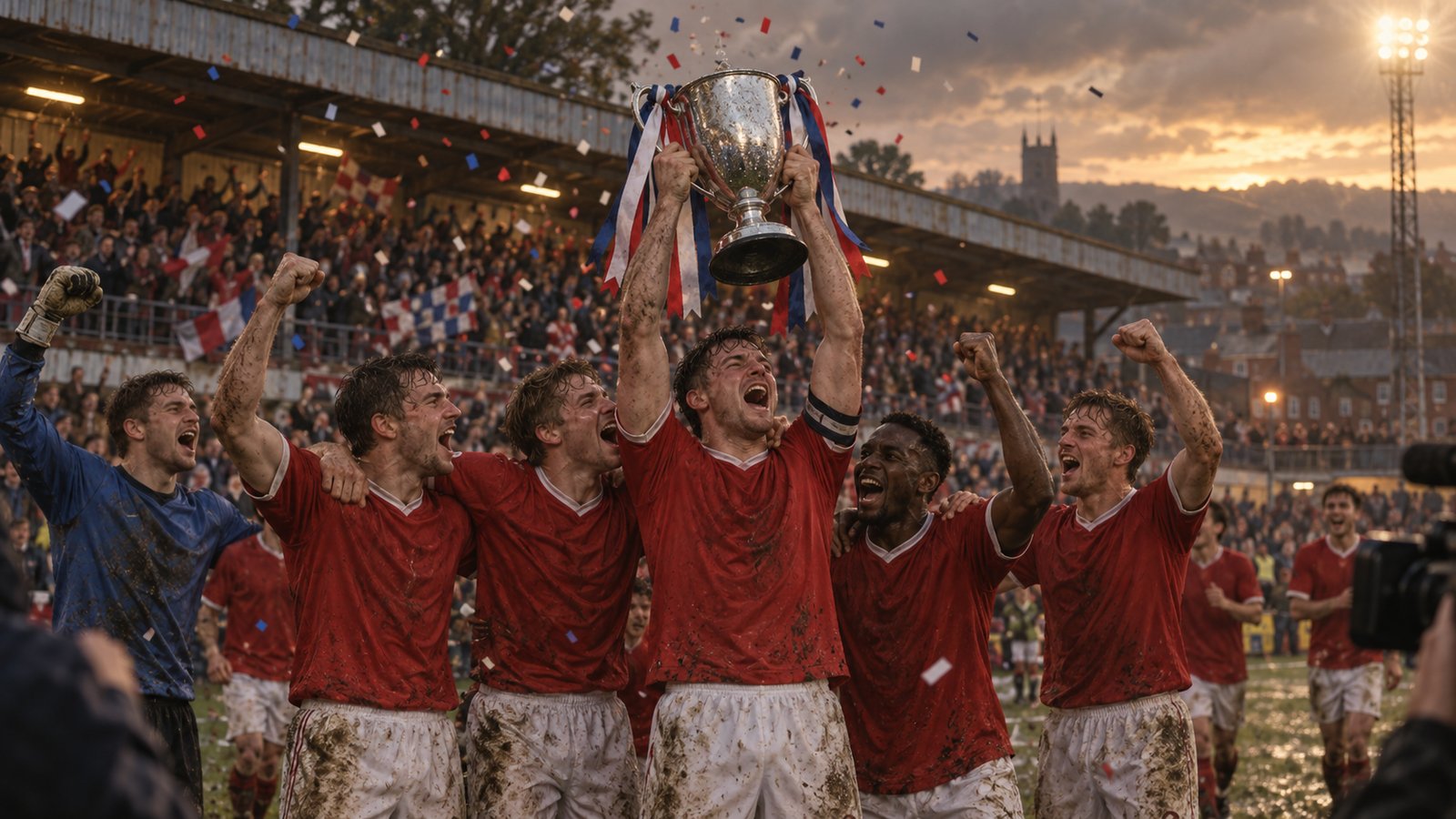
The 2000–01 team opened with 12 unbeaten league games, stumbled before Christmas and then lost only one of its final 23 league fixtures. That recovery overtook Yeovil Town and delivered the Conference title. Rushden & Diamonds entered the Football League nine years after the merger.
The speed of the ascent can hide how narrow its decisive gate had been. The club had finished fourth, fourth and second in the three previous seasons. Money improved the probability of promotion, but it could not buy a second place in the League. Talbot still had to keep a squad together through repeated disappointment and then win the only position that mattered.
Rushden did not merely survive their first League season. They finished sixth and reached the Division Three play-off final, where Cheltenham Town beat them 3–1. A year later they went further. Hartlepool United had led by 12 points at the start of March, but Rushden closed the gap and took the 2002–03 title on the final day. The merged club had travelled from the Southern League Midland Division to Division Two in 11 seasons.
The Peak Coincided With the Patron’s Exit
Division Two exposed a different reality. Rushden finished 22nd in 2003–04 and were relegated. The timing mattered because the promotion season was also the end of the founding arrangement. In October 2003, Griggs stepped down after 11 years at the helm.
He did not walk away by locking the gates. In 2005 the Griggs family transferred the football club, Nene Park and 22 acres of land to the Rushden & Diamonds Supporters Trust. It also offered £500,000 for the 2005–06 season and £250,000 for 2006–07. On paper, this was an extraordinary inheritance: a stadium, surrounding land and transitional cash rather than a stripped shell.
Yet the gift reveals the structural problem. Ownership of a developed ground is not the same as the recurring stream that developed it. Stands require maintenance. A full-time playing operation continues to produce wages and travel costs. Relegation reduces central income and often crowds. A supporters’ trust could receive the club’s accumulated football assets, but it could not receive another Max Griggs.
The first season under the new arrangement ended in relegation from League Two. Rushden’s five-year Football League stay was over. Control passed from the Supporters Trust to Keith Cousins in November 2006 after he invested in the club, another sign that ownership alone had not settled the operating question.
Expulsion Arrived Before the Winding-Up Hearing
Rushden remained in the Conference for five more seasons. By June 2011, however, the competition was deciding whether the club could start another one. The Conference cited significant financial problems and a lack of confidence in Rushden’s ability to pay creditors or satisfy the coming campaign. Expulsion arrived on 11 June, before the winding-up petition hearing scheduled for Monday.
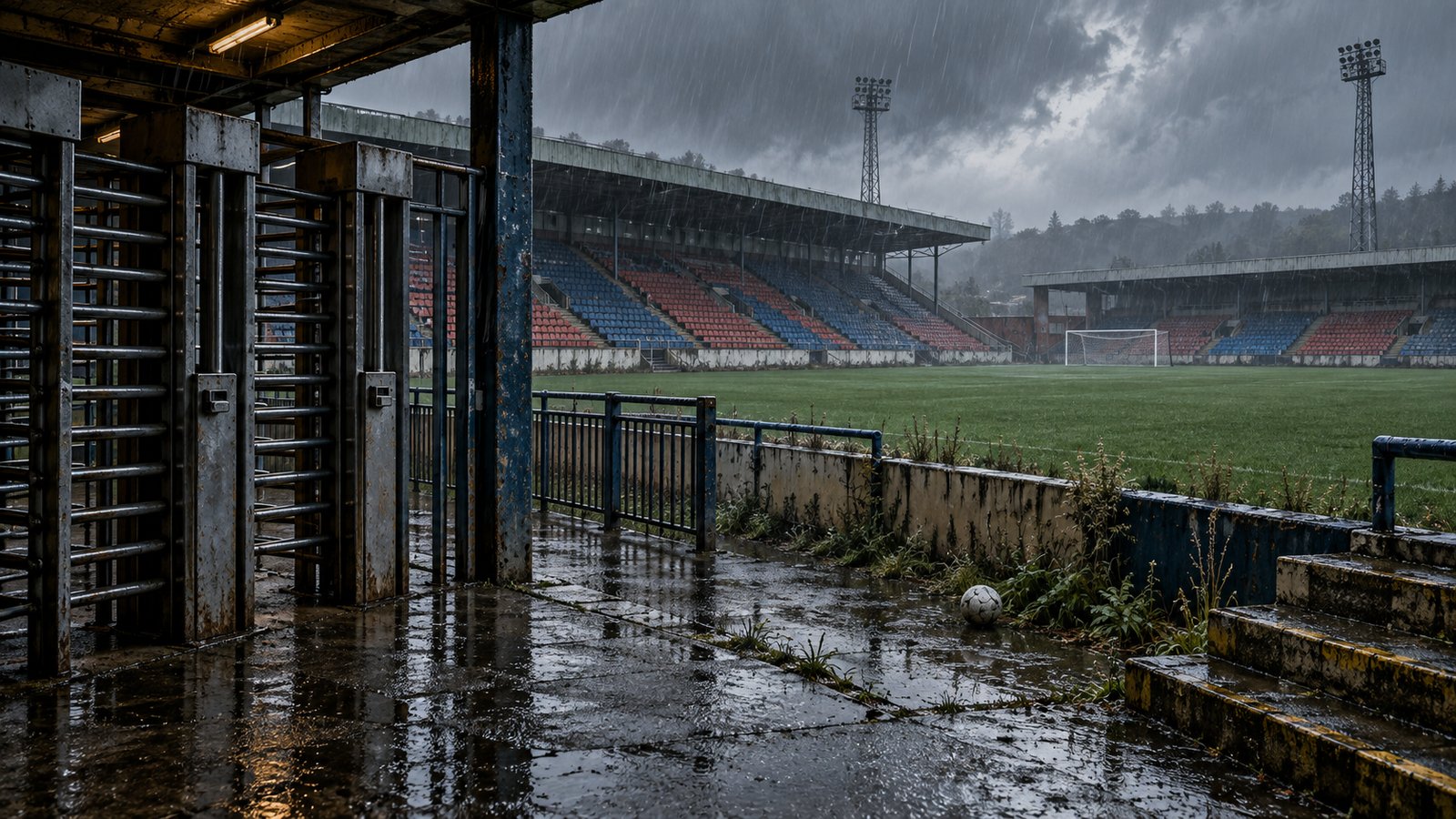
The sequence closed quickly. Rushden withdrew an appeal against expulsion. The Southern League refused its application. In July, the club entered administration, and the administrator said it was no longer in a position to continue trading. A stadium that had once advertised readiness for promotion could not secure a league place when the organisation using it failed the financial test.
The pattern differs from Gretna reaching the Scottish Premier League with a shrinking squad. Gretna’s collapse followed a spectacular rise interrupted by their owner’s illness. Rushden’s patron had prepared a transfer and supplied a financial bridge. Even so, the institution contracted from Division Two to exclusion in eight years.
It also sharpens the story of Bury’s promotion and EFL expulsion in 2019. Both clubs reached the point where a competition judged the next fixture list less important than the risk that the club could not complete it. The administrative decision did not create the financial weakness. It made that weakness final in sporting terms.
The Name Survived Without Pretending Nothing Happened
Supporters began organising before the old company’s legal process had fully ended. Roughly 170 people met on 1 July 2011 and voted overwhelmingly to establish AFC Rushden & Diamonds. By the first competitive youth match on 25 August, around 40 volunteers were helping the acting committee. The successor became a Community Benefit Society in which each member received one ordinary share and one vote.
This was not a seamless continuation of the 1992 project. The senior club that had won a Football League title was gone, and the new organisation began with youth football before entering a senior side. The distinction gave the restart honesty. Supporters preserved the relationships, colours and name they valued without treating the old debts, league membership or ownership as if they had simply crossed a line on a form.
Nene Park therefore records both the power and the limit of football capital. Griggs’s backing solved real problems. It joined two constrained clubs, improved a ground and made a nine-year route to the League possible. The wins were real, not an accounting illusion. But the physical evidence of that success could outlast the arrangement that paid for it.
Rushden & Diamonds crossed four divisions because ambition was attached to unusually concentrated resources. They disappeared because a football club must finance each next season, not merely possess the remains of the previous investment. The supporters who started again in 2011 chose a slower proposition: membership, volunteer labour and one vote each. They kept the Diamonds name by changing the mechanism underneath it.
Sources
Archived Rushden & Diamonds official club history; BBC Sport; Football Club History Database; AFC Rushden & Diamonds club history.