
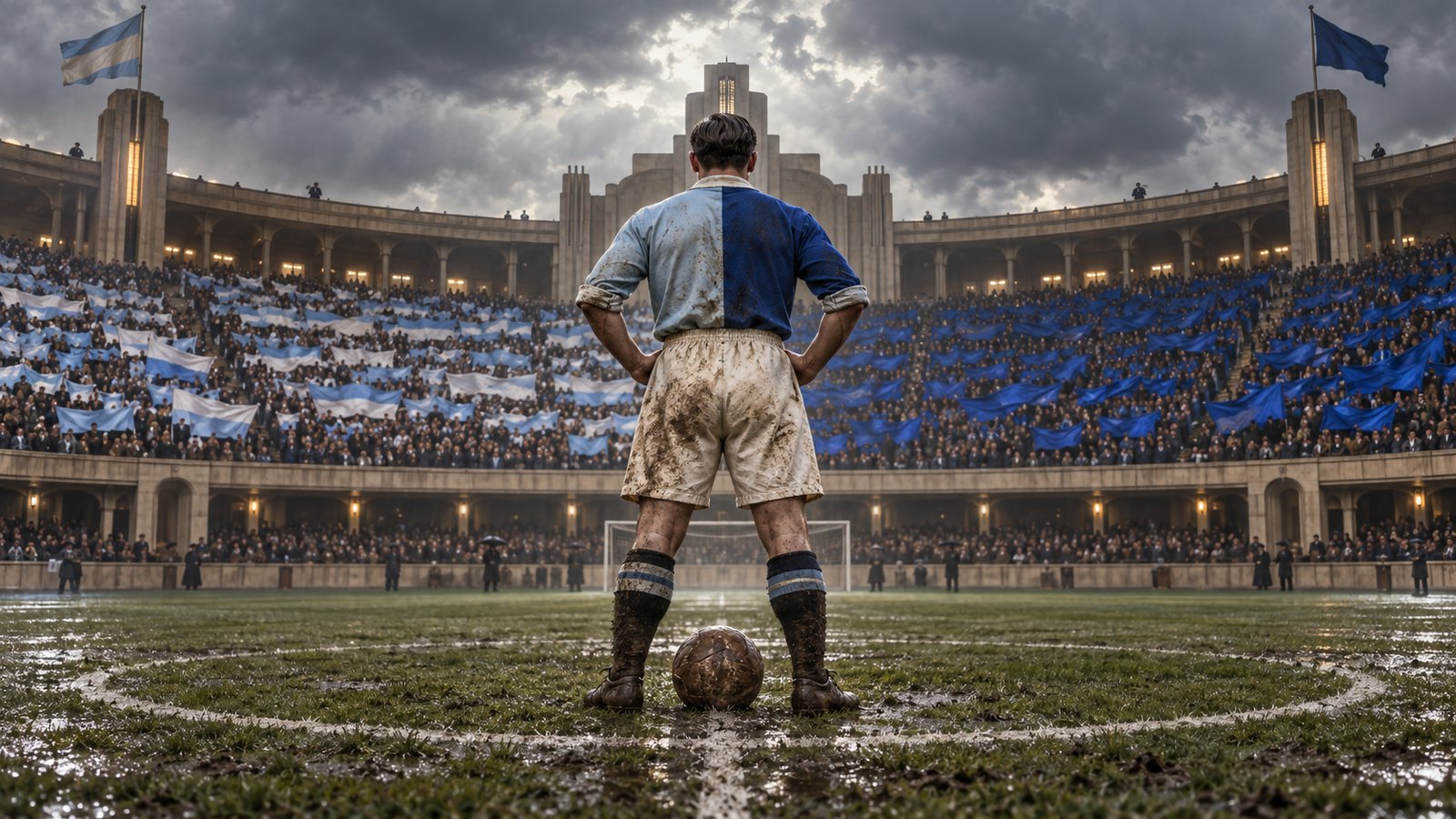
Four years separated two World Cup final dressing rooms. In the first, Luis Monti pulled on Argentina’s pale shirt before walking into the Centenario in Montevideo. In the second, he wore Italy’s blue in Rome. The opponent changed, the anthem changed and the result changed. Monti remained at the centre of the pitch, responsible for closing the most dangerous route toward goal and beginning attacks once the ball had been recovered.
No other footballer has played World Cup finals for two different countries. That fact can look like a curiosity from a loose early age of international football. It becomes more revealing when the matches around it are put back in sequence. Monti’s route from Buenos Aires to Turin joined migration, eligibility and tactics at the precise moment when the World Cup was learning what a national team could be.
The Centre-Half Who Covered Two Jobs
Monti’s nickname in Argentina was Doble Ancho, “double wide,” a description of the ground he could cover rather than his build. He operated as the centre-half in the Metodo formation. When his side defended, he tracked the opposing centre-forward. When possession changed, he became a distributor, sending play toward the forwards instead of remaining beside the backs.
That combination mattered because early international tournaments offered little recovery time and no substitutions. The centre-half had to absorb contact, read long passes and still provide the first useful ball after a tackle. Monti was 167 centimetres tall according to Olympedia, but the role rewarded anticipation and stamina as much as reach. He could make a crowded match revolve around one strip of grass.
His club record in Argentina had already established his authority. He won the 1921 championship with Huracán, then three more with San Lorenzo in 1923, 1924 and 1927. Argentina also won the 1927 South American Championship, and Monti collected an Olympic silver medal in Amsterdam in 1928. By 1930 he arrived at the inaugural World Cup as an experienced organiser rather than an emerging prospect.
Two Goals Carried Argentina to Montevideo’s Final
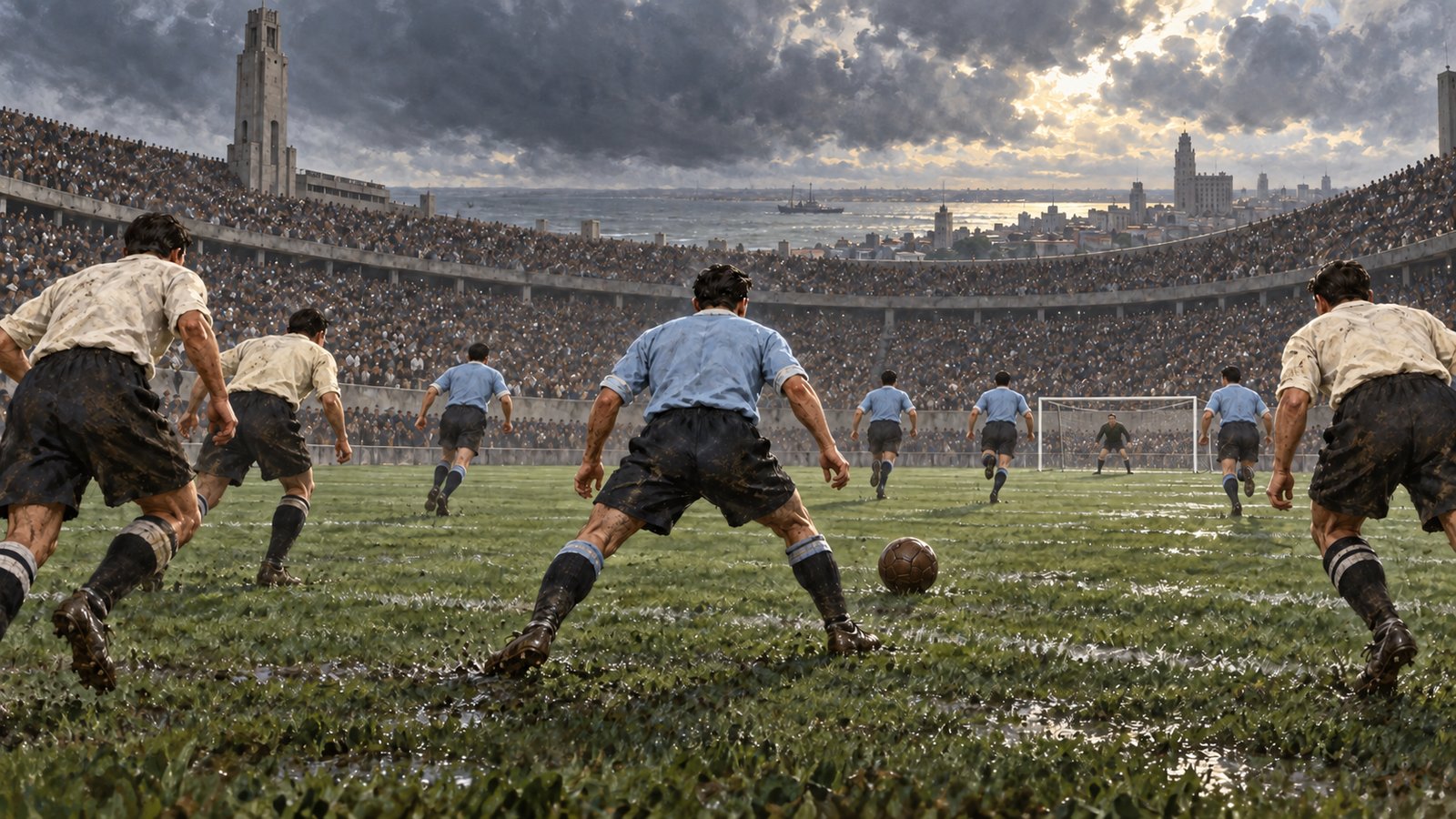
Argentina’s first World Cup campaign gave Monti visible attacking moments as well as defensive work. He scored the only goal against France in the opening group match, striking in the 81st minute of a 1–0 win. He scored again to open the 6–1 semi-final victory over the United States. Those goals came from a player remembered chiefly for control and contact in midfield.
The final on 30 July placed Argentina against host Uruguay at the Estadio Centenario. Argentina led 2–1 at half-time, but Uruguay scored three times after the interval and won 4–2. Monti left the first World Cup with a runner-up medal. The defeat was not a prologue designed for a later Italian triumph; it was already the end of a demanding South American cycle that had included a continental title and an Olympic final.
It also fixed his value in a form European clubs could understand. He had played every kind of match a centre-half could face: narrow group contests, a six-goal semi-final and a final controlled by the pressure of a home crowd. Juventus brought him to Italy in 1931. The move did more than change his club. His Italian ancestry made him eligible for a second national side under the rules then in force.
Turin Remade the Body Before the Shirt Changed
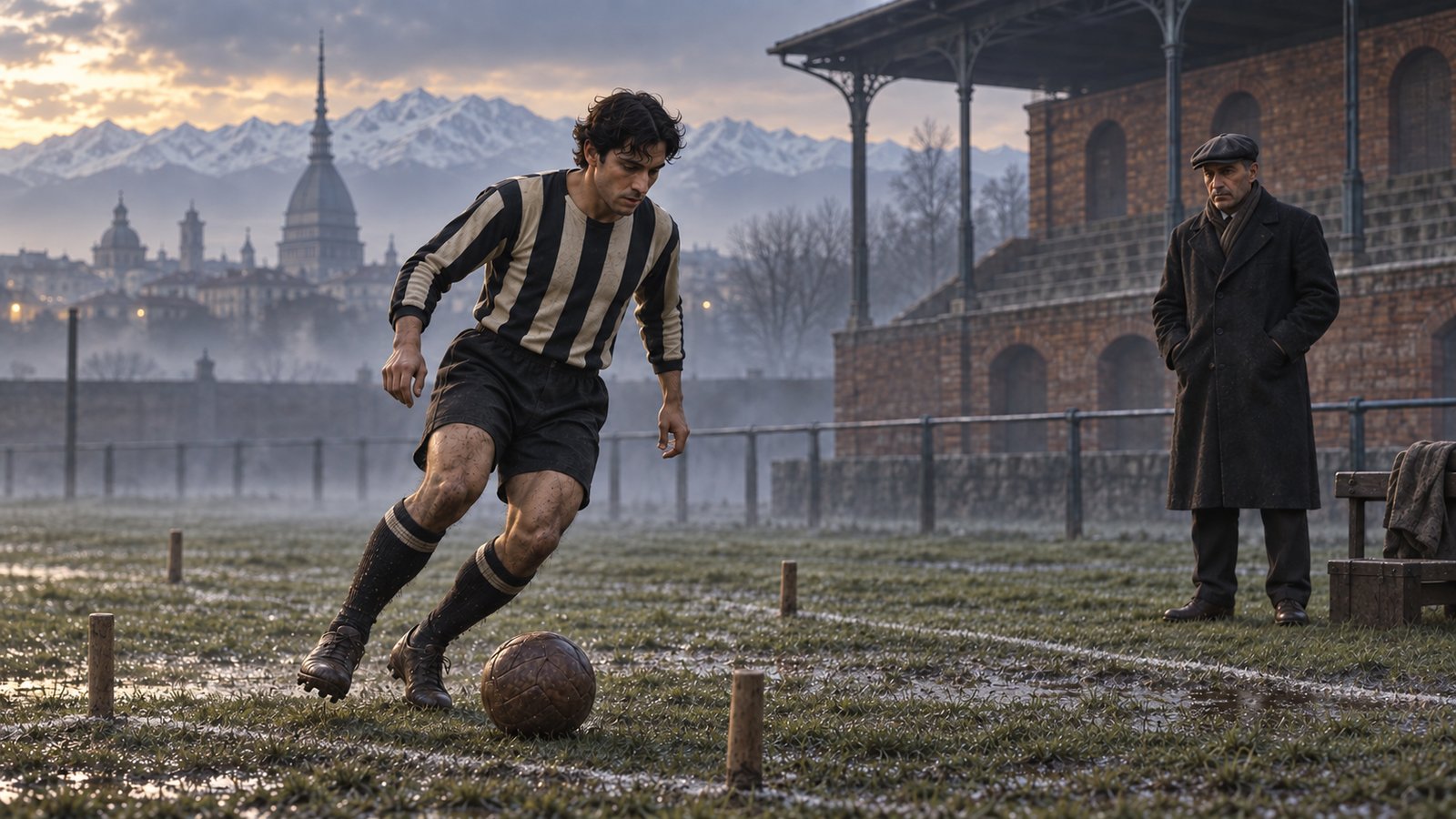
Monti did not arrive at Juventus ready to reproduce his Argentine form immediately. Accounts describe him as overweight and out of condition, followed by a month of individual training. The adjustment worked. He became the central piece between Juventus’s defenders and forwards and helped the club win four consecutive Serie A titles from 1931–32 through 1934–35.
The setting was ideal for Italy coach Vittorio Pozzo. Monti could protect the backs Virginio Rosetta and Umberto Caligaris, then find attackers such as Giuseppe Meazza. His game offered the hinge required by the Metodo: aggressive enough to deny the centre, composed enough to make the next pass. He was selected for Italy as an oriundo, a foreign-born player of Italian descent, alongside the Argentine-born Raimundo Orsi and Enrique Guaita.
International identity in this period did not follow the later rule that permanently tied a senior player to one country. Monti could represent Italy after playing 16 times and scoring five goals for Argentina. The paperwork permitted it, but tactical usefulness made it happen. Pozzo was not collecting a symbolic migrant story. He was choosing a centre-half equipped for the exact responsibilities of his team.
Austria’s Playmaker Became the Semi-Final Assignment
Italy hosted the 1934 World Cup, and Monti’s clearest tactical brief arrived in the semi-final against Austria. Matthias Sindelar was the creative reference point of the celebrated Austrian side. Monti was assigned to mark him. Italy won 1–0 in Milan, with Guaita scoring the only goal, and advanced to face Czechoslovakia.
The task shows why Monti cannot be reduced to the nationality switch. His route into a second final ran through a specific duel. He had to narrow Sindelar’s influence without disconnecting Italy’s midfield from its attack. The work was physical, but it was also spatial: knowing when to follow, when to hold the centre and where the recovered ball should go.
In the final at the Stadio Nazionale in Rome, Czechoslovakia led through Antonín Puč before Orsi equalised. Angelo Schiavio scored in extra time, giving Italy a 2–1 victory. Monti had now completed two World Cup finals for different countries, losing with Argentina in 1930 and winning with Italy in 1934. Olympedia still identifies him as the only player to have done so.
Highbury Revealed the Cost of the Role
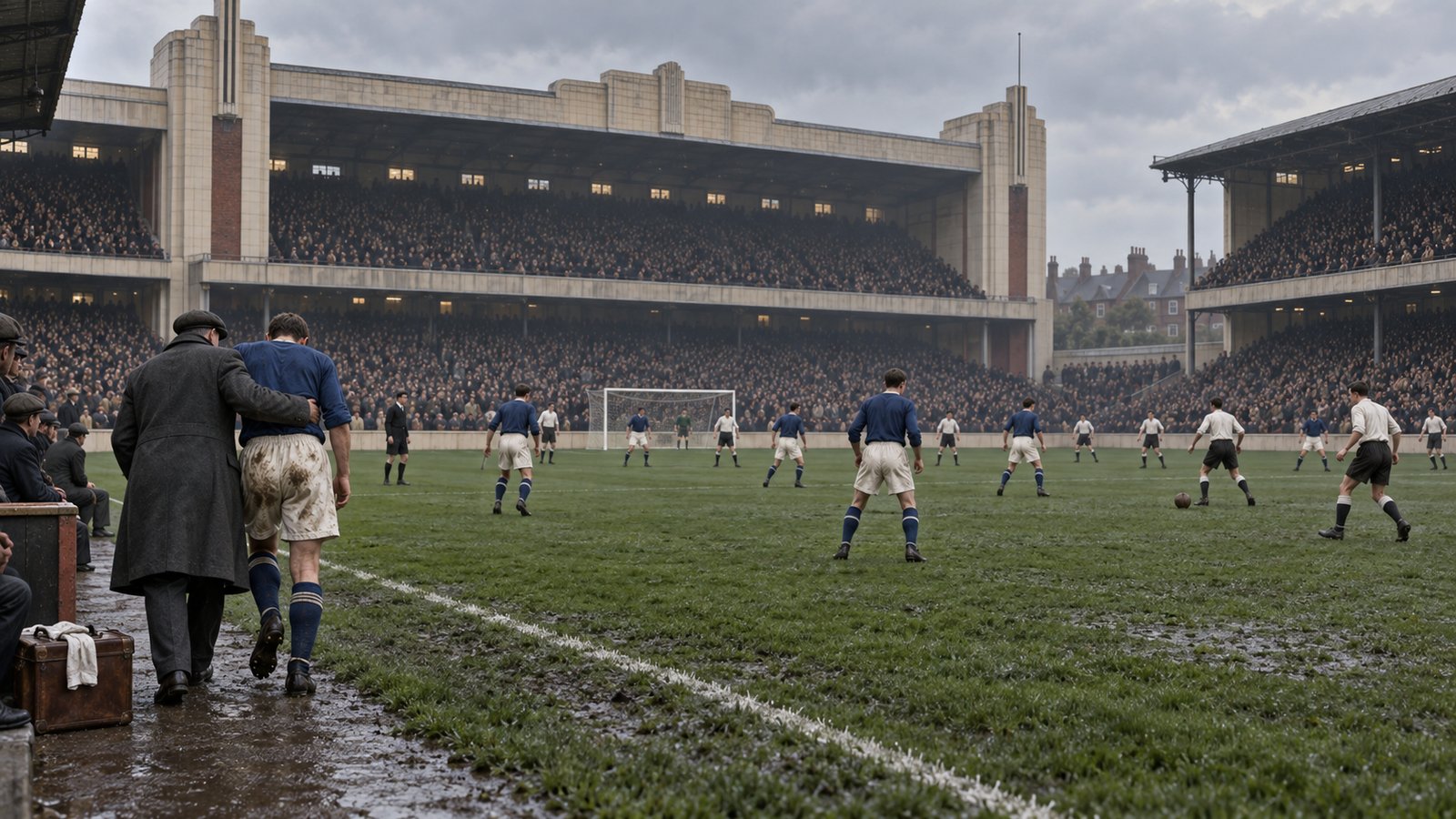
Five months after the Rome final, Italy travelled to Highbury to meet England. The Football Association had stayed outside the World Cup, and the match was promoted in England as a test against the new champions. It became known as the Battle of Highbury. A crowd of 51,000 watched England score three times inside the opening 15 minutes.
Monti’s match ended almost before it had formed. A collision with England centre-forward Ted Drake broke a bone in his foot. Substitutes were not available, so Italy continued with ten men. Giuseppe Meazza scored twice after half-time, but England won 3–2. The same assignment that made Monti valuable—meeting the centre-forward in the most congested channel—also placed him inside the game’s hardest impacts.
The episode provides a physical closing bracket to the two finals. Monti’s position was never an abstract line on a formation diagram. It demanded repeated contact at the point where direct attacks arrived. He later returned for two more Italy appearances, finishing with 18 caps for his adopted country, but Highbury showed how quickly the centre of a team could disappear.
One Career Exposed Football’s Moving Borders
Monti played 225 Serie A matches for Juventus and retired in 1939. His medals included four Italian league titles and the 1938 Coppa Italia as well as the international prizes gathered on both sides of the Atlantic. He later coached clubs in Italy and Argentina. The career lasted long enough for a Buenos Aires champion to become a captain and organiser in Turin.
His singular World Cup record belongs to rules that no longer exist, yet it is more than an administrative relic. Each final depended on the same football skill interpreted inside a different collective. Argentina used a centre-half who could score on the way to Montevideo. Italy used a marker and distributor built into Pozzo’s Metodo. The shirt changed; the tactical problem did not.
That makes Monti’s story a useful companion to later careers shaped by exile and eligibility, including Ferenc Puskás’s return to the highest level with Real Madrid. Football’s borders can appear fixed when a line-up is printed. Monti’s two finals show how much movement, ancestry and club work could sit behind one name in the centre.
Sources
- Olympedia
- Planet World Cup
- The Guardian archive