
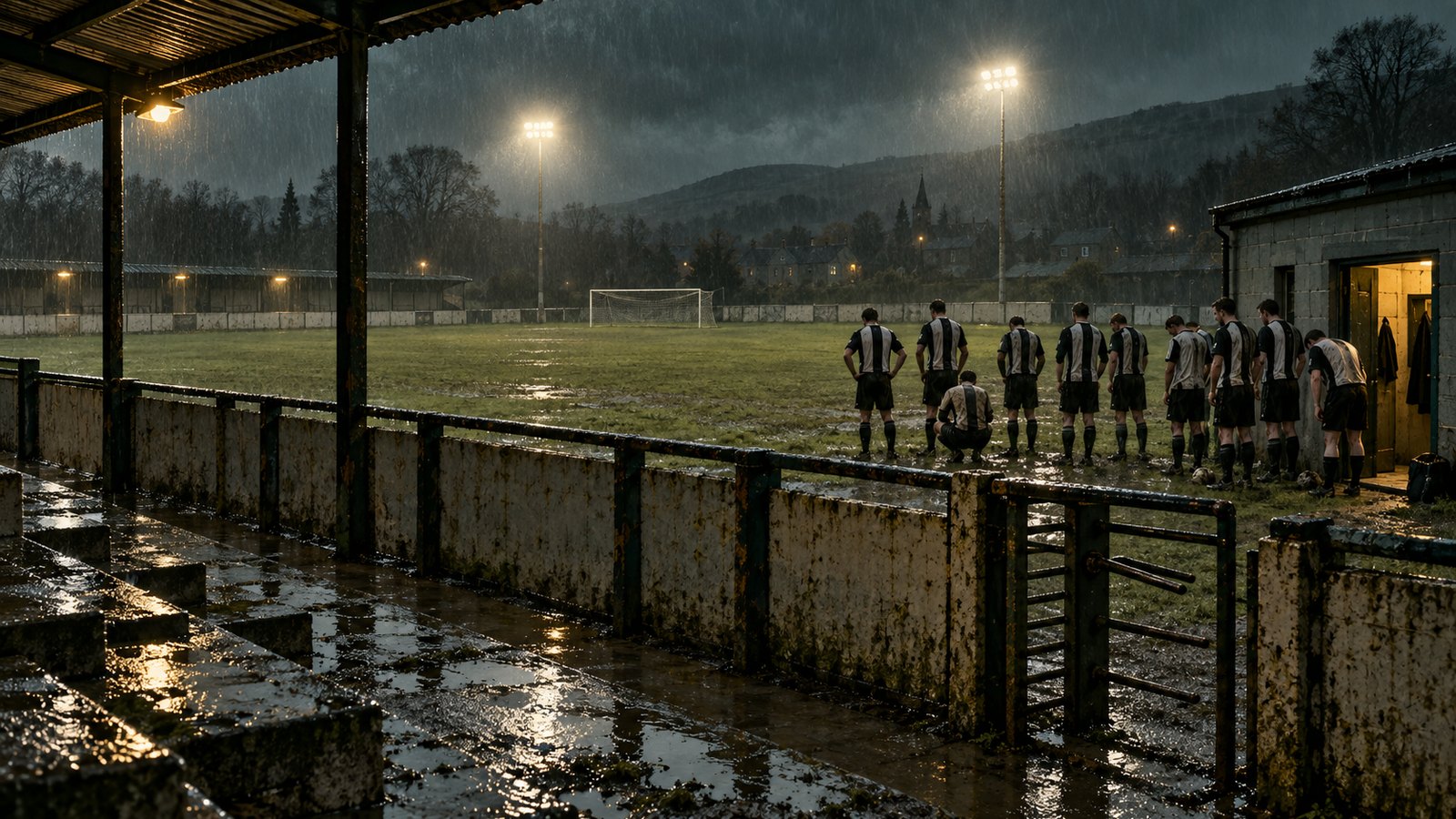
On Thursday, 13 March 2008, Gretna’s administrator counted the footballers prepared to face Aberdeen that weekend. The number was ten. Insurance was uncertain, wages had gone unpaid, and David Elliot said he could neither order players onto the pitch nor promise to pay them on Monday.
The count reduced a spectacular sporting ascent to its most basic obligation: could the club name a team? Gretna had climbed three divisions in three seasons, taken Hearts to a Scottish Cup final shoot-out and joined the Scottish Premier League. Now one missing player separated a possible lineup from no fixture at all.
This was not simply a tale of winning too quickly. It was the failure of a club whose weekly losses depended on one benefactor, whose home crowd had been sent on 150-mile round trips, and whose promotion outran the ground and income beneath it. The scores survived. The organisation producing them did not.
A border village entered Scotland’s league with one small ground
Gretna had spent decades playing south of the border before election to the Scottish Football League in 2002. The place opened by Airdrieonians’ collapse gave the club its third attempt at entry. Raydale Park sat in a town of fewer than 3,000 people, close enough to England that the club’s old football life had followed Carlisle and Northern League routes.
Brooks Mileson arrived in the same year. His first recorded offer was £20,000 for Rowan Alexander’s youth-development work. The relationship soon became far more ambitious. Players with top-flight experience arrived, resources exceeded the usual scale of the lower divisions, and Gretna stopped behaving like a new Third Division member.
The football accelerated first. Across three promotion seasons Gretna scored 297 league goals, 130 of them in 2004–05. Division Three fell, then Division Two. The margins made ascent look repeatable, but the club’s commercial base was not climbing at the same rate. Every stronger squad increased the distance between what Gretna earned and what Mileson supplied.
Hampden gave the project a crowd larger than its home town
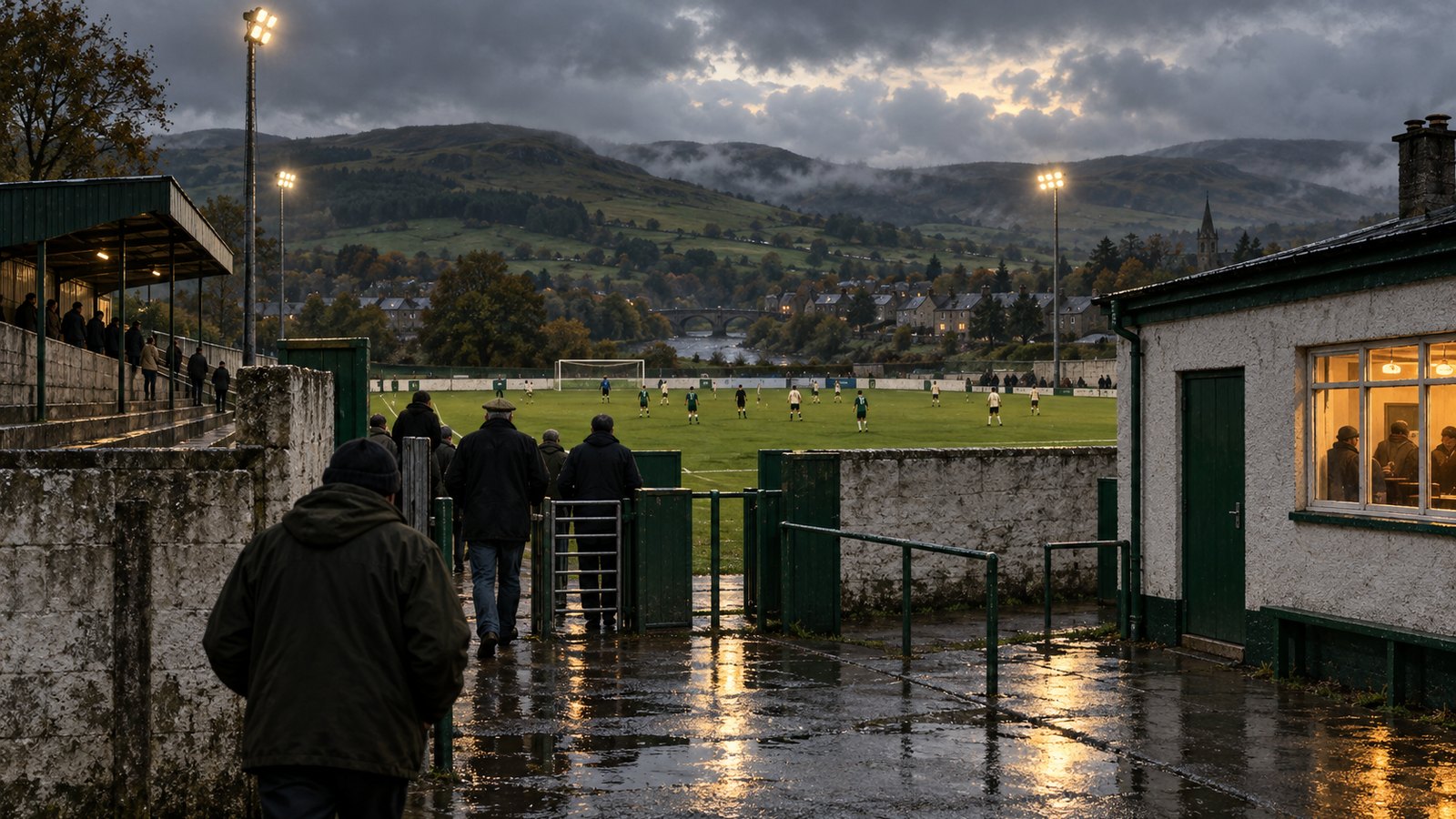
The 2006 Scottish Cup run supplied Gretna with a national stage before they had even reached the First Division. At Hampden, 51,232 watched the third-tier champions face Hearts. The number of people in Gretna colours was reported at roughly four times the town’s population.
Hearts led after Rudi Skacel scored in the 39th minute. Gretna stayed in the final and equalised late. Craig Gordon saved Ryan McGuffie’s penalty, but McGuffie reached the rebound and put it in. Extra time ended at 1–1 after Paul Hartley’s dismissal in the 120th minute.
The shoot-out finally separated them. Gordon stopped Derek Townsley’s attempt, Gavin Skelton struck the crossbar, and Hearts won 4–2. Defeat still enlarged the Gretna story. A club from the third tier had filled Hampden, forced a powerful opponent through 120 minutes and qualified for Europe because Hearts already held a Champions League place.
That afternoon could be read as proof that the scale of the club had changed. In reality, it showed how far a one-off final could stretch the audience. Cup tickets reached people who were never going to form a dependable weekly gate at Raydale—or follow “home” matches to another town.

One 90th-minute goal opened a top flight without a suitable home
The final promotion was less comfortable. Gretna had led the First Division by 12 points, then reached the last day only one point ahead of St Johnstone. At Ross County, Michael Gardyne put the home side in front. Nicky Deverdics answered, James Grady made it 2–1, and Diarmuid O’Carroll levelled after half-time.
Gretna still needed the victory. In the 90th minute, David Graham released Grady, whose second goal completed a 3–2 win. Three successive titles had carried the club from the bottom division to the SPL. The finish could hardly have been sharper: the entire rise ended with one veteran striker breaking clear in the last minute of the last match.
Promotion also exposed an unresolved physical problem. Raydale did not meet top-flight requirements, so Gretna staged home fixtures at Motherwell’s Fir Park. For followers near the border, the arrangement meant round trips of about 150 miles. A League Cup match against Cowdenbeath drew 342. An SPL game against Dundee United drew 501, then the competition’s lowest recorded attendance.
The club had reached Scotland’s richest division while weakening the ordinary ritual that generates local income. A home match no longer began with a walk across town. It required fuel, time and a motorway journey. The grander league delivered a less usable home.
In March, the balance sheet entered the dressing room
Mileson’s health deteriorated and his financial support stopped. Administrator Elliot estimated that the benefactor had put about £8 million into Gretna and had funded losses week by week. Once that flow ended, the weakness was no longer abstract. Wages, insurance, ground-sharing payments and the next fixture all became immediate questions.
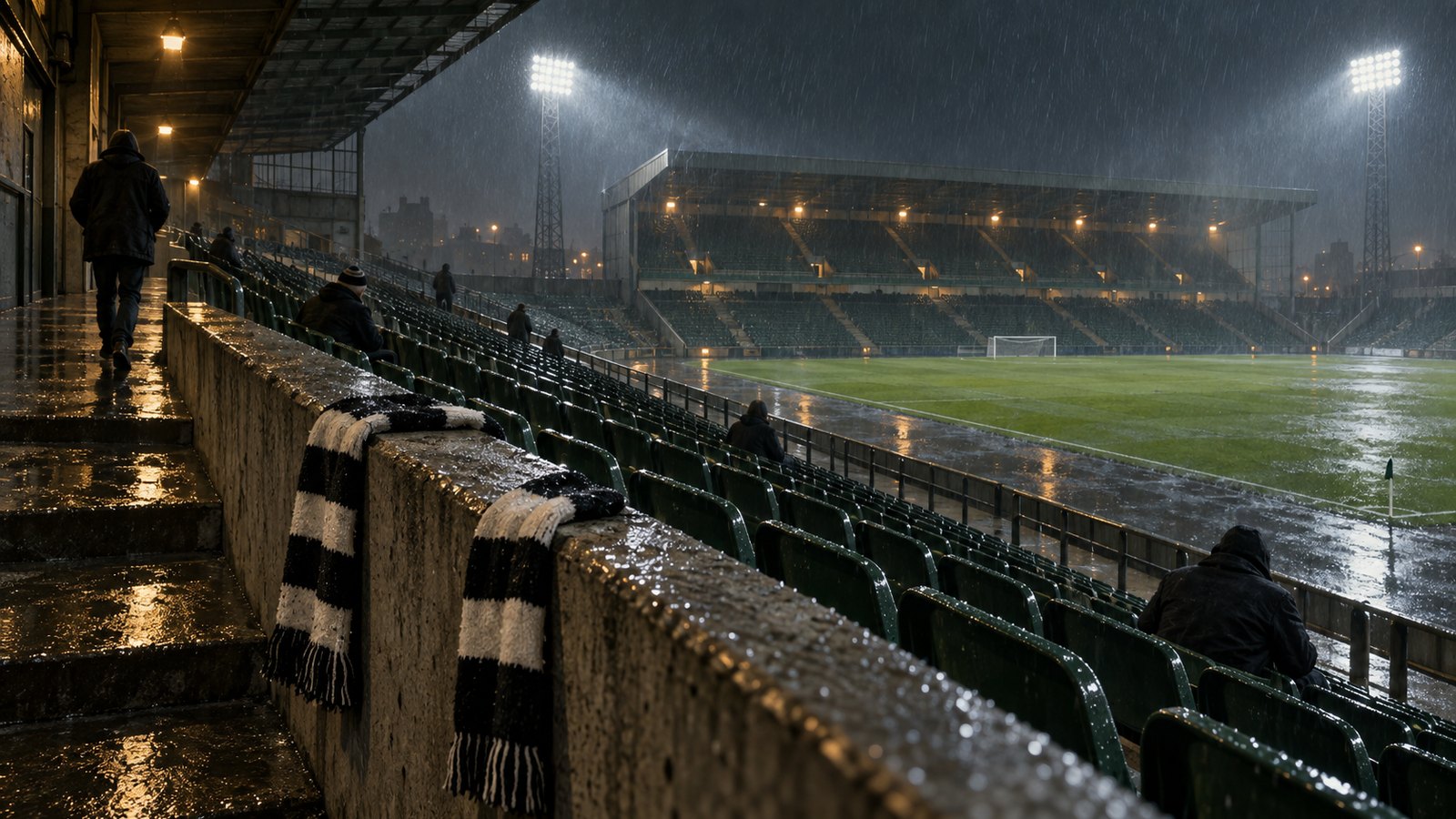
The details of 13 March were brutally domestic. Ten players said they were willing to face Aberdeen. Elliot warned that he could not make unpaid footballers play. The Inland Revenue was pursuing £350,000. Two former managers sought £800,000 and £100,000. An overnight break-in at Raydale had taken football boots and food.
A professional club can make debt sound distant until the equipment cupboard is empty and Saturday’s squad cannot be assembled. Gretna had already reduced its squad in January and borrowed young players from English clubs. Administration then brought a ten-point penalty. League support helped the side complete the season, but completion was survival work rather than recovery.
The contrast with Hampden was only 22 months old. There, a saved penalty had produced an equaliser in front of more than 51,000. Here, the central question was whether eleven insured players could appear at three o’clock. The decline can be measured without metaphor: crowd, cash, contracts, boots, names on a team sheet.
The last buyer needed a division Gretna no longer occupied
By June, one takeover proposal remained. Its plan assumed First Division football. The Scottish Football League instead demoted Gretna to the Third Division, and the prospective purchaser withdrew. Elliot said the club could not guarantee the following season’s fixtures and prepared to market Raydale Park outside football.
The debts were later reported at about £4 million. Yet the decisive shortage was confidence in future income. A buyer could price a known league, crowd and stadium arrangement; Gretna offered uncertainty in all three. Without the benefactor, there was no bridge from the old wage structure to a sustainable one.
The original club disappeared. Supporters formed Gretna 2008, a legally separate successor admitted to the East of Scotland League. That distinction matters. The community preserved a name and a place for football, but it could not retroactively make the 2002–08 structure sound.
Gretna’s promotions remain genuine achievements, just as Grady’s last-minute goal and McGuffie’s Hampden rebound remain real moments. Their speed also concealed a dangerous dependency. The team crossed divisions faster than match-day habits, facilities and decision-making could follow. When one man could no longer cover each week’s gap, three titles offered no protection from the next payroll.
A later Scottish or English collapse may involve different owners, rules and debts. The Ghost Goal’s account of Portsmouth reaching Wembley 78 days after entering administration shows how a cup run can continue while the institution behind it contracts. Gretna’s final months reached a harsher edge: the fixtures were completed, but there was no club left to enter the next one.
Sources
BBC Sport; BBC News; The Guardian and The Observer; Wikipedia’s Gretna F.C. summary, used for the promotion-season goal totals and successor-club outline.