
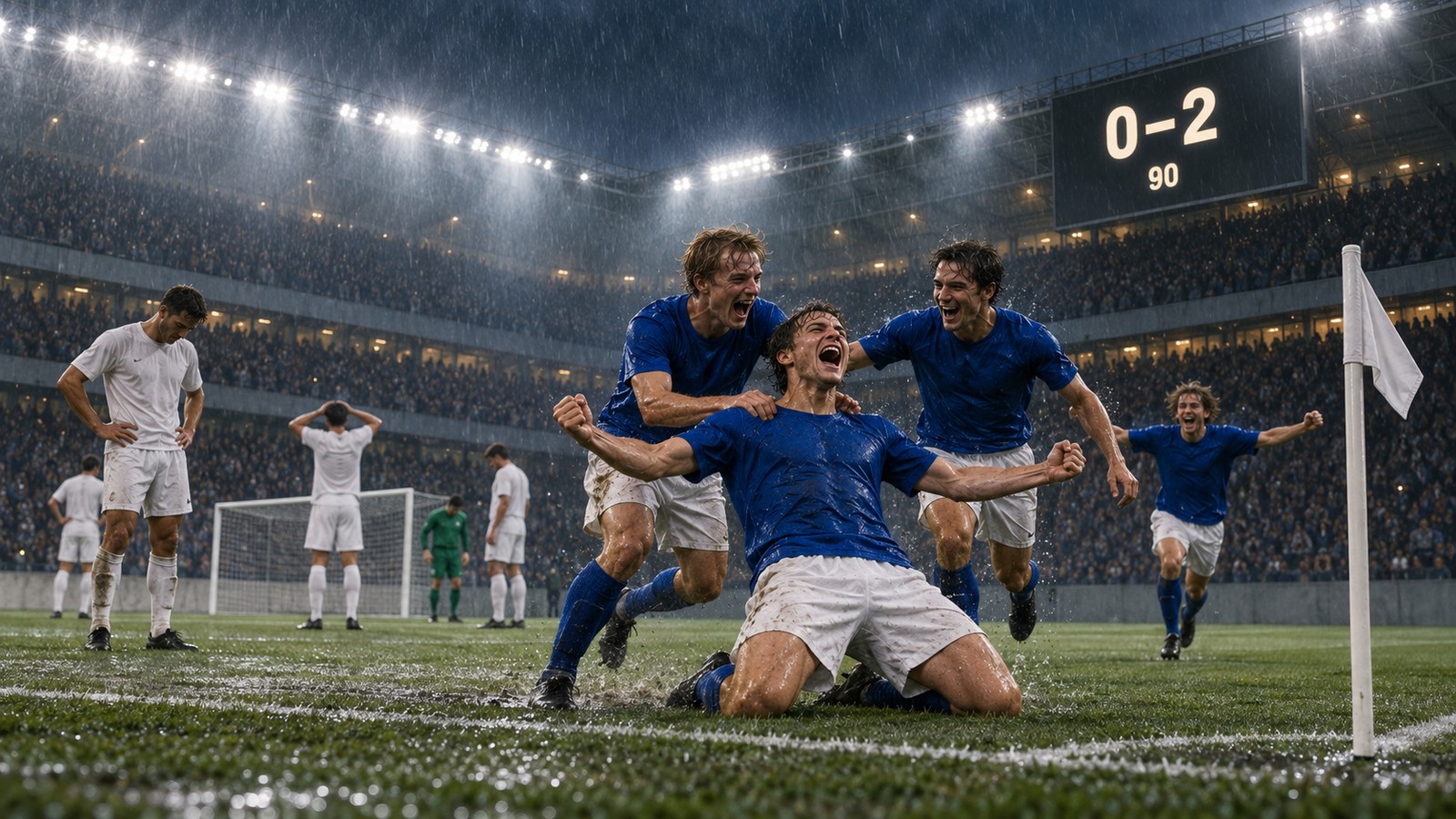
Odense Boldklub reached the Santiago Bernabéu on 6 December 1994 carrying the wrong kind of arithmetic. Real Madrid had won 3–2 in Denmark, so a narrow away victory would not be enough. Odense needed two goals without conceding against a side that included Michael Laudrup and was moving toward the Spanish league title.
The first arrived through Ulrik Pedersen. The second did not come until Morten Bisgaard struck in the 90th minute. Between them stood a long defensive night, repeated interventions from goalkeeper Lars Høgh and the growing sense that one Real Madrid goal would end the attempt.
The result became known in Denmark as the Miracle in Madrid, but its shape was more exact than that name suggests. Odense entered with a defined score to chase, resisted the temptation to spend the entire match attacking recklessly, and kept the tie alive long enough for one final goal to change the aggregate score from elimination to an away-goals victory. The feat depended on the score remaining useful for the entire night, not on one uncontrolled surge.
A late home defeat created a two-goal assignment
Odense had never advanced beyond the first round of a European competition before the 1994–95 UEFA Cup. Its route began against Flora Tallinn with two 3–0 wins. Linfield were held 1–1 away and beaten 5–0 in Denmark. Against Kaiserslautern, a 1–1 draw in Germany and a 0–0 home result sent the Danish club through on away goals.
That progression brought Real Madrid to a sold-out Odense Stadion. The hosts scored from a corner in the first half, briefly giving the tie the atmosphere of an upset already under construction. Real responded with two quick goals after the interval. Odense recovered to make it 2–2, only to concede again shortly before full time.
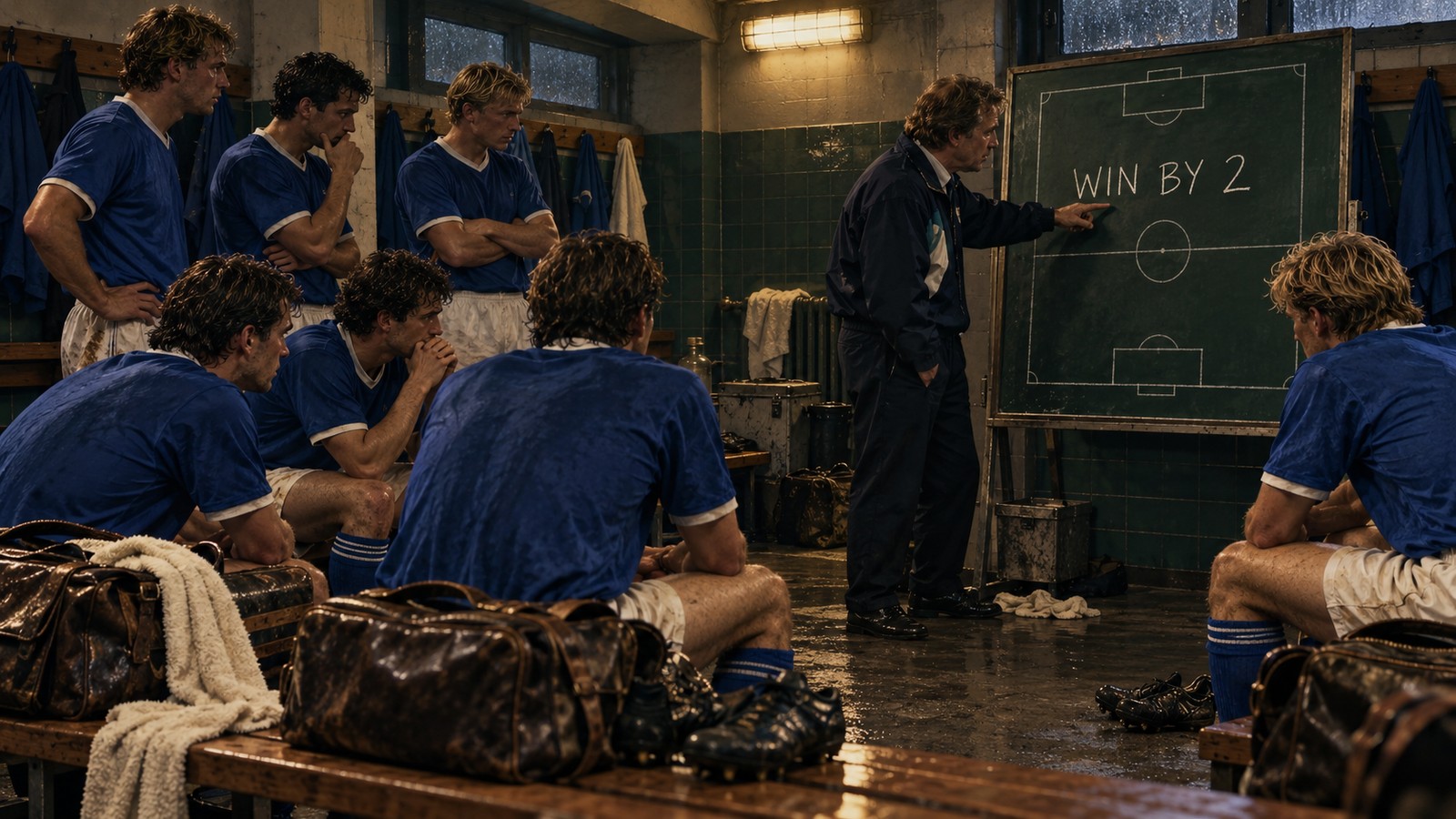
The 3–2 home defeat changed every choice in the return. Because Real had three away goals, Odense could not advance with a 1–0 win and would be eliminated by most one-goal margins. It needed a victory by two. A score such as 4–3 would also have worked on away goals, but planning around that kind of exchange in Madrid would have been reckless.
Real entered as more than a famous name. Jorge Valdano’s side contained Fernando Hierro, Manolo Sanchís, Fernando Redondo, Iván Zamorano and Danish captain Laudrup. It would finish the season as La Liga champion. Odense were trying to overturn a deficit against a team with both prestige and current strength.
Pedersen’s goal made patience possible
A comeback that needs two goals can become frantic before it becomes dangerous. Odense avoided that trap. The visitors protected central space, accepted that Real would have long spells with the ball and looked for moments when the home side’s confidence opened a route forward.
Pedersen supplied the first. His goal moved Odense ahead on the night and reduced the problem to one more clean strike. It did not put the Danish club through. At 1–0, Real still led the tie through the first-leg score. Yet the goal altered the emotional balance because the Bernabéu could now see the exact consequence of another concession.
The scorer was not one of Europe’s established stars. Pedersen was part of a group whose collective record in the competition mattered more than individual fame. Steen Nedergaard had scored twice from distance against Linfield. The side had survived Kaiserslautern through two disciplined draws. Each round had required a different kind of control.
Madrid now required the hardest version. Odense could not retreat completely because the second goal remained necessary. It could not send numbers forward without protection because a Real goal would force the target higher. The match became a negotiation between pursuit and survival.
Lars Høgh kept one goal from becoming irrelevant
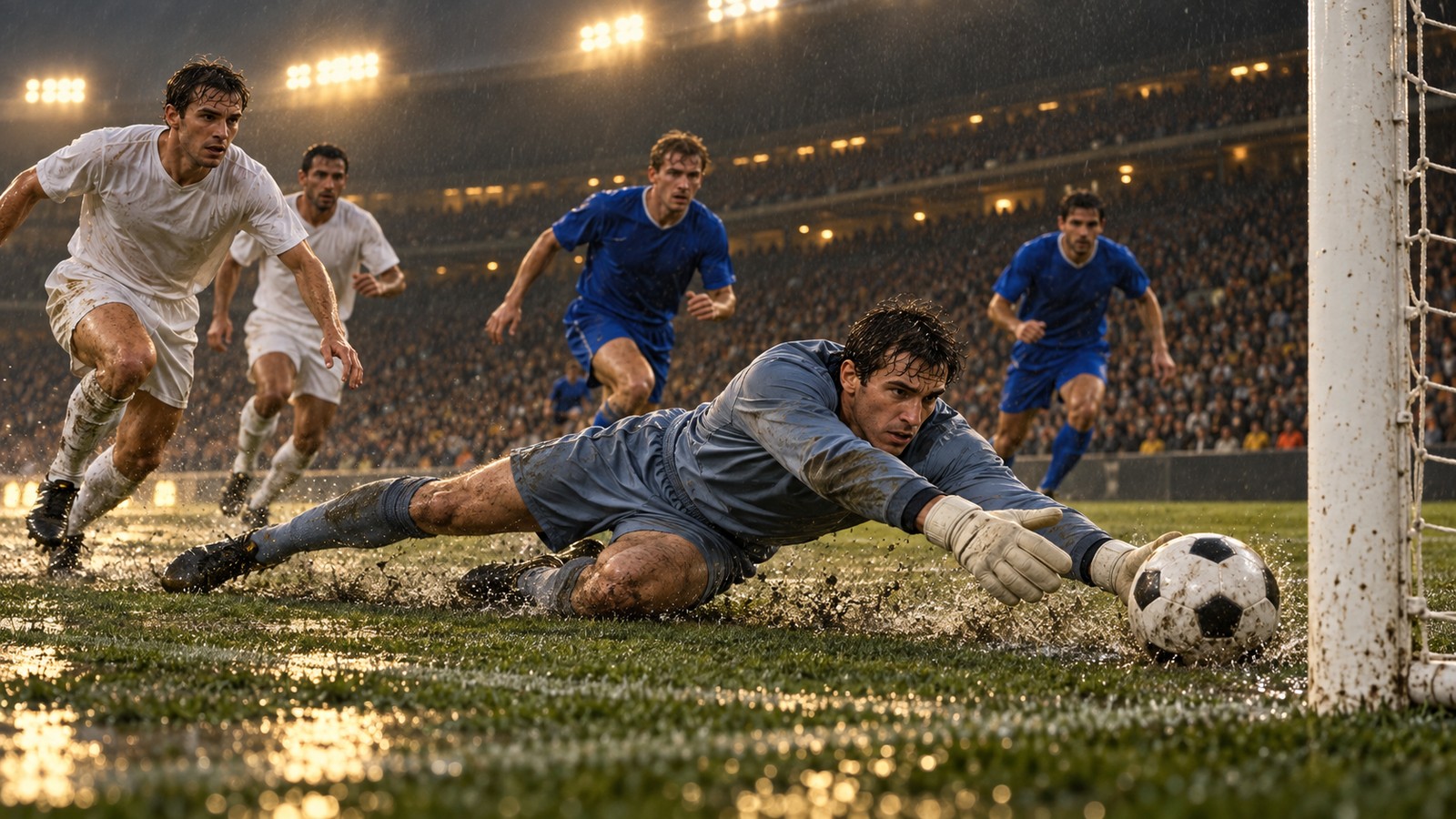
Høgh’s work gave the score meaning. Real created chances, and every save preserved not merely a lead on the night but the possibility of the required aggregate reversal. Had Madrid scored once, Odense would have needed two further goals to advance.
The goalkeeper was already a long-serving figure at the club. In the Bernabéu, his positioning and reactions became the stable point around which the outfield players could continue taking selective risks. The clean sheet meant Pedersen’s goal never lost its leverage.
This was the same competition run in which Odense had already learned to live with narrow margins. The 1–1 draw at Kaiserslautern and 0–0 return had produced advancement through one away goal rather than attacking abundance. Madrid demanded more ambition, but that earlier tie had rehearsed the concentration needed when a single concession could rewrite every calculation.
Real’s names made the resistance feel increasingly fragile. Zamorano would finish the league campaign with 28 goals. Laudrup had arrived from Barcelona and helped Valdano reshape the midfield. Redondo offered control around the ball, while Hierro and Sanchís brought authority behind it. Odense were not waiting out an ordinary favourite.
The clock created a second opponent. A 1–0 win would be historic in isolation and useless in the competition. As the final minutes approached, there was no consolation available in protecting a respectable result. The visitors had to expose themselves at the precise moment Real expected urgency.
Bisgaard supplied the second goal in the 90th minute
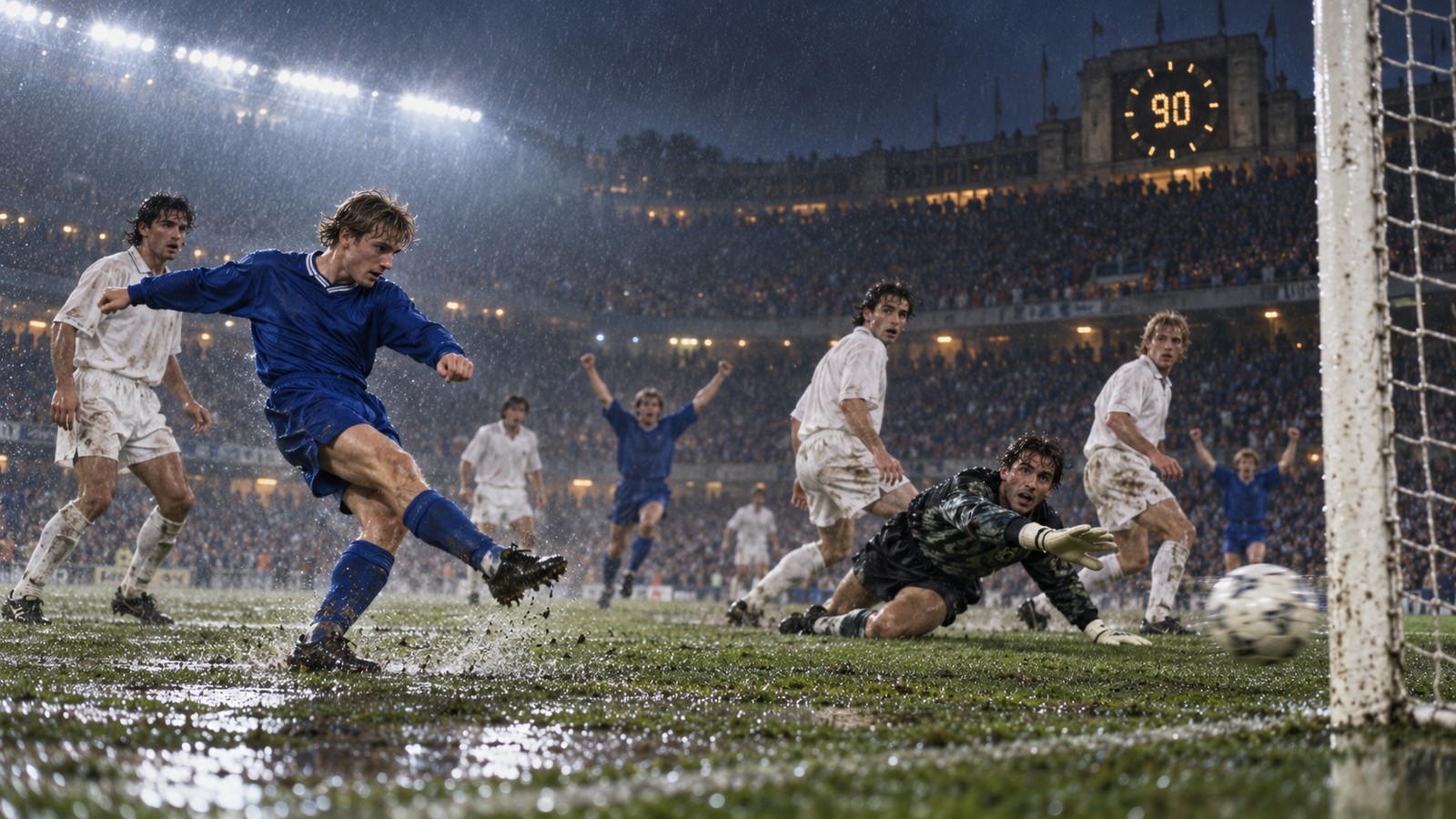
Morten Bisgaard scored the decisive goal in the 90th minute. The tournament record is spare, but its arithmetic is complete: Odense now led 2–0 on the night and 4–3 on aggregate.
The timing gave Real almost no space to turn superiority into recovery. For most of the evening, the Spanish side had lived with the knowledge that 1–0 was insufficient. Bisgaard’s goal reversed that assurance. The third away goal conceded in Denmark no longer protected Madrid; Odense’s two at the Bernabéu now settled the tie.
The goal carried an unusually exact consequence. It did not send the match to extra time or merely improve the appearance of defeat. It completed the only low-scoring victory margin that could take Odense directly into the quarter-final after the 3–2 first leg.
The players still had to survive the final moments, but the match had already changed category. What began as damage limitation after a home defeat had become one of Danish club football’s defining away wins. The term “miracle” attached itself to the location as much as the score: this happened under the floodlights of the Bernabéu.
Parma ended the run without shrinking the achievement
Odense met Parma in the quarter-final. The eventual UEFA Cup winners took the first leg 1–0 through a penalty and held a 0–0 draw in Denmark. The adventure ended without another comeback, but reaching that round had already carried Odense beyond every previous European campaign in the club’s history.
The Madrid result belongs beside other knockout shocks because the underdog understood the mechanism of the tie. It was not enough to play well or win the match. Odense had to manage the away-goals calculation, maintain a clean sheet and find a second goal before time disappeared.
That differs from a comeback built on a burst of scoring, such as Motherwell’s 6–6 recovery against Hibernian. In Madrid, the tension came from scarcity. Every minute preserved the possibility of one more Odense goal while also making its absence more final.
Pedersen changed the mood. Høgh protected the condition. Bisgaard delivered the last required action. Calling it a miracle captures the disbelief, but the score was produced by a sequence of football decisions that remained coherent under pressure. Odense knew exactly what 2–0 meant, and in the 90th minute they finally owned it.
Sources
- RSSSF, European Competitions 1994–95
- Odense Boldklub historical record
- UEFA Cup 1994–95 match record
- Real Madrid 1994–95 season record