
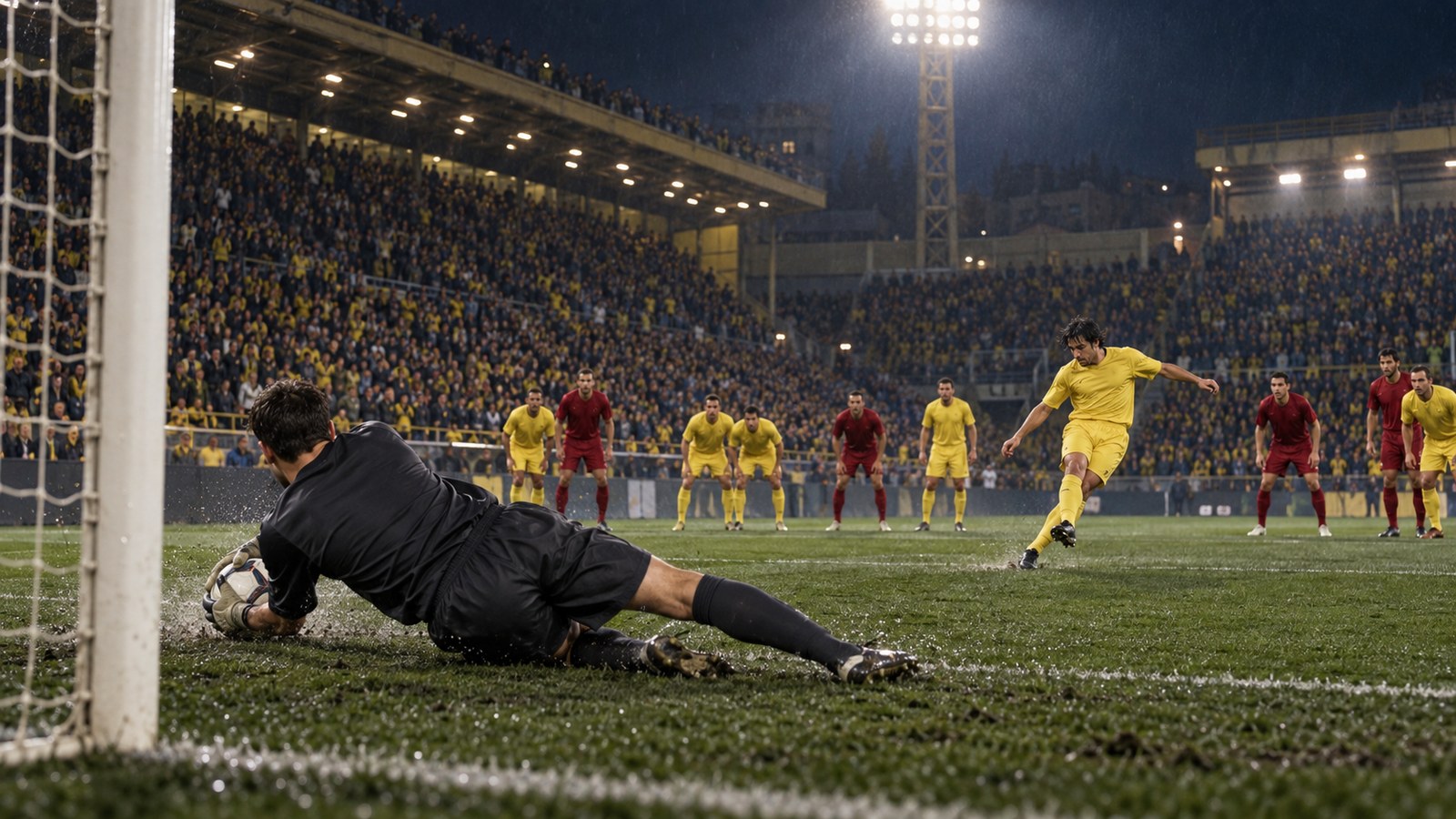
Juan Román Riquelme stood over the ball with Villarreal’s first European Cup final one clean strike away. The clock at El Madrigal had almost run out on 25 April 2006. Arsenal led the semi-final by a single goal from the first leg, yet the second leg had belonged to the hosts: yellow shirts advancing, crosses dropping, chances passing just wide. Gaël Clichy’s late challenge on José Mari finally gave Villarreal a penalty and a route into extra time.
Jens Lehmann waited on his line. Riquelme approached with the measured stride of the player through whom Villarreal’s finest attacks had flowed. His kick went low toward the goalkeeper’s left. Lehmann chose the same side, reached it with both hands and held on. A whole European campaign, built by a club still new to Spain’s top flight, ended in one quiet collision between gloves and ball.
A debut campaign had already crossed unfamiliar ground
Villarreal entered the 2005–06 Champions League as newcomers, not as a decorated continental power. The club had first reached La Liga only in 1998. Riquelme arrived on loan from Barcelona in 2003, helped take the team to a UEFA Cup semi-final in his first season and then formed a productive partnership with Diego Forlán. Villarreal finished third in Spain in 2004–05, high enough to enter the Champions League qualifying rounds.
The route to Arsenal was long. Villarreal beat Everton in qualifying, then topped a group containing Benfica, Lille and Manchester United without losing. Rangers went out on away goals in the round of 16. Inter won the first leg of the quarter-final 2–1 in Milan, but Rodolfo Arruabarrena’s early header at El Madrigal levelled the aggregate score and sent Villarreal through on away goals. By April, Manuel Pellegrini’s side had learned how to make narrow margins serve them.
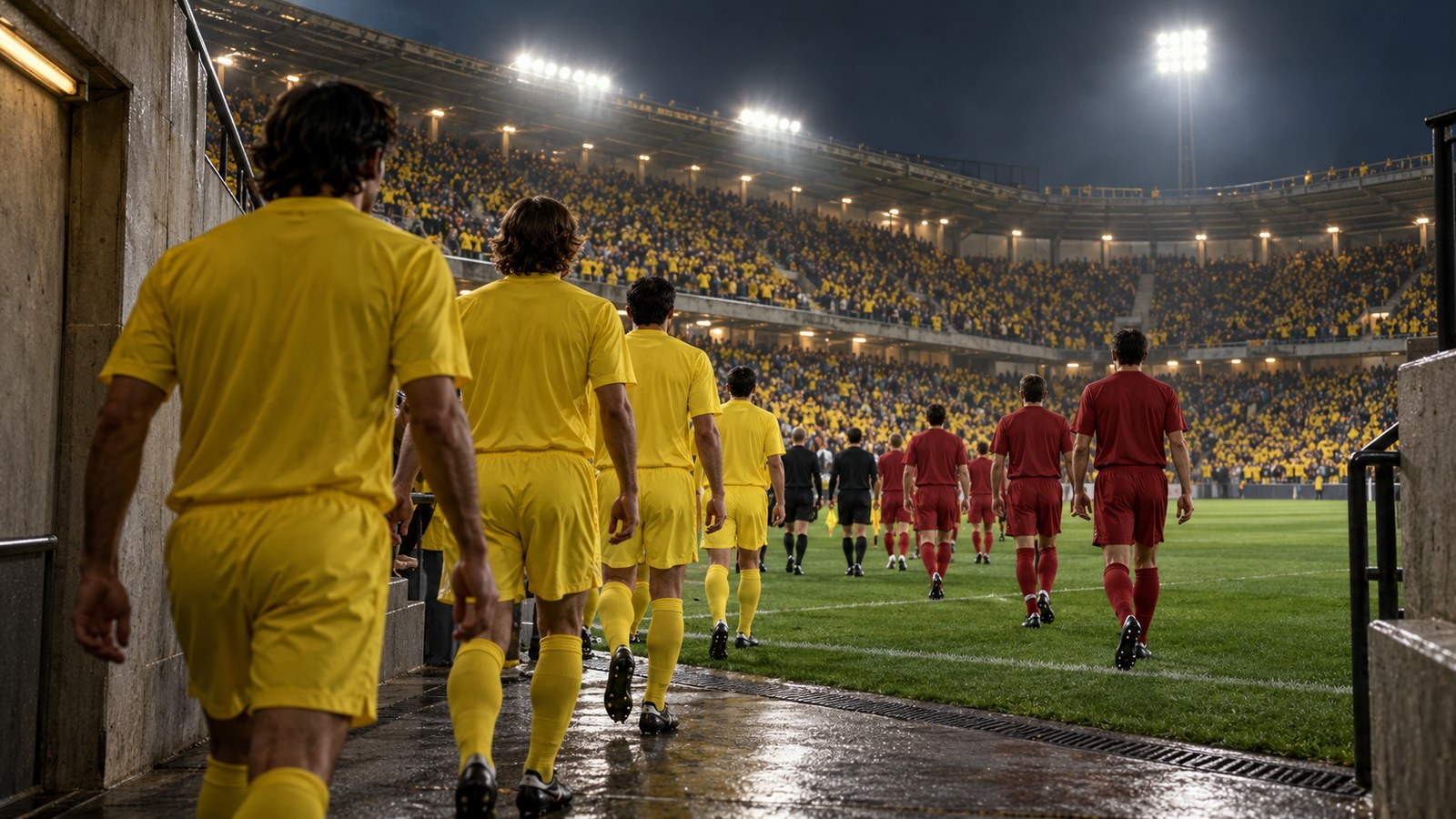
Arsenal arrived with a narrow-margin story of their own. Kolo Touré scored the only goal in the final European match played at Highbury, giving the London club a 1–0 first-leg lead. More imposing than the score was Arsenal’s defensive record. Their goalkeeper had not conceded in the competition since February 2005, and the back line took that run to Spain with one match left between them and Paris.
Villarreal kept forcing the same question
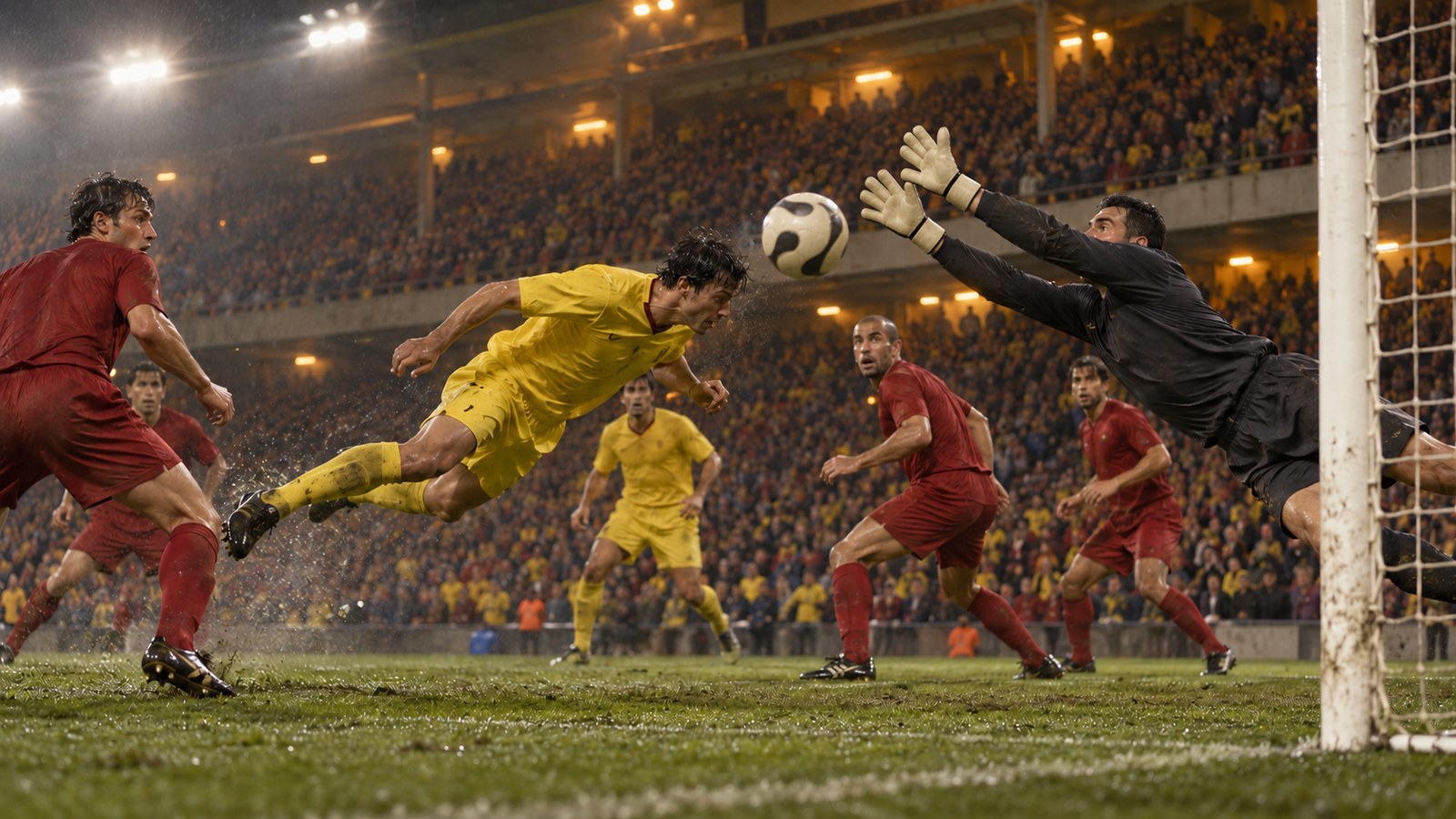
The return leg did not resemble a team calmly protecting control. Villarreal pressed Arsenal toward their penalty area and repeatedly found useful positions around Lehmann. In the 17th minute, Riquelme and Marcos Senna combined to release Juan Pablo Sorín, whose shot went straight at the goalkeeper. Five minutes before half-time, Javi Venta drove in a cross and Guillermo Franco met it with a diving header. Lehmann’s save preserved the aggregate lead.
Arsenal’s evening had already been rearranged. Mathieu Flamini left with a hamstring injury after nine minutes, bringing Clichy into his first competitive appearance since November. Sol Campbell had returned for his first Champions League match in five months. The visitors had experience in defence, but not continuity. Villarreal kept testing the seams with Senna’s delivery, Riquelme’s dead balls and Franco’s movement in the air.
Two minutes after the interval, Franco headed inches wide with Lehmann beaten. He won another aerial duel and missed narrowly again. Forlán then shot wide of an open target after combining with Franco in the 64th minute. Three minutes later, Franco put the ball in the net, only for the flag to rule him offside. Each episode passed without changing the score, while the stadium understood that one Villarreal goal would reopen the tie.
The whistle offered one final route
José Mari entered after 63 minutes as Villarreal searched for another angle. Near the end, he went down under Clichy’s challenge inside the area. The BBC’s contemporary report described the decision as harsh; the referee, Ivan Ivanov, pointed to the spot. The arguments stopped mattering as soon as Riquelme placed the ball.
The choice of taker made sense. Riquelme was Villarreal’s central creator and their leading scorer across the season with 12 goals. His slower tempo could make a crowded pitch appear to wait for him. He had carried the club’s attacks through a campaign in which their first Champions League appearance reached the semi-finals. Now he had to reduce ninety minutes of pressure to a single action.
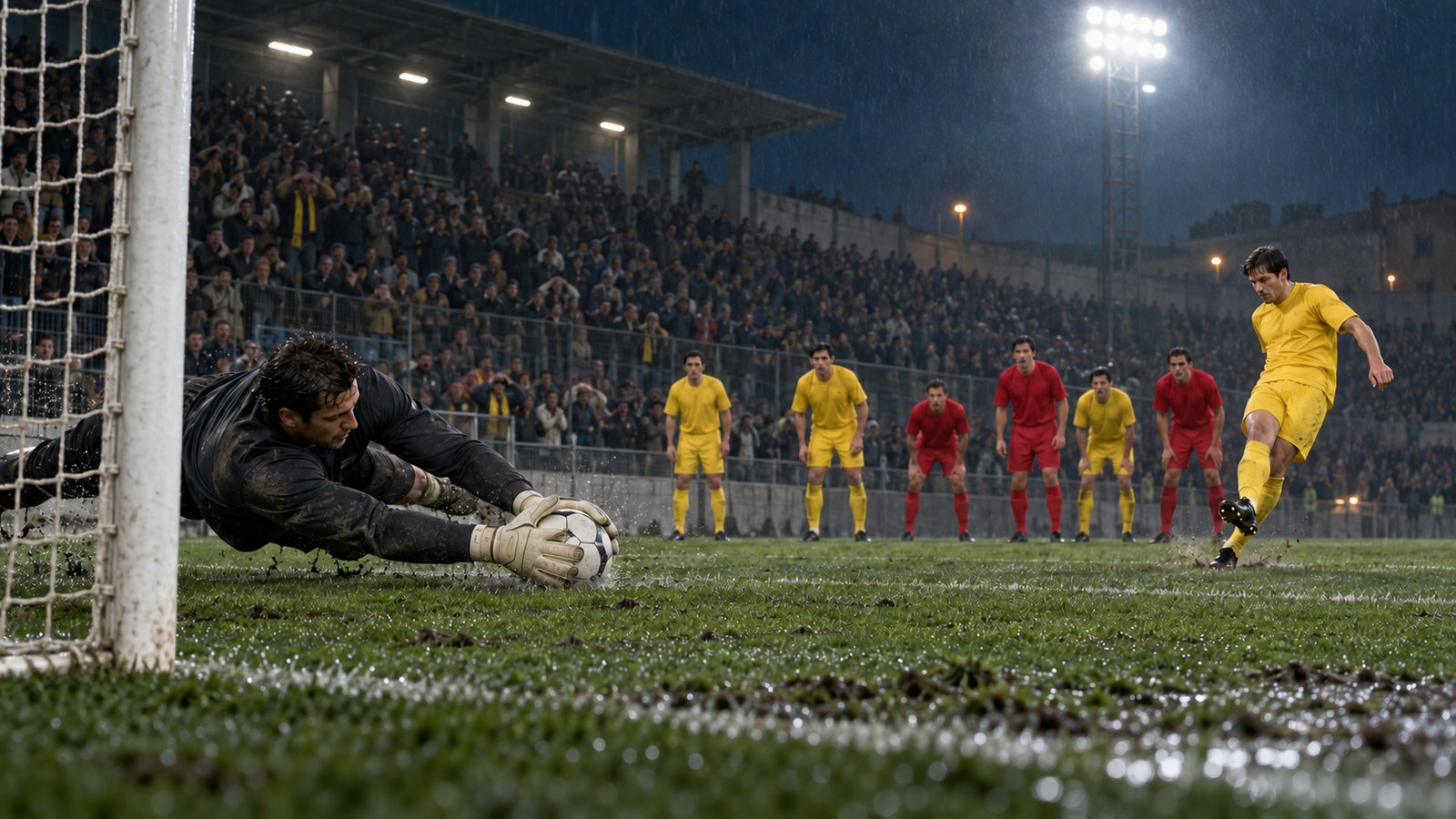
Lehmann did not move early enough to surrender the corner. Riquelme struck left-footed and low. The goalkeeper drove left, put his hands behind the shot and gathered it rather than merely pushing it away. There was no rebound for a yellow shirt to attack. Arsenal’s defenders converged on Lehmann; Riquelme remained near the spot. Seconds later, the aggregate score was still 1–0 and the chance was gone.
The save completed an extraordinary defensive run
Lehmann’s intervention belonged to a larger sequence. Arsenal reached the final without conceding in ten consecutive Champions League matches. Lehmann supplied most of that run and finished with 853 minutes without allowing a goal in the competition, then a record for an individual goalkeeper. Villarreal had produced pressure, headers, a disallowed finish and the last-minute penalty. None crossed his line.
The contrast made the ending sharper. Villarreal had enjoyed the better chances in the second leg and had played the more assertive football. Arsenal advanced through Touré’s first-leg finish, disciplined emergency defending and a goalkeeper who was ready for the final shot. It resembled other European ties in which one physical detail survives longer than the tactical plan—like Saint-Étienne’s two strikes against Hampden’s square posts in 1976—because the detail became the border between a final and a journey home.
Arsenal’s reward was their first European Cup final. Lehmann’s own final lasted only 18 minutes before he was sent off against Barcelona, who came back to win 2–1 in Paris. That later defeat did not erase the route there. The clean sheets against Real Madrid, Juventus and Villarreal remained, with El Madrigal providing the last and most exposed test.
El Madrigal remembered the miss and the arrival
For Villarreal, the penalty became painful partly because the campaign had announced so much. A club in only its sixth consecutive top-flight season had eliminated Rangers and Inter, held Manchester United scoreless twice and pushed Arsenal to the final kick of a semi-final. Domestically, Villarreal finished seventh. In Europe, the team had moved within one goal of extra time and perhaps within 30 minutes of Paris.
Riquelme’s miss can flatten the story if it is treated as a solitary failure. The penalty existed because Villarreal had spent the evening forcing Arsenal backward. It fell to Riquelme because his passing and scoring had helped bring an inexperienced club that far. He did not lose a final that Villarreal had been expected to reach; he took the kick that showed how close their unexpected run had come.
The crowd of 23,000 had watched the home side create enough danger to believe the breakthrough was due. Sorín’s early effort, Franco’s headers and Forlán’s open sight of goal had all kept that belief alive. The penalty therefore felt less like a surprise than a delayed settlement. Football offered no such accounting. Arsenal carried the first leg’s only goal into the final whistle because every Villarreal chance still required one final, exact touch.
Lehmann’s save supplied the opposite image: preparation expressed as an instant decision. He had dealt with Franco’s header, watched Forlán miss and protected a patched defence through sustained pressure. When the ball finally sat still, he read the strike correctly and removed the possibility of a second attempt. The most dramatic moment of Villarreal’s debut Champions League season contained no goal at all—only a low shot, a dive to the left and the sound of an opportunity closing.
Sources
- BBC Sport, “Villarreal 0–0 Arsenal (agg 0–1)”
- UEFA Champions League match record, Villarreal 0–0 Arsenal, 25 April 2006
- UEFA, “Riquelme: Villarreal’s mercurial talent”
- Arsenal, Jens Lehmann archive interview
- Wikipedia, 2005–06 Villarreal CF season and 2005–06 UEFA Champions League