
Richard Møller Nielsen had planned to decorate a kitchen in June 1992. Denmark had failed to qualify for the European Championship, so the national-team coach possessed something tournament managers rarely receive: an ordinary summer. Then Yugoslavia was barred amid the Balkan conflict, Denmark was invited into the eight-team finals, and the decorating could wait.
The notice was brutally short. UEFA’s history describes two weeks of preparation; the BBC says the formal call left just over a week. The Danish domestic season ended five days before the opening match, and players arrived from league duty or interrupted holidays. Less than a month after the invitation, they had beaten the defending European champions and the reigning world champions.
The familiar version turns that sequence into a holiday miracle. The surprise is real, but the shorthand hides what made the surprise possible. Denmark arrived late, not blank. A connected core, a narrow tactical vocabulary and a tournament with no spare rounds allowed an underprepared squad to become unusually clear about each next task.
The invitation reopened a finished campaign
Denmark had placed second to Yugoslavia in qualification. That ordinarily meant elimination, and the players’ plans reflected it. The political decision that removed Yugoslavia did more than change the participant list. It restored a competitive route Denmark had already watched close.
Michael Laudrup, the country’s most celebrated playmaker, did not return after a disagreement with Møller Nielsen. The late call therefore produced no perfect reunion. The squad crossed to Sweden without its brightest individual attacker and without the long camp normally used to rehearse a tournament. Henrik Larsen later remembered taking the ferry on a Monday, doing some light training and treating the base with an informality he compared to a comic holiday camp.
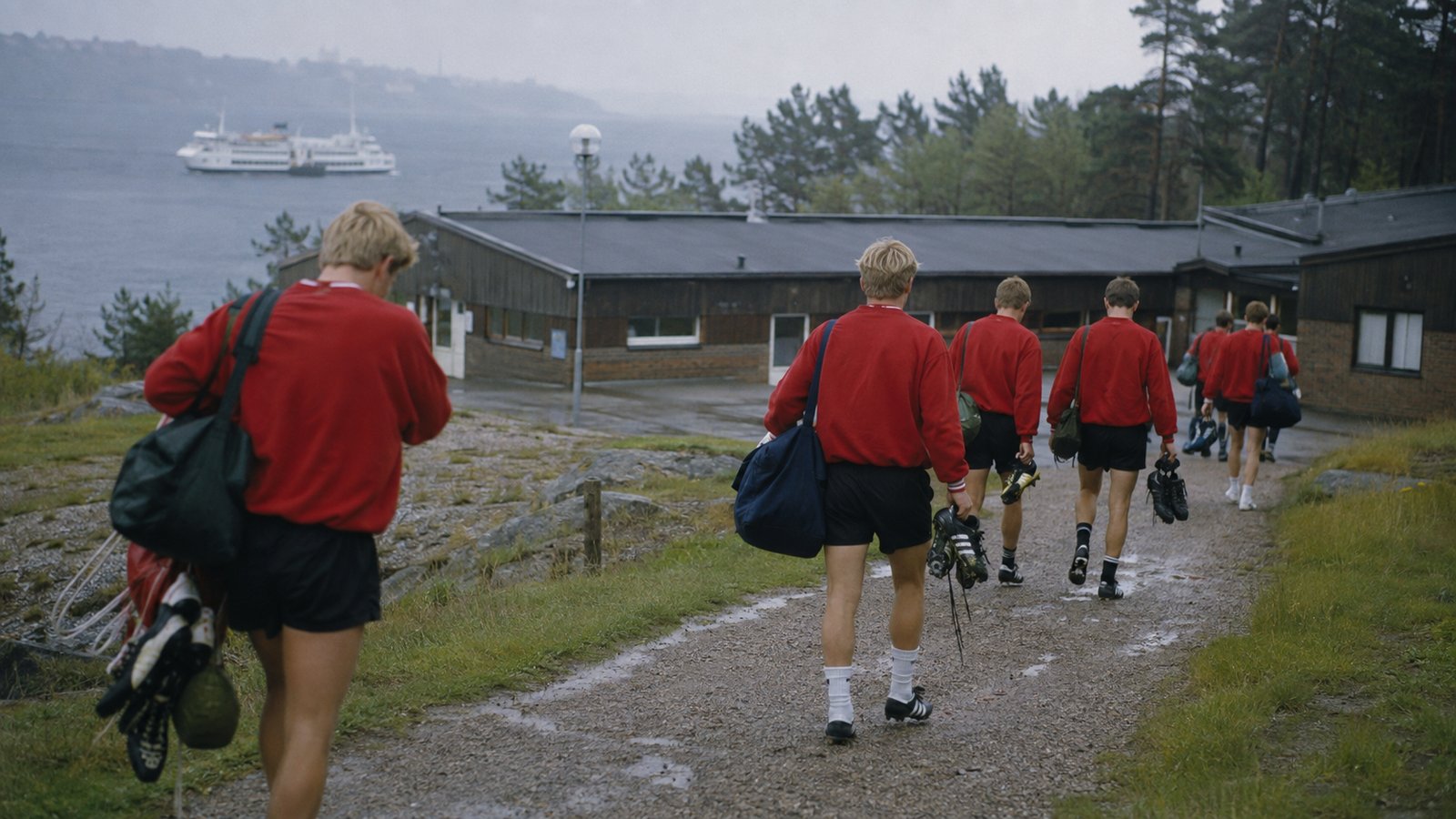
That informality was not the same as ignorance. Kim Vilfort told the BBC there had been talk that Denmark might be called, and a match against the Commonwealth of Independent States had already been arranged for the week before the finals. The players were surprised by the opening, but they were not strangers being introduced in a car park.
A Brøndby core reduced the preparation problem
Ten members of the squad played for or had previously played for Brøndby. The club had reached the UEFA Cup semi-finals in 1991, so a substantial part of Denmark’s group shared recent experience of high-pressure European football. Others had come through national youth and Olympic teams together. Short preparation mattered less when basic references—distances, reactions, personalities—did not need to be invented.
This was not a hidden collection of superior individuals. Vilfort’s explanation was almost the reverse: Denmark did not have the best players, he said, but it had the best team. Familiarity reduced the number of decisions that required discussion. Under pressure, a teammate’s movement could be recognized rather than negotiated.
That distinction matters because the emergency was mostly about time. Denmark could not manufacture weeks of tactical instruction after the invitation, but it could draw on relationships formed before the national squad assembled. Brøndby’s European run had already tested many of those relationships against unfamiliar opponents. International football supplied a different shirt and setting, not an entirely new language.
Møller Nielsen therefore did not need to create a dazzling replacement for Laudrup in a handful of sessions. He needed a shape in which the available players could recognize danger quickly, support Schmeichel and carry limited attacks far enough to matter. Familiarity did not remove fatigue or uncertainty. It made the few training days more efficient.
The setup also changed the emotional calculation. Denmark carried almost no public expectation. Vilfort remembered believing that even three heavy defeats would not be treated as a disgrace. That freedom did not win matches automatically. It removed one kind of fear while the squad tried to compensate for absent preparation with compact, collective work.
The group became a sequence of shrinking doors
Denmark opened with a 0–0 draw against England. A 1–0 defeat by hosts Sweden followed. After two matches, the romantic replacement story looked ready to end in the group, which is where most late invitations would be expected to finish.
The first two results also prevented the team from settling for a respectable appearance. A draw had shown it could stay in a game; defeat showed that compactness alone would not advance it. Against France, Denmark had to connect its defensive security to enough forward risk to score. The requirement simplified selection and intention at precisely the moment when hesitation could have ended the trip.
The last fixture changed the tournament’s emotional tempo. Denmark needed to beat France and did so 2–1, with Larsen and Lars Elstrup scoring. Vilfort missed the match because he was visiting his seven-year-old daughter Line, who was receiving treatment for leukaemia. She died after the tournament. The fact sits uneasily beside any uncomplicated fairy-tale language; one player was moving between the largest sporting opportunity of his career and a private reality much heavier than football.
The victory eliminated France and sent Denmark through as runner-up. In an eight-team championship there was no round of 16 or quarter-final to absorb momentum. One group result placed Denmark directly against the Netherlands, the 1988 champions. The tournament’s small shape turned a single opening into immediate proximity to the final.
One saved penalty removed the holders
Larsen scored twice in the semi-final, but Frank Rijkaard’s late equalizer made it 2–2 and carried the match through scoreless extra time. The shootout placed Peter Schmeichel opposite a Dutch team with Marco van Basten, whose volley had defined the previous European Championship.
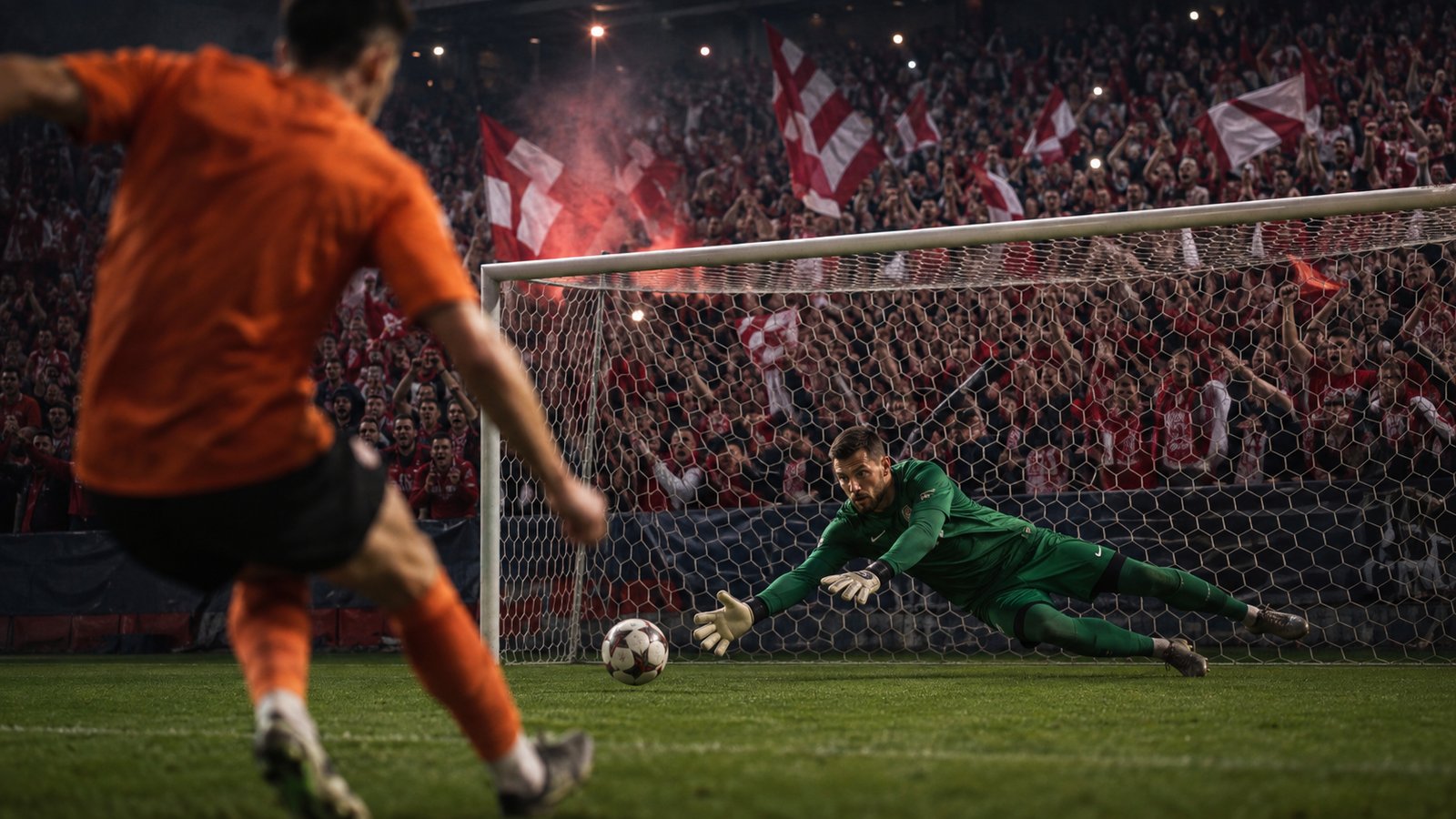
Schmeichel dived low to his left and stopped Van Basten’s kick. It proved to be the only miss. Kim Christofte converted the final Danish penalty, and the late replacements had removed the holders. The episode resembles other compressed tournament reversals, including Portugal’s recovery from three goals down in 1966, but Denmark’s turn was distributed across an entire bracket: one required group win, one shootout intervention, then one final.
The semi-final also clarified Denmark’s strongest version of itself. It could concede territory and survive pressure without becoming passive. It could attack through a few decisive movements rather than continuous control. Each round reduced the tactical argument to actions the group already trusted. That economy mattered more than novelty: every player could spend attention on the opponent instead of decoding a fresh national-team plan.
Germany found red shirts half a yard away
World champions Germany dominated the opening part of the final in Gothenburg. Schmeichel saved from Karl-Heinz Riedle, Stefan Reuter and Guido Buchwald. Then Denmark’s first clear chance reached John Jensen near the right edge of the area. Jensen had scored only once in his first 48 internationals. After 18 minutes, he struck Denmark ahead.
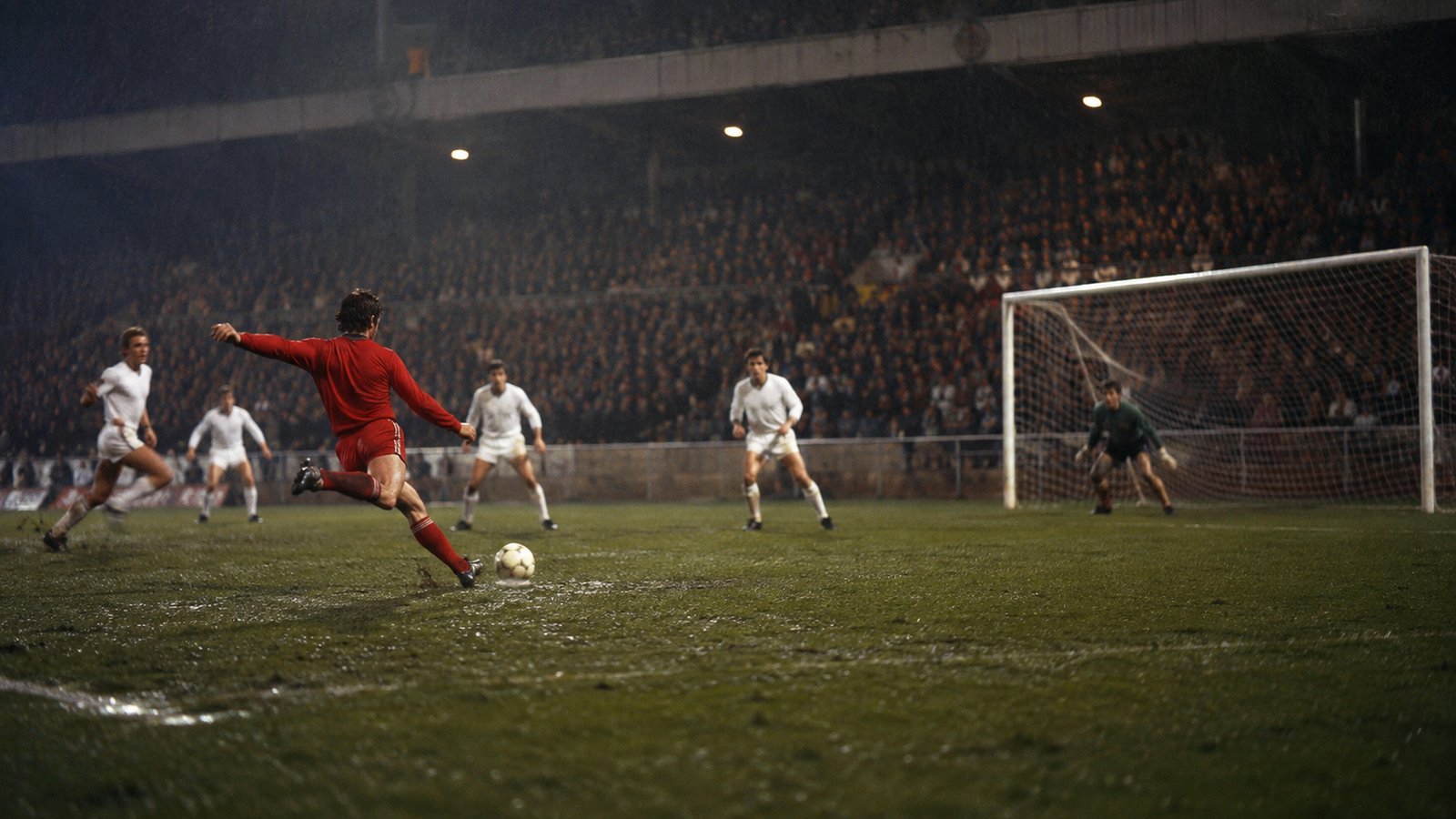
The goal gave the underdog something concrete to defend, but the method was active. Larsen later recalled German players saying that Denmark remained within half a yard, chasing and closing repeatedly. The relaxed camp did not produce relaxed marking. Social ease away from the pitch supported collective intensity on it.
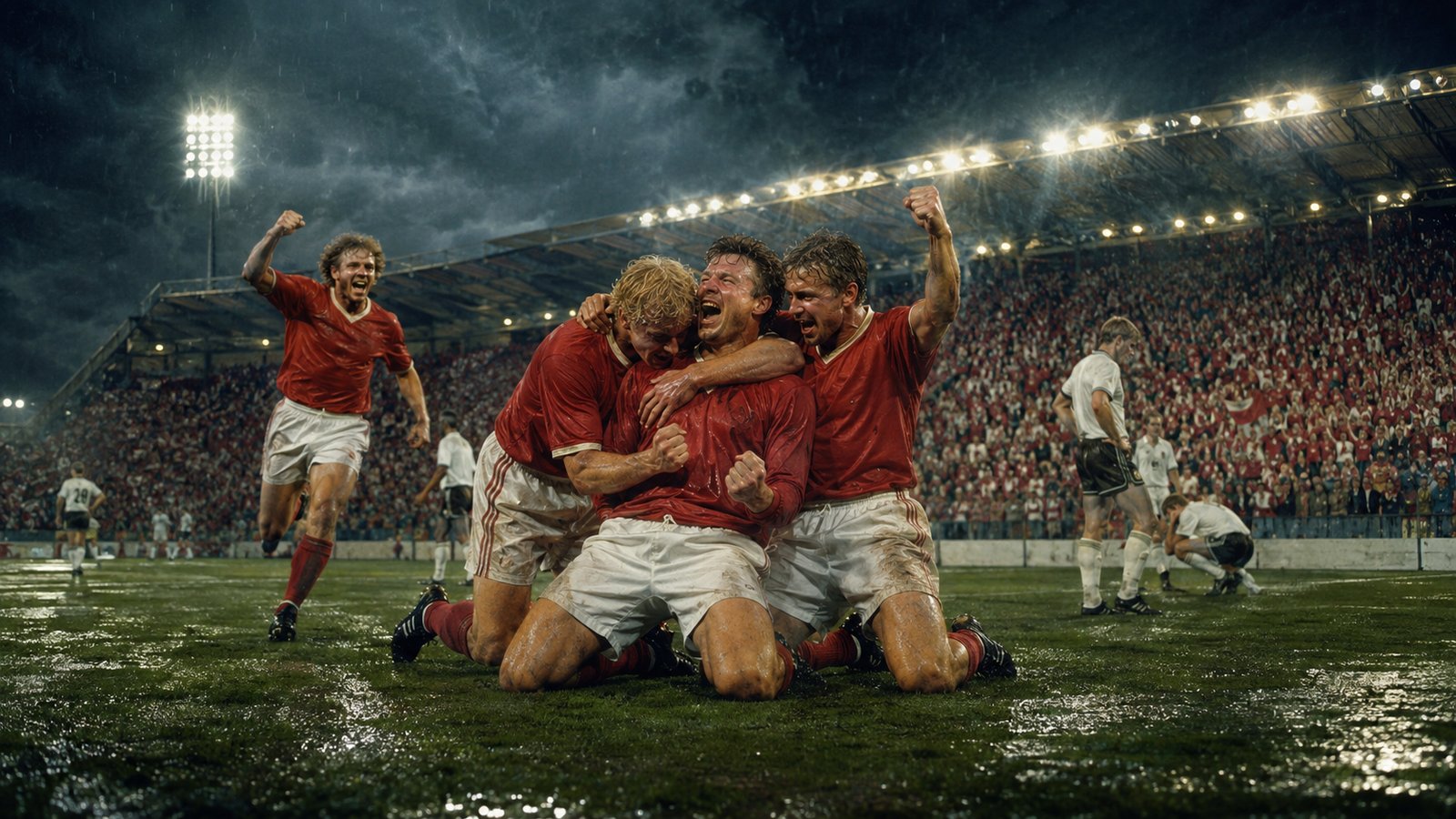
With 11 minutes remaining, Vilfort moved to the edge of the box, passed two challenges and drove the ball in off the post. Denmark won 2–0. His teammates piled over him, bringing the public triumph and his private grief into the same frame without allowing one to explain the other.
Denmark’s title does not need the myth that an unprepared group simply left beaches and improvised its way across Europe. The stronger account is more useful. The invitation created possibility; a shared club core shortened communication; low expectation loosened the players; and an unusually compact tournament rewarded a team capable of treating each narrowing route as a complete assignment. The kitchen could wait because the squad already knew enough about one another to begin.
Sources
UEFA, “Denmark late show steals spotlight”; BBC Sport, “Euro 1992: Denmark’s fairytale”; The Guardian, “Beers and beating Germany: Henrik Larsen on Denmark’s Euro 92 triumph.”