
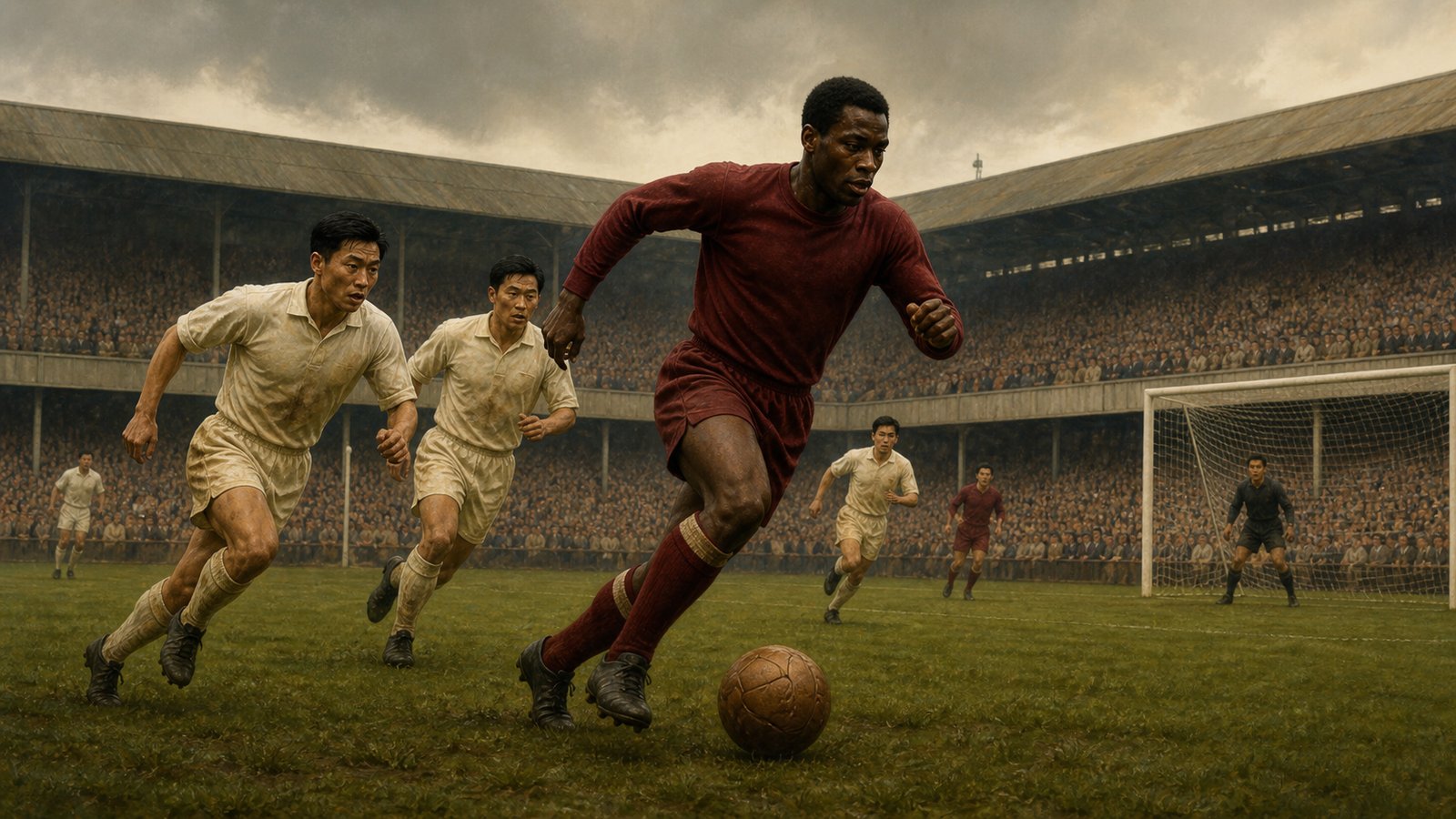
Goodison Park had barely settled when Park Seung-zin struck after 55 seconds. By the 24th minute, North Korea led Portugal 3–0. A World Cup debutant that had already eliminated Italy was one goal away from making the quarter-final feel absurdly simple.
The next 35 minutes reversed everything. Eusébio scored four times, twice from the penalty spot, and Portugal moved from three goals down to 4–3 ahead. José Augusto later made it 5–3. The scoreline is famous; the speed of its changes is more revealing. This was not a long siege followed by a late escape. It was a match that changed its apparent owner every few minutes.
Portugal entered 23 July 1966 unbeaten and had beaten Brazil 3-1 four days earlier. North Korea arrived from Middlesbrough with a victory over Italy and no reason to treat a celebrated opponent as untouchable.
Three North Korean goals arrived before Portugal could reset
The first attack established the tone. Park Seung-zin, North Korea’s captain, scored after 55 seconds. Portugal had not yet been given time to settle into the patient combinations that had carried them through a perfect group stage. They were chasing almost immediately.
The lead remained narrow for twenty minutes, then expanded with startling speed. Lee Dong-woon scored in the 22nd minute. Yang Seung-kook added another in the 24th. North Korea had moved from 1–0 to 3–0 in roughly two minutes, and each new restart forced Portugal to confront a different match.
North Korea’s place in the quarter-final was already substantial history. They had drawn with Chile, lost to the Soviet Union and then beaten Italy 1–0 at Ayresome Park. Park Doo-ik’s 41st-minute goal in that match had taken the debutants through as group runners-up. The result was no ceremonial invitation to face Portugal. It had been earned against one of Europe’s established powers.
At Goodison, the same willingness to attack removed any sense that the Italian result had been a single defensive accident. Park Seung-zin, Lee Dong-woon and Yang Seung-kook were three different scorers. The advantage came from repeated entries into danger, not one isolated break followed by retreat.
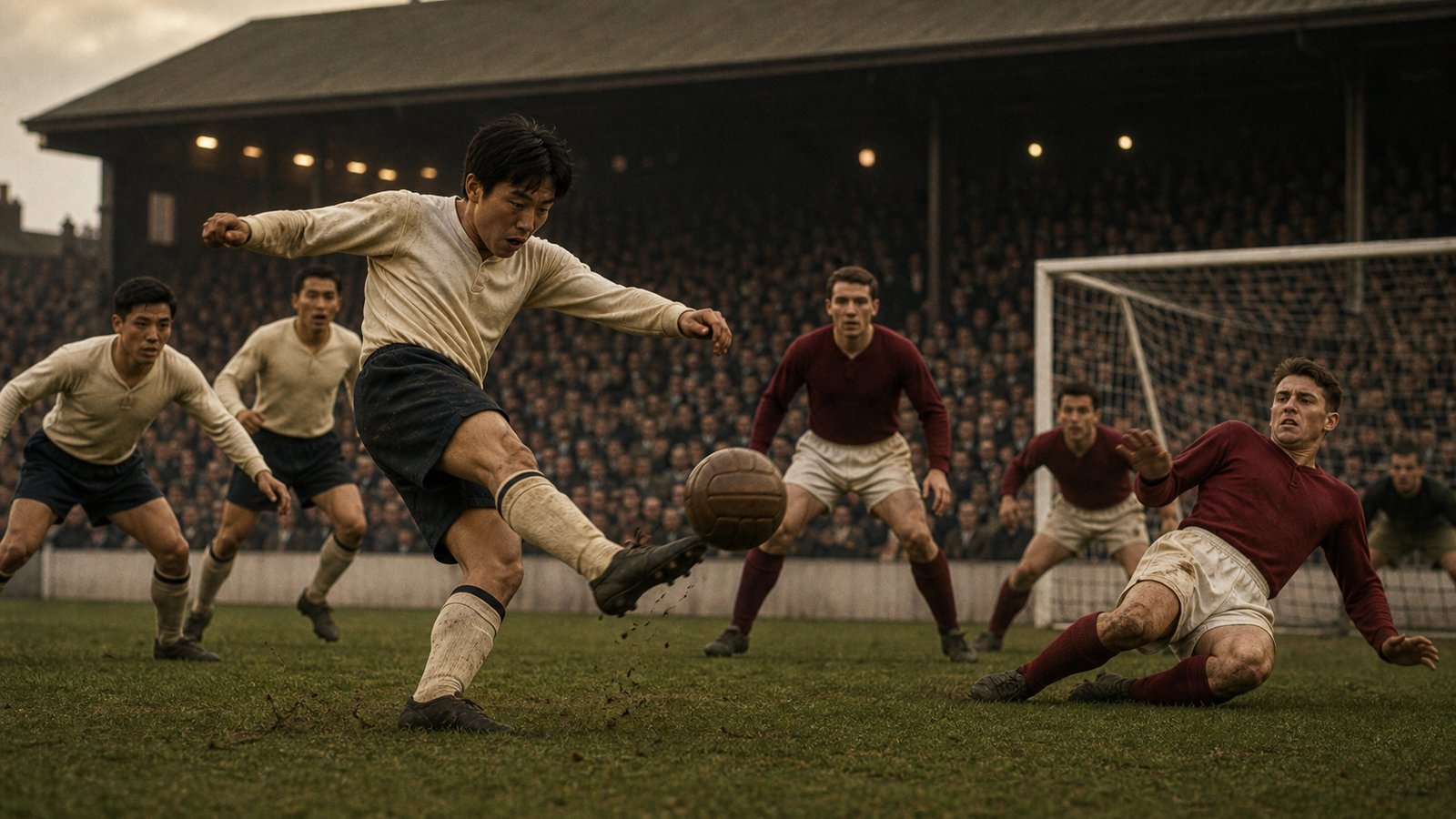
Eusébio’s first answer came before the shock could harden
Portugal’s most important response was not the equalizer. It was the first goal, scored by Eusébio in the 27th minute. Only three minutes had passed since Yang made it 3–0. North Korea were denied the quiet interval in which a huge lead can become a defensive plan.
Eusébio’s position in the side mattered. Portugal did not need to manufacture a new source of threat under pressure. José Augusto and António Simões worked from the wider attacking positions, José Torres occupied the front line, and captain Mário Coluna connected the midfield. The player capable of turning one opening into a shot was already central to the design.
The score stayed 3–1 until late in the half. In the 42nd minute, Eusébio converted a penalty. Portugal still went into the interval behind, but 3–2 carried a completely different pressure from 3–0. North Korea’s achievement remained visible on the board, while the margin protecting it had almost disappeared.
That sequence also prevents the comeback from being reduced to a single burst after the break. Portugal had already repaired two-thirds of the deficit before half-time. The recovery was underway while the memory of North Korea’s third goal was still fresh.
Four goals in 32 minutes changed the tournament’s leading figure
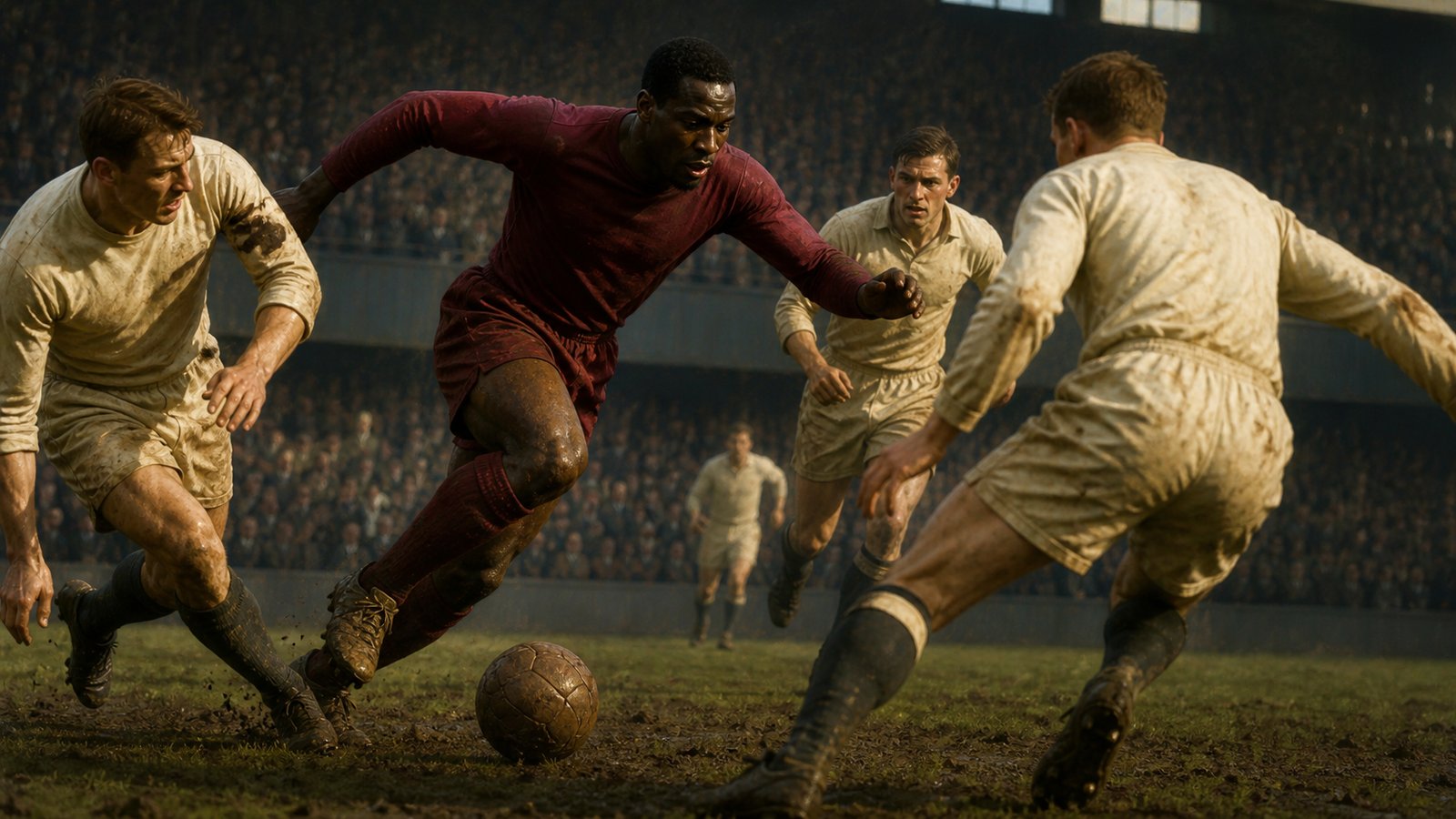
Eusébio equalized in the 57th minute. Two minutes later he converted another penalty. From his first goal in the 27th minute to his fourth in the 59th, only 32 minutes had elapsed. Portugal had gone from apparent elimination to a 4–3 lead.
The two penalties required the same final act under mounting pressure. The open-play goals had already shown that Portugal could reach the area in other ways.
Eusébio had arrived at the quarter-final with four tournament goals. He had scored against Bulgaria and twice against Brazil, helping Portugal win all three matches in a group that also contained Hungary. His four at Goodison took him to eight. He would finish the World Cup with nine and the tournament’s top-scorer distinction.
Statistics can flatten the emotional shape of a performance. “Four goals” sounds like a total assembled across a comfortable afternoon. Here each goal changed the survival conditions. The first kept Portugal within sight. The second made the interval useful. The third erased the deficit. The fourth put North Korea in pursuit for the first time.
José Augusto closed a match that never became cautious
There were still more than 30 minutes to play when Portugal took the lead. A one-goal margin could not turn the remaining time into administration, especially after the afternoon had already produced seven goals. North Korea had shown how quickly a score could move; Portugal had just demonstrated the same thing in the opposite direction.
José Augusto supplied the final goal in the 79th minute, heading in to make it 5–3. It was the only Portuguese goal of the five not scored by Eusébio, and it finally gave the comeback a margin that matched its authority.
The line-ups show how much of the match belonged to collective tournament stories as well as one star. Portugal’s side included goalkeeper José Pereira, defenders such as Vicente and Hilário, Coluna in command, and an attack with Augusto, Eusébio, Torres and Simões. North Korea fielded Lee Chan-myung in goal, captain Park Seung-zin, Park Doo-ik and the two later scorers Lee Dong-woon and Yang Seung-kook.
North Korea did not leave the record as anonymous opposition. Three of their players had scored before Portugal’s recovery began, and Park Doo-ik’s winner against Italy remained one of the tournament’s decisive group-stage moments. Their quarter-final ended in defeat, but reaching it had already moved an Asian debutant further than any previous Asian side in the men’s competition.
The comeback carried Portugal further, but not to the final
Portugal’s reward was a 26 July 1966 semi-final against England at Wembley. Bobby Charlton scored in each half before Eusébio converted an 82nd-minute penalty. England won 2-1 and continued toward the title. Portugal then beat the Soviet Union 2-1 in the third-place match.
Third place remains Portugal’s best men’s World Cup finish. Yet the quarter-final is the performance that most clearly explains how they reached it. The team had the attacking capacity to survive an extreme game state, and its leading scorer could keep finishing while the meaning of each chance grew heavier.
North Korea’s exit has its own double edge. A 5–3 defeat after leading by three can be remembered as a collapse, but that description begins too late. The side had qualified by defeating Italy, then scored three times against the eventual third-place team in 24 minutes. The comeback became extraordinary because the lead was real, fast and deserved.
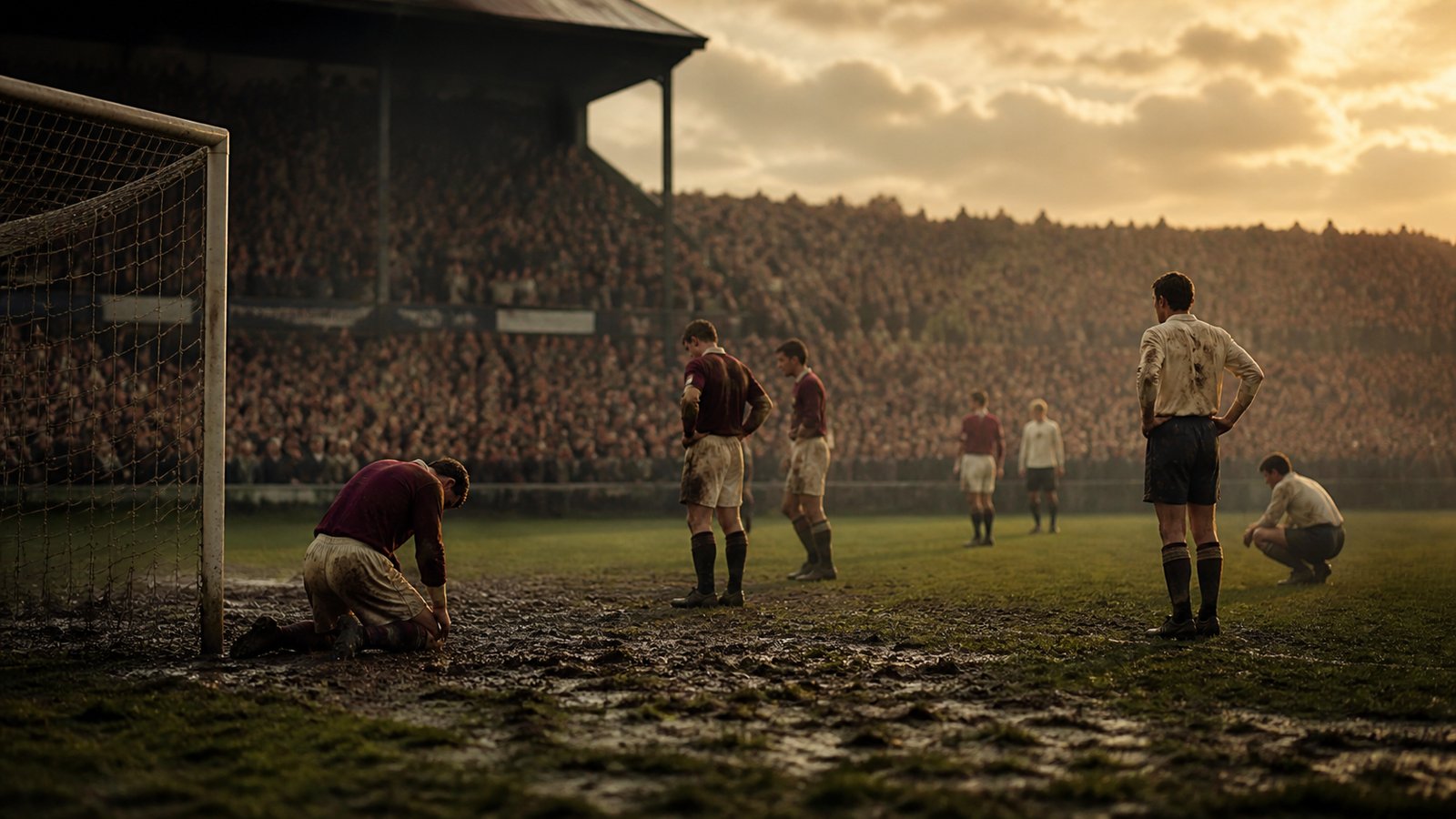
Goodison’s scoreboard preserved both sides of the story
The final sequence is still difficult to absorb when written as minutes: 1, 22, 24, 27, 42, 57, 59, 79. Three North Korean goals came first. Four Eusébio goals followed. Augusto supplied the last one.
Those numbers describe a reversal, but not a simple transfer of control. North Korea’s opening was too forceful to become merely the setup for somebody else’s legend. Portugal’s response was too sustained to be dismissed as panic. One team created a 3–0 quarter-final lead; the other found five answers without waiting for extra time.
The sharpest point came between the 24th and 27th minutes. Had Portugal spent longer at 3–0 down, North Korea might have been able to slow the rhythm and make every possession expensive. Eusébio’s first goal interrupted that possibility. From then on, the score kept changing before either side could make it feel permanent.
At the whistle, Portugal had won 5–3 in front of roughly 40,000 spectators. Eight goals had filled 79 minutes, but the match’s central transformation occupied only 35: from Yang’s goal for 3–0 to Eusébio’s second penalty for 4–3. Goodison had not watched a favorite calmly restore order. It had watched order disappear, return, and change shirts.
Sources
- Rec.Sport.Soccer Statistics Foundation
- FIFA tournament retrospective
- 1966 FIFA World Cup tournament overview