
The penalty had already been saved once. At Woking’s Kingfield ground on 15 April 2006, Justin Richards placed the ball again after the referee ordered a retake, and Accrington Stanley’s 19-year-old goalkeeper Robert Elliott faced the same danger twice. Elliott stopped the second kick and then blocked the follow-up. Around him, a narrow 1–0 lead survived into the final minutes while nearly 1,000 traveling supporters waited for a result that had been missing since 1962.
The goal at the other end had hardly been clean. Gary Roberts rolled a free kick toward Mark Boyd in the 38th minute. Boyd’s attempt was drifting wide before Paul Mullin supplied the deflection that carried it inside the post. A club whose return had required decades of deliberate rebuilding reached the Football League through the sort of untidy touch that can redirect an afternoon.
That contrast gives the day its shape. The final match was nervous and accidental; the climb behind it was neither. Accrington’s name survived insolvency, disappearance and ridicule because different generations kept solving the unglamorous problem immediately in front of them.
A resignation letter closed the first version
Accrington Stanley’s absence was not a normal relegation story. In 1962, with debts of £63,000, the old club resigned from the Football League. The Guardian reported that £40,000 was owed to unsecured creditors and that players were pursuing unpaid wages. Two years later the club folded. The town retained a famous football name but no continuous senior institution capable of carrying it.
Measured against modern transfer fees, the sum later looked almost absurdly small. Eric Whalley, who had played for the reserves before the collapse, pointed out in 2006 that £63,000 would no longer buy a strong non-League player. That comparison did not make the old debt imaginary. It showed how completely football’s scale had changed during the years Accrington spent outside the League.
The rupture also distinguishes this return from an ordinary promotion. There was no intact club patiently recovering its place. The path had to begin with people deciding that a name, a town and a football habit were enough raw material to start again.
Bold Street supplied a beginning, not a shortcut
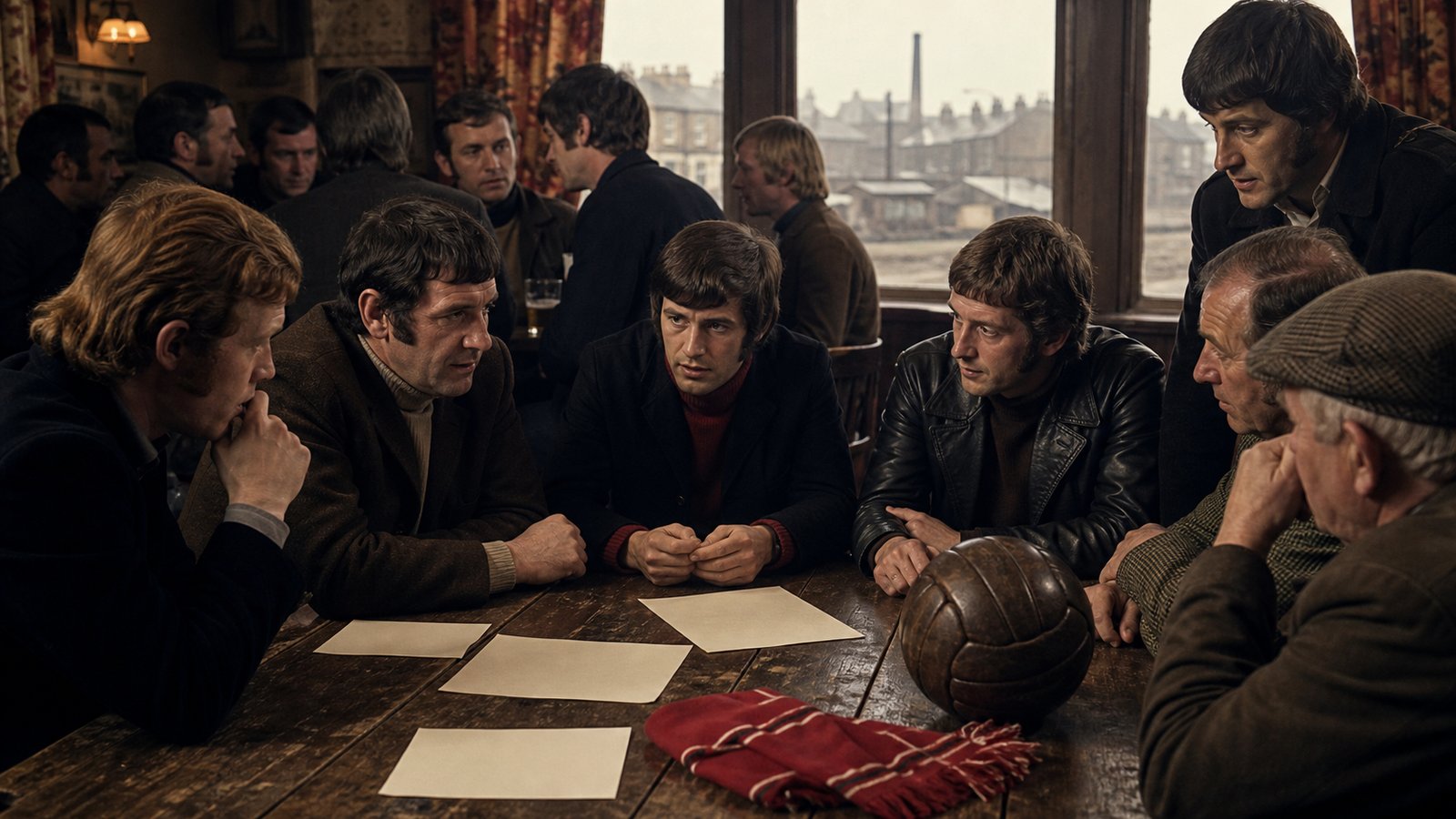
The reformed Accrington Stanley emerged in 1968 from a meeting at Bold Street Working Men’s Club. It entered the Lancashire Combination, far below the Football League it remembered. The setting matters: no wealthy rescue, inherited squad or protected status carried the new club upward. Its first asset was local willingness to organize.
Progress remained fragile. Eric Whalley bought the club for £80,000 in 1995 and spoke openly about a League return, but in 1999 Stanley were relegated from the Unibond League Premier Division. John Coleman later described that level as three steps below the Conference. The distance to League football could still be counted in multiple promotions before the final climb had even begun.
This is where the story differs from the rapid construction of AFC Wimbledon’s first squad. Accrington’s recovery was spread across decades and divisions. It depended less on one burst of mobilization than on surviving long enough for each small advance to become a platform for the next.
Coleman and Whalley made continuity useful
Whalley’s decisive football choice was appointing Coleman. By April 2006 the manager had been in charge for seven seasons, a rare span at a level where budgets, grounds and squads often shift quickly. Together, chairman and manager gave the climb a stable center. Coleman knew the limitations; Whalley understood the town and the arithmetic.
Stanley went full-time two years before the promotion season. The move did not transform the club into a rich one. It changed the amount of organized work available each week. By the closing stretch of 2005–06, Accrington carried a 12-point lead at the top of the Conference. What looked romantic from outside had been built through repetition: training, recruitment, travel, wages, fixtures and enough victories to make the table feel less vulnerable.
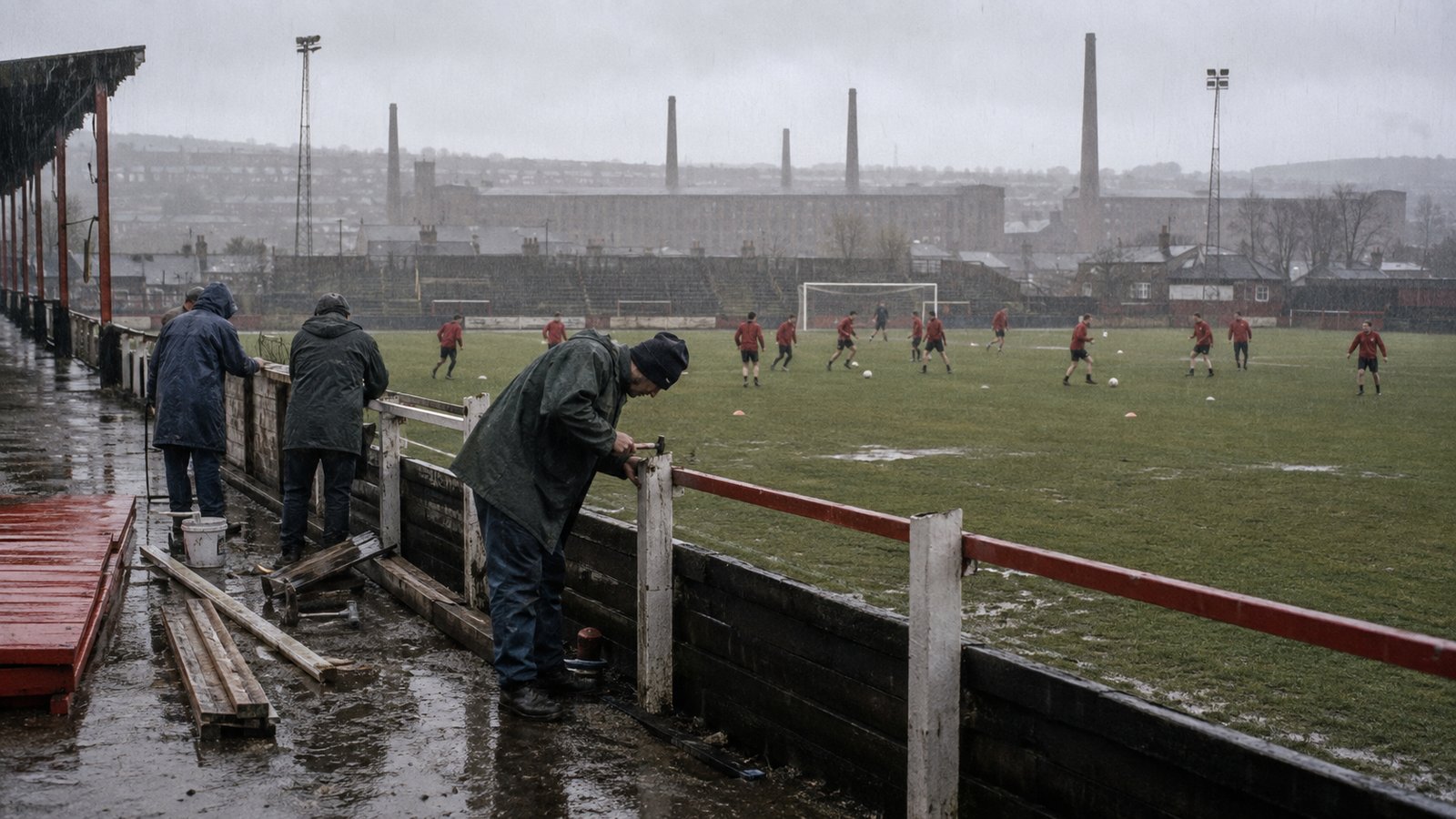
The same approach endured beyond 2006. A BBC review of the club’s 2018 promotion noted that Accrington then had the EFL’s second-smallest average attendance and rented a 3G pitch because it owned no training ground. Coleman’s teams kept working without the facilities available to larger opponents. Limited means became a condition to manage, not a reason to abandon competitive standards.
In 2006, continuity also protected the club from mistaking ambition for expenditure. The route from regional football had not been financed by one spectacular gamble. Going full-time was a calculated organizational change, and the long managerial appointment allowed lessons from one division to travel into the next. Players could be replaced without replacing the whole idea of how Stanley trained and competed.
The town supplied a scale appropriate to that method. Children had begun appearing in Accrington shirts rather than only the colors of nearby giants. The old milk advertisement still made the club a punchline across Britain, but recognition could be converted into attention rather than resentment. Coleman accepted the joke because people still knew the name. Survival had made that name available for a new result.
Woking compressed 44 years into ten minutes
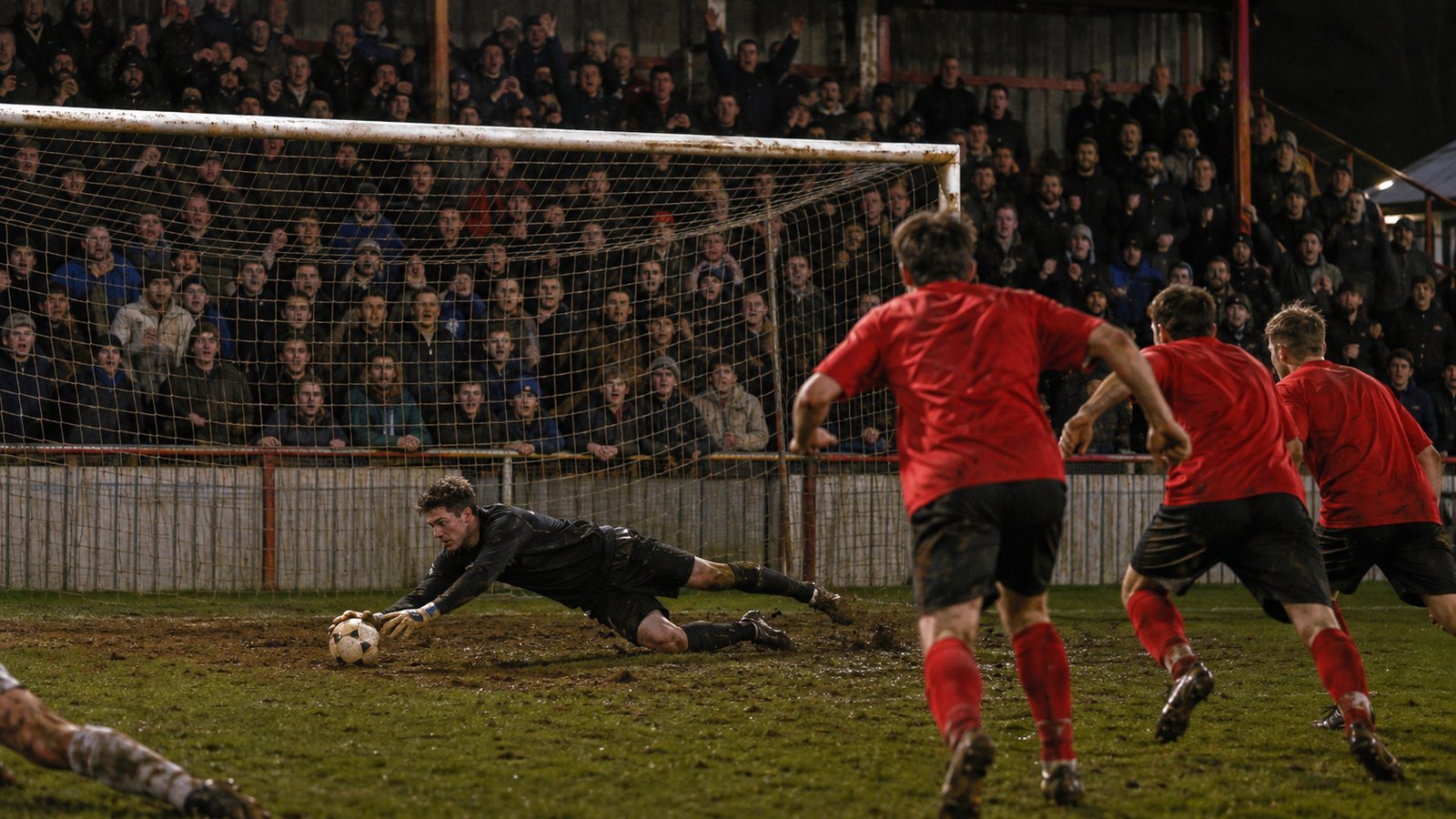
Promotion could be secured at Woking, but the match refused to become ceremonial. Mullin’s 38th-minute deflection gave Stanley the lead. Then, in the 78th minute, Richards received the chance to level from the penalty spot. Elliott saved it. The referee demanded another attempt. Elliott saved again and smothered the next effort.
Elliott was on loan from Charlton and still a teenager. That detail sharpened the imbalance between the history in the stand and the immediate responsibility on the pitch. He could not personally remember the 1962 resignation or the 1968 restart, yet two reactions from him protected the work of everyone who could. The return depended on a borrowed young goalkeeper behaving as though the second penalty were simply another save to make.
The details resist polishing. The winner was redirected; the penalty was repeated; Leam Richardson later hit the bar with an open goal available. Accrington’s players were not calmly performing a destiny written by the previous 44 years. They were trying to manage the next ball while their supporters experienced every loose touch as a threat to an enormous piece of history.
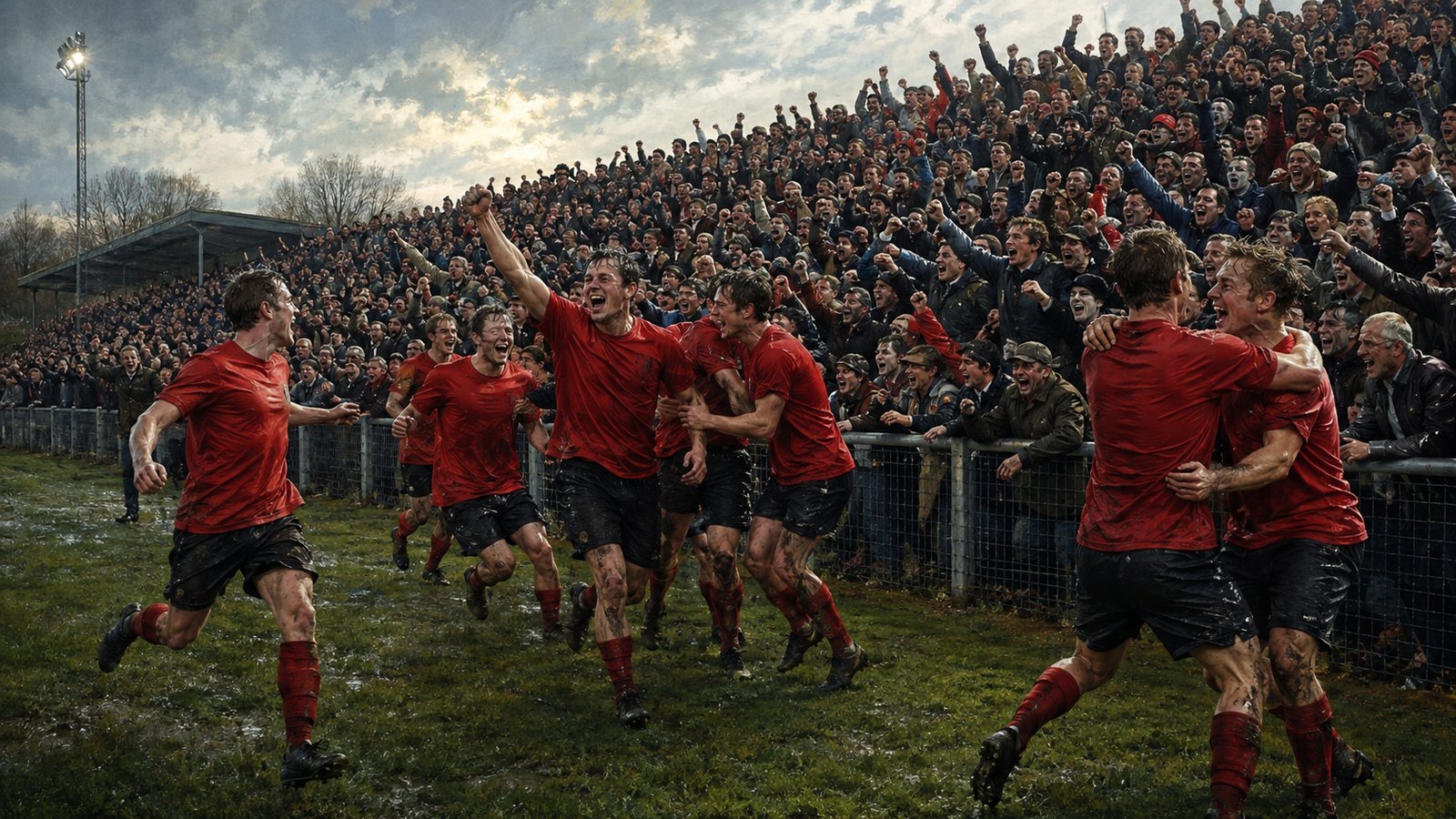
When the whistle came, adults cried, kissed strangers and sang the theme from Minder. Chairman Eric Whalley joined supporters on the pitch. The 1–0 win made other results irrelevant and sealed the Conference championship. According to the contemporary Observer report, Stanley became the first club to go out of business and later regain a Football League place.
The ground had to return with the team
Even victory did not complete the job by itself. The Crown Ground needed minimum improvements before League status could be confirmed: a police control room, additional turnstiles and spectator first-aid facilities. Those requirements expose the practical meaning of promotion. A team can win a division in 90-minute pieces, but a club must also provide the physical and administrative structure of the level it is entering.
That final work connects the 1968 meeting to the 2006 whistle. The rebuilt Stanley kept translating belief into objects and routines: a competition entry, a functioning ground, a coach, a full-time squad, a control room, a turnstile. None carried the emotional force of Elliott’s saves. Together they made those saves consequential.
Accrington’s later EFL life was not guaranteed by the afternoon at Woking, any more than Portsmouth’s cup run could repair the finances around its team. The achievement was narrower and more durable: a town had rebuilt enough of a football club to reclaim the place its earlier institution had surrendered. One deflection decided the match. Forty-four years of local construction gave that deflection somewhere to lead.
Sources
BBC Lancashire, “Stanley return to the League”; BBC Sport, “Accrington Stanley: How club made history with League Two promotion”; The Guardian, “Stanley ready to end long march back into league”; The Observer, “Accrington Stanley’s greatest day.”