
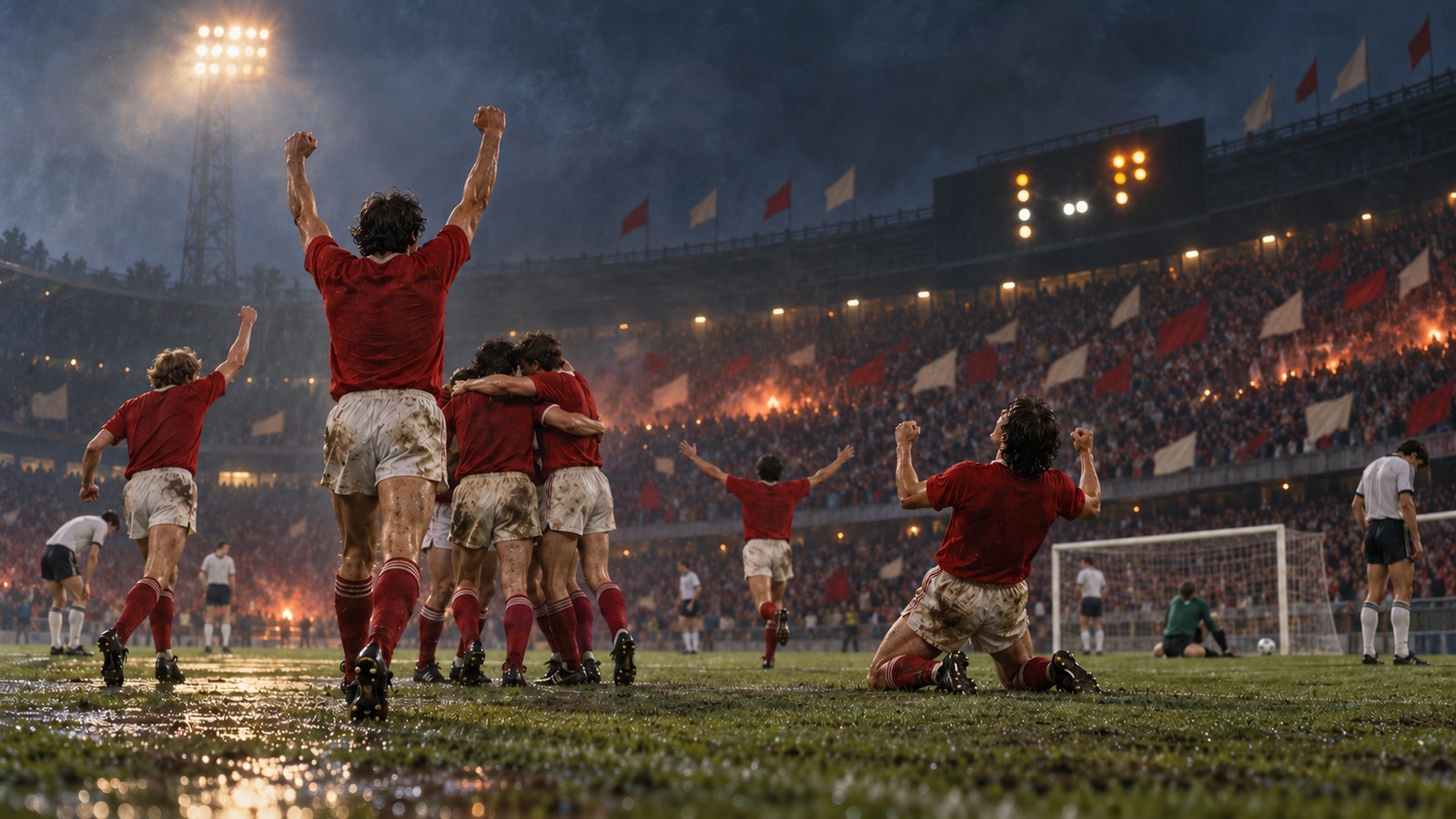
AZ ’67 scored four goals in a European final and still watched the trophy leave with the other team. On 20 May 1981, the scoreboard at Amsterdam’s Olympic Stadium read AZ 4, Ipswich Town 2. The two-leg total beneath it was harsher: Ipswich 5, AZ 4.
That contradiction is the sharpest way into AZ’s greatest season. The club won 27 of 34 league matches, scored 101 goals, lost once and finished 12 points clear of Ajax when a victory was worth only two. It also beat Ajax in the Dutch cup final. Yet the campaign is remembered with one space left empty because three bad goals at Portman Road could not be erased by four good ones in Amsterdam.
This was no sudden run from an accidental finalist. It was the mature product of a rescue begun nine years earlier, a carefully accumulated squad, and a season in which AZ overwhelmed Dutch opponents at home and away. The European ending did not expose the league champions as impostors. It showed how one night can resist ten months of evidence.
A Household-Goods Fortune Rebuilt a Club in Debt
AZ ’67 began with a merger. Alkmaar ’54 and FC Zaanstreek joined in 1967 because the two professional clubs saw more future together. The first attempt at growth was expensive rather than secure. AZ’s official history says the young club signed many foreign players and accumulated a heavy debt burden.
Klaas and Cees Molenaar intervened in 1972. The brothers had once played for KFC, a predecessor of FC Zaanstreek, before building Wastora into a successful household-goods business. Their money prevented the project from ending before it had properly formed. Their ambition was equally direct: take AZ ’67 to the top.
The important detail is the length of the construction. Kees Kist arrived in 1972 and the Danish midfielder Kristen Nygaard followed in 1973. Over subsequent seasons AZ added Hugo Hovenkamp, Johnny Metgod, Peter Arntz, Jan Peters, Pier Tol, goalkeeper Eddy Treijtel and Austrian forward Kurt Welzl. Georg Kessler had a squad assembled across years rather than one bought in a single summer.
A Dutch cup win in 1978 proved the investment could produce a trophy. By 1980–81, the pieces had aged together. The Molenaars’ rescue had moved from balance-sheet emergency to sporting advantage: established players, continuity and enough depth to attack three competitions without treating Europe as a ceremonial excursion.
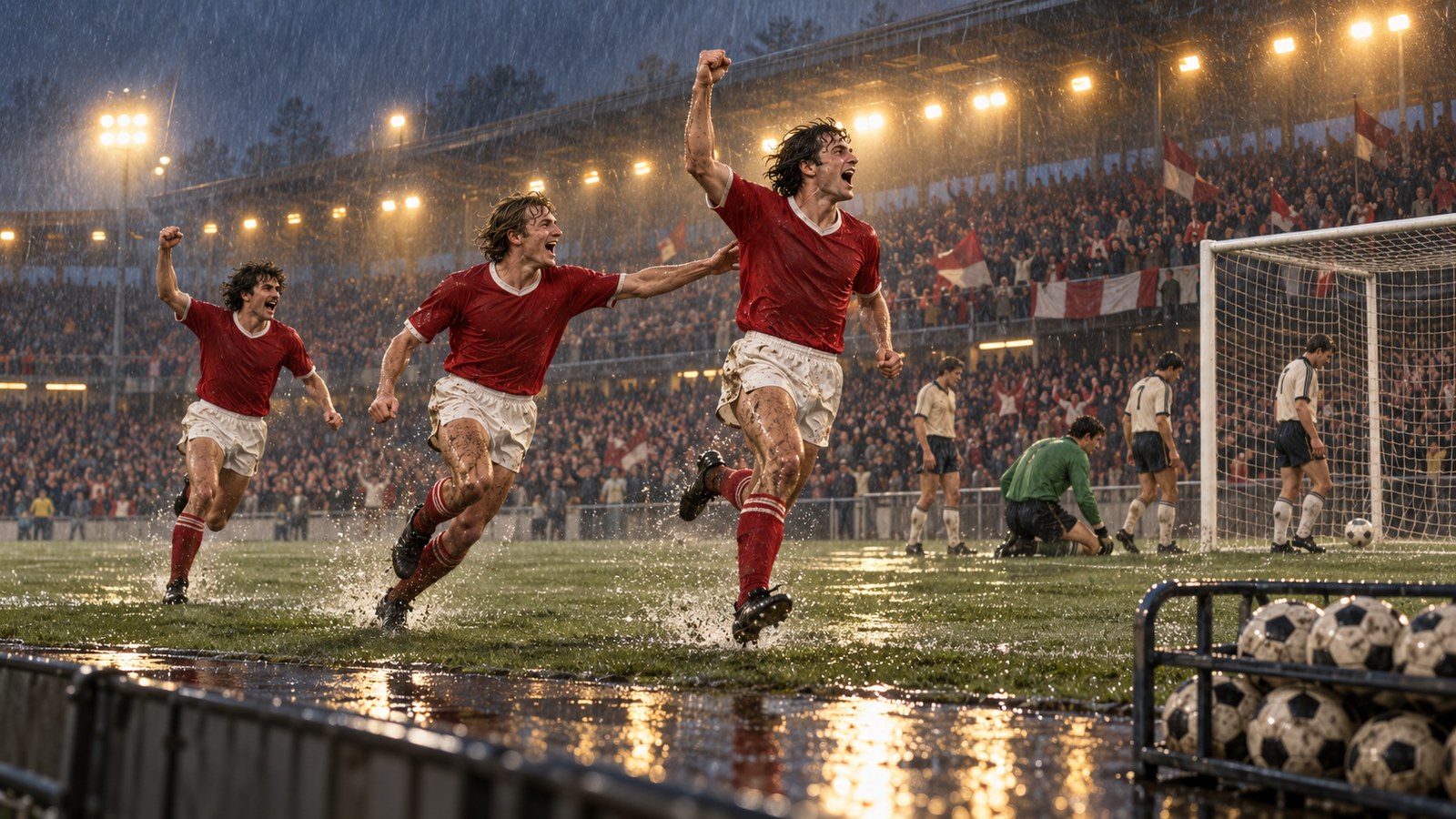
The League Table Looked Like an Error Until You Read Every Column
AZ’s final Eredivisie line was 34 played, 27 won, six drawn and one lost. The goal columns were 101 for and 30 against. Under two points for a win, that produced 60 points. Ajax finished second with 48; FC Utrecht and Feyenoord followed on 45.
The home-and-away split removes another possible explanation. AZ won 14 of 17 home fixtures, drew two and lost one. Away from Alkmaar, it won 13 and drew four. There was no away defeat. The side scored 51 league goals at home and 50 on the road, an almost perfectly balanced distribution of damage.
Ajax supplied the single blemish, winning 1–0 in Alkmaar. AZ answered by winning 2–1 in Amsterdam. Kessler’s team could lose a direct contest and still build a lead that left the established powers with no realistic route back.
The cup added a cleaner piece of symmetry. AZ met Ajax again in the final and won 3–1, completing the domestic double. The club that had needed rescue in 1972 had taken both major Dutch trophies nine years later, and it had done so by beating its nearest league rival when silverware was physically waiting beside the pitch.
Europe Kept Changing the Size of the Test
The UEFA Cup route began with numbers that resembled AZ’s league form. Red Boys Differdange lost 10–0 on aggregate. Levski-Spartak Sofia went out 6–1, then Radnički Niš 7–2. AZ scored five in the home leg against both Levski and Radnički.
The margins narrowed in spring. Lokeren lost the quarter-final 2–1 on aggregate after beating AZ 1–0 in Belgium. Sochaux made the semi-final tighter still. A 1–1 draw in France left the tie open before AZ won the return 3–2, advancing 4–3 overall.
Across five rounds, AZ exploited weaker opposition, recovered from an away defeat, and survived a semi-final decided by a single aggregate goal.
Ipswich presented a final complication. Bobby Robson’s team carried its own long construction and two Dutch midfielders, Frans Thijssen and Arnold Mühren. The club’s earlier rise had already produced an extraordinary English championship, explored in Ipswich’s first-season title in 1962. By 1981, Robson had created another side capable of making a European tie obey its preferred rhythm.
Portman Road held 27,532 for the first leg on 6 May. John Wark scored a penalty after 28 minutes, Thijssen added the second just after half-time, and Paul Mariner made it 3–0 in the 56th. AZ had not conceded three in any previous European tie that season. In less than half an hour across the interval, the final acquired a shape that its domestic record could not correct.
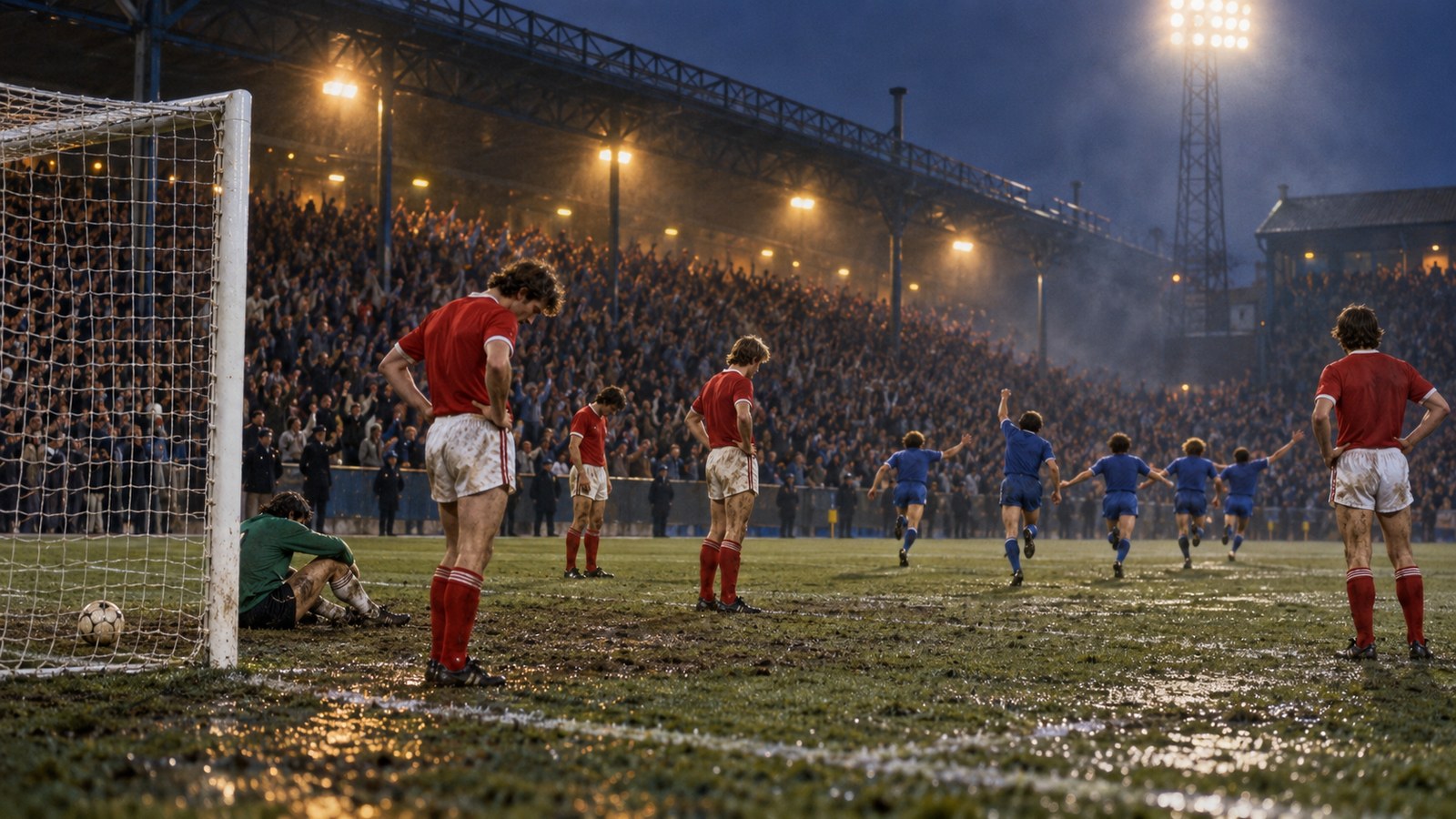
Six Goals in Amsterdam Left the Aggregate One Step Away
The return moved to Amsterdam’s Olympic Stadium because the Alkmaarderhout was considered too small. A crowd of 28,500 arrived on 20 May to see whether the Dutch champions could apply their season’s attacking force to a three-goal deficit.
Within four minutes, Thijssen scored for Ipswich. AZ now required an improbable flood. Welzl answered in the seventh minute, and Metgod made it 2–1 after 25. The comeback was alive for seven minutes before Wark scored in the 32nd. Ipswich’s two away goals meant AZ needed far more than a simple three-goal win.
Pier Tol restored the lead before half-time. His 40th-minute goal sent AZ in at 3–2 on the night and 5–3 down on aggregate. The pace of the scoring had been violent: five goals in 36 minutes, each changing the calculation while leaving almost no time for either side to settle.
Jos Jonker scored AZ’s fourth in the 74th minute. At 4–2, the crowd could see a victory in front of them and elimination behind it. Another goal would only have levelled the aggregate at 5–5 while leaving Ipswich ahead on away goals; AZ needed two. The final whistle confirmed a 4–2 win and a 5–4 defeat across the tie.
That ending belongs beside the stories of other clubs whose European scale exceeded their domestic profile. Malmö’s run to the 1979 European Cup final, built through rehearsed restraint rather than 101 league goals, offers a revealing opposite route to the same stage. AZ reached its final by carrying abundance forward until Ipswich made the first leg too expensive.
The Missing Trophy Does Not Reduce the Season to a Near-Miss
It is tempting to describe 1980–81 only as the season AZ almost won three trophies. That frame gives the UEFA Cup defeat too much authority. The league title and Dutch cup were not consolation prizes collected after Amsterdam. They were the proof that a club outside the Netherlands’ traditional giants had built the country’s strongest side.
The arithmetic remains startling. One league defeat. No away league defeats. More than three goals per match across 34 fixtures. A 12-point lead in a two-point system. A 3–1 cup-final win over Ajax. Five European opponents removed before the final. Four goals scored in the decisive return.
The human chain behind those numbers runs back to 1972: the Molenaar brothers, their Wastora fortune, Kist and Nygaard arriving early, then the later group around Treijtel, Hovenkamp, Metgod, Peters, Tol and Kessler. The project did not conquer every stage, but it reached a height that would have looked impossible when debt threatened the merged club.
AZ won another Dutch cup in 1982, but the 1980–81 season remained the summit. Its final image is not one of uncomplicated celebration. It is a team winning 4–2 while learning that a scoreboard can tell two truths at once. AZ had beaten Ipswich that night. Ipswich had won the final. Everything AZ achieved before it survived both facts.
Sources
- AZ, club history
- RSSSF, Netherlands 1980–81
- RSSSF, Netherlands cup finals
- RSSSF, European competitions 1980–81