
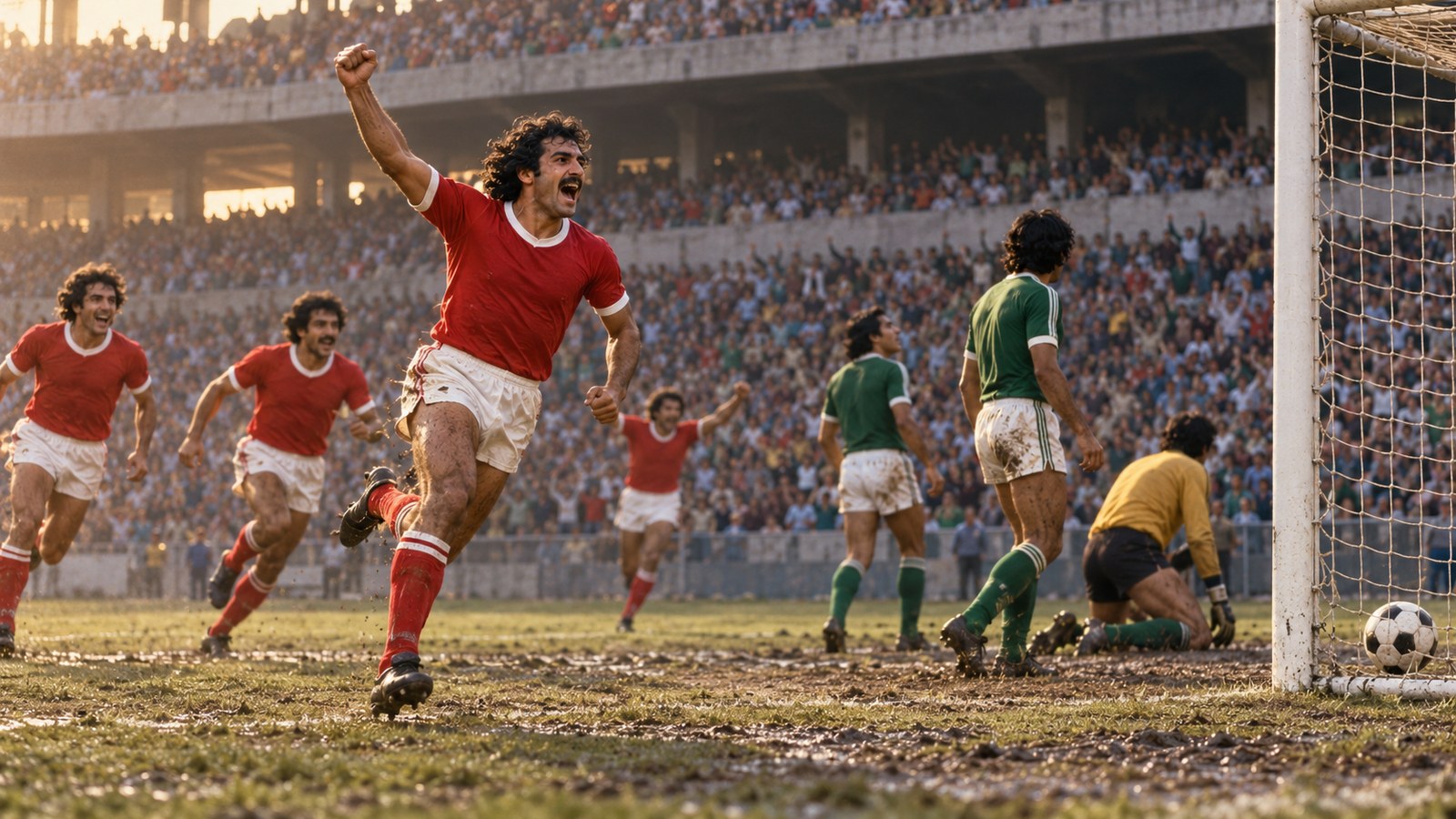
At half-time in Rosario on 2 June 1978, Tunisia’s World Cup debut had the shape of a familiar warning. Mexico led 1–0 through Arturo Vázquez Ayala’s penalty, scored in the 45th minute. The African representatives had played one half at this level and were already chasing the match.
The next 45 minutes changed more than the score. Ali Kaabi equalised in the 55th minute, Nejib Ghommidh put Tunisia ahead in the 79th, and Mokhtar Dhouieb made it 3–1 eight minutes later. No African side had won a World Cup match before. Tunisia reached that landmark not by surviving until a lucky opening appeared, but by steadily taking command after the interval.
The result is often filed as a continental first. Look more closely and it also becomes a compact story about a team correcting a match while it was still moving: a full-back attacking the loose space, midfielders advancing with better timing, and a tiring opponent losing control of the distances between its lines.
A Debut Carried More Than One Team’s Expectation
Tunisia arrived in Argentina as Africa’s only representative and as a World Cup newcomer. Abdelmajid Chetali, not yet 39 during the tournament, coached a squad whose names were unfamiliar to much of the international audience. Captain Temime Lahzami led the side, with Tarek Dhiab in midfield, Mohamed Akid in attack and Mokhtar Naili in goal.
That context matters because the 1978 finals still offered very little space to African football. A single qualification place made one team stand for an entire continent in the tournament’s public imagination. Earlier African appearances had produced resistance and striking performances, but not a victory. Tunisia therefore carried a historical possibility before its players had touched the ball in Rosario.
Mexico carried a different kind of pressure. It had far more World Cup experience and fielded a young Hugo Sánchez, years before his greatest seasons in Spain. Tunisia did not have the luxury of a gentle opening fixture. Its first examination came against a team that could treat the occasion as another entry in a familiar competition.
The match began at 16:45 at the Estadio Dr. Lisandro de la Torre. FIFA’s archived match record lists 17,396 spectators. Those bare details place the scene precisely: an afternoon group game in Rosario, not a final under ceremonial lights, with history arriving before anyone knew that it had an appointment.
A Penalty Drew the Wrong First-Half Conclusion
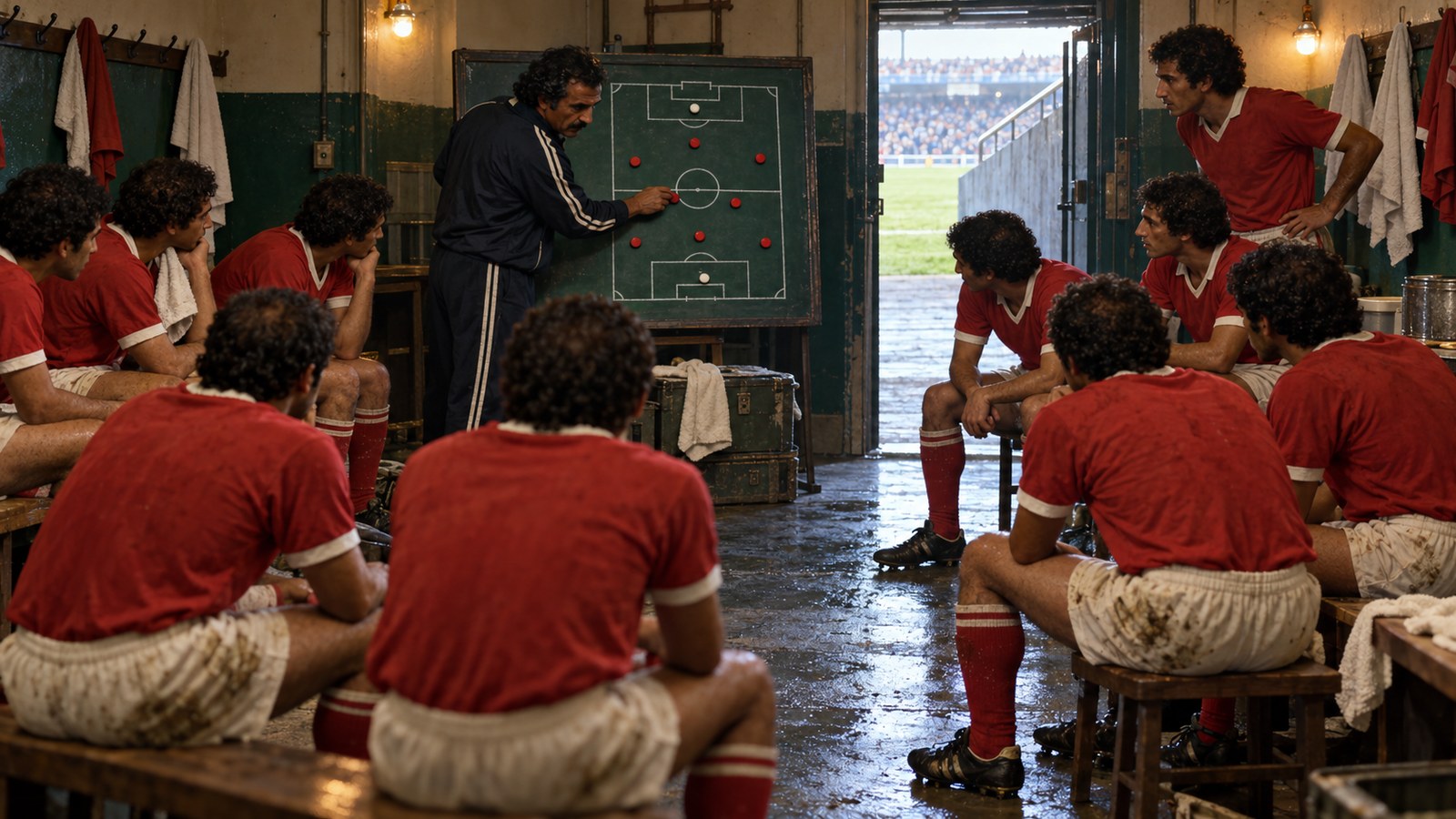
The opening half ended with Mexico in front. Arturo Vázquez Ayala converted from the penalty spot in the 45th minute, the latest possible moment to send Tunisia into the dressing room behind. A goal at that point can flatten a debutant because there is no time to answer before the whistle.
Yet the 1–0 score concealed how recoverable the match remained. Tunisia’s lineup was not built around one isolated star who had to invent a rescue. Kaabi could advance from the back, Ghommidh could arrive from midfield, and Dhouieb could contribute at both ends. The eventual scorers came from different lines of the formation. That distribution is the key to understanding the comeback.
Chetali did not make an immediate substitution. The same eleven began the second half, which suggests that the correction was about how they occupied the pitch rather than a desperate change of personnel. Tunisia needed cleaner support around the ball and the confidence to send players beyond Mexico’s first defensive pressure.
Ten minutes after the restart, it had the equaliser. The timing denied Mexico the chance to settle behind its lead. It also moved the emotional weight of the match. Tunisia was no longer trying to avoid an opening-day defeat; Mexico had to manage an opponent that had discovered it could hurt them.

Ali Kaabi Attacked From the Back
Kaabi’s goal came in the 55th minute. The significance goes beyond being Tunisia’s first World Cup goal. Kaabi was listed as a defender, so his arrival in a scoring position showed how far Tunisia’s shape had begun to move forward. The equaliser came from a player who could have been told to remain cautious after Mexico’s penalty.
That movement stretched the problem Mexico now faced. If Tunisia’s attackers occupied the centre while a defender advanced, the Mexican midfield had to decide whether to follow him or protect the space behind. Every hesitation created another passing lane. The comeback did not require Tunisia to throw away its structure; it required the structure to travel up the pitch together.
Kaabi was also part of the defensive unit that then kept Mexico from scoring again. The balance is easy to lose when a team chases a game, especially in its first World Cup appearance. Tunisia found aggression without turning the match into an exchange of uncontrolled attacks.
The equaliser remains a useful dividing line. Before it, Mexico could read the match as a favourite controlling a debutant. After it, Tunisia had proof on the scoreboard that its adjustments worked. The next objective was no longer symbolic respectability. There were 35 minutes left to win.
Ghommidh and Dhouieb Closed the Space Between Belief and Proof
The breakthrough took another 24 minutes. Nejib Ghommidh scored in the 79th, putting Tunisia ahead for the first time. The gap between the equaliser and the second goal is important. This was not a frantic burst in which two rebounds transformed the contest. Tunisia sustained the match long enough to create a second phase of pressure.
Ghommidh’s goal also continued the pattern of contributions from different areas. A midfielder supplied the finish after a defender had supplied the equaliser. Mexico could not solve the game by surrounding one forward. Tunisia’s threat kept changing its point of arrival.
In the 87th minute, Dhouieb scored the third. FIFA’s record fixes the sequence clearly: Kaabi at 55, Ghommidh at 79, Dhouieb at 87. Three Tunisian scorers turned a half-time deficit into a two-goal win. The final margin made the result difficult to dismiss as a single break protected for half an hour.
There was also time for Chetali to make his changes. Raouf Ben Aziza left for Kamel Karoui in the 81st minute, and captain Lahzami was replaced by Kamel Labidi in the 88th. The substitutions came after Tunisia had established control rather than as an early rescue attempt. By then, the match had become a matter of completing what the original shape had begun.
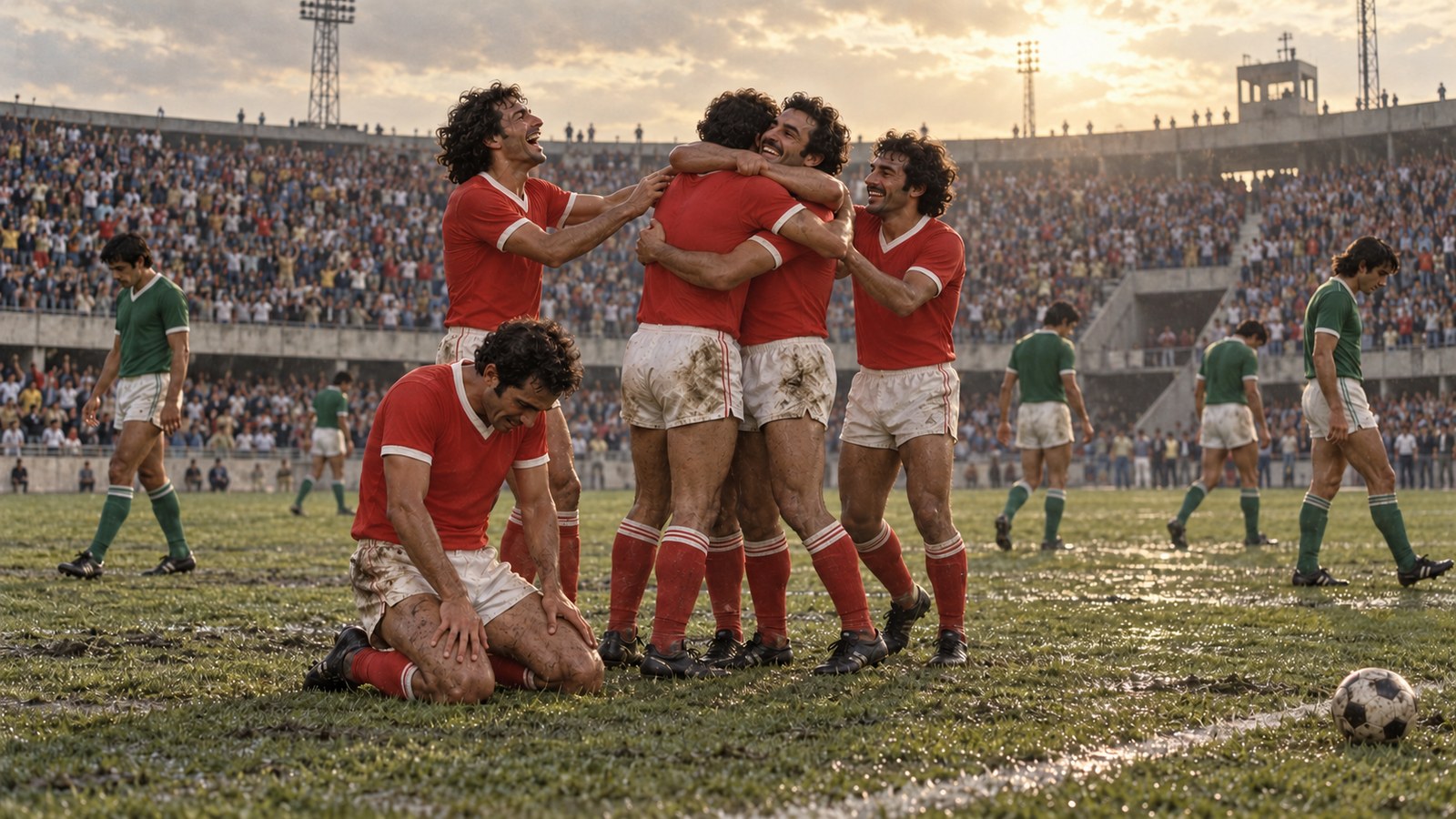
The whistle confirmed a 3–1 victory and the first World Cup match won by an African or Arab national team. The players had not merely crossed a statistical threshold. They had overturned the kind of game that previous tournament structures gave African representatives very few chances to replay.
The Two Matches After Mexico Made the Win Larger
Tunisia did not advance from Group 2. Poland beat them 1–0 four days later, Grzegorz Lato scoring in the 43rd minute. On 10 June, Tunisia drew 0–0 with reigning world champion West Germany. Their tournament ended after three matches, with one win, one draw, one defeat, three goals scored and two conceded.
Those later results sharpen the Mexico performance. The opening victory was not followed by collapse. Tunisia conceded only once across the next 180 minutes and held West Germany scoreless. In the two-points-for-a-win era, three points were not enough to pass Poland and the Germans, but the debut had produced a positive goal difference and two matches without defeat.
Its historical position becomes clearer beside later African World Cup stories. Cameroon’s run in 1990, examined in the tournament that pushed open a wider door, became a global spectacle because it reached the quarter-finals. Tunisia’s contribution was smaller in distance but earlier in sequence: it supplied the first win that made later expectations possible.
The result also belonged to a longer African competition history rather than appearing from nowhere. The continent had already built its own championship tradition, including the compact first Africa Cup of Nations in 1957. What Rosario offered was recognition on football’s most visible stage.
That is why the three scorers deserve to remain central. Kaabi, Ghommidh and Dhouieb were not background figures in a vague tale of continental progress. Their goals came at exact minutes, from different lines, after an exact half-time problem. Tunisia made history through the practical work of changing one match before the clock ran out.
Sources
- FIFA archived match record, Tunisia v Mexico, 1978 World Cup
- RSSSF, World Cup 1978 finals
- FIFA archived Group 2 match records
- Tunisia national team historical record