
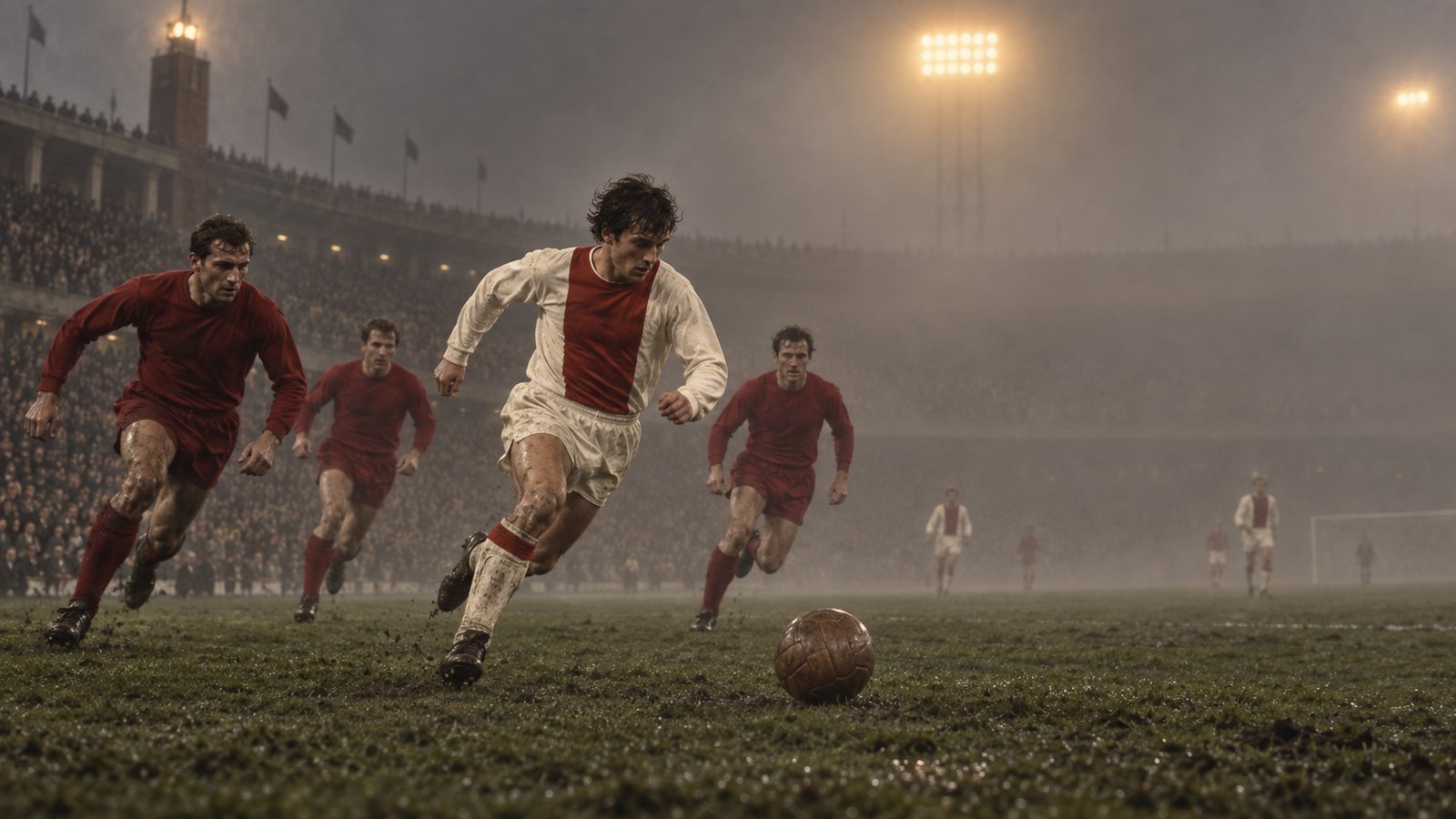
The first roar reached only one part of Amsterdam’s Olympic Stadium. Cees de Wolf had headed Ajax in front after three minutes, but the fog was so thick that spectators farther from the goal could not see it. Their celebration began only when the noise travelled around the bowl. On 7 December 1966, even the crowd needed time to discover the score.
Liverpool spent the same night discovering an opponent. The English champions left with a 5–1 defeat, four goals conceded before half-time and no reliable view of how the damage had happened. Weather gave the game its Dutch name, De Mistwedstrijd. The return at Anfield gave the result its meaning: Ajax could perform without the fog.
Two champions entered with very different reputations
Both clubs had won their domestic leagues in 1965–66, yet their continental standing was uneven. Liverpool had reached the European Cup semi-final in 1965 and the Cup Winners’ Cup final in 1966. Bill Shankly had a mature side containing Roger Hunt, Ian St John, Ian Callaghan, Ron Yeats and Tommy Smith. Hunt had helped England win the World Cup only months earlier.
Ajax had finished seven points clear of Feyenoord in the Eredivisie under Rinus Michels, but that authority was still largely a Dutch fact. The club had made little impact in earlier European campaigns. Johan Cruyff was 19. Liverpool’s own retrospective records that the English side were overwhelming favourites.
The route to the second round reinforced that hierarchy. Ajax had beaten Beşiktaş 4–1 across two legs. Liverpool needed a play-off to eliminate Petrolul Ploiești, but their recent European runs still made them the recognised power. Shankly had watched Ajax lose to modest opposition before the tie and returned confident that Liverpool would advance.
Demand moved the first leg from Ajax’s De Meer ground to the larger Olympic Stadium. More than 55,000 people came expecting an emerging Dutch champion to face an established English one. The evening reversed those roles.
Fifty yards of visibility changed how the match could be read
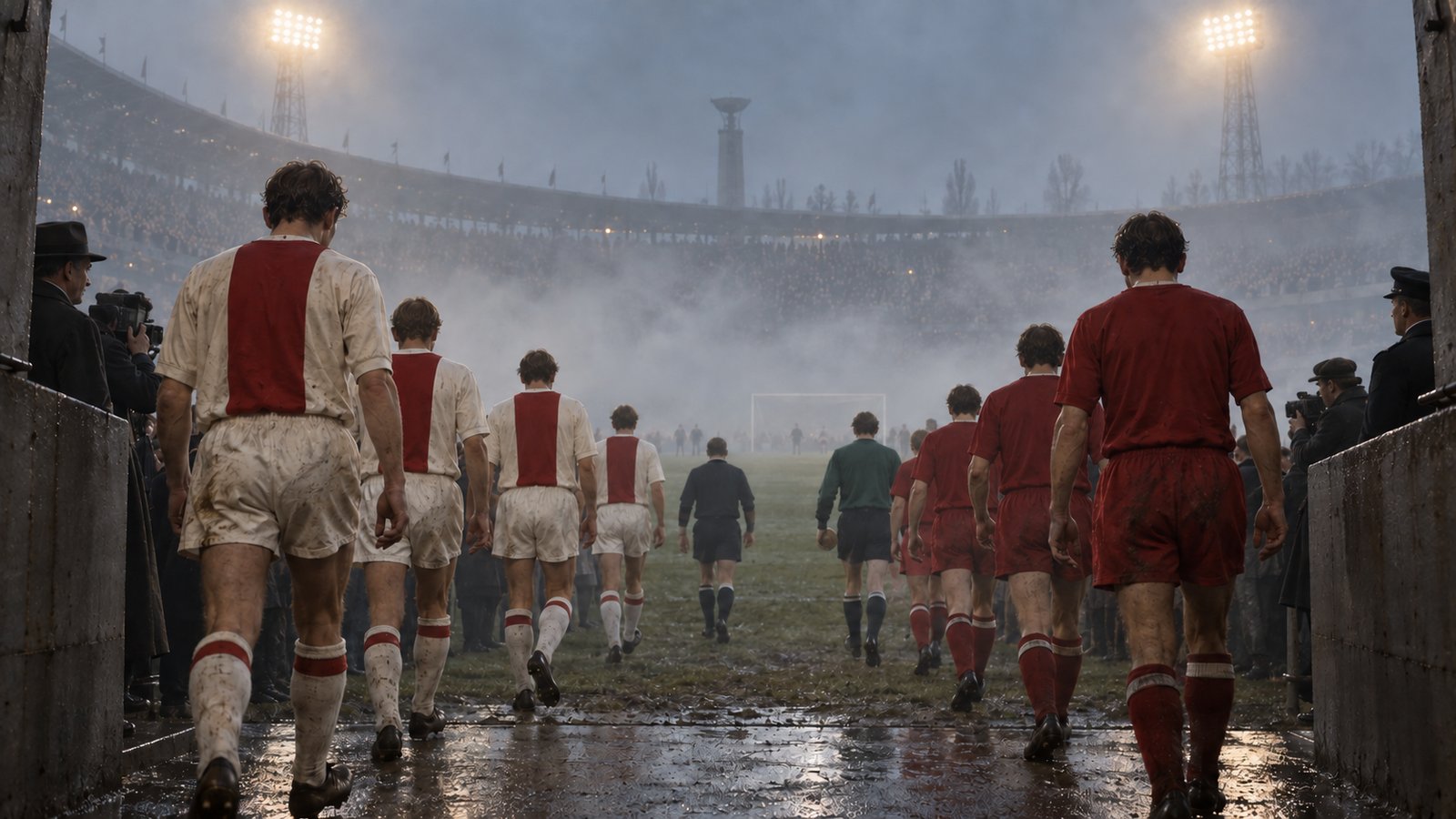
Heavy fog had covered Amsterdam for much of the day. Postponement was discussed before kick-off. Shankly favoured calling the game off, although he did not want the alternative of waiting only 24 hours. After an inspection, Italian referee Antonio Sbardella allowed the fixture to proceed.
Liverpool’s club account put visibility at roughly 50 yards. Players, coaches and officials were losing information across the field. Movement at the far end could become sound before it became sight. A run behind a defender might vanish into grey air.
When Liverpool coach Bob Paisley went onto the pitch to treat an injured player, Shankly followed and delivered instructions before the officials noticed and ordered him away. His later recollection was blunt: he could not see the game, and the referee had not initially seen him enter it.
Fog did not choose Ajax’s passes or force Liverpool’s errors, but it made adjustment painfully slow. The visitors could not observe the whole pattern from the bench. Ajax were confident in their spacing and attacked before Liverpool could settle.
Four first-half goals arrived before Liverpool found a picture
The opening goal came from a player making his Ajax debut. Cruyff’s throw was headed upward, goalkeeper Tommy Lawrence moved out and then tried to recover, and De Wolf beat Chris Lawler to the dropping ball. The third-minute header was followed by that strange relay of cheers through the obscured stadium.
Cruyff scored after 17 minutes. He was not yet the figure who would lead Ajax to European titles, but the essentials were visible whenever the mist allowed it: acceleration into useful space and an instinct for appearing where Liverpool’s markers had not expected him.
Klaas Nuninga then struck twice, in the 38th and 42nd minutes. Ajax reached half-time 4–0 ahead. The score did not describe a cautious side exploiting one freak incident. Four different moments had repeatedly found the same weakness: Liverpool could not establish control over where Ajax’s next attack would appear.
The visitors pushed Ajax back for periods after the interval. Smith forced a save from Gert Bals, Yeats had a header stopped and Geoff Strong sent an effort over. Those chances mattered because they showed Liverpool could still compete inside the match. They also made the fifth goal more revealing. With Liverpool committing players forward, Ajax countered and Henk Groot scored with about a quarter-hour remaining.
Lawler’s 89th-minute goal reduced the deficit to 5–1 but could not soften the defeat. The score remains Liverpool’s joint-heaviest loss in European competition.
Shankly promised seven; Anfield supplied the control experiment
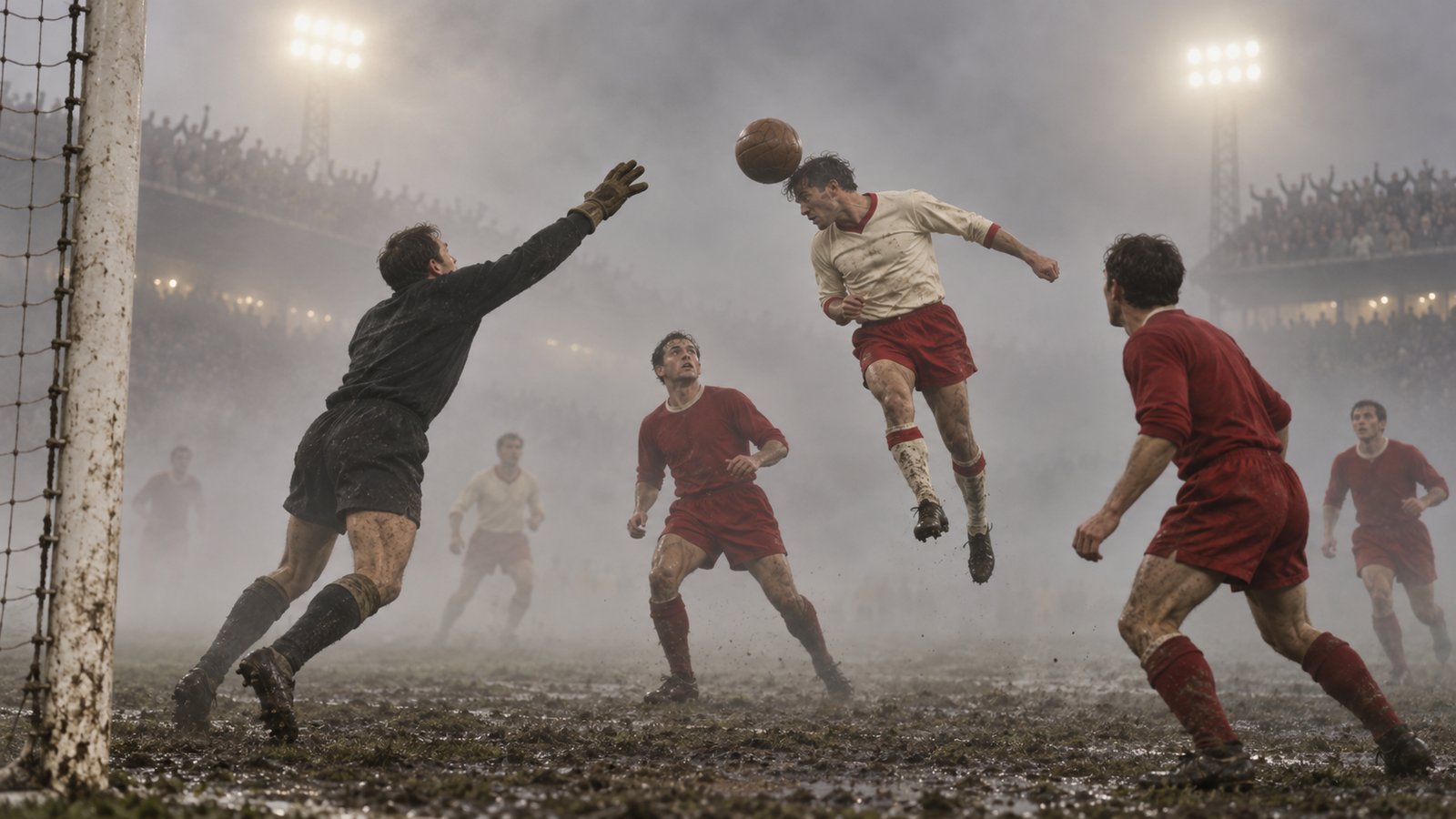
Shankly refused the conclusion everyone else could see. He insisted the tie was unfinished and said Liverpool would score at least seven at Anfield. The claim was theatre, protection and motivation at once. More than 50,000 supporters arrived believing a comeback remained possible.
A week later, Liverpool began at the required intensity. Strong and Peter Thompson hit the woodwork before half-time. The score stayed 0–0, and those misses consumed the part of the evening in which an early goal might have made the four-goal deficit feel vulnerable.
Then Cruyff scored in the 49th minute. Hunt equalised, Cruyff restored Ajax’s lead in the 71st, and Hunt struck again late. The 2–2 draw produced a 7–3 aggregate result. More importantly, it removed the easiest excuse for Amsterdam. Ajax had gone to Anfield, faced Liverpool’s pressure in clear conditions and never lost command of the tie.
Michels later identified that second performance as the stronger proof. The first leg, he acknowledged, might be dismissed as an accident of weather. The return was hectic and hostile, yet Ajax drew without being overwhelmed. For the coach, that established that his side belonged at the international level.
Amsterdam supplied the unforgettable image, but Anfield verified the team. One match made Ajax look startling. Two made them credible.
The night announced a direction rather than a finished style
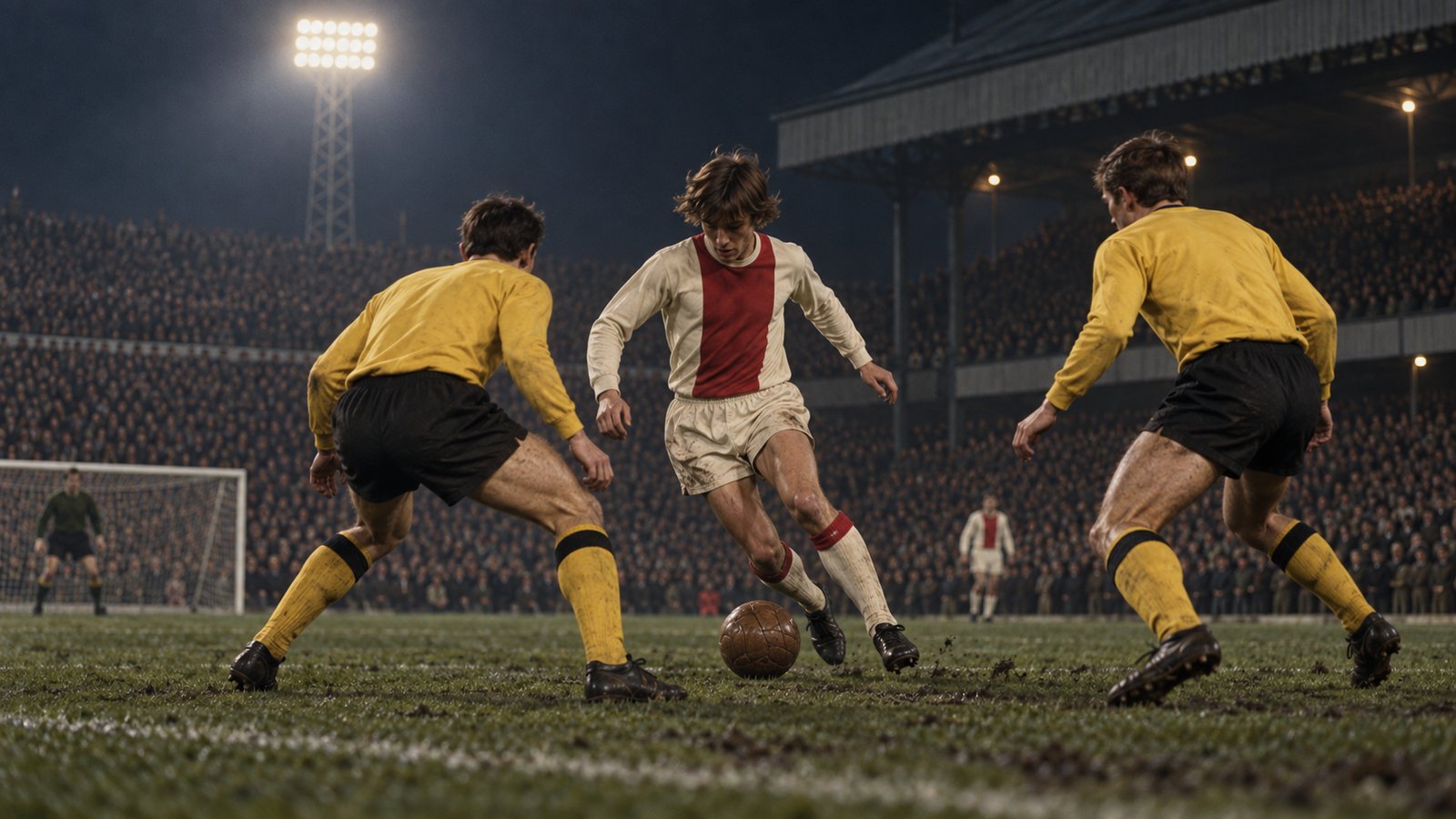
It is tempting to label the 5–1 as the birth of the fully formed Ajax later called Total Football. The chronology is less tidy. Jonathan Wilson’s history of the great Ajax side describes Michels using a 4–2–4 and developing a passing, possession game in 1966, while systematic pressing had not yet become the defining feature it would be in the early 1970s. The Liverpool tie was evidence of a direction, not the unveiling of a completed doctrine.
Ajax lost the next round 3–2 on aggregate to Dukla Prague. Michels responded by changing his defence and bringing in Velibor Vasović from Partizan. Two years later Ajax reached the European Cup final. From 1971 through 1973, the club won the trophy three times in succession. The path from fog to dominance still included defeat, recruitment and tactical revision.
That development connects the 1966 side to our account of the positional risks inside Total Football. The later team could compress space, exchange roles and press as a coordinated unit. Against Liverpool, the public first saw the raw competitive force from which those refinements would grow.
The match also changed the scale of Dutch possibility. Feyenoord would become the first Dutch club to win the European Cup in 1970, a story explored in our piece on the final against Celtic. Ajax then moved the centre of European football decisively toward Amsterdam. The famous sequence did not begin with a trophy. It began with a score that many spectators could barely see.
Fog is why the game survives in photographs and memory. The second leg is why it survives as more than weather folklore. Liverpool could blame the view for confusion in Amsterdam; they could not blame it for Cruyff’s two goals at Anfield. Across 180 minutes, Ajax replaced surprise with proof.
Sources
- Liverpool FC, “Liverpool v Ajax 1966 revisited”
- LFC History, “The Fog Game”
- RSSSF, European Champions’ Cup 1966–67 records
- The Guardian, “The Great European Cup teams: Ajax 1971–73”
- UEFA, Ajax and Liverpool head-to-head records