
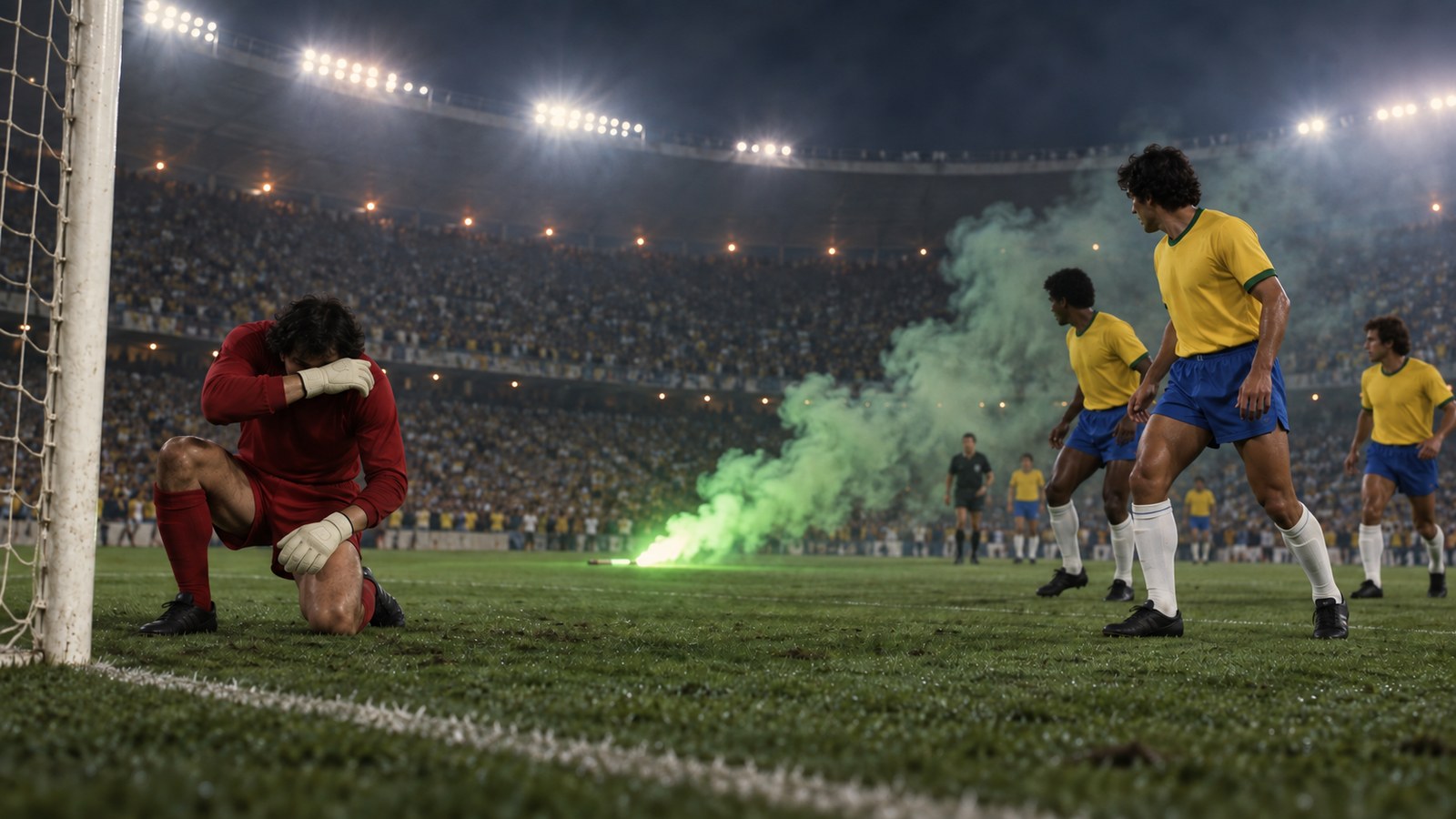
Ricardo Alfieri had pointed his camera at the wrong place for Chile’s story and exactly the right place for football’s investigation. A green flare fell onto the Maracanã grass on 3 September 1989. Chile goalkeeper Roberto Rojas collapsed with blood on his face, and his teammates soon walked off while trailing Brazil. From the stands, the sequence looked like a crowd attack ending a World Cup qualifier. Alfieri’s film recorded something more precise: open turf between the flare and the goalkeeper.
That distance changed the case. The danger in the stadium was real, but it did not explain Rojas’s wound. FIFA eventually awarded Brazil a 2–0 victory, barred Chile from the next World Cup qualifying campaign and banned the goalkeeper for life. The decisive evidence was not a better view of the injury. It was a camera roll that showed what had never made contact.
Brazil could advance with a draw; Chile had to win
The final South American Group 3 fixture began with both teams unbeaten. Brazil and Chile had each collected five points under the two-points-for-a-win system, but Brazil’s goal difference was plus ten to Chile’s plus seven. The hosts therefore needed only a draw in Rio de Janeiro. Chile needed victory to finish above them, and even that would not automatically guarantee direct qualification because the records of the other group winners still mattered.
The earlier meeting in Santiago had finished 1–1 and produced red cards for Romário, Raúl Ormeño and Chile coach Orlando Aravena. Crowd disorder there meant Chile’s next nominal home match, against Venezuela, was moved to Mendoza. Chile won 5–0. Brazil had beaten Venezuela 4–0 and 6–0. The last game was carrying a simple pressure: one goal against Chile could leave Aravena’s side needing two at the Maracanã.
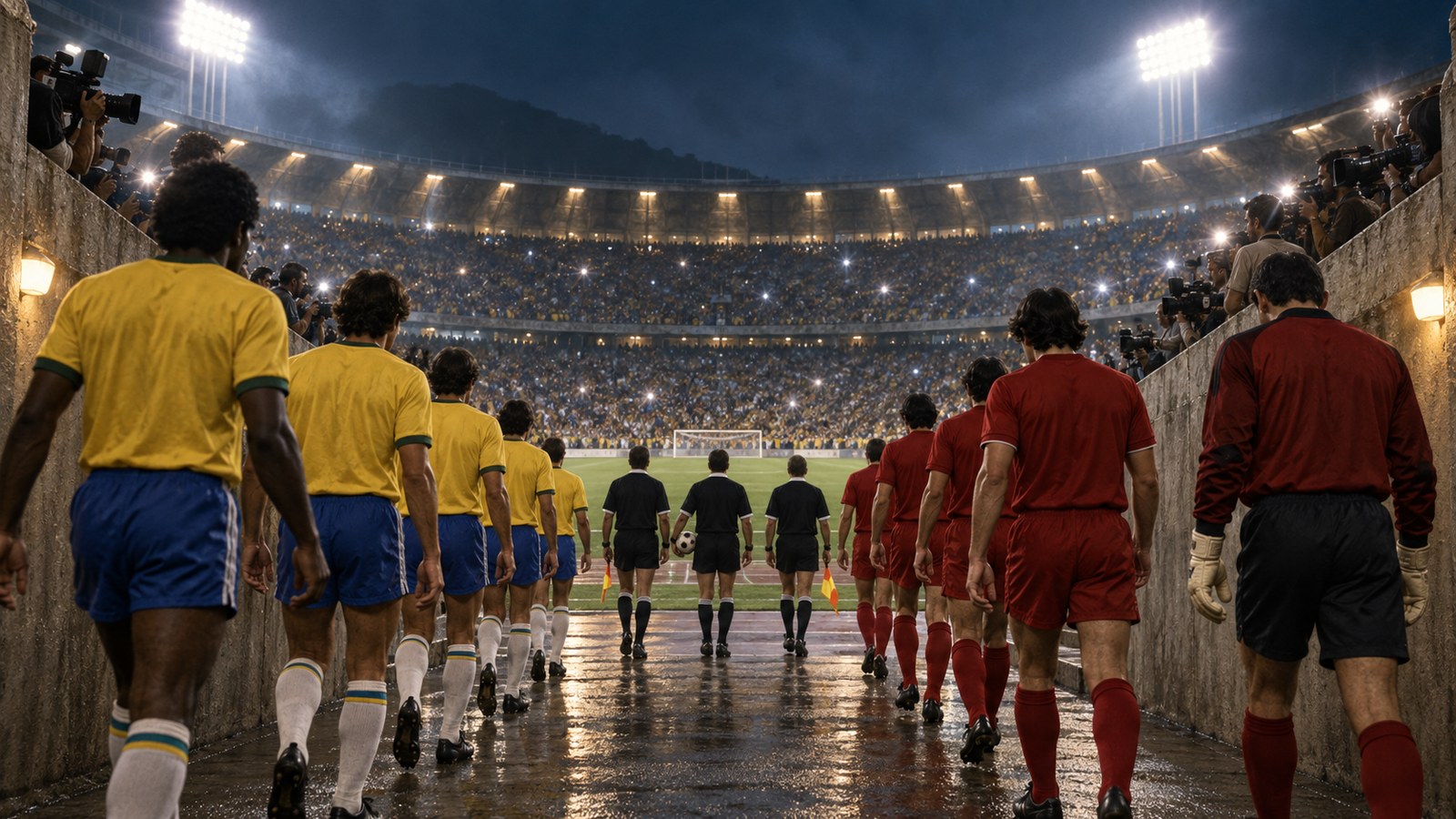
Aravena was suspended from the touchline and watched from a television booth. Juan Carlos Loustau of Argentina refereed. Rojas captained Chile from goal; Careca led Brazil’s attack alongside Bebeto. More than 131,000 tickets were sold for a stadium capable of turning every pause into noise.
Careca’s goal left the match balanced on one requirement
Rojas made important saves through a scoreless first half. Brazil had no need to force the game recklessly, while Chile could not afford to let the clock expire. Careca broke the balance after the interval. At 1–0, Chile’s route to the World Cup required two goals.
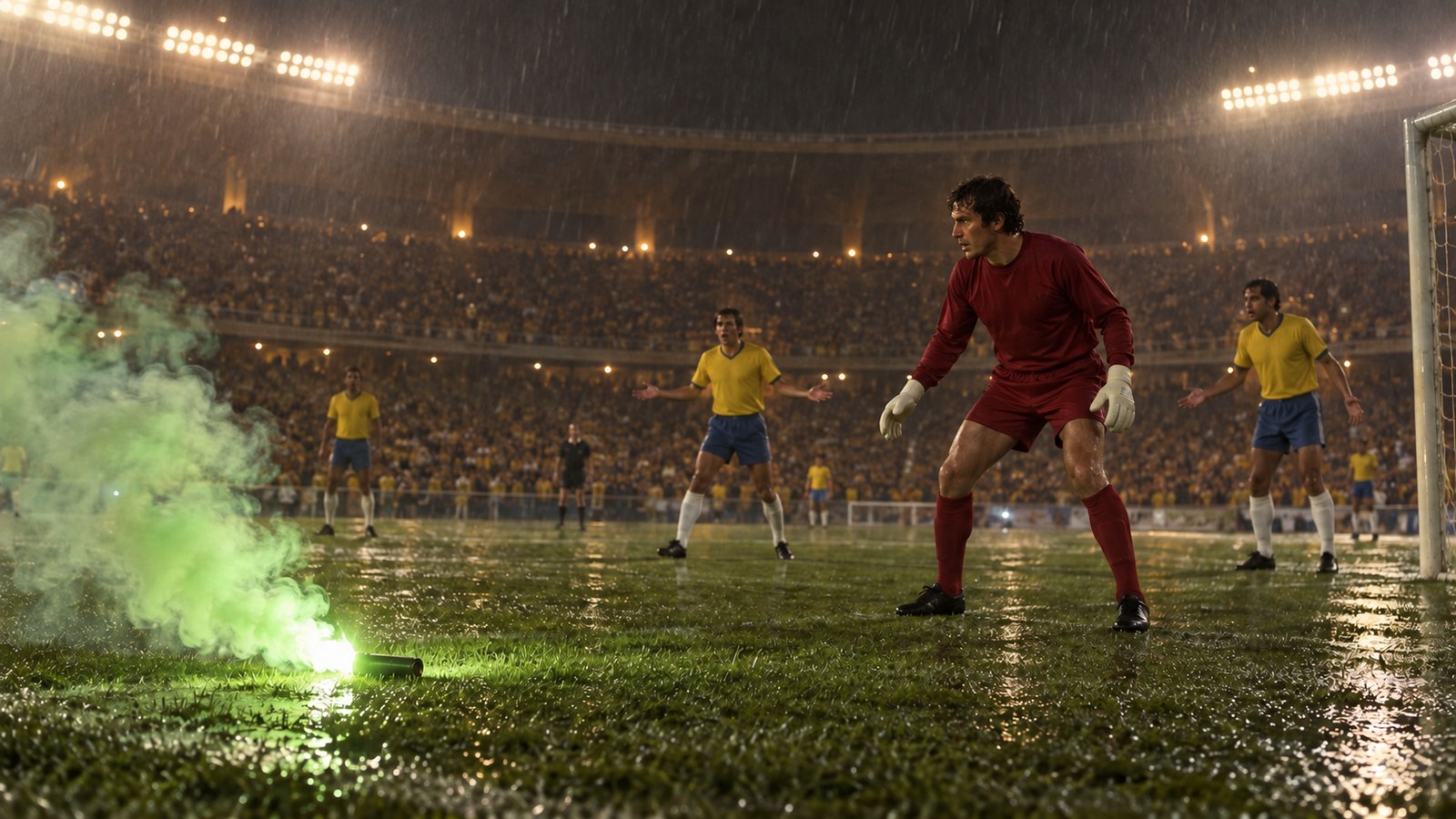
Later in the half, the qualifier stopped. A supporter in the Brazilian section launched a green signal flare. It arced over the running track, landed several feet from Rojas and burned on the grass. The goalkeeper fell and covered his face. When teammates reached him, blood was visible on his forehead and shirt.
The physical scene encouraged a fast conclusion. There was a dangerous projectile on the field. There was an injured player beside it. Chile’s players, led away by defender Fernando Astengo, refused to resume. Loustau tried to persuade them back. FIFA representatives offered assurances that the match could continue safely, according to a contemporary report, but the Chilean delegation rejected them and remained off the field.
This was the hinge. Leaving the pitch transformed the apparent injury from an incident for the referee into a bid to determine the result. If the crowd had struck the goalkeeper and made the field unsafe, Chile could argue that sporting defeat had become impossible to judge. If the flare had missed, the walkout carried a completely different meaning.
A photographer preserved the missing distance
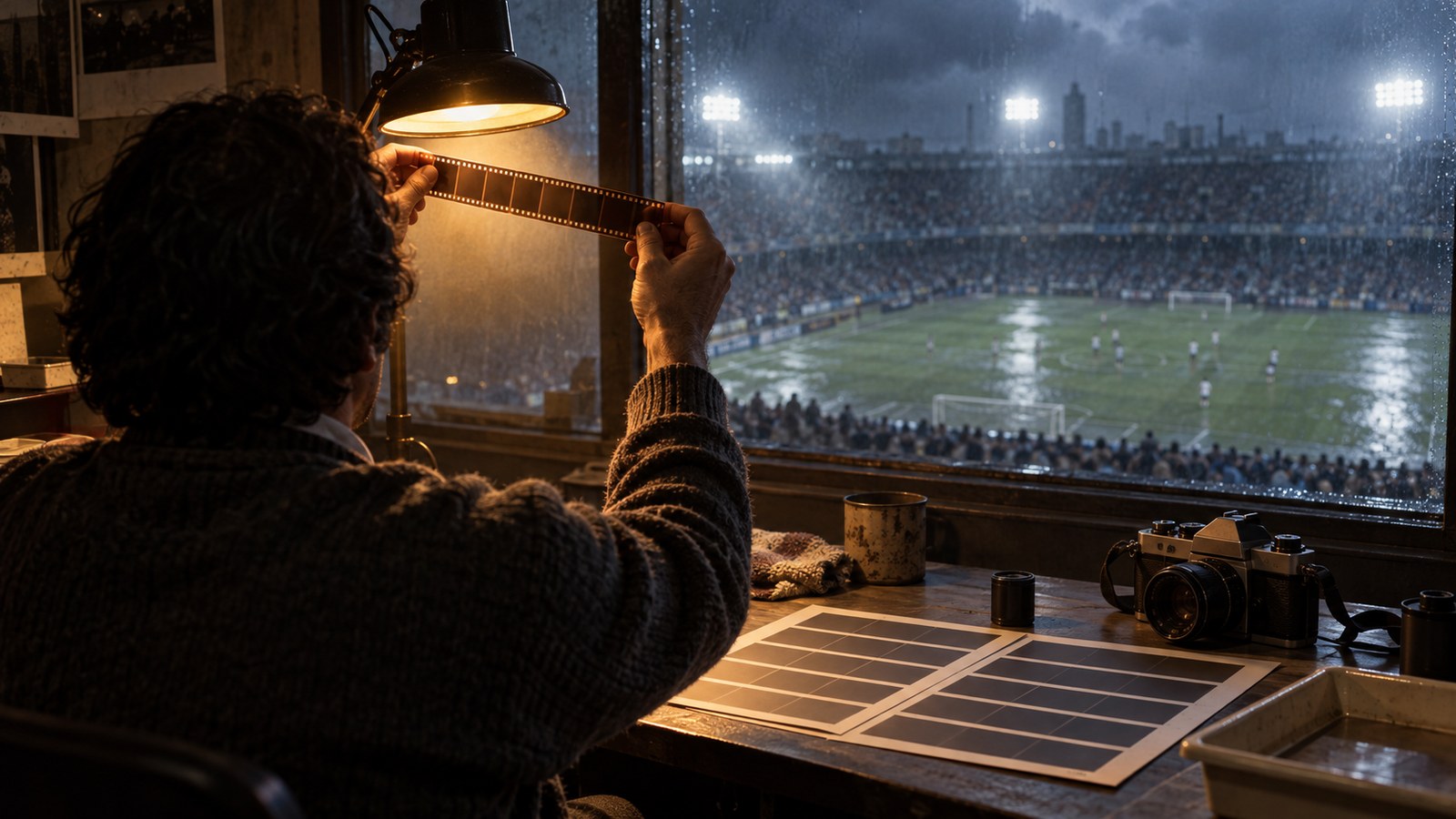
Alfieri, an Argentine photojournalist working at the match, immediately said the flare had not hit Rojas. That claim was unwelcome amid the confusion. Chilean broadcaster Nicanor Molinare challenged him, but Alfieri kept the evidence rather than the argument. After the match he handed his film roll to the Brazilian football authorities.
The developed sequence separated two events that the live spectacle had fused together. The flare descended and exploded away from the goalkeeper. Rojas went down with a cut that showed no burn or gunpowder trace. Photographs could not by themselves reveal how the wound had appeared, but they removed the thrown object as its physical cause.
Brazilian police identified the supporter who launched the flare as 24-year-old Rosenery Mello do Nascimento. Her act remained reckless; proving that the flare missed did not make throwing it acceptable. Yet discipline in this case depended on keeping separate questions separate. Who endangered the field? What injured Rojas? Why did Chile abandon the match? The camera answered the second question negatively before testimony supplied a positive answer.
On 10 September, FIFA treated the abandoned match as a Brazil walkover and entered the score as 2–0. RSSSF’s qualifying record preserves the same sequence in compressed form: the game was abandoned at 1–0 and awarded 2–0. Brazil topped the group with seven points and reached Italia ’90. Chile finished with five.
The sanctions distinguished the cut from the walkout
Rojas later admitted that he had cut himself with a blade concealed in a glove. The admission explained the wound that the pictures had disconnected from the flare. FIFA’s response reached beyond the goalkeeper. A contemporary Los Angeles Times report recorded a lifetime ban from organised football for Rojas, a $31,000 fine for Chile and the 2–0 award to Brazil. Other officials and staff members also received sanctions for their roles.
Chile’s largest punishment addressed the collective act, not only the simulated injury. The national team was barred from the qualifying competition for the 1994 World Cup. The distinction mattered. A goalkeeper had created false evidence, but a team delegation had acted on it by leaving the pitch and refusing the referee’s request to return. FIFA treated those as connected offences with different responsible parties.
The case therefore sits beside the 1973 Chile–Soviet Union match staged in an empty stadium as another moment when qualification became inseparable from authority. In 1973, the dispute was over whether a fixture should exist at all. In 1989, it was over who controlled the meaning of an interruption already seen by a vast crowd.
Rojas’s lifetime ban ended when FIFA granted clemency in 2001. By then, the immediate competitive effects could not be reversed. He had lost the rest of his playing career, and a generation of Chilean players had lost the chance even to enter the next qualifying tournament.
The case survives because the dangerous thing was still not the cause
The easiest retelling turns everyone into a prop: a villainous goalkeeper, a reckless spectator and a photographer who exposed them. The actual disciplinary problem was harder. A flare really had entered the field. Match officials really did have to consider safety. The fraud worked for a few minutes because it attached a false injury to a genuine breach.
That mixture is why Alfieri’s sequence mattered more than a general claim that Rojas looked suspicious. It supplied a measurable gap. Once the projectile and the wound were separated, investigators could test each account against physical evidence. The blood no longer proved impact. The flare no longer explained the blood. Chile’s refusal to continue no longer rested on the event its delegation had described.
Football often asks a referee to make a final decision from one angle and one instant. This qualifier escaped that limit because a still camera had preserved the approach, landing and aftermath. The photographs did not remove danger from the Maracanã or excuse the person who threw the flare. They prevented that danger from being used as proof of something it had not done.
Brazil qualified on the awarded result and Chile disappeared from two World Cup cycles. Rojas became inseparable from the hidden blade, but the governing lesson belongs to the strip of film: when spectacle collapses several events into one, discipline depends on reconstructing the space between them.
Sources
- Los Angeles Times, contemporary reports from September and October 1989
- RSSSF, 1990 World Cup qualifying records
- Wikipedia, El Maracanazo and Roberto Rojas reference pages