
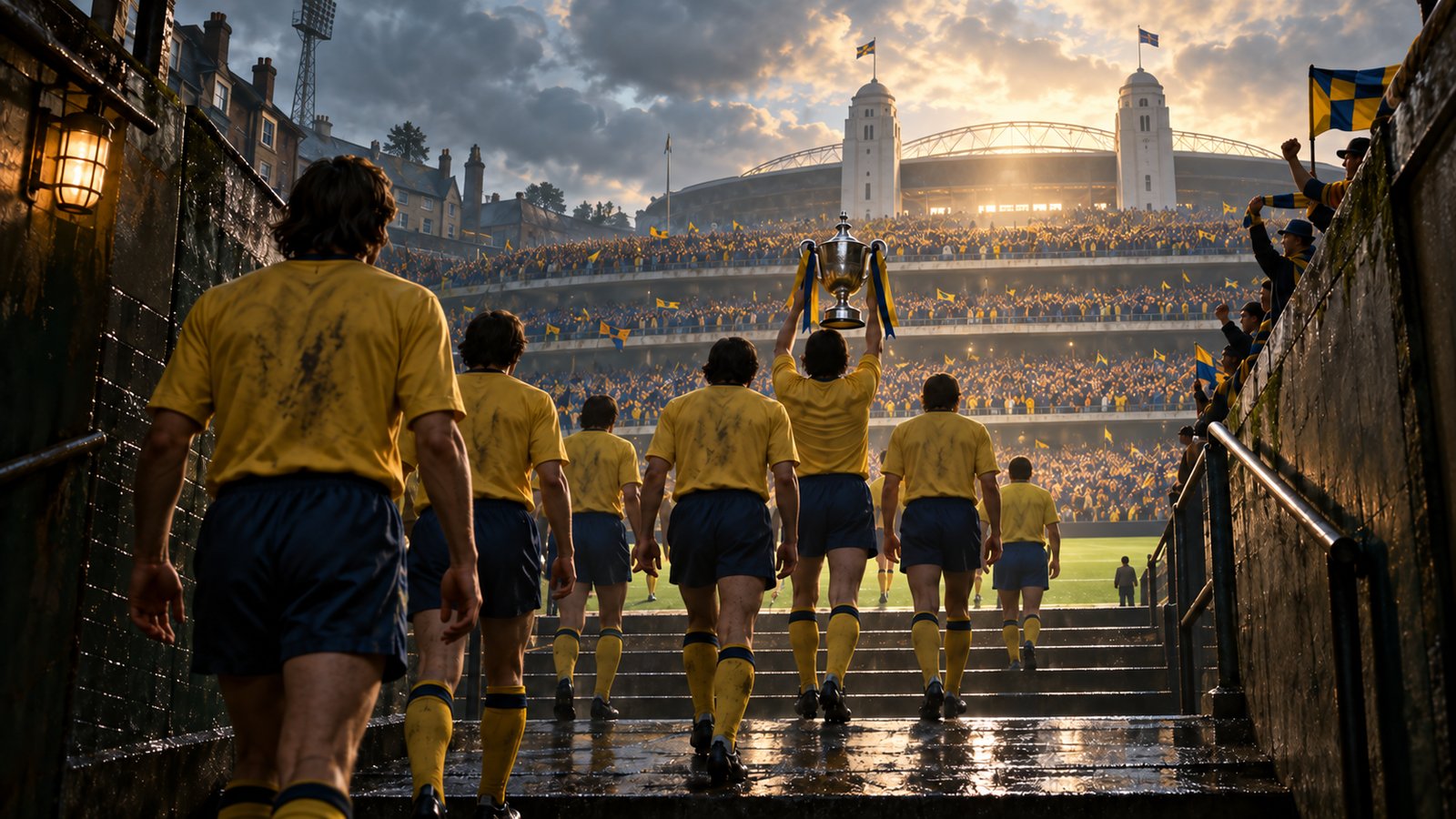
Three lines in Oxford United’s record look almost like a printing error. Third Division champions in 1983–84. Second Division champions in 1984–85. League Cup winners in 1985–86, while spending their first season in England’s top flight.
The sequence matters more than any one trophy. Oxford did not arrive at Wembley after years of comfortable consolidation. The club changed divisions twice, changed managers, fought to remain in the First Division and pursued a cup run at the same time. On 20 April 1986, that run ended with a 3–0 victory over Queens Park Rangers before 90,396 people.
It was Oxford’s first major trophy and remains the clearest surviving marker of an ascent that moved faster than the usual football story can comfortably explain. The interesting question is not simply how a small club won at Wembley. It is how one squad carried momentum through three different competitive problems without losing its nerve when the architect of the climb was no longer in the dugout.
The table changed before the expectations could catch up
Oxford’s 1982–83 season had ended with fifth place in the Third Division. A year later, Jim Smith’s side won the division with 95 points under the scoring system then in use. The numbers show the scale of the jump: 28 wins from 46 matches, 91 goals scored and only seven defeats. Promotion was emphatic rather than accidental.
The next division did not slow them. In 1984–85, Oxford won 25 of 42 league matches, scored 84 goals and conceded 36. Their total of 84 points delivered the Second Division championship and a second consecutive promotion. A club that had spent the previous decade moving between the second and third tiers was suddenly preparing for the First Division.
Those totals also explain why the later cup win cannot be detached from the climb. Oxford had learned to attack a season as a sequence of solvable tasks. They were not protecting a single surprise result. They were repeatedly collecting points, recovering between fixtures and carrying a productive forward line into unfamiliar rooms.
Top-flight survival created a different kind of pressure
The First Division exposed the cost of that speed. Oxford’s league record in 1985–86 was ten wins, twelve draws and twenty defeats. They scored 62 goals but conceded 80, finishing 18th in a 22-club division. The smooth upward line had become a fight to avoid dropping straight back down.
Those figures describe a side that could still score but no longer controlled most weeks. The 62 goals were evidence that the attacking confidence of the promotions had travelled upward. The 80 conceded showed how severely the new level punished it. Oxford had to find enough results to stay above relegation while accepting that the rhythm of the previous two championships was gone. Every cup date therefore landed inside a league campaign with little spare comfort.
There was another disruption. Smith, who had managed the successive promotion campaigns, left for Queens Park Rangers before Oxford’s first top-flight season. Maurice Evans took charge of the promoted side. This gave the campaign an unusual split: the habits of the ascent belonged partly to one manager, while the work of surviving and directing the cup run belonged to another.
That distinction prevents the story from becoming a simple tale of one charismatic builder. Smith had assembled and advanced the team. Evans inherited players who already knew how to win across a long calendar, but he had to use them in a division where Oxford conceded almost two goals for every league victory they recorded. The cup offered no refuge from pressure; it added knockout decisions to a demanding league schedule.
Three consecutive 3–1 home wins opened the route
Oxford entered the League Cup in the second round and beat Northampton Town 4–1 across two legs. The return at Northampton was their only away win of the entire cup run. What followed was an unusually regular sequence at the Manor Ground: Newcastle United, Norwich City and Portsmouth were each beaten 3–1.
The Norwich result removed the holders. The Portsmouth tie in the fifth round also carried a small sign of tension around the club. A boycott over increased ticket prices helped produce an attendance roughly 400 below Oxford’s league average. Even while the team was approaching its first League Cup semi-final, not every supporter accepted every condition attached to the occasion.
Aston Villa finally broke the pattern. The first leg of the semi-final finished 2–2 at Villa Park. In the return, goals from Jeremy Charles and Les Phillips gave Oxford a 2–1 win and a 4–3 aggregate victory. The margin was narrow, but the route was substantial: six opponents, nine matches and a progression from a two-legged tie against Fourth Division Northampton to a semi-final against established top-flight opposition.

Wembley reunited Oxford with the manager who had left
The final produced the neatest possible human complication. Queens Park Rangers were managed by Smith. The man who had led Oxford through two promotions now stood in the opposite technical area, trying to stop the team he had helped prepare for this level.
QPR had earned their place by eliminating Liverpool 3–2 on aggregate in the semi-final. Their route also included Watford, Nottingham Forest and Chelsea. Oxford therefore entered Wembley facing neither a decorative finalist nor an opponent overwhelmed by the venue. Yet the match itself moved decisively in yellow.
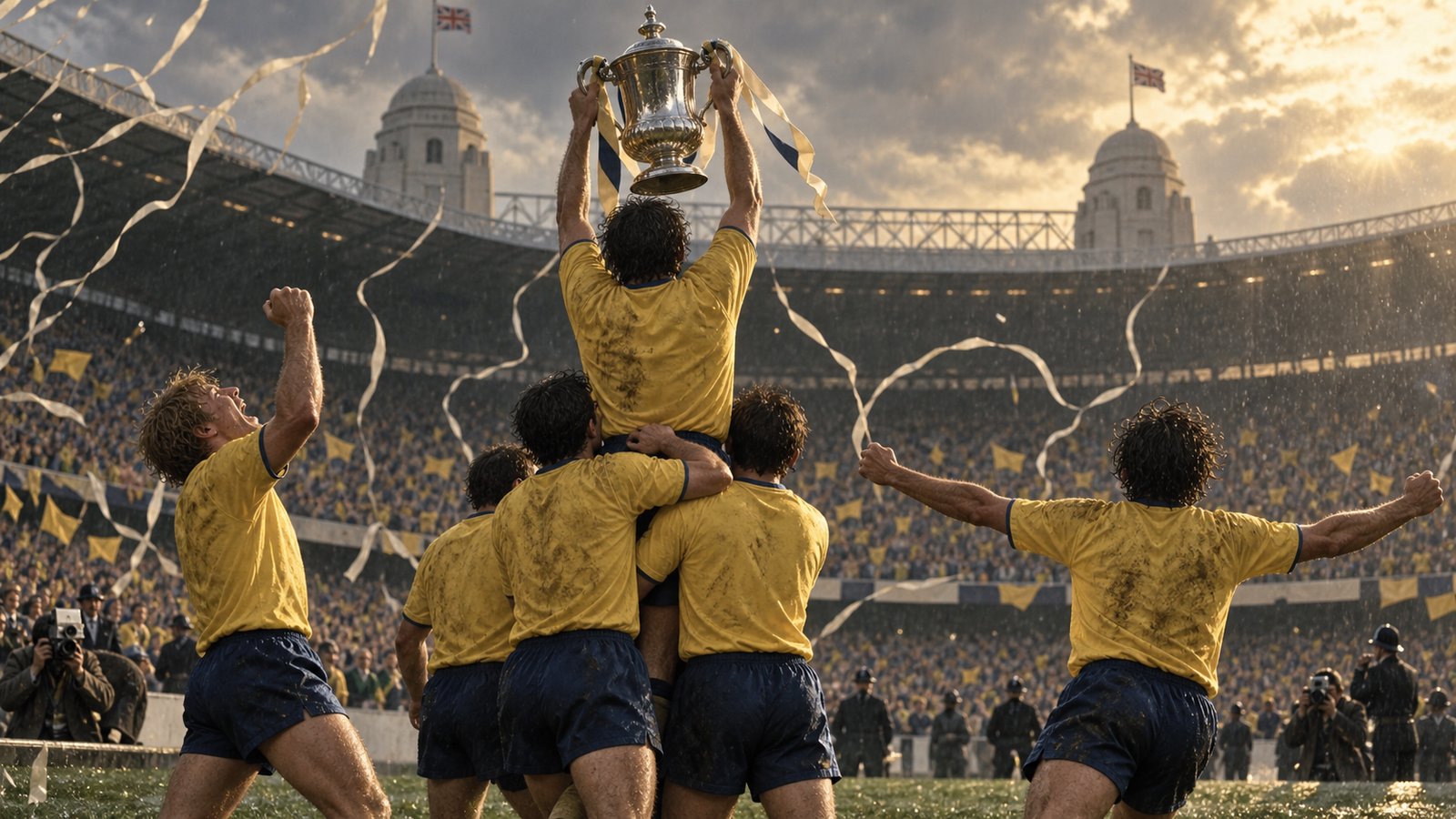
Trevor Hebberd opened the scoring in the 40th minute. Seven minutes after half-time, Ray Houghton made it 2–0. The third arrived in the 86th minute when QPR goalkeeper Paul Barron saved John Aldridge’s shot and Jeremy Charles followed in the rebound. Hebberd was named man of the match.
The scoring spread is revealing. A midfielder began it, another midfielder extended it, and a forward completed the result by following a teammate’s attempt. Oxford did not spend the afternoon clinging to one early break. They added goals in three different phases of the final and kept a clean sheet against a side that had already survived a difficult route to Wembley.
The reward stopped at the English border
Winning the League Cup would ordinarily have brought a place in the following season’s UEFA Cup. Oxford never received that European continuation. The ban on English clubs after the Heysel disaster remained in force, so the club’s first major honour did not produce a first European campaign.
That missing trip gives the story its final sharp edge. The team had travelled from the Third Division to the top flight in two summers, survived its first season there and won a national cup. The football ladder had opened at astonishing speed. The international door was closed by a decision that had nothing to do with Oxford’s own conduct or results.
Oxford finished 18th again in 1986–87 and were relegated the following season. The summit was brief. Yet brevity does not make the climb less real. Across three seasons, the club solved three separate problems: winning from the front in the Third Division, repeating that authority one level higher, and absorbing top-flight defeats without allowing a knockout campaign to unravel.
The 1986 final survives because it concentrated the whole ascent into ninety minutes. The former manager was across the pitch. The successor held the cup. Players developed during consecutive promotions supplied all three goals or their immediate creation. Oxford’s rise was not a straight line to permanent status; it was a rapid accumulation of competence, pressure and timing that reached its clearest expression at Wembley.
There is a useful comparison with Kaiserslautern’s title immediately after promotion: both teams carried lower-division momentum into a level expected to expose them, but Oxford’s prize arrived through a cup run while league survival remained uncertain.
Sources
Football Club History Database; English Football League; RSSSF; 1986 Football League Cup final record; Oxford United historical record.