
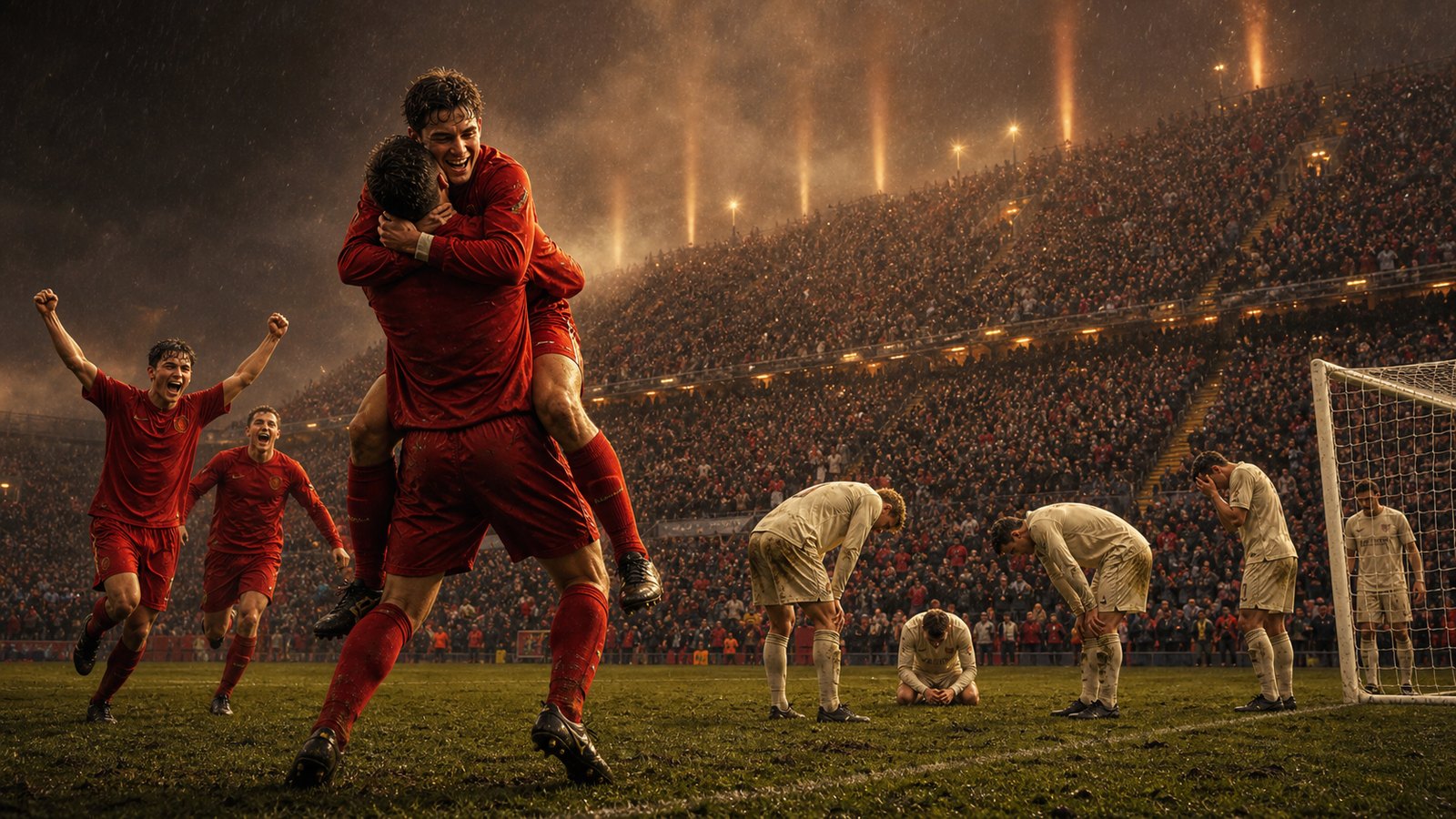
On 2 August 1997, the newly promoted side walked into Munich’s Olympiastadion and found the champions waiting. Bayern’s team sheet carried Oliver Kahn, Lothar Matthäus, Bixente Lizarazu, Mario Basler and Giovane Élber. Kaiserslautern had spent the previous season in the second division. Their coach, Otto Rehhagel, had been dismissed by Bayern four days before the first leg of the 1996 UEFA Cup final.
The fixture looked like an unnecessarily cruel welcome. Instead, Michael Schjønberg scored in the 80th minute and Kaiserslautern won 1–0. It was one result in August, too early to define anything, but it established the tension that would hold for nine months: every time the established order offered Rehhagel’s team a reason to retreat, they found another reason to stay.
Relegation left a cup in the cabinet and a wound in the town
Kaiserslautern had been a founding Bundesliga member in 1963 and remained in the top flight until 1996. The first relegation arrived only five years after the club’s 1991 league title. Even winning the 1996 German Cup could not soften the contradiction. A team could lift a national trophy and still be sent down in the same spring.
Rehhagel reached the Betzenberg with his own public bruise. Bayern had removed him before the UEFA Cup final he had guided them toward, then Franz Beckenbauer took charge for the victory over Bordeaux. Rehhagel was already one of Germany’s most experienced coaches after fourteen years at Werder Bremen, but Kaiserslautern did not need a celebrity performance from the touchline. They needed someone who understood how to turn wounded pride into weekly discipline.
The response in the 1996–97 second division was decisive. Kaiserslautern won the title by ten points and returned at the first attempt. The ground remained too large, loud and emotionally invested to feel like a normal second-tier venue: DW records an average crowd of 36,709. Winning became a repeated action rather than a memory from the club’s better years.
The champions appeared on both sides of the opening whistle
Bayern began the new season as Bundesliga champions under Giovanni Trapattoni. They had also added the German Cup and League Cup, while Kaiserslautern’s stated ambition was survival. Yet the visitors brought a useful advantage into the Olympiastadion: most of their core had already spent a year solving matches together. Schjønberg later credited those second-division victories with creating a winning spirit.
The 1–0 upset was followed by another 1–0 win, this time against Hertha Berlin. Kaiserslautern reached the top after the second matchday, regained first place after the fourth and then stayed there. The calendar had begun with the most intimidating trip available. Surviving it altered the emotional scale of every challenge that followed.
A sweeper stepped forward while the forwards chased back
Rehhagel’s football was more flexible than the later caricature of his defensive teams. Miroslav Kadlec operated as the libero behind Harry Koch, Axel Roos and Michael Schjønberg, but the Czech international was not confined to emergency clearances. Comfortable with the ball, he could leave the back line and add a spare player in midfield. The movement changed the numbers around possession without requiring a substitution or a new formation.
Ahead of him, Ciriaco Sforza supplied angles and set-piece delivery. The Swiss midfielder had returned after spells with Bayern and Inter. Brazilian winger Ratinho offered another creative route, while Andreas Buck and Martin Wagner supplied work around them. A young Michael Ballack made occasional appearances, but the title was not built around the future star he would become.
Olaf Marschall gave the attacks a hard endpoint. He scored 21 league goals, combining his heading with Sforza’s delivery and the pressure created by teammates recovering the ball. Marschall later described Rehhagel’s instructions with striking simplicity: the coach named the lineup, the players handled the rest, and everyone—including the strikers—defended immediately after losing possession. Freedom was paired with a shared obligation.
The return match made belief measurable
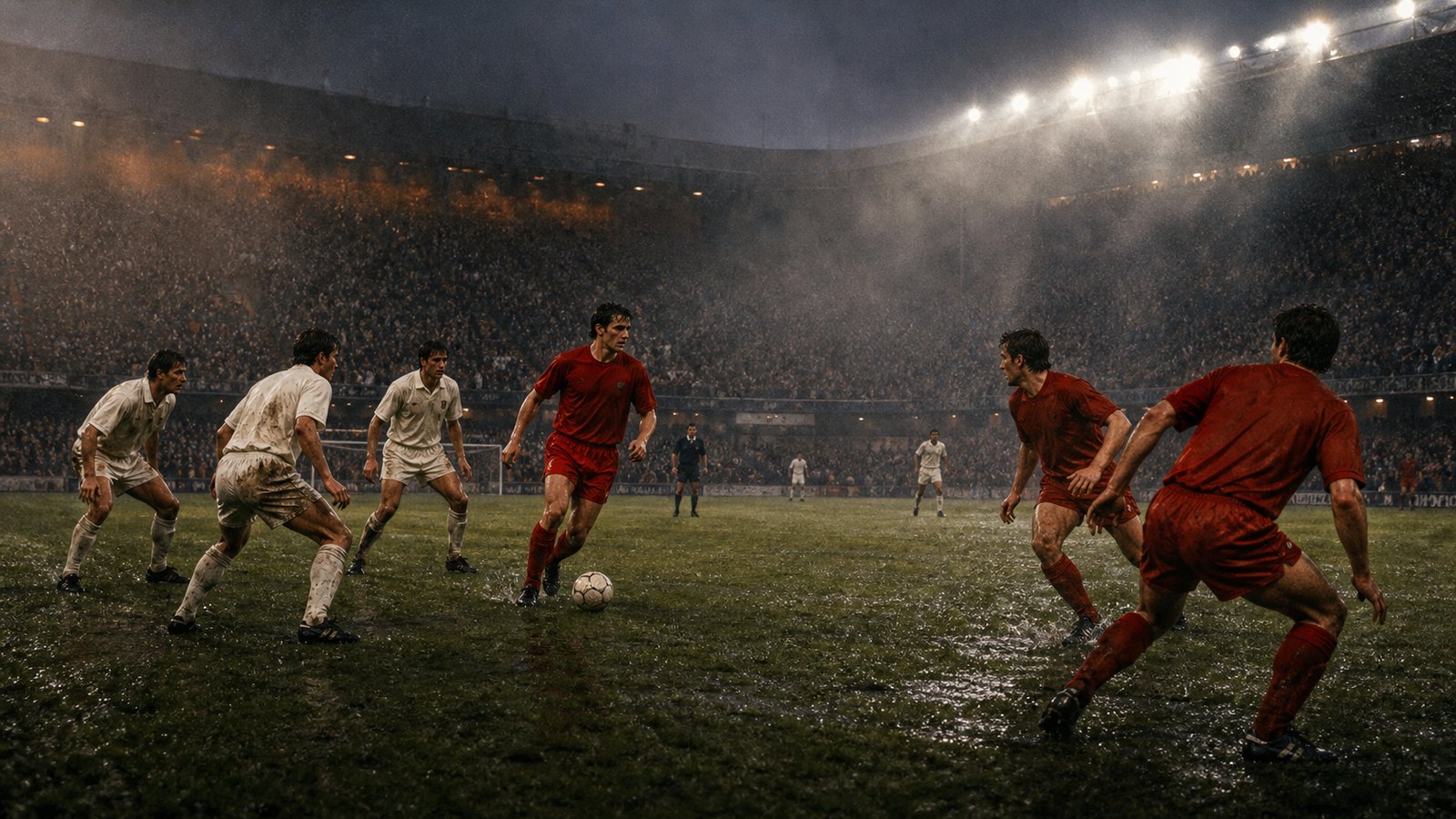
Bayern recovered from the opening defeat with a fifteen-match unbeaten run. That kept the chase close until late November, when Bayer Leverkusen beat them 4–2. One week later, Bayern travelled to the Fritz-Walter-Stadion for the rematch. The ground on the Betzenberg hill was full, and the league table could no longer dismiss Kaiserslautern as an August curiosity.
A Dietmar Hamann own goal and a strike from Marian Hristov produced a 2–0 home win. Kaiserslautern had taken six points from the defending champions and opened a seven-point lead. This was not a side merely protecting an unexpected position. Against the team best equipped to reclaim it, Rehhagel’s players had won twice in two different settings.
The winter was less cinematic. Kaiserslautern drew more matches than they won from December onward, the kind of stretch that normally returns an outsider to its expected place. Their earlier work gave them room, and Bayern supplied more when they lost three consecutive league games across February and March. The title race became an endurance test rather than a weekly demand for another miracle.
The cushion had been constructed before the weather turned. After the opening victory, Kaiserslautern collected 33 of the next 42 available points by December. Rehhagel kept public talk fixed on survival while the table delivered a different message. Inside the team, the evidence was practical: Koch, Roos and Schjønberg could defend the penalty area; Kadlec could step beyond them; Sforza and Ratinho could make the next pass; Marschall and Jürgen Rische could finish attacks. Each part answered a different problem, so a draw or a quiet week did not erase the method.
There was also pressure in refusing to call the race what it had become. Every opponent now arrived knowing the promoted club led Germany, and every home crowd came expecting that lead to survive. The same supporters who had filled a second-division ground turned the Betzenberg into a weekly test of whether belief could remain useful without becoming panic.
Wolfsburg brought the plate within reach
On 1 May 1998, with one match still to play, Wolfsburg came to Kaiserslautern. The hosts won 4–0. Bayern drew 0–0 at Duisburg, so the mathematics finished the story before the final weekend. A club promoted the previous summer had become Bundesliga champion, the first and still only team to do it in the competition.
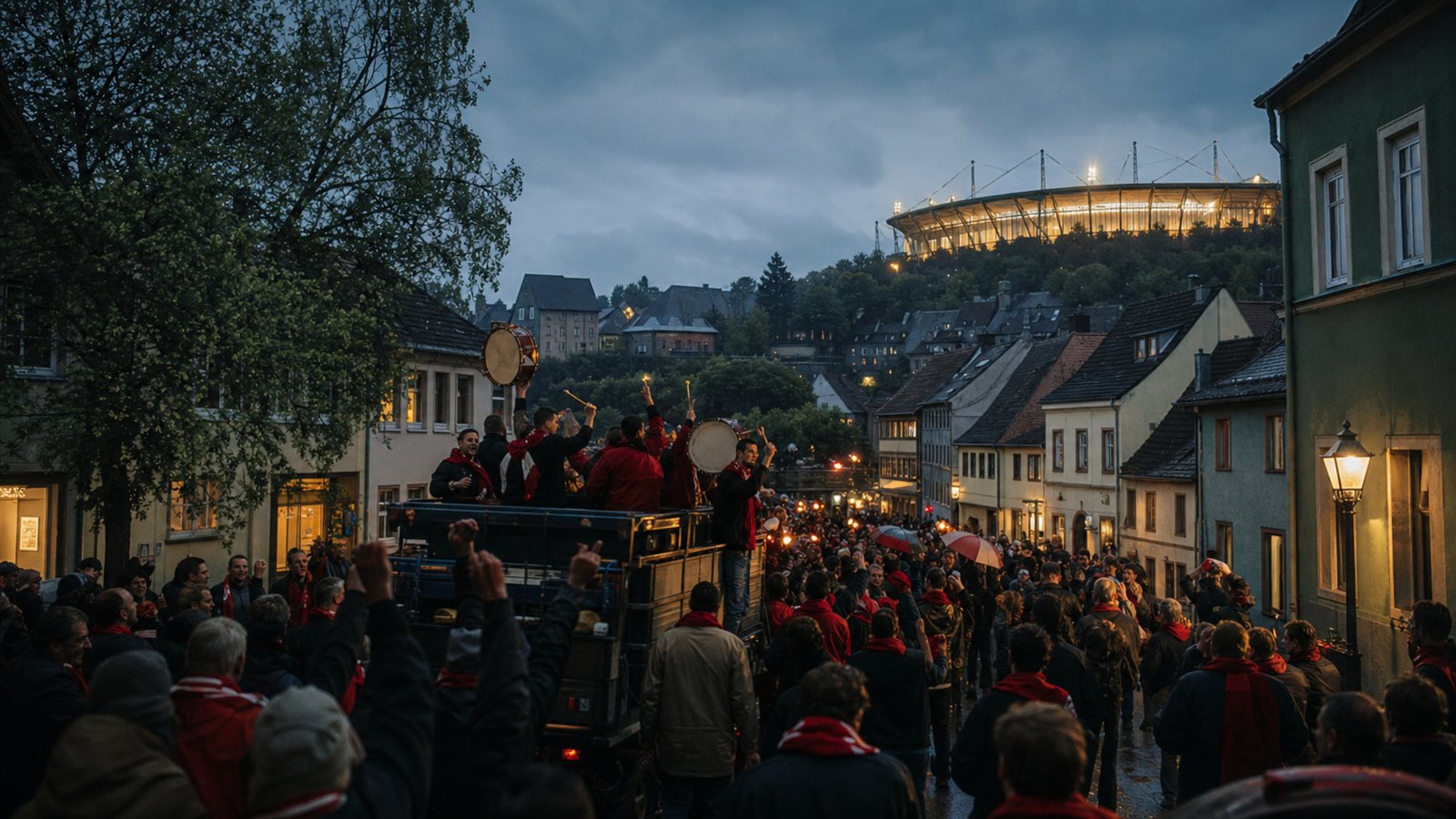
The celebration suited a town of fewer than 100,000 people carrying a stadium-scale identity. Sky Sports recalled a week-long party, streets turned red and players beating drums from the roof of an open vehicle. The trophy was Kaiserslautern’s second Bundesliga-era title and fourth German championship overall.
What made the achievement durable was not an absence of quality. Sforza could dictate, Marschall could finish and Kadlec could change the geometry of a match. Its surprise came from how familiar players were arranged and trusted. Rehhagel gave defined roles to footballers discarded or underestimated elsewhere, while retaining the collective habits built during promotion.
The following season exposed how narrow the moment had been
Kaiserslautern finished fifth in 1998–99 and reached the Champions League quarter-finals, where Bayern won 6–0 on aggregate. Brehme and Kadlec had left after the title. Ballack moved to Bayer Leverkusen in 1999, and the relationship between Rehhagel and captain Sforza deteriorated publicly. The unusual balance of experience, freedom, tactical fit and common purpose did not reproduce itself on command.
That aftermath sharpens the 1997–98 season. The club did not discover a permanent shortcut around football’s financial hierarchy. It carried the confidence of a second-division champion directly into a first match against Bayern, then supported that confidence with a libero who advanced, forwards who recovered the ball and a coach who absorbed attention without scripting every decision.
The opening afternoon in Munich remains the cleanest way into the story. A promoted team was expected to learn its place from the champions. Schjønberg’s late goal supplied a different lesson: Kaiserslautern already knew how to win together. By the time Germany understood how far that habit might carry them, the red shirts were seven points clear and the league plate was heading for the Betzenberg.