
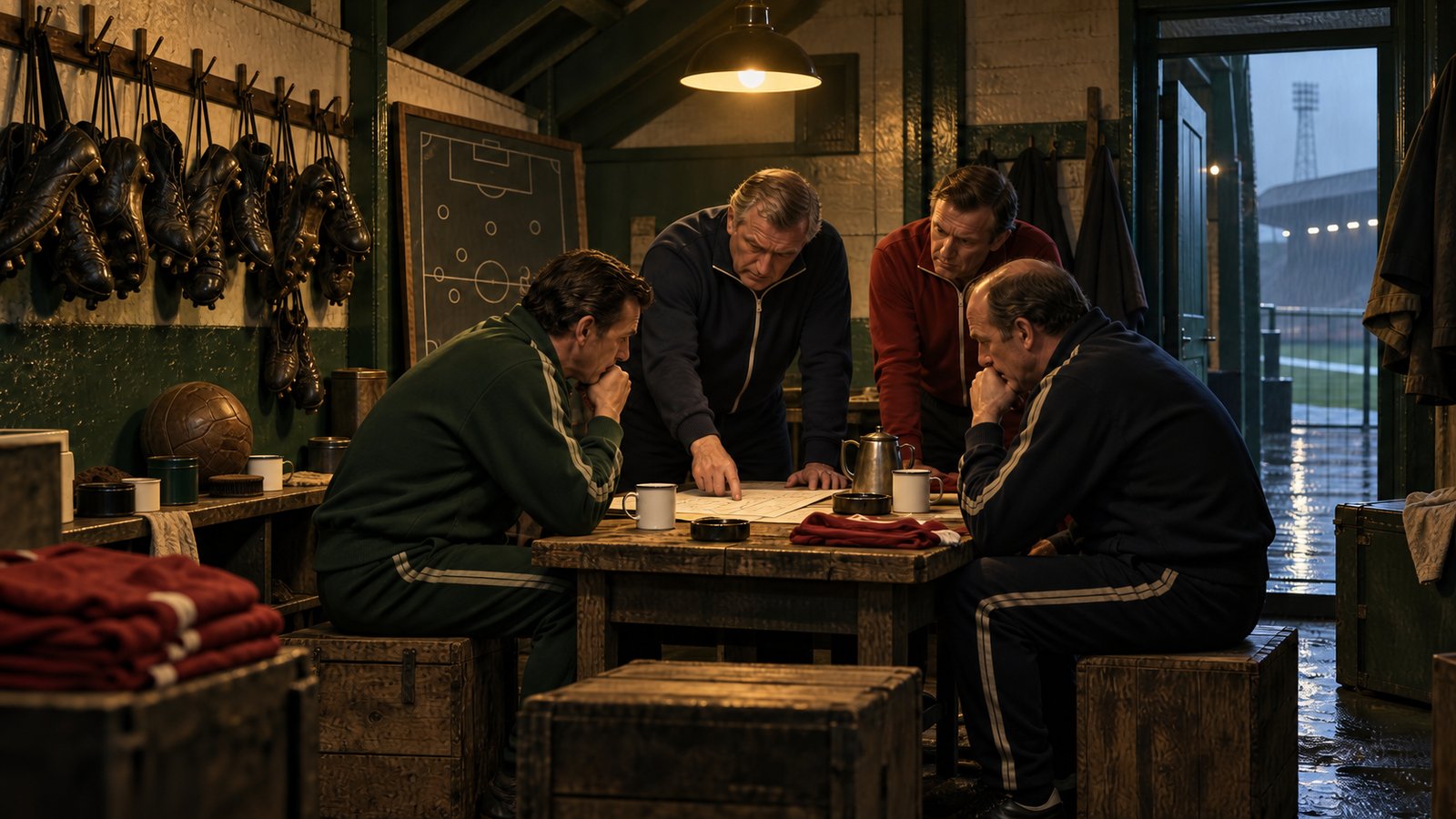
There were no leather chairs in Liverpool’s most famous coaching office. The room beneath Anfield’s old Main Stand held boots, polish boxes, forgotten kit and crates or barrels sturdy enough to sit on. Players usually knocked and waited outside. Visiting managers, by contrast, might be invited in after a match and offered a drink.
The arrangement sounds more like backstage clutter than an engine of sporting advantage. Yet this cramped room gave Liverpool’s coaches a place to compare what each of them had noticed before the detail vanished into the next fixture. They discussed players, opponents, fitness and recruitment, then carried those conversations into training. When one manager left, people who knew the discussions from the inside were ready to continue them.
The Boot Room mattered because information crossed its threshold repeatedly: from pitch to notes, from visitor to scout, from reserve team to first team, and from one generation of staff to the next. Its great product was not a single formation. It was institutional memory with mud on its shoes.
The furniture revealed how little mythology needed to begin
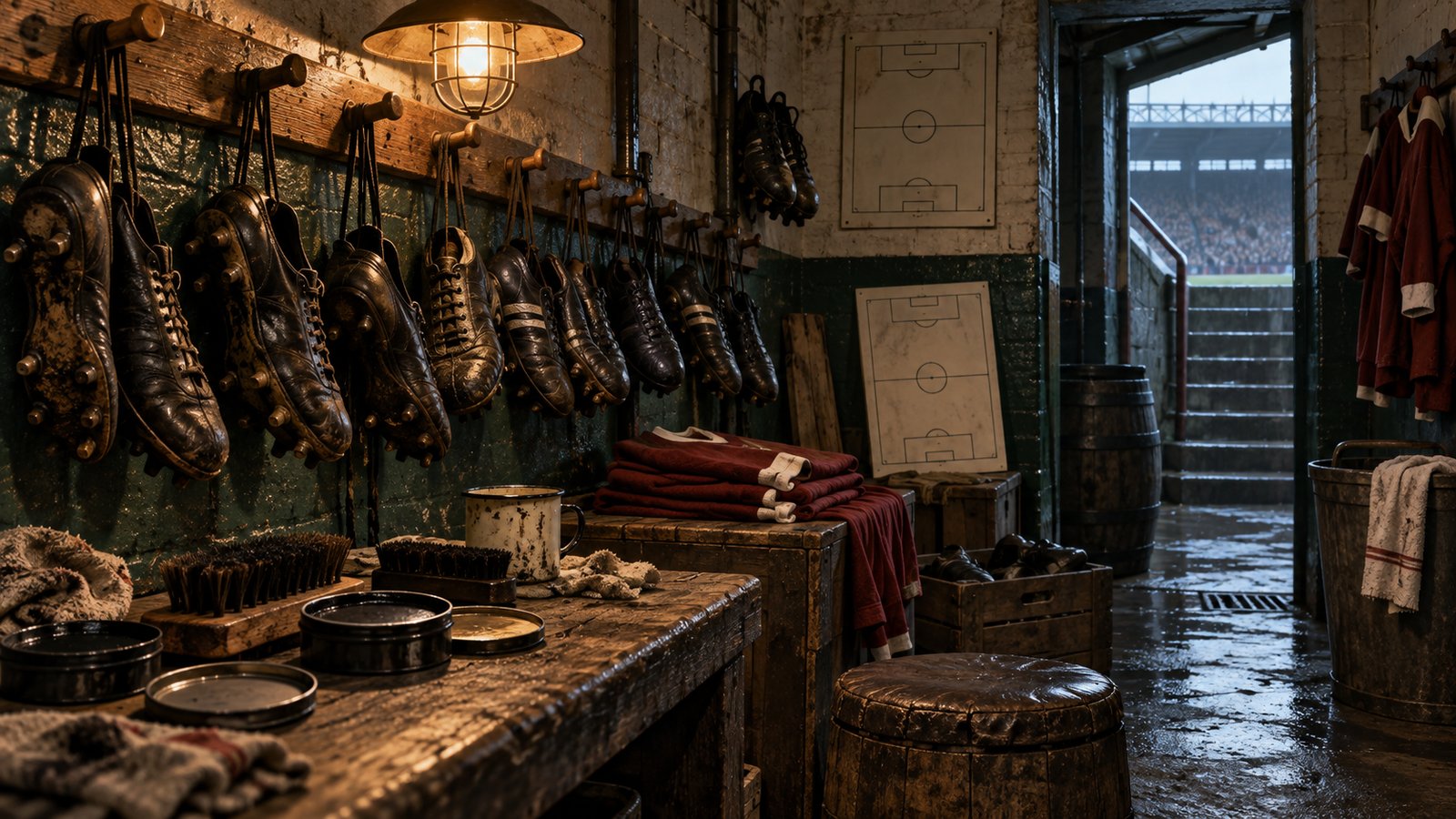
Liverpool FC’s own account calls the space a glorified cubby-hole. The Independent found no conventional seating in descriptions of it, only old crates and barrels beside metal shelving. Boots hung nearby. Polish boxes, soft drinks and stray pieces of kit occupied the shelves. Ale arrived because Joe Fagan helped a local amateur side and received crates as thanks.
That physical modesty is useful. Liverpool did not design a grand strategy suite and then recruit experts to fill it. Coaches already doing different jobs needed somewhere to gather. The club credits Fagan with establishing the habit, while also correcting the popular impression that Bill Shankly spent every spare hour inside. The room was primarily the staff’s territory.
The core included Fagan, Bob Paisley and Reuben Bennett, with Albert Shelley close to Shankly’s working group. Their usefulness overlapped without becoming identical. Bennett drove fitness work. Fagan brought tactical judgement and the trust of players. Paisley coached and watched for transfer possibilities. Shelley was not even on the payroll, according to historian Peter Hooton, but Shankly valued his service and attachment to the club.
When Shankly arrived in 1959, those existing relationships could have looked like inherited baggage. Instead, he retained the staff and told them his own approach would work in cooperation with theirs. After Liverpool’s 1961–62 promotion from the Second Division, he publicly said the achievement could not have happened without Bennett, Fagan, Shelley and Paisley. Authority remained clear, but observation was distributed.
An open door after matches became a listening device
The room’s boundary depended on who approached it. Players generally had to knock. Opposition managers were warmly admitted after games. Over a drink, Liverpool’s staff asked questions and listened for details that the formal contest had not revealed.
This was hospitality with a second function. Ian St John recalled that matchday visitors sometimes talked freely. The Independent reported that Evans and Ronnie Moran would note references to promising players and send scouts to investigate. A casual name spoken among boots could therefore travel into a dossier, then onto a scouting itinerary.
Written memory reinforced the conversation. Kevin Keegan remembered Shankly recording training and match events in a diary known as “the Bible.” Evans and Moran later maintained detailed files, making an old observation available when a similar problem appeared again.
Anfield itself had accumulated football history long before this room acquired its reputation; the split that left Liverpool behind at Anfield in 1892 explains the ground’s unusual origin. The Boot Room added another layer to that geography. Opponents entered the stadium to compete, then sometimes entered a cupboard where their words became part of Liverpool’s preparation.
The reserve team kept succession from becoming imitation
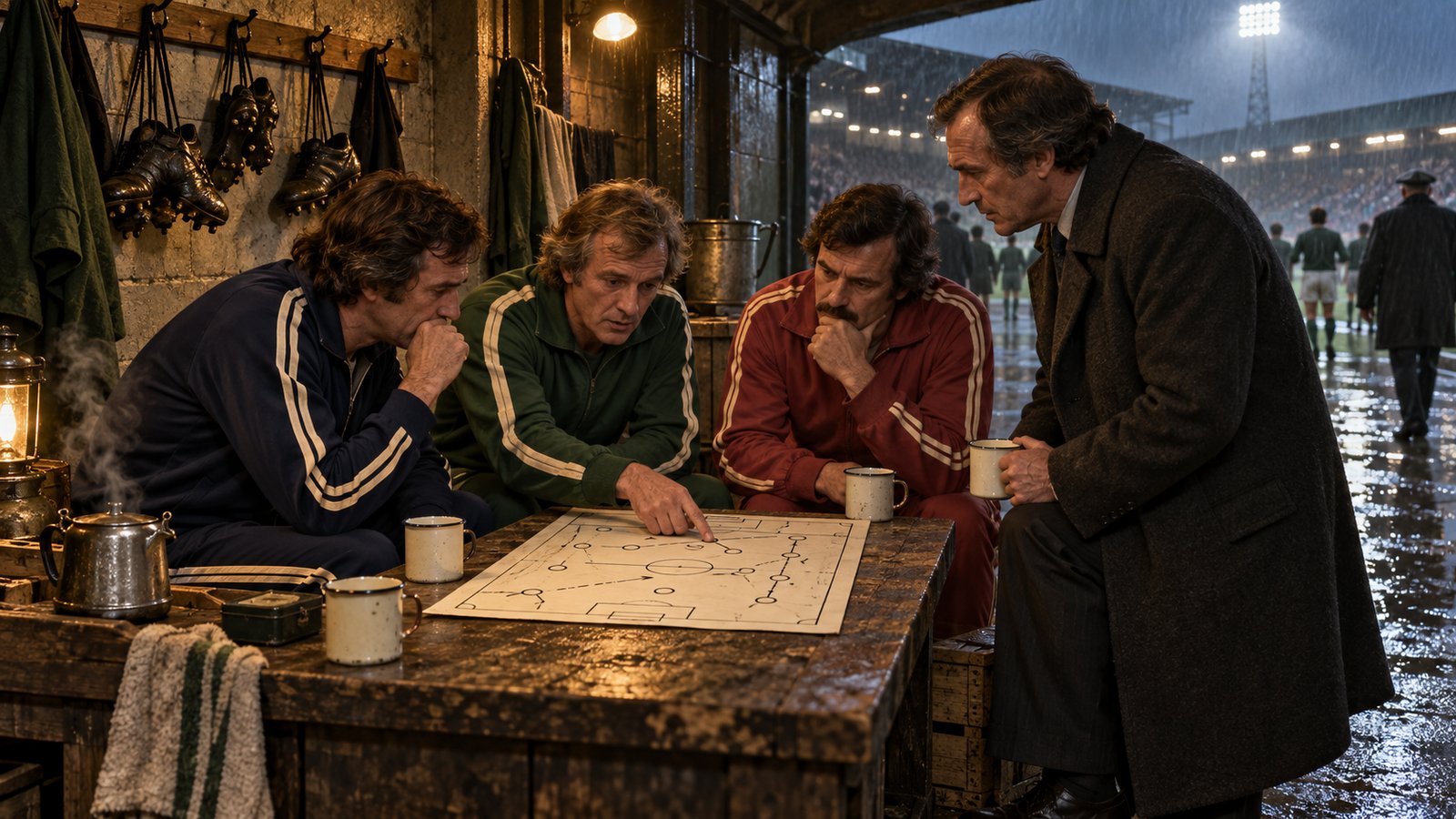
Continuity can easily be mistaken for everybody thinking alike. The Boot Room’s strength came from people learning the same club while carrying different responsibilities. Roy Evans offers the clearest view. He had supported Liverpool, joined as a young player and made only a handful of league appearances. When Paisley succeeded Shankly in 1974, Evans moved into coaching.
His reserve-team assignment was not decorative apprenticeship. Liverpool won the Central League seven times in nine years under him. Ian Rush, Ronnie Whelan and Sammy Lee were among the players who passed through that environment. Evans said he could choose from those outside the first team and use talented 16-year-olds against adults. The reserve side became a difficult classroom rather than a waiting room.
The coaches were broad generalists. Evans remembered four or five people carrying duties later divided among 15 or 20 specialists. They coached different levels and even took kit home to wash. A future manager had therefore seen selection, development, logistics and dressing-room mood at close range.
Succession therefore transferred more than slogans. Paisley had been a Liverpool player, physiotherapist, coach and assistant before taking charge. Fagan knew tactics and player relationships before following him. Evans learned through the reserves and the daily labour around them. Each inherited a shared record of how Liverpool worked, but each also arrived with a different map of the building.
Paisley proved that a quieter successor could change the team
Shankly’s retirement in 1974 tested whether continuity could survive the loss of its loudest voice. Club secretary Peter Robinson later described the difficulty of persuading Paisley to accept the job. At his first training session as manager, Paisley joked that he was only looking after the shop until a proper manager arrived.
The results demolished any idea that internal promotion meant timid maintenance. Across nine seasons, Paisley won six league titles, three European Cups, three League Cups, a UEFA Cup, a Super Cup and three Charity Shields. Liverpool’s first European Cup came with a 3–1 victory over Borussia Mönchengladbach in Rome in 1977. Further wins followed in 1978 and 1981.
His method also included hard renewal. After the 1981 European Cup victory over Real Madrid, Paisley decided the team needed freshening. Ray Clemence, Terry McDermott and David Johnson were among the established players phased out within a year. His recruitment could be equally decisive: Phil Neal arrived from Northampton, Ian Rush from Chester, Ronnie Whelan from Home Farm and Bruce Grobbelaar from Vancouver Whitecaps. When Kevin Keegan left for Hamburg, Kenny Dalglish came from Celtic for a fee that left Liverpool with a reported £60,000 difference.
Accumulated knowledge did not require preserving every player or practice. It gave Paisley confidence about what could change without dissolving the team’s identity. His quiet manner concealed a manager willing to replace European champions.
The cupboard disappeared after its habits had weakened
Joe Fagan followed Paisley in 1983 and won the league, League Cup and European Cup in his first season. Internal promotion looked automatic, but it was not. Kenny Dalglish, appointed in 1985, had not served the same coaching apprenticeship. Evans’s appointment in 1994 briefly restored the direct lineage.
The numbers still show what the line produced. BBC Sport credited Paisley, Fagan and Evans together with seven league titles, five League Cups, four European Cups and one UEFA Cup. Yet a successful chain can become a trap if a club treats inheritance as proof that the next answer must always come from the same room. Continuity needs renewal in personnel and method, not reverence for a location.
Anfield refurbishment removed the physical Boot Room in 1996. Evans left the manager’s job in November 1998, the widely recognised end of its managerial era. The demolition did not suddenly erase Liverpool’s knowledge, just as preserving the cupboard would not have guaranteed success.
Fagan resisted the magical explanation even while the legend grew. Liverpool FC records his insistence that people made the room. Its real lesson sits in the traffic through the doorway: specialists comparing evidence, visitors being heard carefully, observations becoming records, young players facing older ones and successors learning the club before receiving authority. The boots and ale made the story memorable. The repeated conversion of experience into decisions made it useful.
Sources
- Liverpool FC — “The Bootroom Boys”
- The Guardian — “Liverpool’s coaching evolution: from the boot room to a throw-in specialist”
- BBC Sport — “Bob Paisley: How Liverpool’s reluctant hero began a revolution”
- BBC Sport — “The legacy of the boot room”
- The Independent — “Legends among the boots: The Boot Room”