

On a Saturday morning in June 2002, Wimbledon Common became an improvised recruitment office. There was no inherited first team waiting nearby, no academy list to promote and no transfer department quietly arranging introductions. Two hundred and thirty unattached footballers arrived because a club that was less than a month old had invited anyone who believed he was good enough to be seen.
The trial is an unusually concrete beginning for AFC Wimbledon. The club was created after the Football Association allowed Wimbledon FC to move to Milton Keynes, but protest alone could not fulfil a fixture. Supporters had to turn refusal into administration: raise money, hire a manager, secure a ground, choose colours and identify players. The 230 hopefuls on the Common reveal how quickly an argument about belonging had to become a working football team.
Two Days Between a Ruling and a New Club
Wimbledon supporters had already lived through years away from their old Plough Lane ground. The first team played at Selhurst Park while successive proposals raised the prospect of a permanent home elsewhere. When chairman Charles Koppel argued that relocation was necessary to prevent bankruptcy, the question ceased to be only where matches would take place. It became a dispute over whether a club could remain representative of its community after moving roughly 60 miles away.
On 28 May 2002, the FA approved the decision of a three-person independent commission permitting the move to Milton Keynes. The commission’s report recorded opposition from hundreds of correspondents, supporters’ groups and fans of other clubs. Yet there was no further sporting appeal available. For those who rejected the decision, winning the argument inside the existing process was no longer an option.
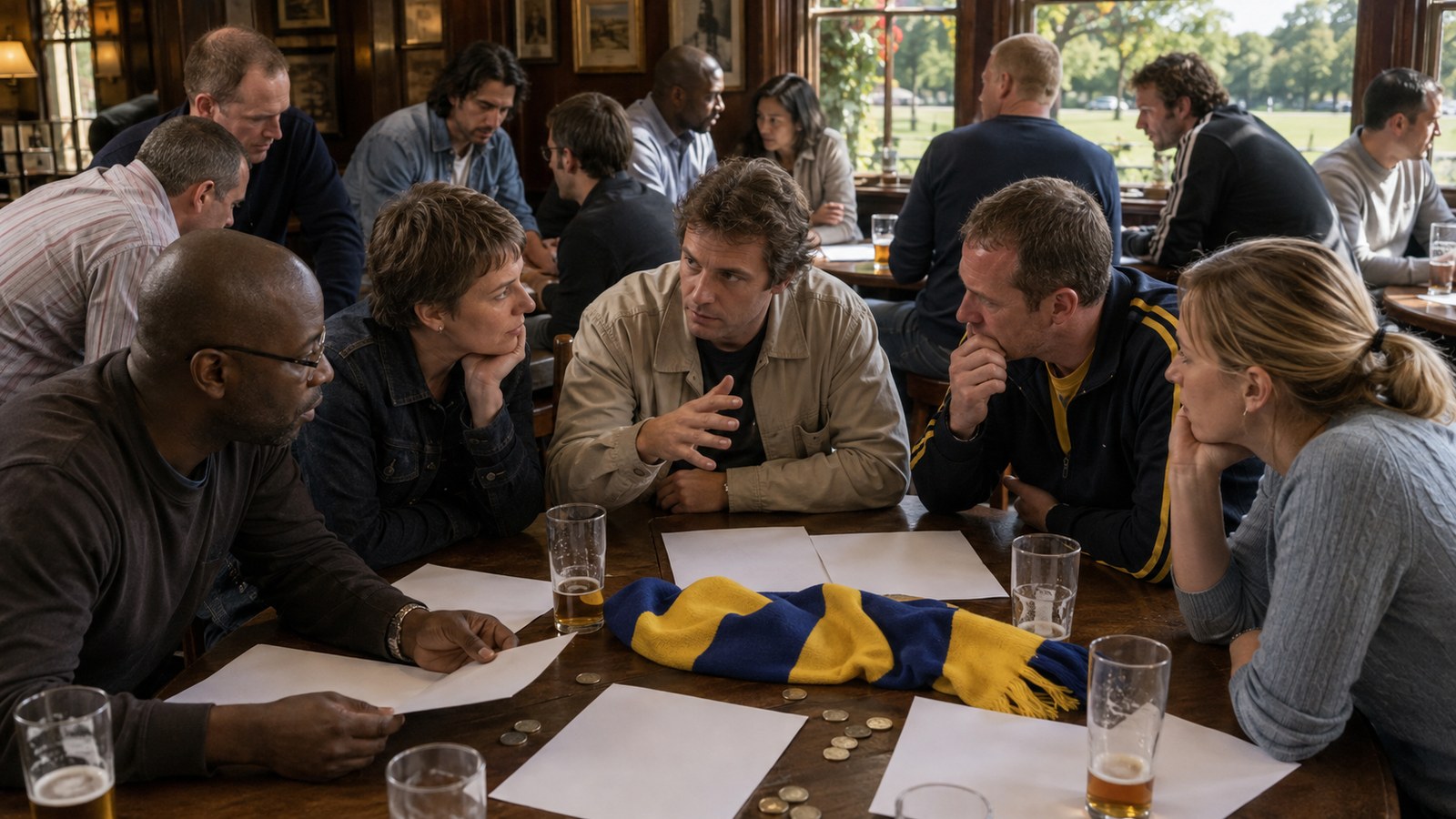
Kris Stewart, Marc Jones and Trevor Williams were among the supporters who met at the Fox and Grapes on Wimbledon Common to decide what could still be done. On 30 May, a Wimbledon Independent Supporters’ Association meeting heard the proposal for a new community club called AFC Wimbledon. An appeal for funds began. The interval between permission to relocate and the alternative club’s conception was measured in days, not in a carefully financed pre-season.
A Badge, a Ground and a Manager Before a Squad
A name was only the first commitment. The founders needed a legal and sporting structure capable of entering a league. They affiliated with the London and Surrey county associations and applied to the Combined Counties League Premier Division, then the ninth tier of the English pyramid. Kingsmeadow in Kingston provided a ground, even though it was not in Wimbledon itself. The difference mattered: this was a practical tenancy close to the displaced support, not a claim that geography no longer counted.
On 13 June, a packed Wimbledon Community Centre saw the new manager, playing strip, badge and stadium presented to supporters and journalists. Former Wimbledon player Terry Eames took charge. The familiar blue and yellow offered continuity, but the important work was functional. Eames had fewer than four weeks before the club’s first friendly and no retained list from which to build.
AFC Wimbledon had supporters before it had players and a declared relationship with a place before it had a league record. Here, the public made the founding decision and then assembled what is normally hidden behind the team sheet.
Two Hundred and Thirty Chances on the Common
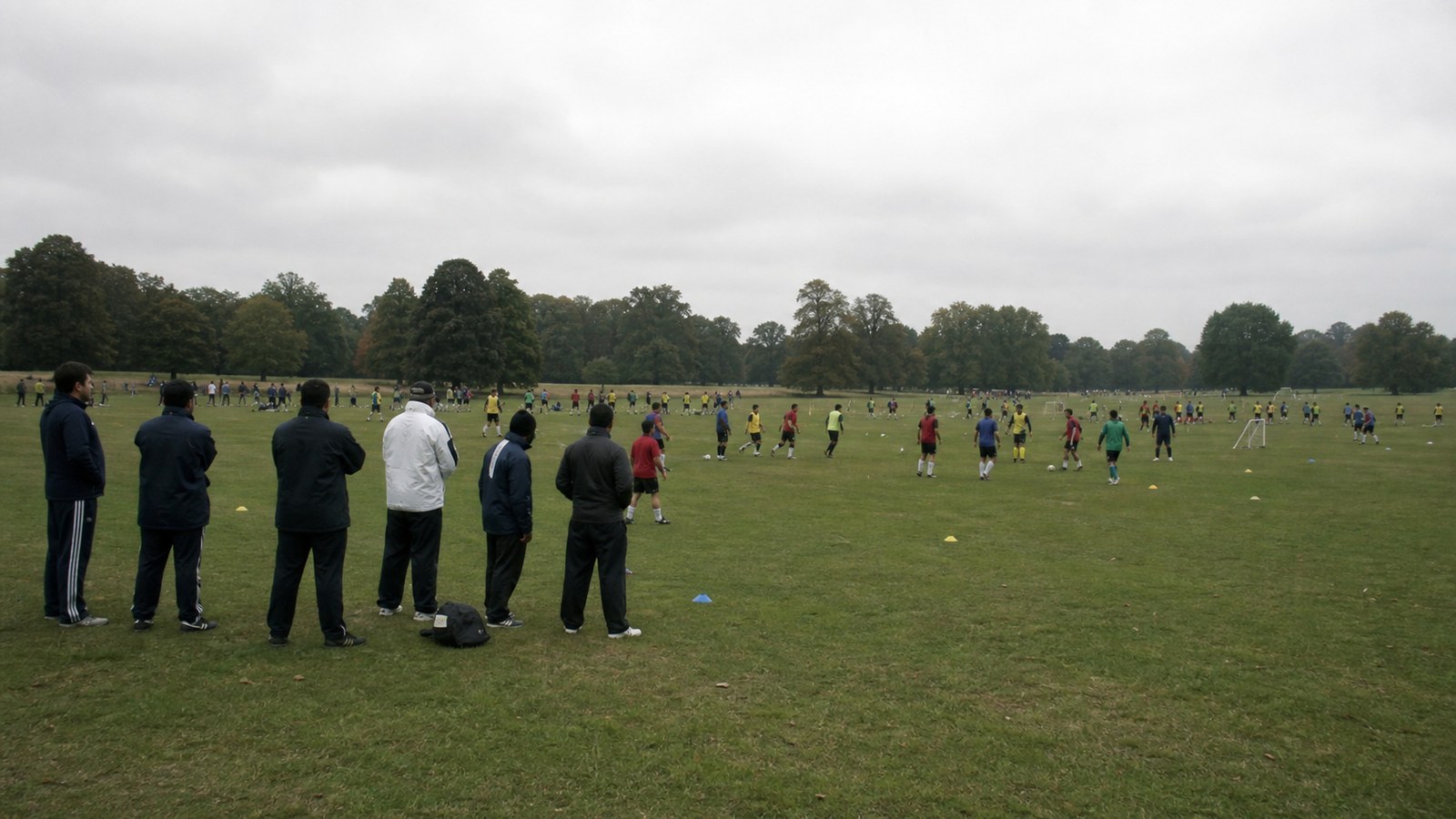
The open trial on 29 June made that reversal visible. Two hundred and thirty hopeful players came to Wimbledon Common. Some had non-league experience; others simply answered the invitation. Coaches had to reduce a crowd into positions, combinations and decisions quickly enough to create a side. There was no romance in the selection process for those released. A supporter-founded club still needed centre-backs who communicated, midfielders who kept their shape and forwards who could turn chances into points.
The same Common contained the pub where founders had discussed starting again, and now it held the footballers from whom the first squad would be chosen. Registration forms, fitness judgements and tactical balance had to follow the emotional declaration.
Eleven days later, on 10 July, AFC Wimbledon played Sutton United in a friendly. The new side lost 4–0. The result offered no convenient origin myth, but 4,657 people attended. That crowd did not prove the team was ready. It proved that a substantial audience had transferred its attention before there was any success to reward it.
A Ninth-Tier Season With First-Team Pressures
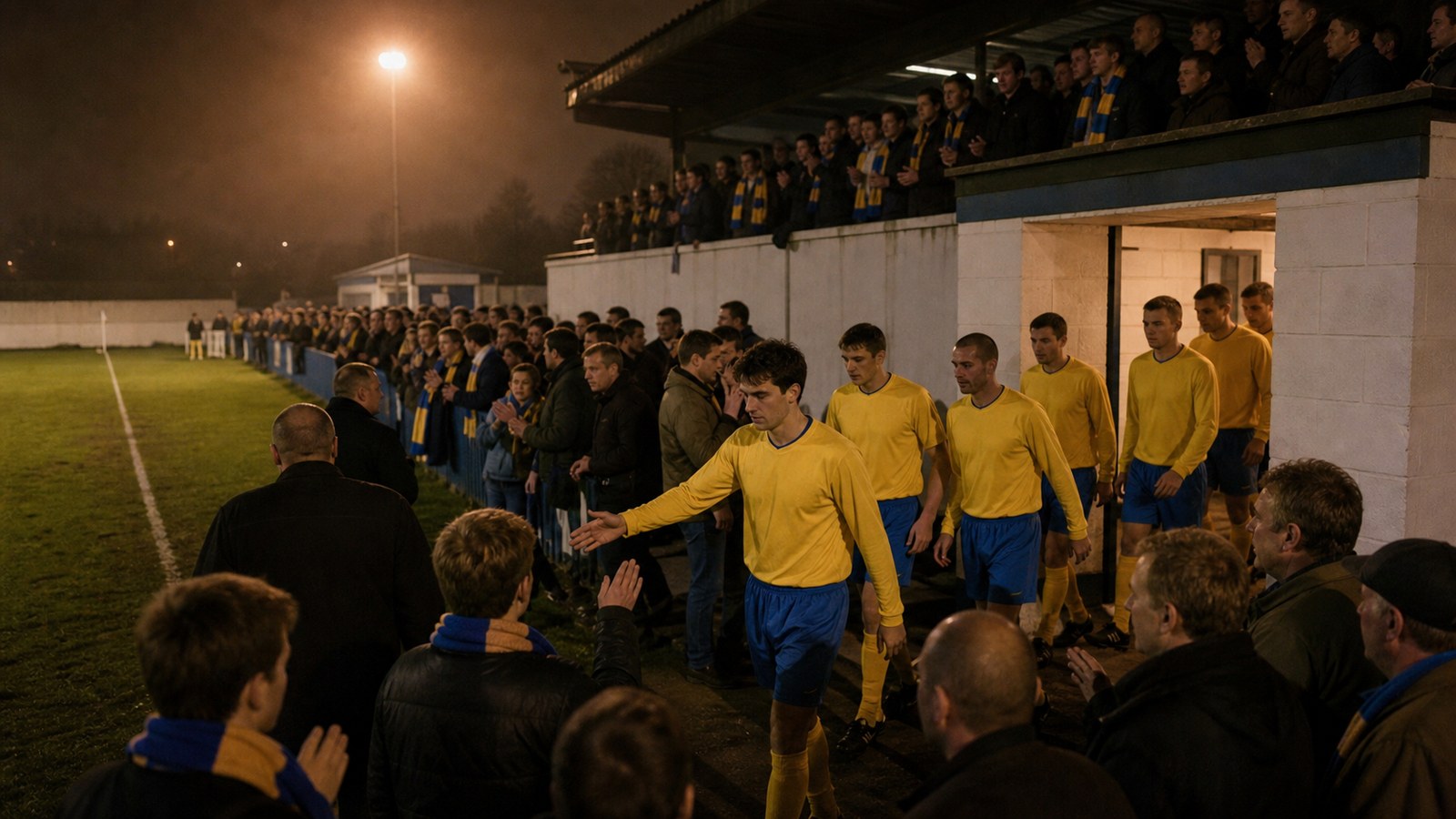
AFC Wimbledon entered the 2002–03 Combined Counties Premier season at level nine. Opponents were established in that environment, while the new club brought crowds, scrutiny and expectations far beyond the division’s ordinary scale. Volunteer work had to sustain ticketing, travel, communications and matchday operations. The founders had created a club quickly; they could not demand that the league become easy in return.
The team finished third and missed promotion despite winning its final 11 league matches. That ending changed the meaning of the first year. The season had not delivered an immediate step up, yet it showed that a squad assembled from an open call could improve into a coherent side. The recruitment morning on the Common had produced more than a symbolic eleven for a launch fixture.
The next campaign demonstrated how rapidly the football operation matured. AFC Wimbledon won its opening 21 league games in 2003–04. It completed the league season unbeaten with 42 victories and four draws, then added the Premier Challenge Cup. Across two seasons, the club eventually reached 78 consecutive league matches without defeat, a senior English record at the time.
Those numbers can make the rise look inevitable. It was not. Managerial disruption arrived during the unbeaten season, and each promotion demanded a team suited to a stronger level. The club survived ordinary football problems after an extraordinary birth.
Belonging Became a Sequence of Verifiable Acts
The relocation dispute asked a philosophical question: what makes a football club the same club? AFC Wimbledon answered through repeated practical acts rather than a single slogan. Supporters funded it, elected representation through the Dons Trust, attended its fixtures and carried the operation through the pyramid. Six promotions in 13 seasons took the club from the Combined Counties League to League One.
That journey can be read beside Charlton supporters’ campaign to return to The Valley. Charlton’s fans used local elections and sustained pressure to bring an existing institution home. Wimbledon’s supporters faced a different boundary: they built another institution when they believed the existing one had been detached from them. Both cases made fandom operational rather than decorative.
There is also a contrast with Real Oviedo’s share rescue. Oviedo supporters and distant allies injected money to keep a threatened legal entity alive. AFC Wimbledon’s founders could not preserve Wimbledon FC through investment. Their capital paid for affiliation, kit, rent and a new beginning. The object being protected was a relationship among team, place and public.
The Return Was Built Into the First Morning
In November 2020, AFC Wimbledon played at a new Plough Lane stadium, about 250 yards from the site of the old club’s former ground. It is tempting to treat that return as the point at which the story became complete. The deeper achievement had happened much earlier. Long before the stadium opened, the club had proved that the community could maintain a football institution through seasons that contained defeats, missed promotions and internal difficulties as well as celebrations.
The first trial remains the clearest image because it contains no guarantee. Two hundred and thirty players came; coaches had to choose; a team lost its first friendly 4–0; supporters kept coming. The old Wimbledon had been known for extracting competitive force from rejection and limited resources. The new club’s founders did something related off the pitch: they converted a ruling they could not reverse into a list of tasks they could complete.
AFC Wimbledon did not begin when a trophy was lifted or when Football League status returned. It began when supporters moved from saying what a club should represent to deciding who would play right-back on Saturday. On Wimbledon Common, identity became selection, organisation and risk. That is how an objection acquired fixtures of its own.
Sources
The Football Association independent commission report; BBC Sport; The Guardian and The Observer; Merton Council football history; AFC Wimbledon historical records.