
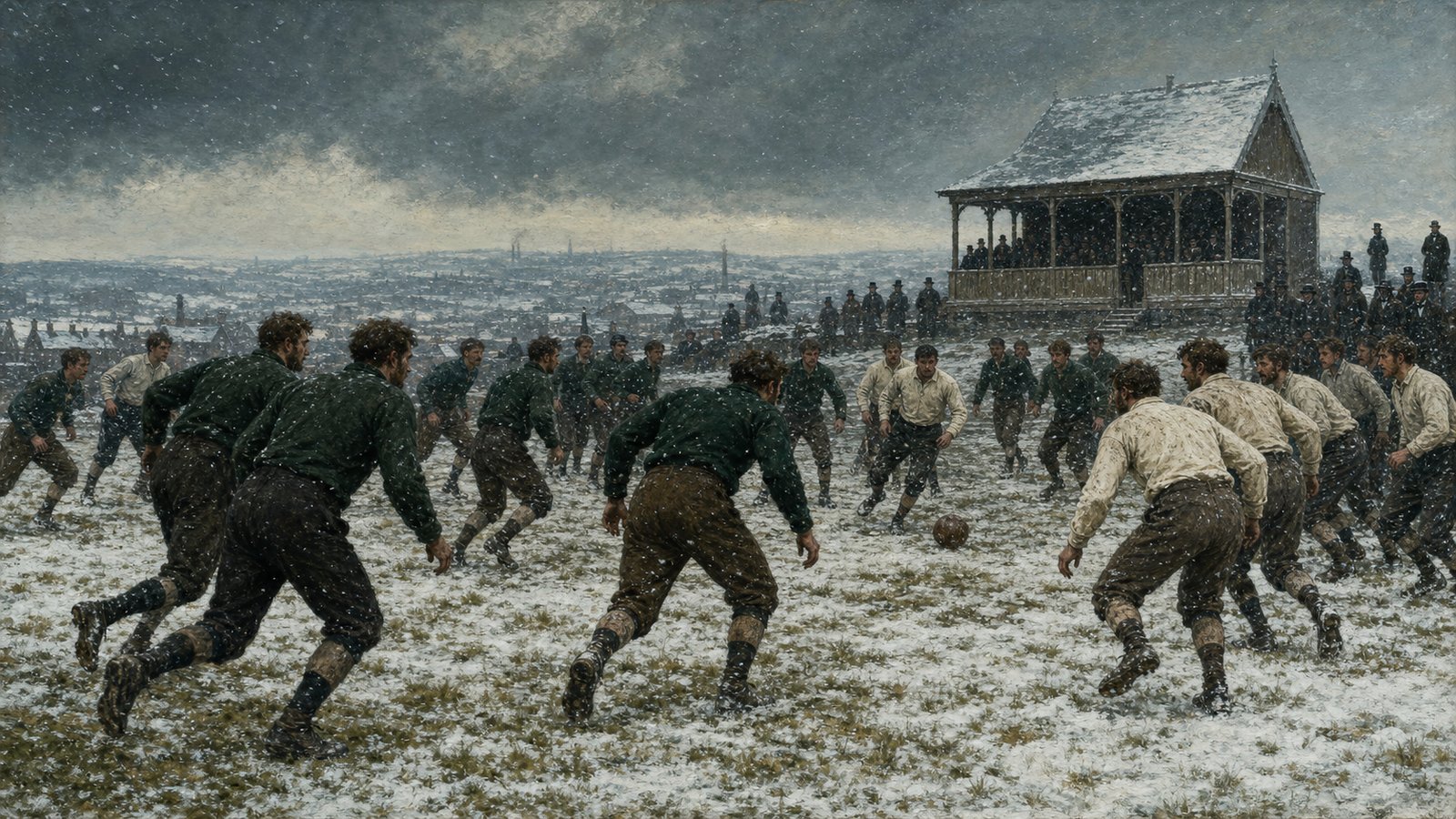
On Boxing Day 1860, football acquired something it had not previously possessed: two lasting clubs in the same city with a match to play against each other. Snow lay across Hallam’s cricket ground at Sandygate. A large crowd had still climbed to the site, roughly 800 feet above sea level, and the hosts met Sheffield under a local code rather than a national law book.
The result mattered less than the arrangement. Sheffield Football Club had spent three years creating opponents from within its own membership. Now Hallam offered a separate name, ground and community. The match turned a private sporting experiment into a relationship between institutions. Modern football’s derby culture did not begin with a packed grandstand or a league table. It began when one club finally had another club close enough to challenge.
Sheffield Had a Code Before It Had a Rival
Nathaniel Creswick and William Prest established Sheffield Football Club in October 1857 after meeting through a local cricket club. They also drew up the Sheffield Rules. This was practical work, not simply constitutional decoration. A club could not stage repeatable contests unless its members agreed what counted as play, what stopped play and how it restarted.
The difficulty was that Sheffield stood almost alone. Its early fixtures divided the same membership in whatever way created two sides: married men against single men, names from the first half of the alphabet against the second, or professional men against workers. Those divisions reveal the club’s first problem. It had organised football but not yet built an external football world.
Hallam Grew Across the Same City
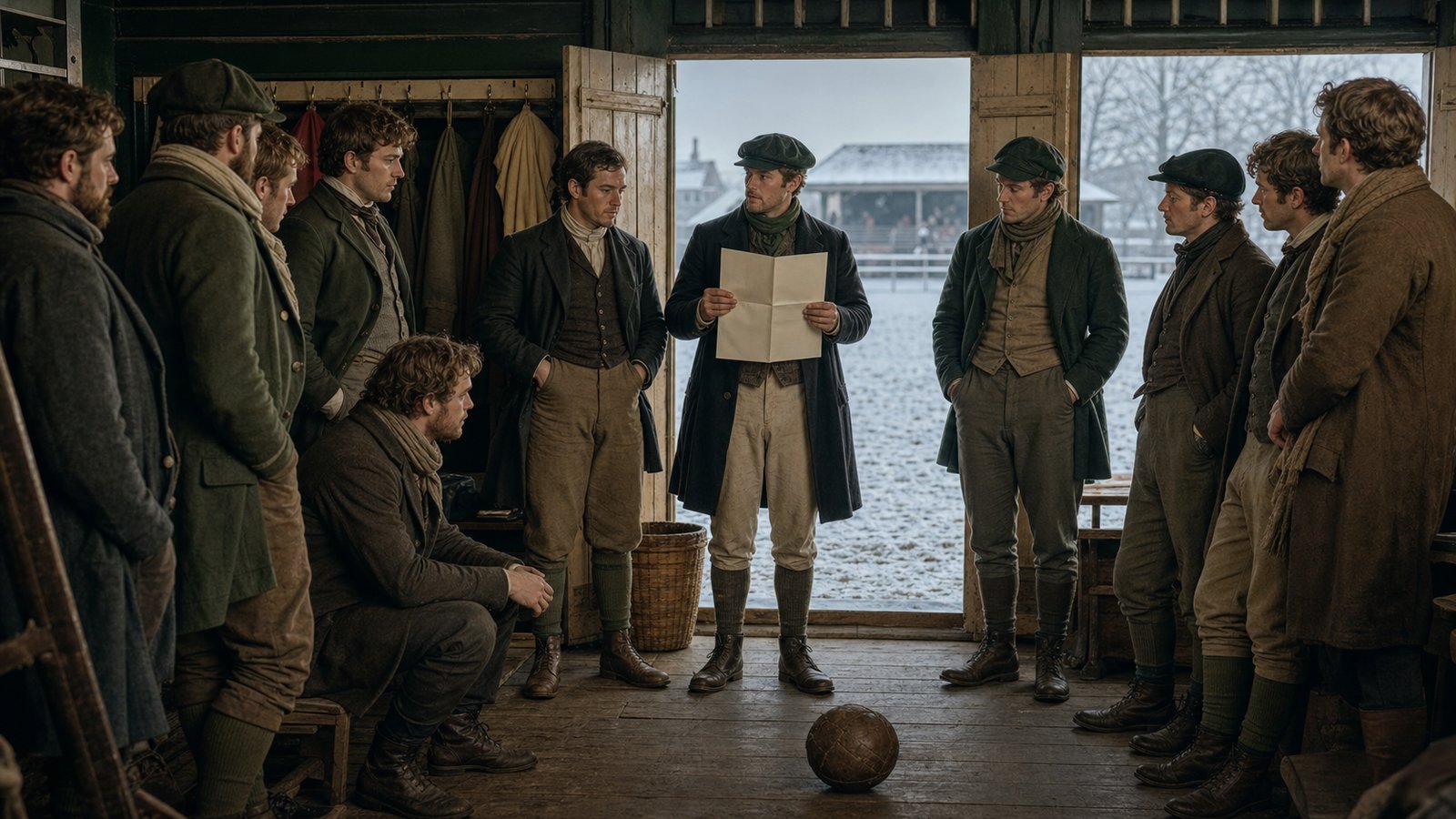
Hallam emerged from another cricketing base. Hallam Cricket Club had been formed in 1804 around the Plough Inn, and by the 1850s it had more than 300 members. Some wanted a football club that was less exclusive than Sheffield’s. In 1860, Hallam Football Club was formed in Crosspool.
Its home gave the new club a physical identity. Sandygate was Hallam’s cricket ground and remains the club’s home. Hallam describes it as the world’s oldest football ground, while the club itself is second in age to Sheffield. A football culture that had previously depended on whichever internal teams Sheffield could assemble now had two addresses.
That changed the meaning of a match. Married versus single could be reorganised next week without leaving a lasting institution behind. Sheffield versus Hallam attached the contest to places and memberships. The sides could meet again because both clubs would still exist after the snow melted.
A Boxing Day Kick-Off in Heavy Snow
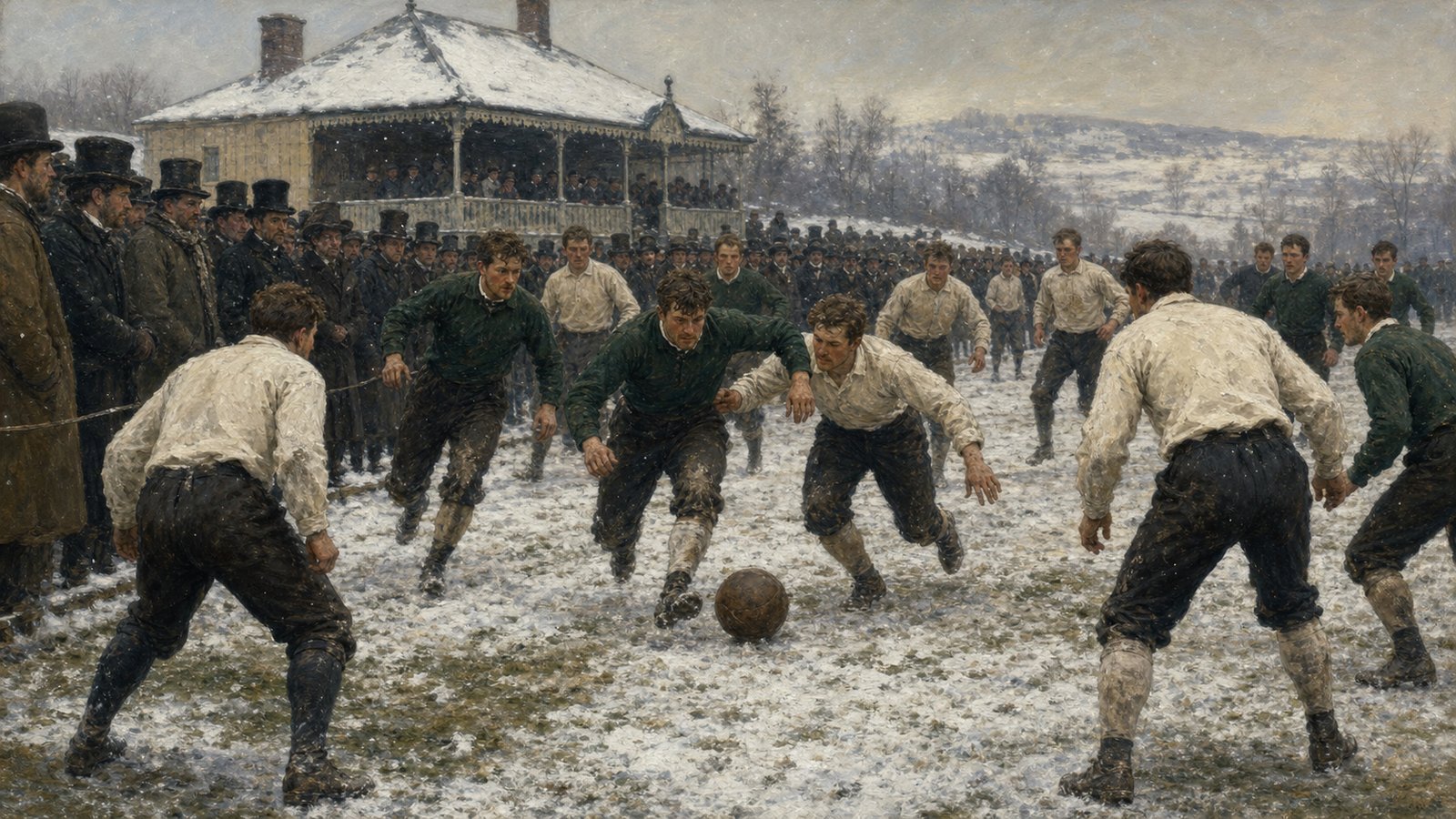
On 26 December 1860, the clubs met at Sandygate. A notice in the Sheffield Independent had advertised the novelty four days earlier and told spectators that omnibuses would leave the Angel Hotel at noon. The match was played in snowy conditions before a large crowd. The high ground west of central Sheffield must have made the conditions more exposed, but the game went ahead.
Exact modern assumptions about formations or fixed team sizes do not fit this scene; the code and its customs were still developing. What the surviving report preserves is a 2–0 Sheffield victory. Two days after the match, the Sheffield Daily Telegraph described a good-tempered contest and noted that many in the crowd were “extremely liberal with their plaudits.”
The tone mattered because a challenge between separate clubs had to establish trust as well as superiority. Hallam needed to know that Sheffield would return; Sheffield needed an opponent that could host, organise and survive defeat. Friendly did not mean meaningless. It meant the relationship could continue.
The Rules Made the Meeting Reproducible
Sheffield’s code gave the Boxing Day challenge a structure that could be recognised and repeated. The club’s 1858 minute book contains early recorded references to the centre kick, free kicks, corners, goal kicks and throw-ins, and Sheffield used a crossbar to define the goal. This was not the finished modern game, but neither was it an improvised chase whose rules vanished when the players went home.
The same minute book required players to bring both a red and a dark blue flannel cap so the teams could be distinguished. When the book sold at auction in 2011, it fetched more than £800,000. Those small equipment instructions show a club trying to make repeated play legible long before standard kits existed.
The code also sat inside a broader argument about how football should be played. The Football Association would publish its own laws in 1863, drawing on more than one tradition, including Sheffield and Cambridge. The significant point at Sandygate was not that every modern law appeared complete. It was that two independent clubs could consent to one rule set before kick-off.
That agreement made rivalry possible. A derby requires different loyalties, but it also requires enough shared procedure for the loyalties to meet. Without the common code, Sheffield and Hallam would have been two groups pursuing related games. With it, victory, complaint and a return match could belong to the same continuing contest.
A City Became Football Territory
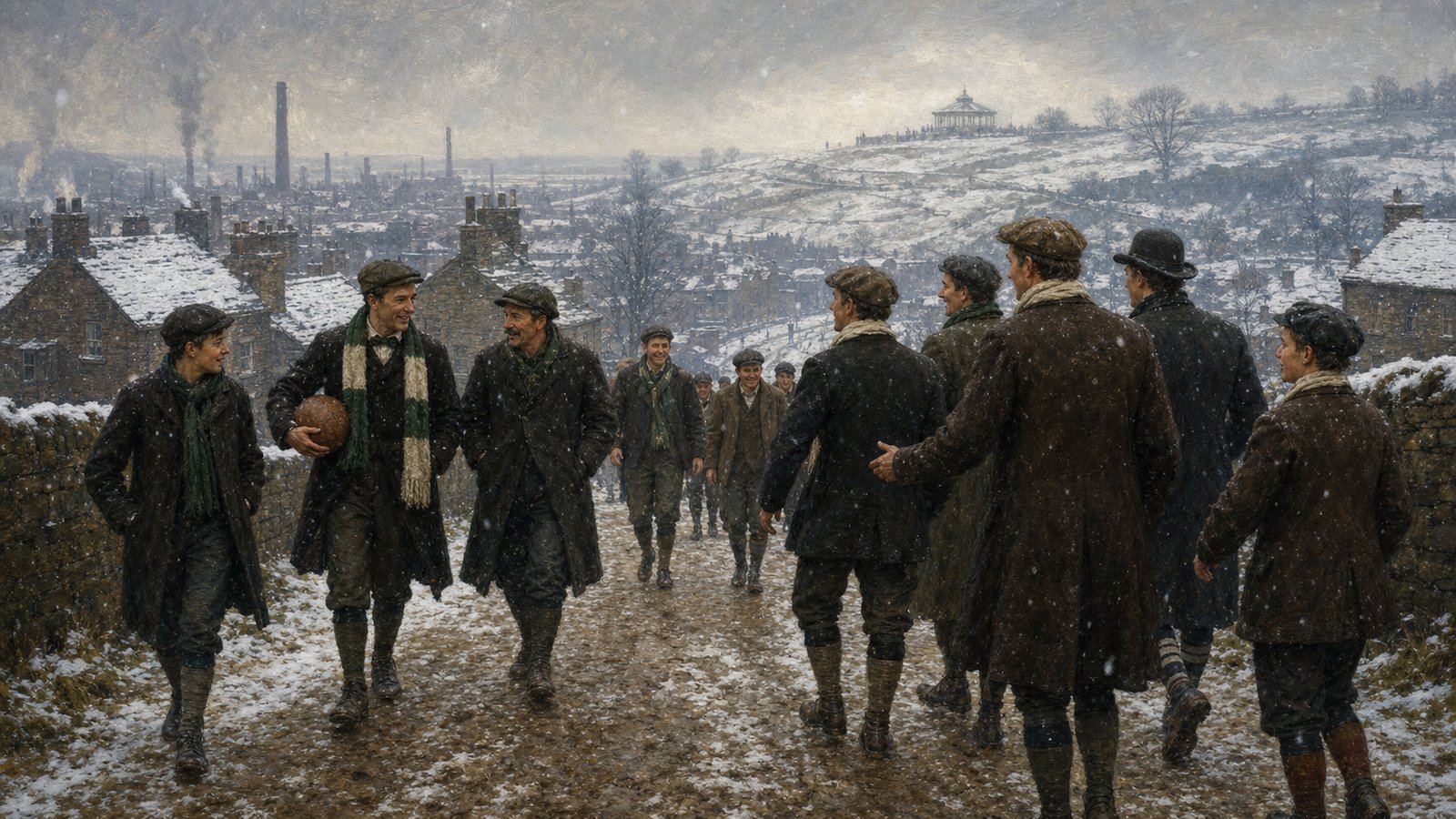
The clubs were close enough for spectators to take an omnibus from central Sheffield, yet each organisation held its own ground and identity. That created the essential scale of local rivalry. The match made the space between Sheffield and Crosspool part of the story.
Later derbies would gather league points, ticket markets, newspapers, policing and inherited family loyalties around this same basic architecture. The 1860 match had none of that machinery. What it supplied was the minimum viable form: two persistent clubs, one agreed code, one reachable venue and a reason to stage the contest again.
The city’s club network soon thickened. In 1867 Sheffield hosted the Youdan Cup, described as the world’s first football tournament, under Sheffield Rules. Hallam beat Norfolk Park in the final at Bramall Lane, which was then a cricket ground. A one-opponent problem had become a local competition within seven years. The sequence shows how quickly a shared code could turn nearby sporting organisations into an ecosystem.
The development also helps explain why the next major steps in football history depended on institutions rather than isolated moments of invention. Twelve years later, Scotland and England would stage the first official international, another match made possible by organisations that could choose teams, agree terms and preserve a record. The path toward that 1872 international ran through local experiments such as Sheffield and Hallam.
Hallam still plays at Sandygate, and the “Rules Derby” survives as a historical rivalry even when the clubs occupy different divisions. That continuity gives the first meeting unusual weight. The snowy challenge did not merely produce an old result. It established a social unit that football would reproduce everywhere: the nearby opponent whose existence gives a club a sharper sense of itself.
The Opponent Was the Breakthrough
Sheffield’s founders had already done the celebrated work of establishing a club and writing rules. Boxing Day 1860 exposed the next requirement. Football could not expand through solitary clubs forever dividing their own members. It needed opponents that were independent, durable and near enough to meet.
Hallam supplied that missing piece. Its cricketing membership, Sandygate ground and Crosspool identity gave Sheffield a challenge that could outlast one afternoon. The snow, the noon omnibuses and the reported 2–0 score are memorable details because they belong to the first version of a familiar ritual.
A derby is often described through hostility. The first one is better understood through cooperation. Two clubs agreed where to gather, which code to use and what kind of conduct would let the fixture continue. Only after those decisions could local pride acquire a scoreboard. The most consequential result at Sandygate was that there would be a next meeting.
Sources
Outside Write; Hallam Football Club; Sheffield Rules (1858).