
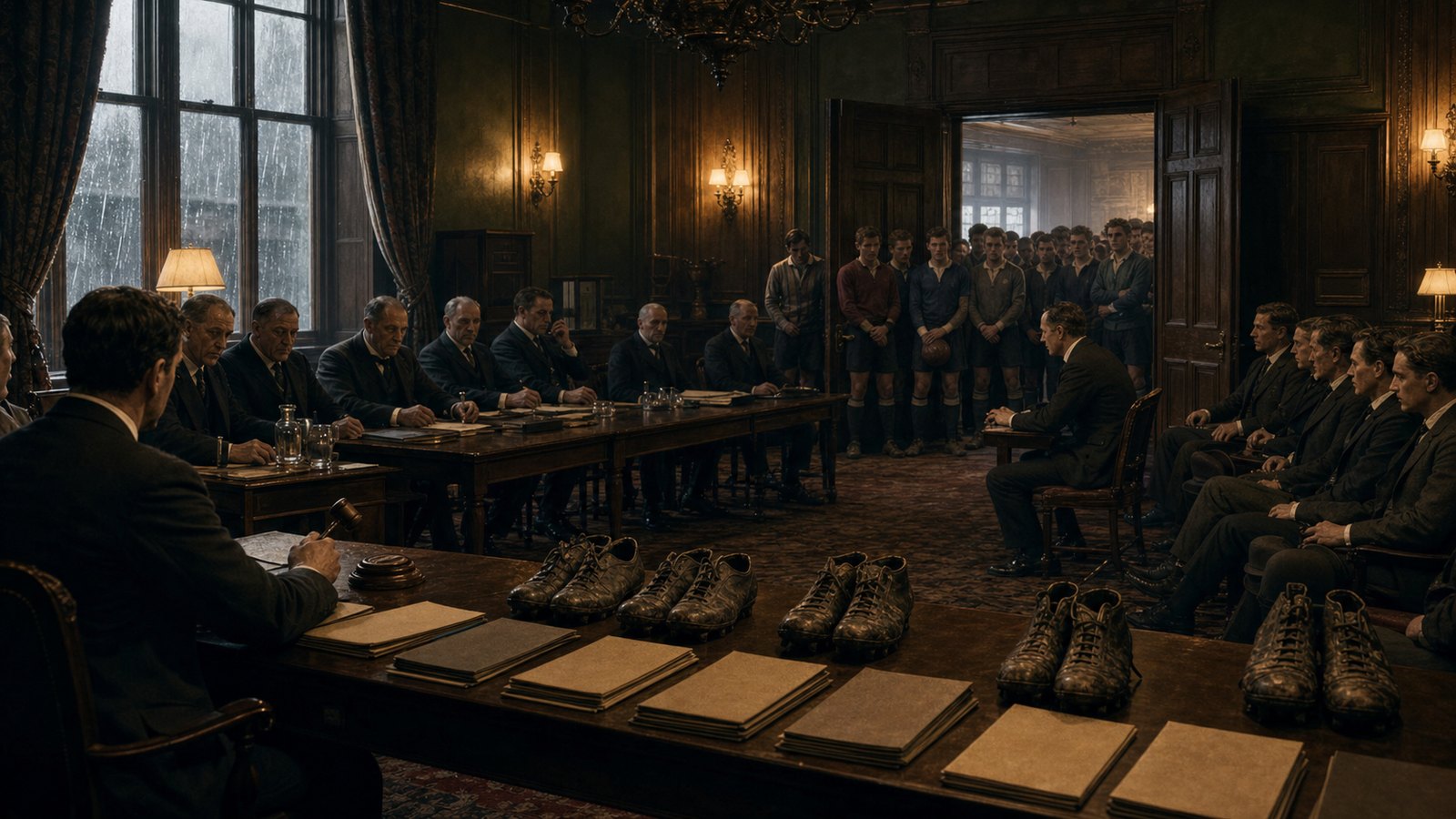
Inside Leeds’s Metropole Hotel in October 1919, footballers became lots in a closed-room sale. More than 30 club representatives had gathered to bargain over a squad whose employer had vanished in the middle of the season. The men had played eight Second Division matches; now they waited while other clubs decided what their contracts were worth. Reporters pieced together the prices from delegates moving through the hotel, despite the Football League’s wish for secrecy.
The auction was the strangest visible moment in Leeds City’s destruction, but it was not the cause. The club had spent years balancing ambition against debt, weak governance and an unstable local market. Wartime payments brought those weaknesses into an inquiry that City’s officials could not—or would not—answer with complete records. Expulsion followed. The sale then converted a vanished institution into a list of players, prices and destinations.
A football club built on uncertain ground
Leeds City was formed in 1904 and elected to the Football League’s Second Division in 1905. Its home, Elland Road, did not yet possess the commercial certainty later generations would associate with elite football in Leeds. Rugby already commanded local loyalty, and City struggled to turn football interest into dependable gate income. The club added the Scratching Shed in an attempt to create more capacity and revenue, yet results remained ordinary and finances fragile.
The danger became explicit in 1912. With City facing re-election to the League, its bankers called in a £7,000 overdraft. Chairman Norris Hepworth intervened with £15,000, keeping the club alive. Herbert Chapman arrived as manager and campaigned for City to retain its League place. Re-election came on 4 June, followed by a sixth-place finish in which centre-forward Billy McLeod scored 27 league goals.
For a brief period, the risk appeared to have worked. City missed promotion by two points in 1913–14, beat Nottingham Forest 8–0 at Elland Road and drew crowds that rose toward 30,000. The season produced a reported £400 profit. Yet the improvement had not removed the club’s dependence on individual patrons or solved its habit of operating close to football’s financial boundaries.

The war years broke the chain of authority
In 1914, a local syndicate led by Joseph Connor bought the club for £1,000 and agreed an annual rent of £250 for Elland Road. Then war interrupted the regular League programme. Chapman left day-to-day football work to manage the nearby Barnbow munitions factory. Administrative responsibility passed to assistant manager George Cripps, while Connor took charge of team selection. Their relationship deteriorated.
When the board changed the handling of the accounts but left Cripps selecting the team, duties became divided without becoming clear. Chapman’s return in 1918 deepened the dispute. Cripps sued for wrongful dismissal and told his solicitor, James Bromley, about payments made during wartime football. Guest players had appeared for clubs while normal competition was suspended, but the rules governing what they could receive had not disappeared.
A settlement with Cripps contained the immediate argument, not the underlying evidence. That mattered because the next complaint came from a player. Full-back Charlie Copeland was offered £3 10 shillings for reserve appearances and £4 for first-team matches. He wanted £6. After moving to Coventry, he disclosed allegations about City’s wartime payments to the authorities. Bromley also represented him, placing a solicitor already familiar with the club’s internal conflict at the centre of the new case.
An inquiry City could not satisfy
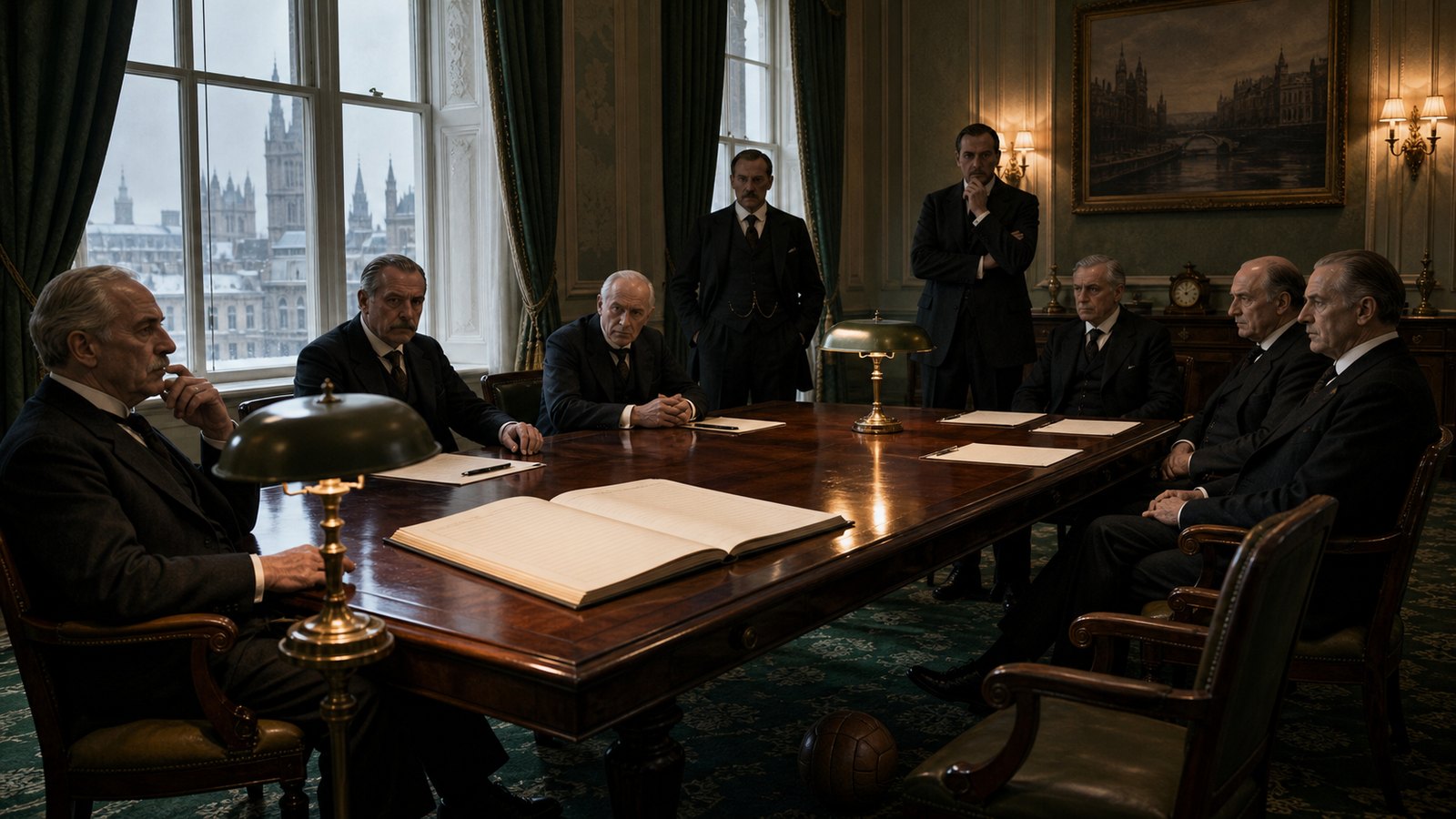
On 26 September 1919, a joint Football Association and Football League committee ordered Leeds City to produce relevant financial documents by 6 October. The demand was not merely about whether one player had received a few extra pounds. The authorities wanted records capable of showing how wartime football had been financed and who had authorised the payments.
City failed to produce the required papers. At the Russell Hotel in London, League chairman John McKenna announced that the club would lose its place in the Second Division. Burslem Port Vale took over City’s remaining fixtures, while the record of the eight matches already played—four wins, two draws and two defeats, with 17 goals scored and 10 conceded—was expunged.
Five officials, including Connor and Chapman, received life bans. Chapman later overturned his punishment by demonstrating that he had been working at the munitions factory when the disputed payments were made. The distinction saved one career, but it could not save the club. City’s failure to open its records had allowed the inquiry to treat missing evidence as an admission that the rules had been broken.
The Metropole turned contracts into lots
Expulsion left an entire professional squad without a club during the season. The League’s solution was a meeting at the Metropole Hotel, where representatives from more than 30 clubs bid for the players. Contemporary criticism described the gathering as a “slave market” and its proceeds as “blood money.” The official purpose was quicker and more practical: find employment for the displaced players and redistribute registrations before the season moved on.
The whole squad fetched around £10,000. The highest individual figure was reported as £1,250, but not every established player commanded a dramatic fee. Young full-back Billy Kirton, who had impressed in City’s final match at Wolverhampton, went to Aston Villa for £250. The numbers leaked into the evening press even though the meeting had been intended to remain secret.
The sale exposed how little control the players possessed over the aftermath. Their employer had been erased by a disciplinary decision, yet their next step was arranged through bids between clubs. That older transfer world would survive in different forms for decades. The later dispute involving George Eastham and the retain-and-transfer rules shows how registration power continued to shape a footballer’s freedom long after the Metropole auction.
One club disappeared as another was organised
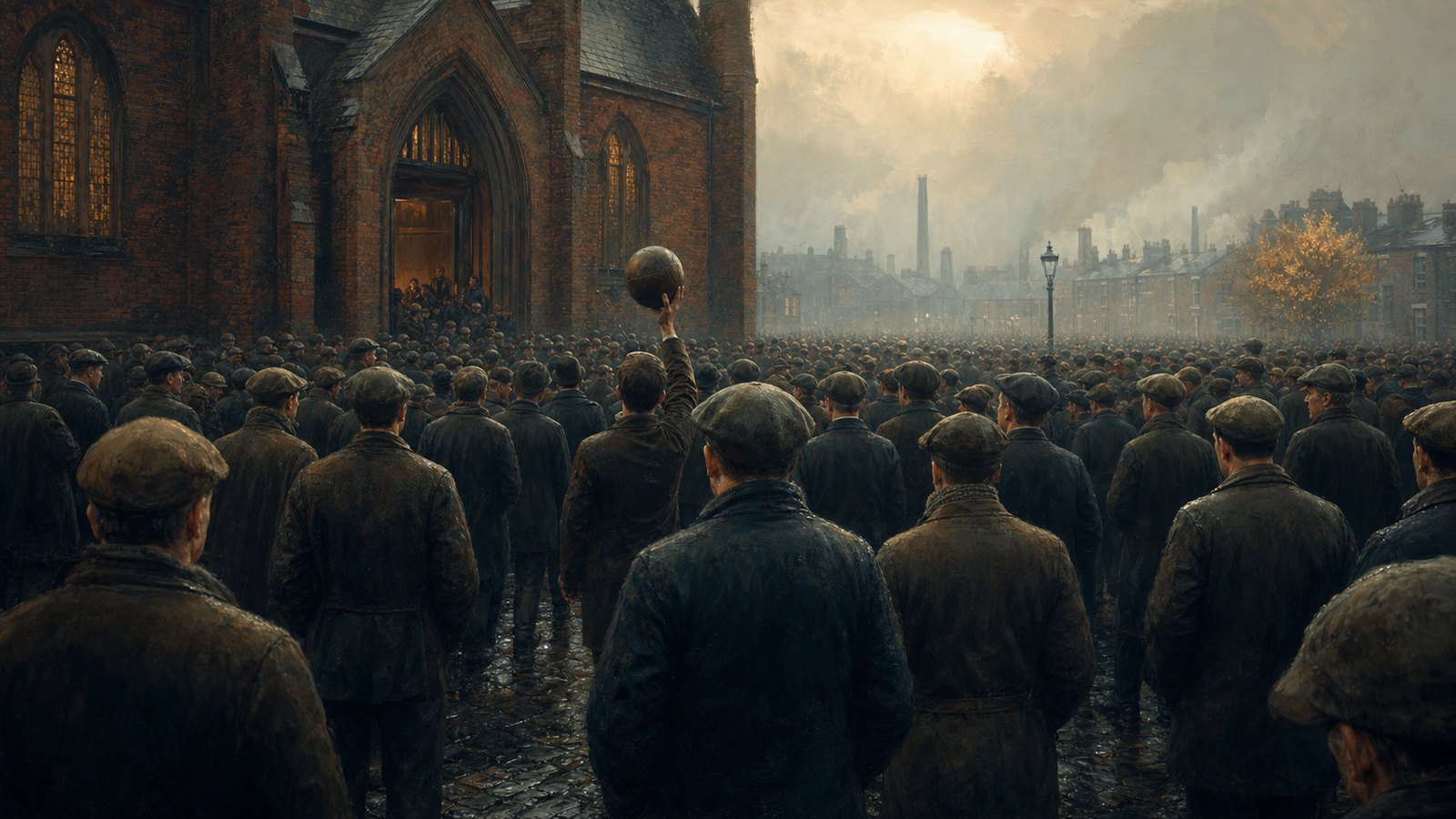
Port Vale absorbed the fixture list, but Leeds did not remain without senior football for long. After the auction, about 1,000 former City supporters went to Salem Chapel in Holbeck. There, with Hilton Crowther and others involved, they helped form Leeds United. The new club entered the Football League a year later.
The sequence is remarkable because collapse and replacement happened almost in the same civic breath. City’s name, directors and League membership were finished. Elland Road, the supporters and the conviction that Leeds could sustain a major football team remained available. The auction dispersed the playing staff, while the chapel meeting gathered the local demand that the old company had failed to govern.
The collapse was administrative before it was financial
Leeds City had known debt, benefactor rescue and fluctuating crowds, but none of those conditions alone ended its League life. The fatal moment came when years of blurred responsibility met a demand for documents. Officials could argue about personalities and wartime circumstances; they could not provide a record strong enough to keep the institution alive.
That makes the episode more than an eccentric story about footballers sold in a hotel. The auction was the liquidation scene after governance had already failed. City’s competitive record could be deleted, its players allocated and its place handed to another club because the League treated membership as conditional on accountable administration. Leeds United inherited the city and eventually Elland Road’s possibilities, but not legal continuity with the expelled club.
In modern football, collapse is often pictured as an empty bank account or a locked stadium gate. Leeds City offers a sharper image: an unanswered request for ledgers, followed by a hotel room full of buyers. The money problems made the club vulnerable. The missing chain of authority made its destruction possible.
Sources
Leeds United; When Saturday Comes; Football Club History Database.