

Five minutes into the final afternoon, the celebration still looked capable of becoming a nervous wait. Then Zvjezdan Misimović scored. Grafite followed. A Werder Bremen own goal made it 3–0 after 26 minutes, and the Volkswagen Arena stopped wondering whether Wolfsburg would become German champions for the first time.
The final score was 5–1. Green-and-white ticker tape covered the pitch, and a team that had never won the Bundesliga finished two points above Bayern Munich. The startling number was not only the margin or the table. Grafite and Edin Džeko had scored 54 league goals between them, a record for a Bundesliga partnership at the time.
Wolfsburg’s 2008–09 title is often filed as a sudden miracle. Felix Magath had spent heavily, concentrated unusual authority in his own hands and arranged a narrow attack around three players whose skills overlapped almost nowhere. The surprise came from how quickly those pieces accelerated together: 14 wins in the final 17 matches and the division’s most productive pair of forwards.
A title challenge hiding behind modest language
Magath had arrived in 2007 and inherited a club that had recently been fighting near the bottom. By March 2009, Wolfsburg were four points behind leaders Hertha Berlin after winning 3–1 in Hamburg. Magath still said fifth place would satisfy him. His caution sounded plausible because Wolfsburg had no championship history to protect and several established rivals remained close.
The club itself made the old underdog description complicated. Volkswagen had supported Wolfsburg for decades and took complete control of the professional football operation in 2007. The Guardian estimated that the squad had absorbed roughly €60 million in net transfer spending across Magath’s first two years. This was not a collection assembled from loose change.
Yet money alone did not explain the spring. Bundesliga clubs with deeper habits of winning still had to solve Wolfsburg’s particular geometry. Magath generally used a 4-1-3-2 or a midfield diamond. Captain Josué protected the centre, while Marcel Schäfer and Sascha Riether supplied width from full-back. Andrea Barzagli brought the experience of an Italy international to the defence. Diego Benaglio started 31 league matches and kept 11 clean sheets.
The shape gave Wolfsburg a stable rear platform without flattening the attack into a single method. Misimović could pause and choose a pass. Džeko could receive with his back to goal or attack space. Grafite could carry defenders, improvise and finish. Their differences became the plan.
Misimović supplied the missing angle
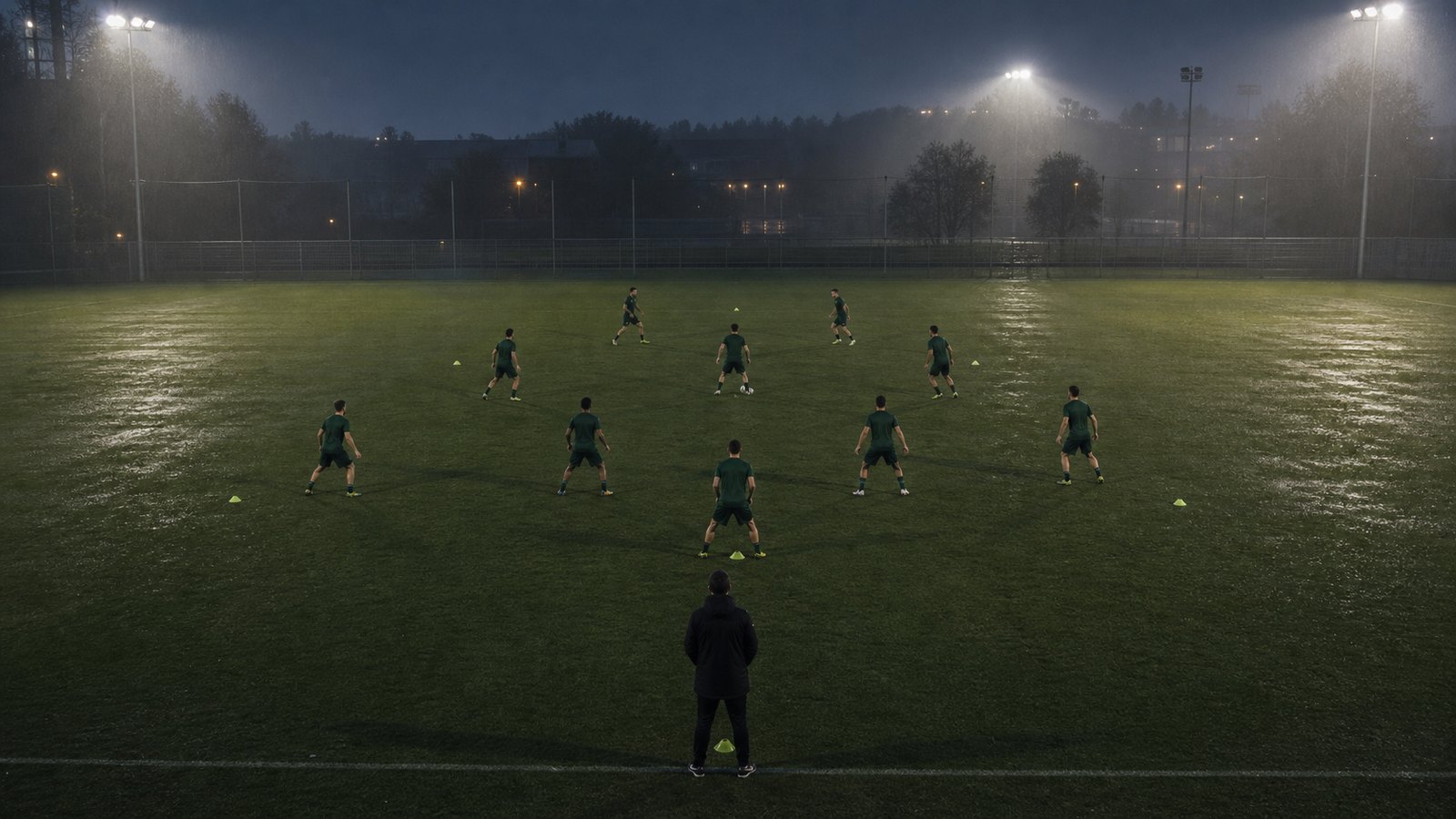
The famous total belongs to the two strikers, but the passes often began with Misimović. The Bosnia-Herzegovina international scored seven league goals and led the division for assists. From the point of the diamond, he could slip the ball between centre-back and full-back, find a striker checking short or switch the attack toward Schäfer’s deliveries from the left.
Džeko, 22 when the season began, offered length and control. He could protect a direct pass, bring Misimović into the next action and then arrive in the penalty area. Grafite, seven years older, brought heavier contact and less predictable movement. One forward made the pitch feel longer; the other made crowded areas feel unstable.
Their routes to Germany were as different as their football. Magath had signed Džeko from Teplice after the Bosnian had established himself in the Czech league. Grafite reached Wolfsburg after spells in Brazil, South Korea and France. The Guardian reported transfer fees of about €4 million for Džeko and €7.5 million for Grafite. Neither arrived carrying the status of a ready-made Bundesliga superstar.
By the end, Grafite had 28 league goals and Džeko 26. Grafite won the scoring title. Džeko scored in 13 of Wolfsburg’s final 16 matches, collecting 21 goals during that stretch. Their 54-goal partnership was not a season-long metronome. It was a late surge in which each successful week made the next opponent’s choice worse: compress around the pair and leave Misimović time, or step toward the passer and release one of the forwards.
Bayern arrived and the argument became visible
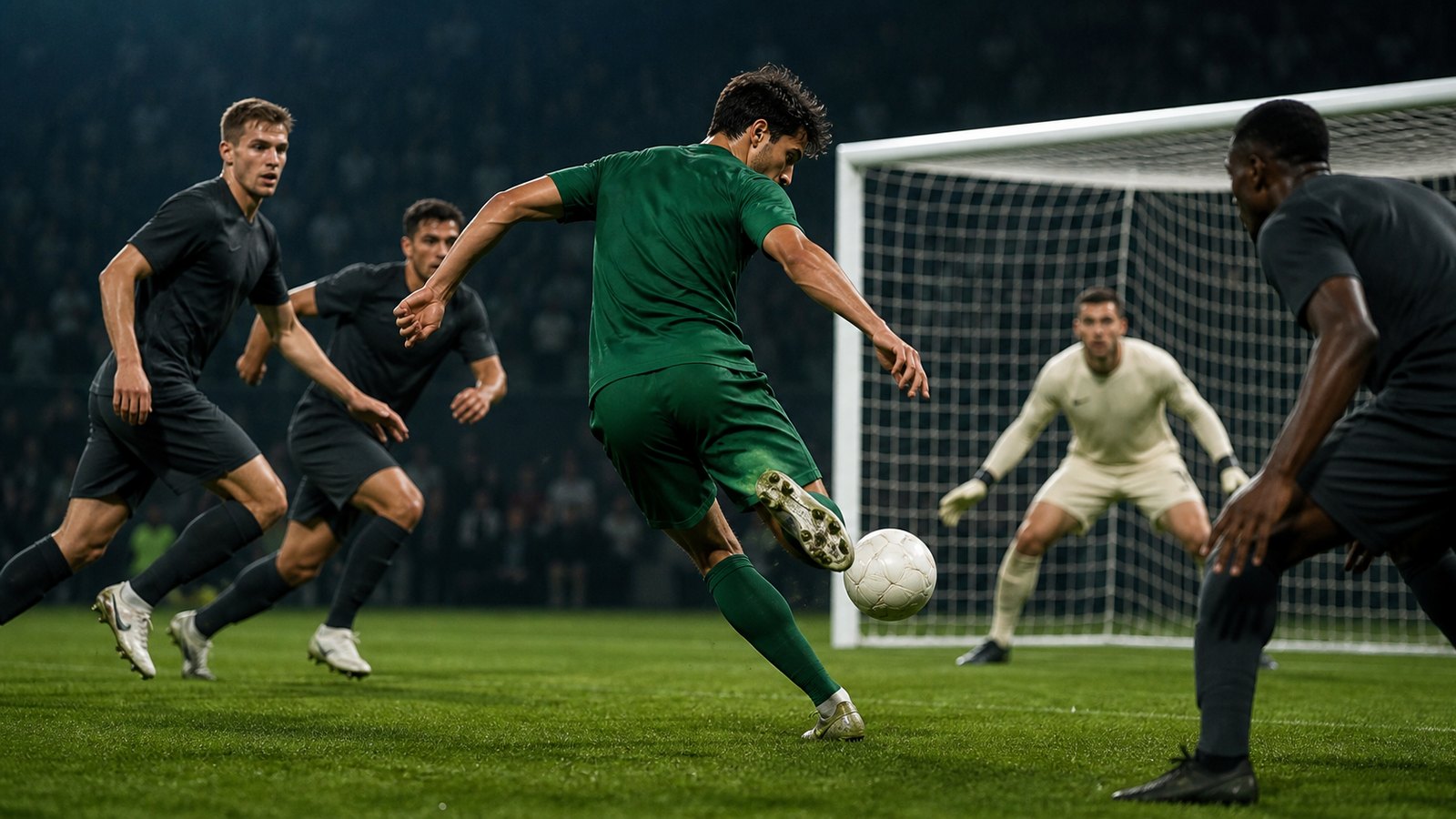
On 4 April, Bayern Munich came to Wolfsburg level with Magath’s side on points. The match was still 1–1 at half-time. Within 15 second-half minutes, Wolfsburg scored four times. Džeko struck twice, Grafite struck twice, and a fixture that could have restored the established order ended 5–1.
Grafite’s second goal became the image of the season. He moved through the right side of Bayern’s penalty area, escaped several challenges and, while running away from goal, backheeled the ball across the line. It was audacious without being decorative: the move completed a defeat that made Wolfsburg’s claim impossible to treat as a temporary table accident.
The result exposed why the front pair resisted one scouting instruction. Džeko could punish space quickly, while Grafite could manufacture an opening after the defence appeared to have closed it. Misimović supplied the first decision that forced the back line to move.
Other title stories on The Ghost Goal have depended on a single narrow rule or final-day calculation. Kilmarnock’s 1965 championship, for example, came down to a goal-average margin of 0.042. Wolfsburg’s proof was more physical. They met Bayern in the same arena and scored five, then carried the advantage through the remaining weeks.
The second half of the season compressed the table
Wolfsburg won 14 of their 17 league matches after the winter break. That sequence explains how a plausible European qualification campaign became a championship before rivals could establish control. It also reveals the risk inside Magath’s approach: the title depended on an extraordinary concentration of form.
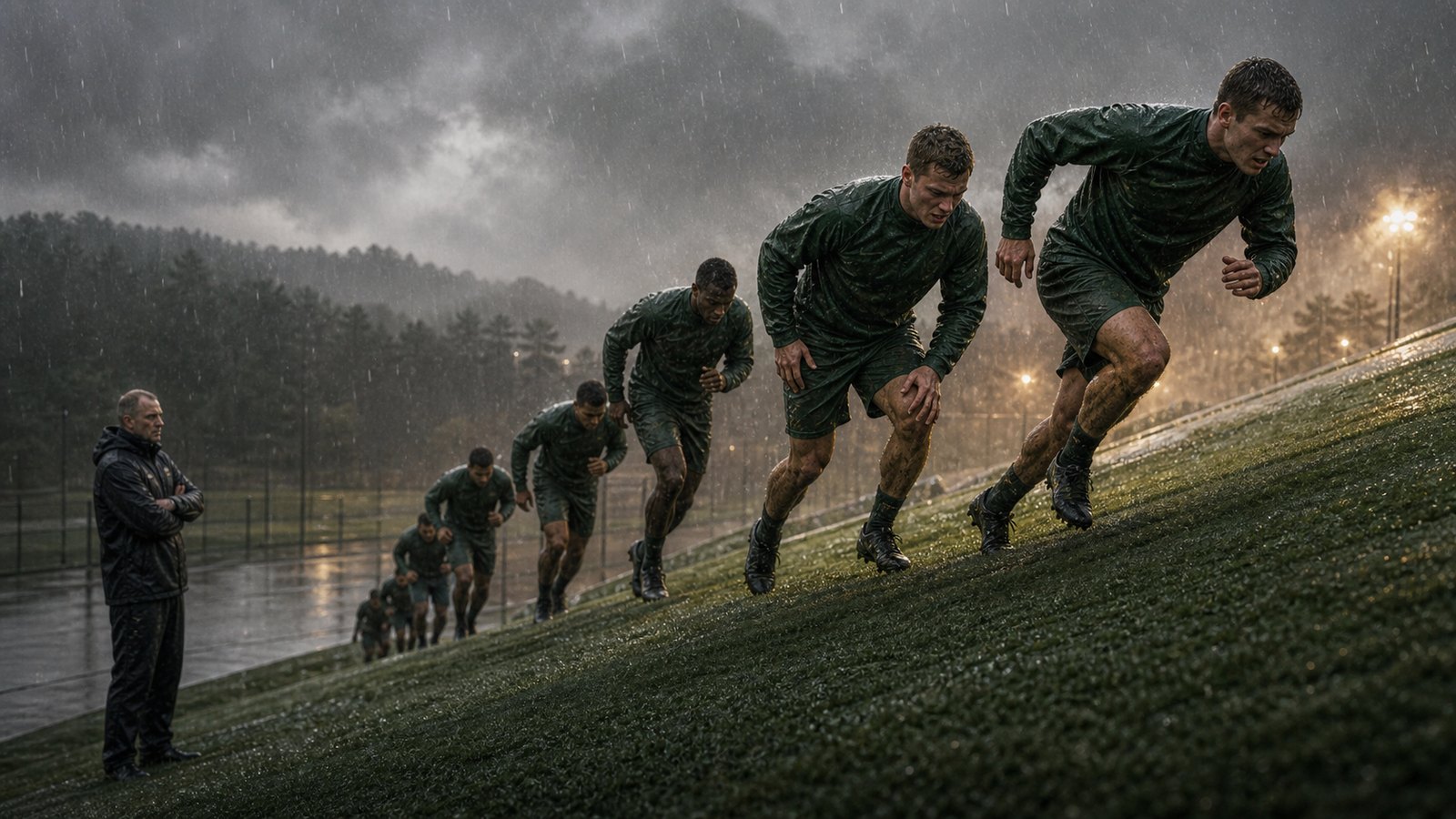
His training methods were notorious for their physical severity. The artificial hill at the training ground acquired the nickname “Mount Magath.” The Guardian described a manager with unusually broad sporting authority, emotional distance from his players and little enthusiasm for fashionable performance language. His football was less exotic than the mythology around his fitness work. A compact base, two forwards and a gifted creator gave the team repeated reference points under pressure.
The squad had detail beyond the headline trio. Schäfer produced eight assists from left-back. Riether scored a 90th-minute equaliser at Hertha and an 85th-minute winner at Borussia Mönchengladbach. Jan Šimůnek barely appeared before December, then played in 16 of the final 17 league games. Barzagli, Schäfer and Christian Gentner appeared in all 34 rounds. Those contributions kept the late run from becoming solely a forwards’ exhibition.
Magath had already agreed to join Schalke before the championship was secure. He admitted that he had not believed Wolfsburg could win it when that decision was made. The coach would leave just as the work reached its highest point.
Five final-day goals, then a different future
Werder Bremen arrived for the last round days after losing the UEFA Cup final in extra time. They selected a strong side, but Wolfsburg settled the occasion almost immediately. Misimović scored after six minutes, Grafite after 15, and Sebastian Prödl’s own goal followed after 26. Diego pulled one back before half-time. Grafite’s second and Džeko’s goal completed the 5–1 result.
The Guardian estimated that 100,000 people joined the celebration in a city of about 130,000. A procession included Volkswagen vehicles and luxury marques owned by the group. Wolfsburg had its first major silverware in 64 years.
The party did not erase the argument about resources. Critics saw a company-backed club that had spent more aggressively than its rivals in net terms. Supporters saw a young, international squad playing fast attacking football in a city still searching for a football identity. Both descriptions could be true. The money created options; the diamond, the conditioning and the forward partnership made those options coherent for one remarkable spring.
That distinction keeps the season interesting. Calling it a miracle hides the investment. Calling it a purchase hides the precision. Wolfsburg’s first championship came when expensive preparation met an unlikely scoring concentration: 54 goals from two forwards, 14 wins after winter and two separate 5–1 statements against Bayern and Werder. For a few months, the club’s scale and its football matched perfectly.
Sources
- Bundesliga, “Iconic Bundesliga teams: Wolfsburg 2008/09”
- The Guardian, “Selfish Messiah Magath brings first Bundesliga title to Wolfsburg”
- The Guardian, “Magath’s endless appeal overshadowed as Wolfsburg make title case”
- CNN, “Wolfsburg win first German league title”