
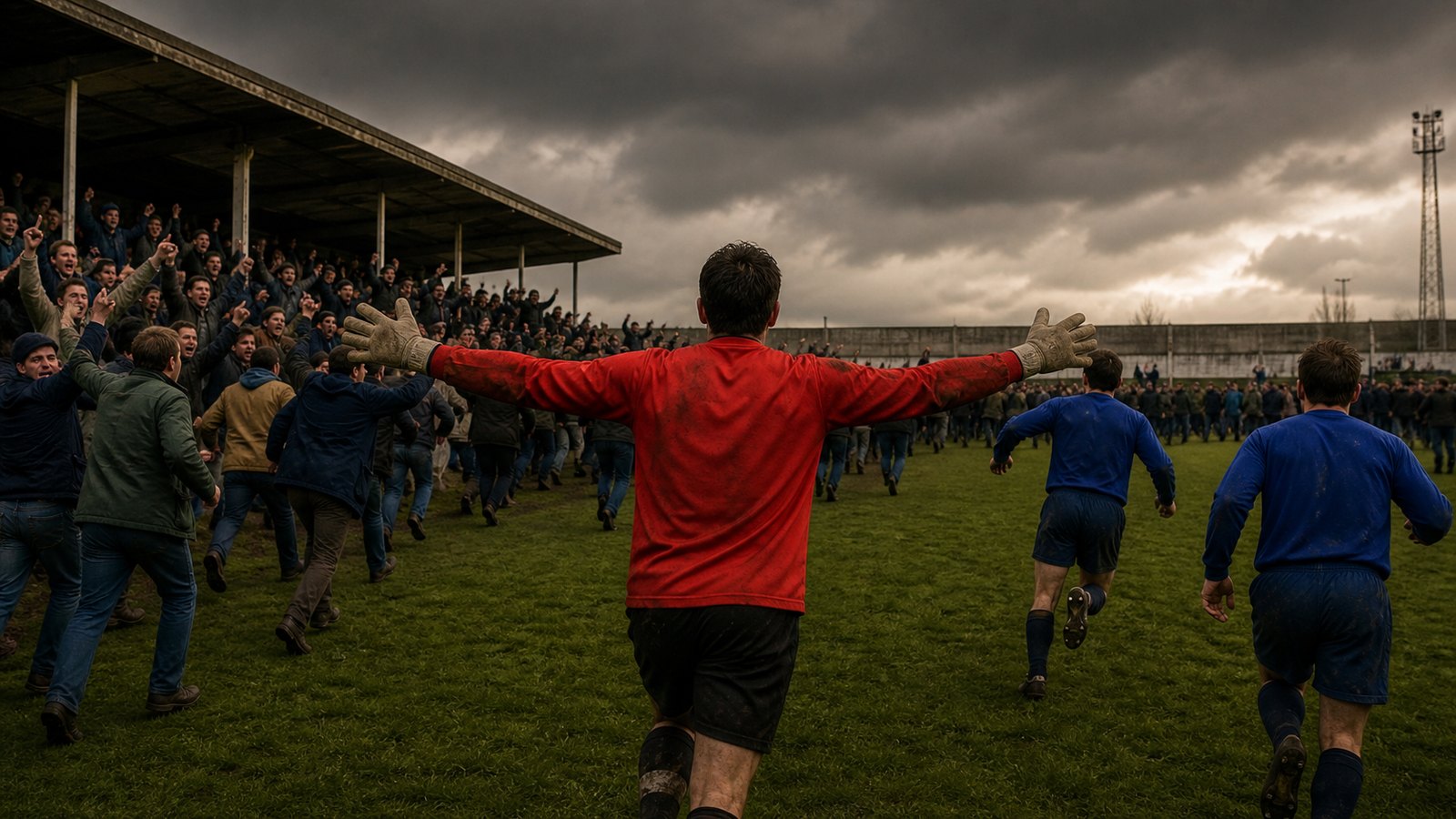
The red shirt appeared at the far end of Brunton Park because there was nowhere else for it to go. Carlisle United had a corner, four minutes of stoppage time had almost expired, and the other match that governed their future was already over. A draw would remove them from the Football League. Goalkeeper Jimmy Glass looked toward manager Nigel Pearson, saw the signal, and ran the length of the pitch.
Seventeen days earlier, Glass had not been a Carlisle player. He was an emergency loanee from Swindon Town, permitted to join after the normal transfer deadline because Carlisle could document a goalkeeping crisis. Now the exception in a league regulation was standing in Plymouth Argyle’s penalty area. The corner came in, Scott Dobie headed, James Dungey parried, and the loose ball reached Glass about four yards from goal.
His swing of the right boot settled two clubs’ seasons. Carlisle won 2–1 and stayed in the League; Scarborough, whose players had finished their own match believing survival was near, went down. The scene is remembered as a miracle because a goalkeeper scored with virtually the last kick. Its deeper drama lies in the chain that made the impossible action rational: a rule change, a sale, an emergency loan, a score transmitted from another ground, a manager’s wave and one rebound.
Seventeen days turned a stranger into the last line
Carlisle began the final day of the 1998–99 Third Division season at the bottom. Their task had two parts, only one of which they controlled. They had to beat Plymouth at Brunton Park, and Scarborough had to fail to beat Peterborough United. If Carlisle did not win, the result on the Yorkshire coast would not matter.
The man in Carlisle’s goal had arrived through an unusual route. Chairman Michael Knighton had sold first-choice goalkeeper Tony Caig to Blackpool for £5,000, leaving the club with a shortage at the most specialised position on the field. The Football League had revised its regulations the previous summer so that a club could obtain emergency cover after the deadline if medical evidence showed no goalkeeper was available for first-team action.
Glass was 25, contracted to Swindon and searching for minutes. Swindon manager Jimmy Quinn made him available to Nigel Pearson. The Guardian reported that Glass had joined Carlisle only 17 days before the decisive afternoon. On the journey north, he heard that his temporary club was losing again and later admitted he had nearly turned around.
Two grounds shared one relegation clock
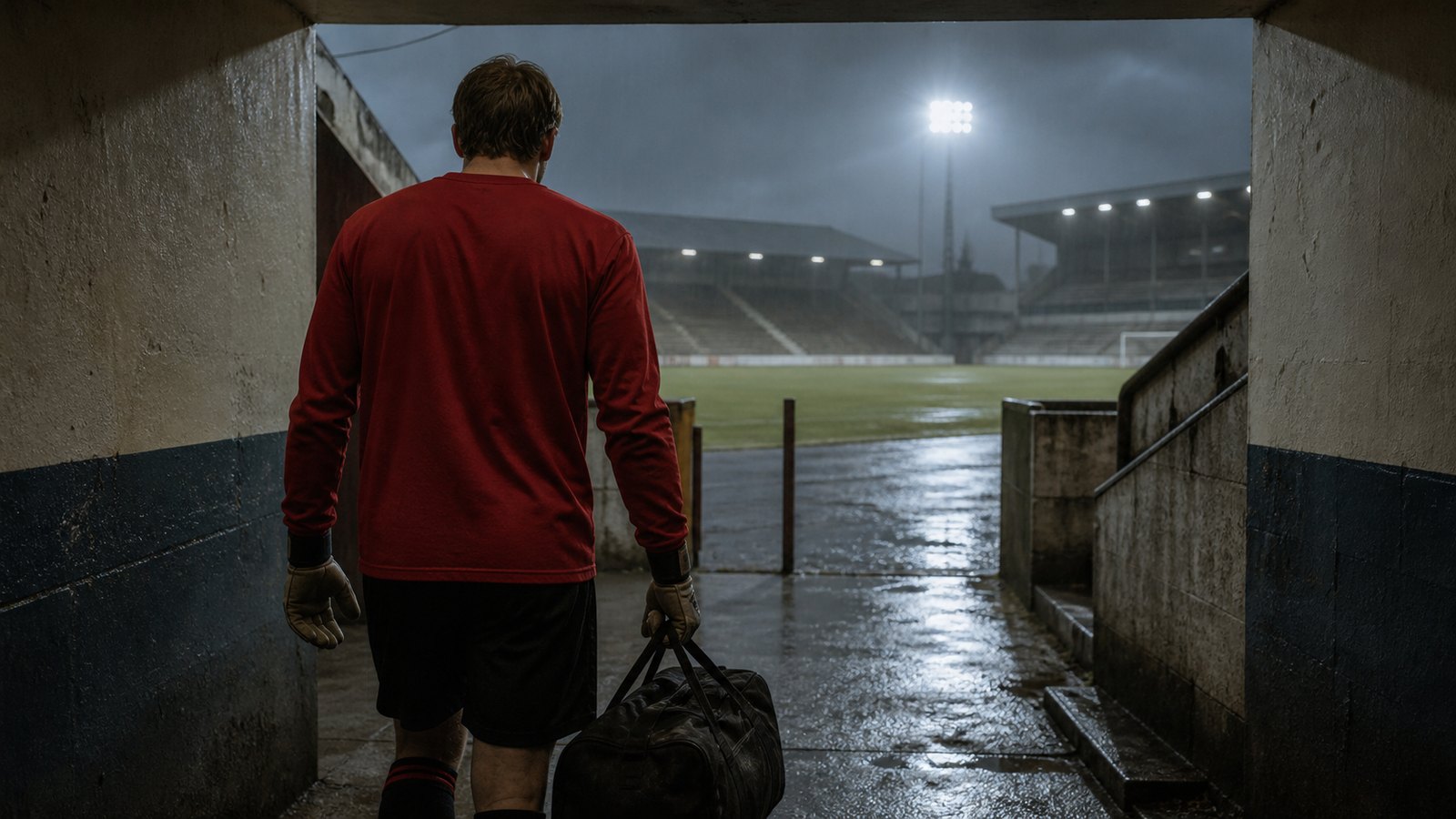
The tension at Brunton Park was never contained by its own scoreboard. Supporters listened for updates from Scarborough against Peterborough. The BBC’s later oral history records radios and phones throughout the crowd, each message altering the meaning of Carlisle’s match. Peterborough took the lead, Scarborough equalised before half-time, and Carlisle remained level at 0–0. As the scores stood, Carlisle were going down.
Lee Phillips made the problem physical in the 49th minute. His shot from around 20 yards put Plymouth ahead and emptied the sound from the ground. Carlisle were already playing with the weight of another fixture; now they required two goals of their own. Captain David Brightwell supplied the first response in the 62nd minute, driving an equaliser from distance.
Then the final whistle went at Scarborough. Its 1–1 score converted Brunton Park’s remaining seconds into a simple instruction. Carlisle had to score. There was no longer a reason to preserve a draw, protect a goal difference or keep a goalkeeper in reserve. The information from the other ground removed caution from the decision.
Pearson’s wave changed the goalkeeper’s job
Carlisle won one last corner. Glass looked toward Pearson and received a wave to go forward. The gesture was small, but it transferred the final risk from the touchline to the goalkeeper. If Plymouth cleared and scored into the empty net, Carlisle would lose rather than draw. The consequence was identical either way: relegation. Sending Glass up was therefore not reckless theatre. It was the only calculation left.
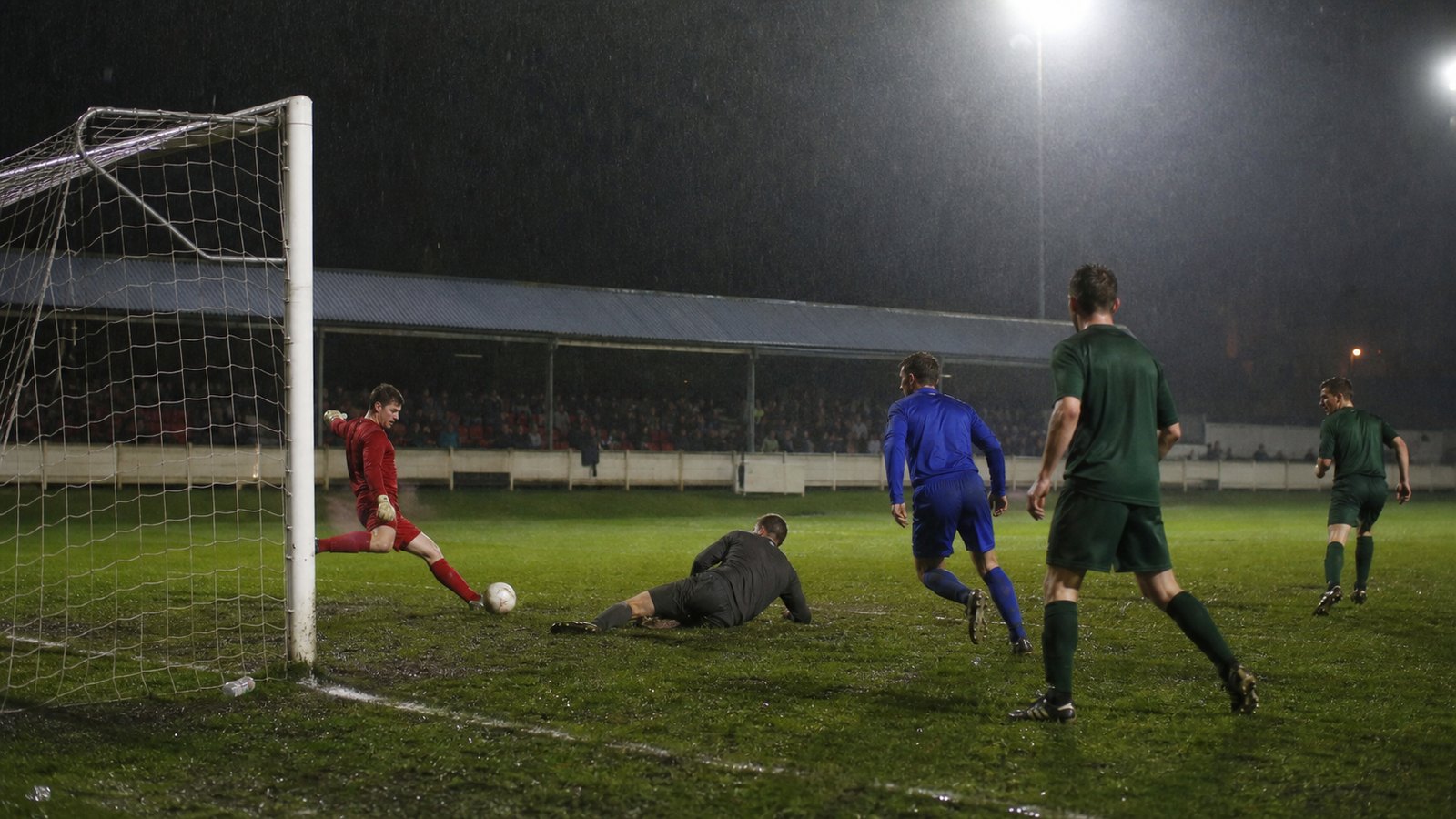
Graham Anthony delivered the corner into a penalty area crowded with almost every available body. Dobie reached it and directed a powerful header toward goal. Dungey made the first save, parrying instead of holding. The ball fell into the six-yard box, where Glass had continued his run rather than waiting at the edge.
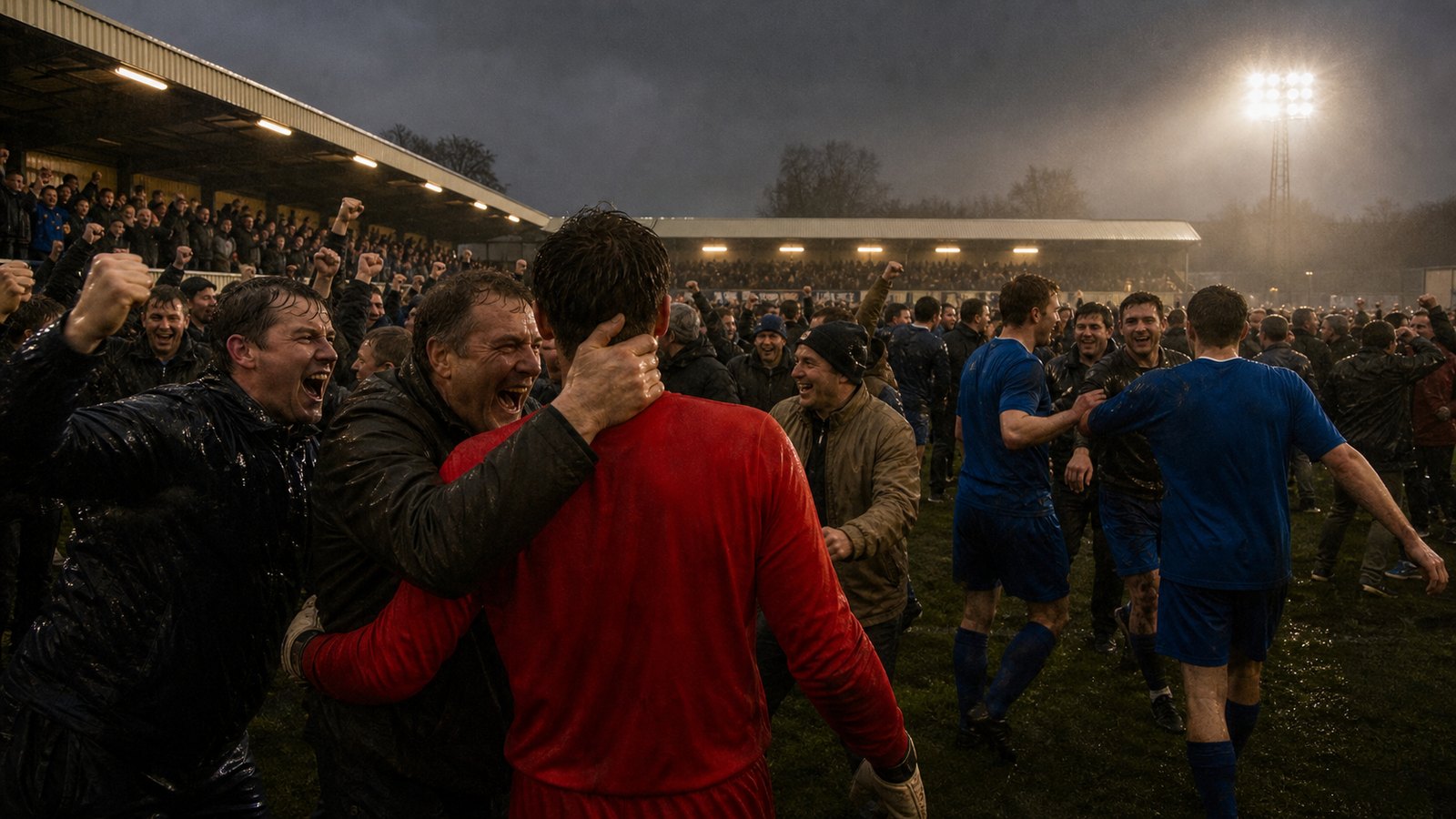
The finish contained no goalkeeping technique and needed none. Glass later described the instinct in blunt terms: goals are scored in the six-yard box, the ball fell to him, and he went “wallop.” From roughly four yards, he struck through the rebound before Plymouth could reorganise. His red jersey vanished beneath teammates and supporters as the pitch filled.
The same whistle produced opposite endings
The 2–1 victory preserved Carlisle’s League place and relegated Scarborough to the Football Conference. At Brunton Park, the release was immediate: spectators crossed the boundary between stand and pitch, and a temporary goalkeeper became the permanent face of survival. At Scarborough, a draw that had seemed sufficient was rewritten after the players’ work had ended.
There was also controversy around the man who scored. Scarborough questioned the emergency loan because Carlisle’s goalkeeper crisis followed the sale of Caig. A Football League spokesman explained that the revised rule allowed cover when a club could prove it had no keeper available for first-team action and supplied the required medical documentation. The regulation stood. Glass was eligible, and the result remained.
That administrative detail does not diminish the sporting moment. It makes it stranger and more precise. Football’s most memorable interventions often seem detached from paperwork, yet Glass reached the corner because paperwork had been accepted. A provision designed to fill a vacancy produced the only goalkeeper in Carlisle’s history likely to be remembered first for a shot.
“St Jimmy’s Day” kept more than a score
Glass did not build a long Carlisle career after the goal. That brevity helped the event retain its clean outline: the emergency loanee arrived, scored, and moved on. He later worked as a taxi driver. When a goalkeeper advanced for a late corner during the 2010 World Cup, Glass heard a radio commentator use his name as a verb-like piece of football shorthand: he was “going to do a Jimmy Glass.”
In Carlisle, 8 May became known as “St Jimmy’s Day.” The local name is affectionate and knowingly excessive, but it describes how supporters store the event. They do not recall only a winning goal. They recall the radios in the crowd, the silence after Plymouth scored, Brightwell’s equaliser, the false explosion when Dobie hit the outside of the net, and the red shirt running into a corner that had to become a goal.
The story also survives because the hero’s decision is visible before the payoff. Any spectator can understand what it means when a goalkeeper leaves his area in the final seconds. The whole field becomes evidence of the risk. Glass’s run allowed dread to accumulate step by step; the rebound then converted that distance into release.
A miracle assembled from ordinary decisions
Calling the goal miraculous is emotionally accurate but mechanically incomplete. No single decision guaranteed it. The League’s emergency rule only put Glass in Carlisle. Pearson’s wave only added one attacker. Anthony’s corner and Dobie’s header only forced a save. Even Dungey’s parry created a chance rather than a result. The event required every ordinary choice to align within a few square yards.
Glass supplied the final act because he recognised that his usual responsibility had expired. Staying in goal could no longer protect Carlisle. The rational place for the goalkeeper was beside the opposition goalkeeper, anticipating a loose ball. That inversion is the source of the image’s power: the player defined by prevention became the scorer because survival demanded that he stop behaving like a keeper.
Carlisle’s season was not rescued by dominance, and the afternoon did not reveal a hidden tactical superiority. It produced something rarer: a moment when information, regulation and instinct all pointed in the same desperate direction. A borrowed goalkeeper ran forward. A saved header fell loose. One swing kept a club inside the League.
Sources
- BBC Sport, “League Two: The day Jimmy Glass rescued Carlisle United”
- The Guardian, “Surreal Carlisle reach the Glass ceiling”
- The Guardian, “Joy for Carlisle as roof falls in on Scarborough”
- News & Star, “Jimmy Glass’s Carlisle United miracle — on this day in 1999”