
Arsene Wenger did not arrive in English football as a thunderclap. To many supporters in 1996, he arrived as a question. A Frenchman who had worked in Japan, with glasses, a long coat, and ideas about diet and stretching, did not fit the Premier League’s preferred picture of authority. English football liked managers who sounded like they had been carved from the same weather as the terraces. Wenger seemed to have walked in from a different laboratory.
That is why the story is often flattened into a joke about broccoli, pasta, and players no longer drinking like it was still the 1970s. The diet changes mattered, but they were not the revolution by themselves. Wenger’s deeper impact was that he treated a football club as an operating system. Training, recovery, recruitment, medicine, player education, tactical rhythm, and the emotional climate of a squad all belonged to the same machine.
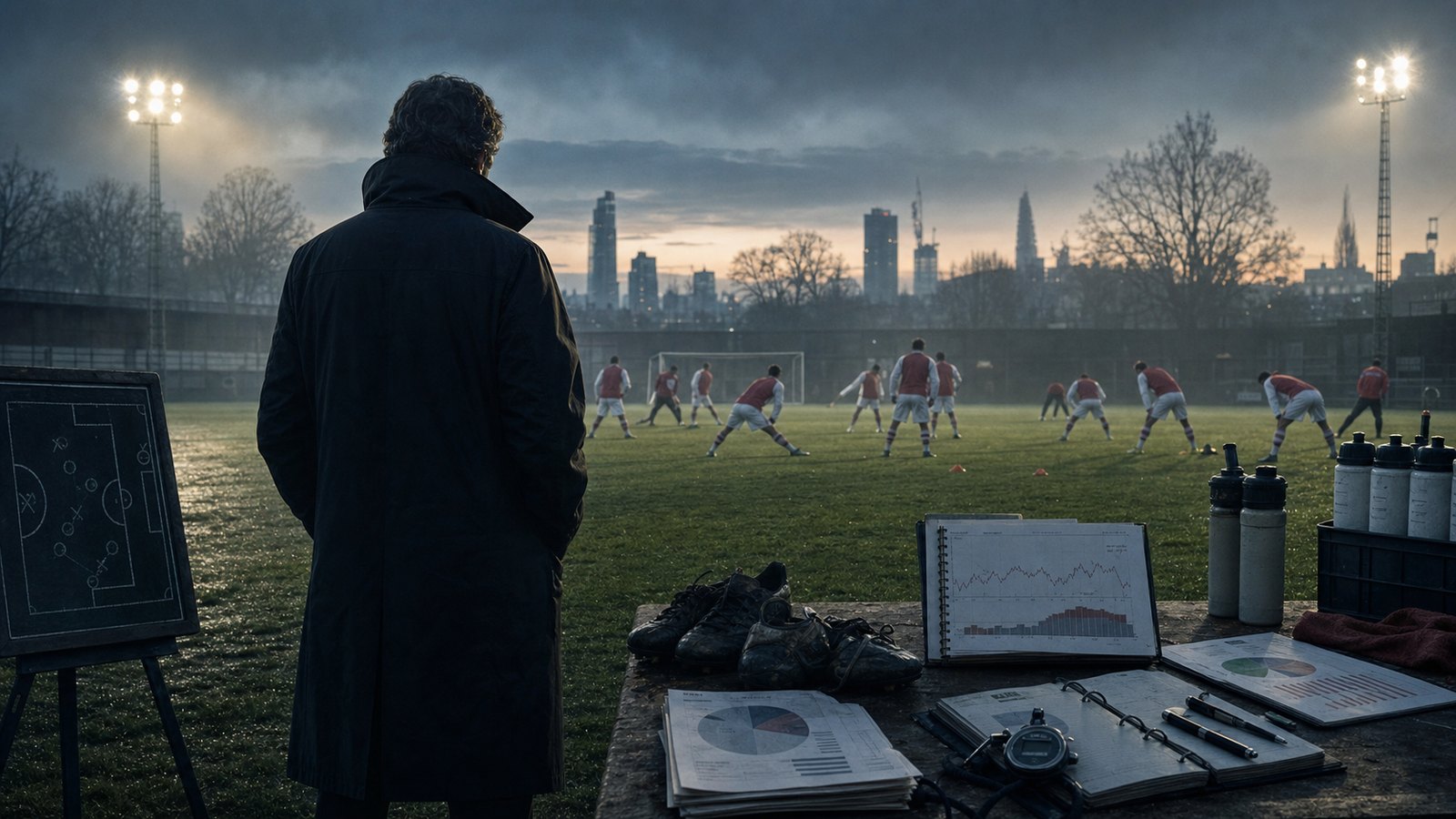
The shock was not foreignness. It was coherence.
English football had already seen foreign players, foreign coaches, and foreign tactical ideas before Wenger. What made his arrival feel different was the sense that the details connected. A meal was not just a meal. It was part of recovery. Recovery affected training intensity. Training intensity affected pressing, movement, and injury risk. Recruitment was not simply buying famous names; it was identifying physical and technical profiles that could grow inside the system.
Arsenal in the mid-1990s were not a blank slate. The club had a strong defensive identity, serious senior professionals, and a history of trophies under George Graham. Wenger did not inherit a broken pub team. He inherited a major club with habits, strengths, and limits. His achievement was not to erase all of that overnight. It was to add a new layer of method without immediately destroying the old competitive spine.
That is why the famous back line matters in the story. Tony Adams, Steve Bould, Nigel Winterburn, Lee Dixon, and David Seaman were not Wenger inventions. They were already there, already experienced, already carrying Arsenal’s old grammar. Wenger’s early genius was to avoid treating them as museum pieces. He extended careers, adjusted preparation, and built a bridge between English defensive authority and a more continental attacking rhythm.
Diet became the visible tip of a bigger change
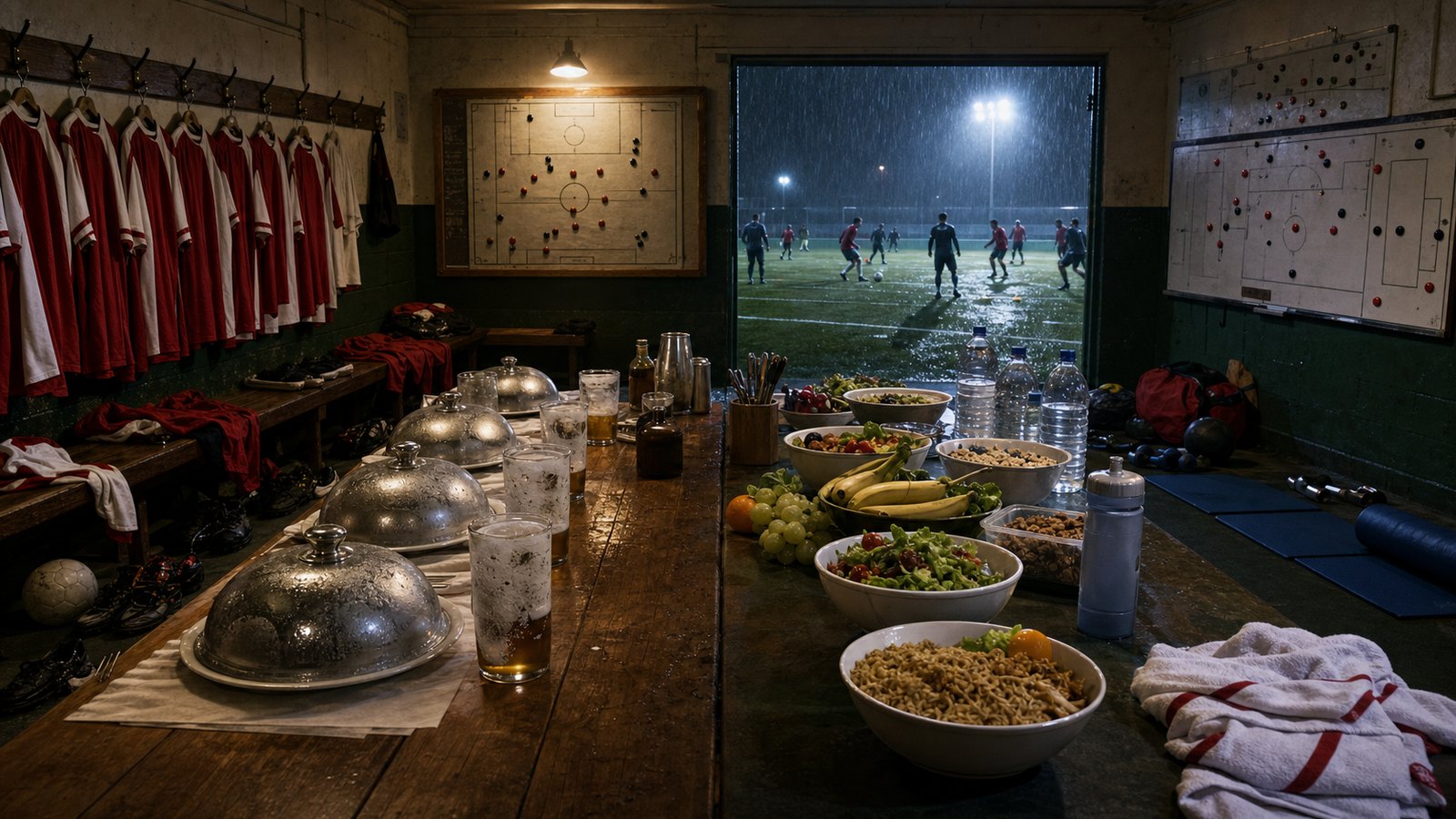
The food stories survived because they were easy to understand. Players noticed different meals, different rules, different ideas about alcohol, sugar, and body condition. Supporters could picture the contrast because it felt comic: old football plates replaced by pasta, vegetables, fish, and an unfamiliar seriousness about what happened away from the pitch.
But the comedy can hide the importance. In a league becoming faster, richer, and more global, physical preparation was no longer background noise. Small advantages compounded. A player who recovered better trained better. A player who trained better handled more tactical information. A squad with fewer soft-tissue injuries could sustain selection and rhythm. Wenger’s dietary changes were not moral lectures; they were performance tools.
The same applied to stretching, warm-downs, medical monitoring, and the general language around the body. Footballers had always been athletes, but clubs did not always behave as if every hour of the week mattered. Wenger’s Arsenal made the body part of the tactical plan. That idea now feels obvious because the revolution succeeded. At the time, it asked senior professionals to trust methods they had not grown up with.
Recruitment turned global before the market fully did
Wenger’s advantage was also informational. His years in France, Monaco, and Japan gave him a wider map than many Premier League rivals were using with the same confidence. Nicolas Anelka, Patrick Vieira, Emmanuel Petit, Marc Overmars, and later other imports did not merely make Arsenal more exotic. They changed the athletic and technical profile of the team.
Vieira is the cleanest example because he embodied the new blend. He had height, stride, aggression, technique, and the capacity to turn midfield pressure into forward motion. He was not a luxury playmaker imported to decorate English football. He was a structural piece who made the Premier League’s old categories feel too small. Arsenal could be physical and technical, disciplined and quick, English at the back and continental through midfield.
This recruitment model carried a warning for the rest of the league. The Premier League’s new television money was only as powerful as the intelligence used to spend it. Wenger showed that global scouting was not simply about finding bargains. It was about seeing how a player’s body, education, temperament, and tactical habits would fit a club before the market priced that fit correctly.
The 1998 Double made the method undeniable
Ideas in football need results before opponents call them ideas rather than eccentricities. Arsenal’s 1997-98 Double gave Wenger that proof. Manchester United had looked like the Premier League’s new center of gravity, but Arsenal chased them down with a blend of defensive control and attacking speed. The title was not won by theory. It was won by a squad that looked fresher, sharper, and more coherent as the season tightened.
The Double mattered because it turned private habits into public evidence. The methods could no longer be dismissed as foreign fussiness. Players who had accepted the changes were lifting trophies. Older defenders still looked formidable. Newer attackers gave the team a different ceiling. The club had not just hired a manager; it had changed the way its week was built.
That is the point often missed in nostalgia. Wenger did not simply bring prettier football to Highbury. He altered the invisible calendar between matches. He made Monday matter to Saturday in a new way. He made what players ate, how they stretched, where the club looked for talent, and how training connected to the match all part of one competitive argument.
The rest of England copied the boring parts first
Revolutions rarely remain romantic once everyone copies them. The visible features of Wenger’s method spread quickly: better nutrition, more sports science, wider scouting, more international dressing rooms, and greater attention to recovery. Some of those changes would have come anyway because money and globalization were already pushing English football in that direction. Wenger accelerated the process by proving the package could win immediately.
The copying also made his advantage smaller over time. Once rivals hired specialists, expanded scouting departments, and treated marginal gains as normal, the early gap narrowed. That later reality sometimes distorts the original achievement. A method that becomes ordinary can look less revolutionary from the future. But it became ordinary partly because Wenger made it impossible to ignore.
There is an irony there. The more completely English football absorbed his ideas, the harder it became for Wenger to shock it again. The Premier League he helped modernize eventually became a league of systems, analysts, nutritionists, global recruitment teams, and managers fluent in detail. He had helped create the world that made his first revolution unrepeating.
The real legacy is the club as a system
Wenger’s arrival is remembered through the elegant teams, the titles, the unbeaten season, and the arguments that came later. But the first lesson remains the most durable: a football club is not only eleven players and a manager shouting from the touchline. It is a set of connected habits. Change the habits and you change what the players can become.
That was the uncomfortable truth for English football in 1996. The foreign manager did not simply bring new tactics. He exposed how much performance had been left to custom. Food, sleep, scouting, training load, technical development, and the treatment of senior players were not soft details. They were football.
So the Wenger story is not really about broccoli beating beer, even if that line will always survive. It is about coherence beating habit. Arsenal gained an edge because one man looked at the club and saw not a dressing room full of isolated traditions, but a system waiting to be tuned. Once that happened, the rest of the Premier League had to learn the same language or be left sounding old.
Sources
Arsenal club histories and season records; Premier League archive; Arsene Wenger interviews and memoir material; contemporary English football reporting from 1996-1998; biographies and interviews with Arsenal players from the 1997-98 Double squad.