
Corinthians Democracy sounds, at first, like the kind of phrase football history invents after the fact. It has the shape of a slogan and the glow of a myth: players vote, a club listens, a country under military rule sees a dressing room behave like a tiny republic. But the power of the story is that it was not merely symbolic. It changed how a major Brazilian club made decisions day by day, and it forced football to admit that a squad could be more than a workforce taking orders.
Between the early 1980s and the mid-1980s, Corinthians became a stage on which football, labor, celebrity, and politics met. The club was not operating in an empty cultural space. Brazil was still emerging from military dictatorship. Public argument about voting, rights, and civic voice carried a charge far beyond sport. Into that climate stepped a group of footballers who asked a dangerous question: if players were treated as adults on Sunday, why should they be treated like children from Monday to Saturday?
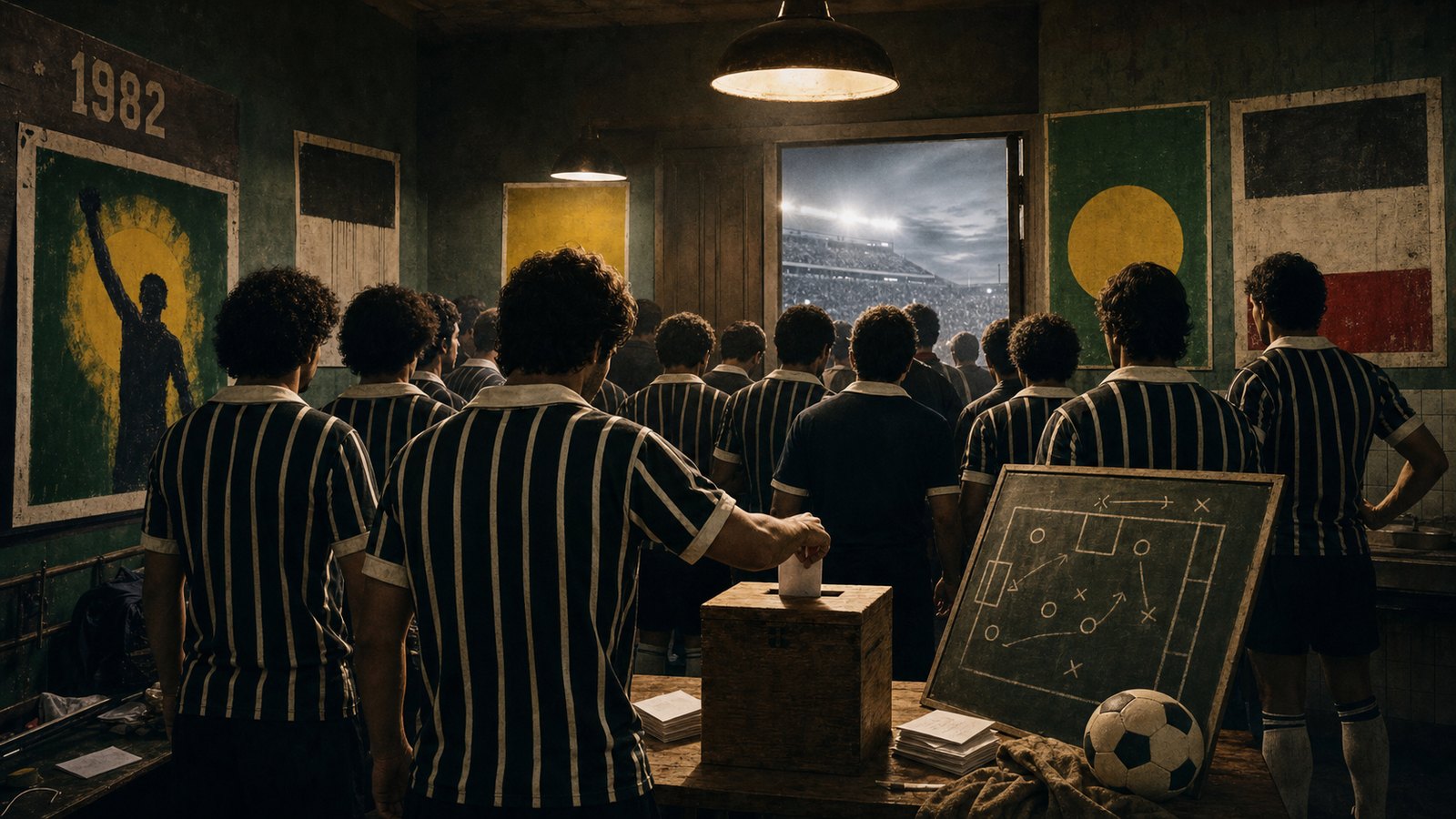
The revolution began with ordinary club control
Football clubs have always loved the language of family, but many have historically run like barracks. Training schedules, travel routines, hotel rules, transfer decisions, and disciplinary standards arrive from above. The manager decides. The directors decide. The player obeys. In Brazil’s early 1980s football culture, with its heavy club hierarchies and political pressure outside the stadium, that model was not unusual.
Corinthians Democracy attacked that assumption from inside the dressing room. Players were not simply asking for nicer conditions. They wanted a say in the things that shaped their working lives. Decisions around concentration camps before matches, travel, bonuses, and internal discipline could be debated and voted on. One player, one vote became the famous shorthand, but the deeper change was psychological. A football squad was treating itself as a political community.
The idea did not arrive as a clean manifesto from a think tank. It grew through personalities, club circumstances, and a group willing to test the edge of what a Brazilian footballer could say in public. The most famous figure was Socrates, the tall, elegant midfielder who looked like a philosopher because he often sounded like one. But the movement was broader than one captain. Wladimir, Casagrande, Zenon, and others mattered because democracy only has meaning if it outlives charisma.
Socrates gave the movement a face, not its whole engine
Socrates is unavoidable in the story because he made the movement legible to the outside world. He was a medical graduate, a smoker, a back-heel artist, and a public intellectual in boots. He could explain why a football dressing room mattered in a country arguing about its future. He carried himself like a man who understood that the microphone after a match could be as useful as the pass before a goal.
Yet reducing Corinthians Democracy to Socrates alone makes the same mistake old club hierarchies made. It turns a collective experiment back into a story about one exceptional man. The movement worked because it gave ordinary decisions a new procedure. Players voted. Staff participated. Directors had to deal with a squad that could speak with organized weight. A club famous for mass support became, for a moment, an internal argument about how mass participation should feel.
That distinction matters because football has often tolerated outspoken stars while resisting structural change. A rebellious genius can be marketed. A dressing room that votes is harder to domesticate. Corinthians Democracy was not simply Socrates being clever in interviews. It was a working method that changed the balance of power inside a club.
The shirt became a public message board
The visual memory of the movement is powerful because Corinthians carried political language into the football spectacle. The team used shirt slogans tied to voting and civic participation, most famously around the demand that Brazilians vote for president. In a dictatorship-era context, that was not a harmless marketing flourish. A football shirt became a moving billboard for public voice, worn in front of crowds that understood the charge.
This is where the story becomes more than dressing-room management. Corinthians were not playing outside Brazilian society. They were playing inside a national transition, when public gatherings, popular celebrities, and mass media could turn coded messages into shared recognition. A stadium is not a parliament, but in a country where direct democracy had been restricted, a stadium could become a place where the language of democracy was rehearsed at volume.
The club’s supporters were not passive observers of a civics lesson. Corinthians had one of Brazil’s great urban fan bases, rooted in São Paulo’s working-class identity and mass emotion. When players talked about voting, they were not delivering abstract theory. They were speaking to people whose own civic power was part of the national argument. The dressing room and the terrace were connected by the same question: who gets a voice?
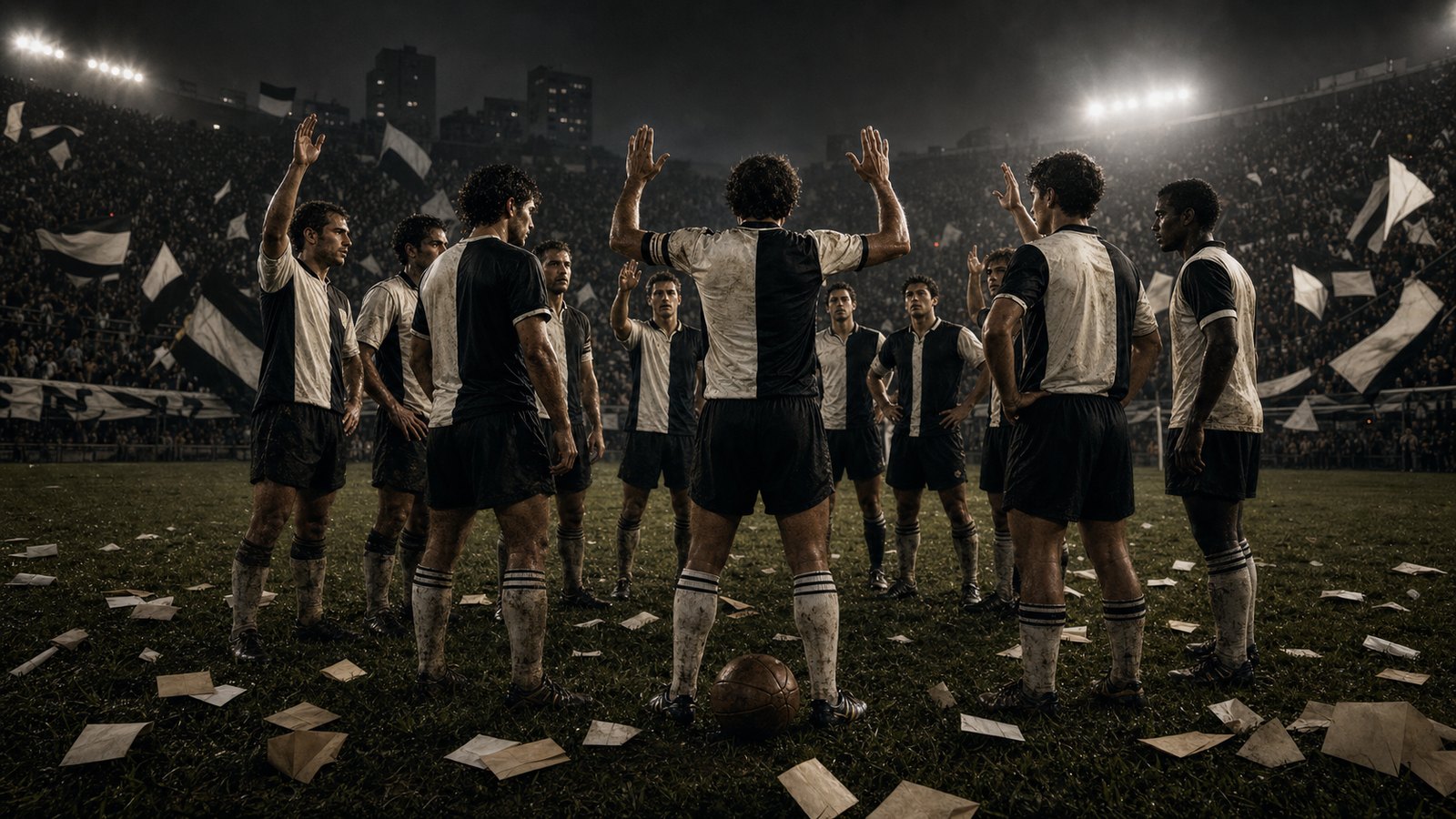
Winning made the experiment harder to dismiss
Radical football ideas are easier to mock when the team loses. Corinthians made the movement harder to dismiss by winning São Paulo state titles in 1982 and 1983. Those championships did not prove that democracy automatically beats hierarchy, but they destroyed the laziest objection: that player voice was a luxury incompatible with serious competition.
The team’s success mattered because it showed that autonomy did not have to mean chaos. A squad could argue and still organize. Players could vote and still train. Political consciousness did not make them less professional; in some ways, it made professionalism more adult. The club’s internal system asked players to take responsibility for decisions instead of merely receiving them.
That is a subtle but important football lesson. Control can produce discipline, but so can ownership. A player who has helped shape a rule may obey it differently from a player who only fears punishment. Corinthians Democracy suggested that the dressing room was not a machine to be tightened from above. It was a group of people whose commitment could deepen when their voices mattered.
The ending revealed the limits of a club-sized republic
Corinthians Democracy did not become a permanent template for world football. Socrates left for Italy. Brazilian politics moved. Club structures changed. The movement’s most intense period faded, and the ordinary forces of football returned: directors, contracts, transfers, money, impatience, and results. A dressing-room republic is fragile when its citizens are bought, sold, injured, replaced, or pulled toward other leagues.
That fragility does not make the story smaller. It makes it more honest. The movement was never a magic system that could abolish football’s economics. It was a historical opening created by specific players, a specific club, and a specific national moment. Once those conditions changed, the experiment became harder to sustain. Football is very good at absorbing rebellion into nostalgia once the difficult part is over.
Still, the fact that it ended should not be confused with failure. Many football revolutions are temporary because football itself is temporary: squads change, seasons turn, and institutions protect themselves. Corinthians Democracy lasted long enough to prove that the normal way was not the only way. That is more than most slogans achieve.
Why it still unsettles football
The story continues to matter because modern football still talks about player leadership while often fearing player power. Clubs sell authenticity, community, and identity, but decision-making remains concentrated. Players are expected to be brand ambassadors, tactical instruments, role models, and emotional symbols. They are less often treated as citizens inside the institutions they animate.
Corinthians Democracy is unsettling because it refuses to keep those categories separate. It says the dressing room can be political because work is political. It says tactics and travel routines, public speech and private discipline, voting rights and matchday identity can belong to the same conversation. That does not mean every club should run by referendum. It means football’s usual hierarchy is a choice, not a law of nature.
The lasting image is not only Socrates raising a fist or a shirt carrying a slogan. It is a room full of players choosing to count hands before counting excuses. In a sport built on obedience to the whistle, Corinthians briefly asked what might happen if the people inside the game learned to hear their own voices too.
Sources
Andrew Downie, Doctor Socrates; Sócrates interviews and contemporary Brazilian football accounts; Corinthians club histories; FIFA and Brazilian football archive summaries; academic and journalistic histories of Brazil’s democratic transition and the Diretas Já movement.