
Valencia did not reach back-to-back Champions League finals because Europe briefly forgot how to defend. They got there because Héctor Cúper turned a tense, financially ambitious club into one of the most uncomfortable opponents of the early Champions League era. The version people remember is often reduced to a simple tragedy: two finals, two defeats, one team left with regret. That misses the more interesting story. Valencia’s run was a working model for how a club outside the continent’s richest inner circle could survive the new money era by becoming brutally specific about space, timing, and emotional control.
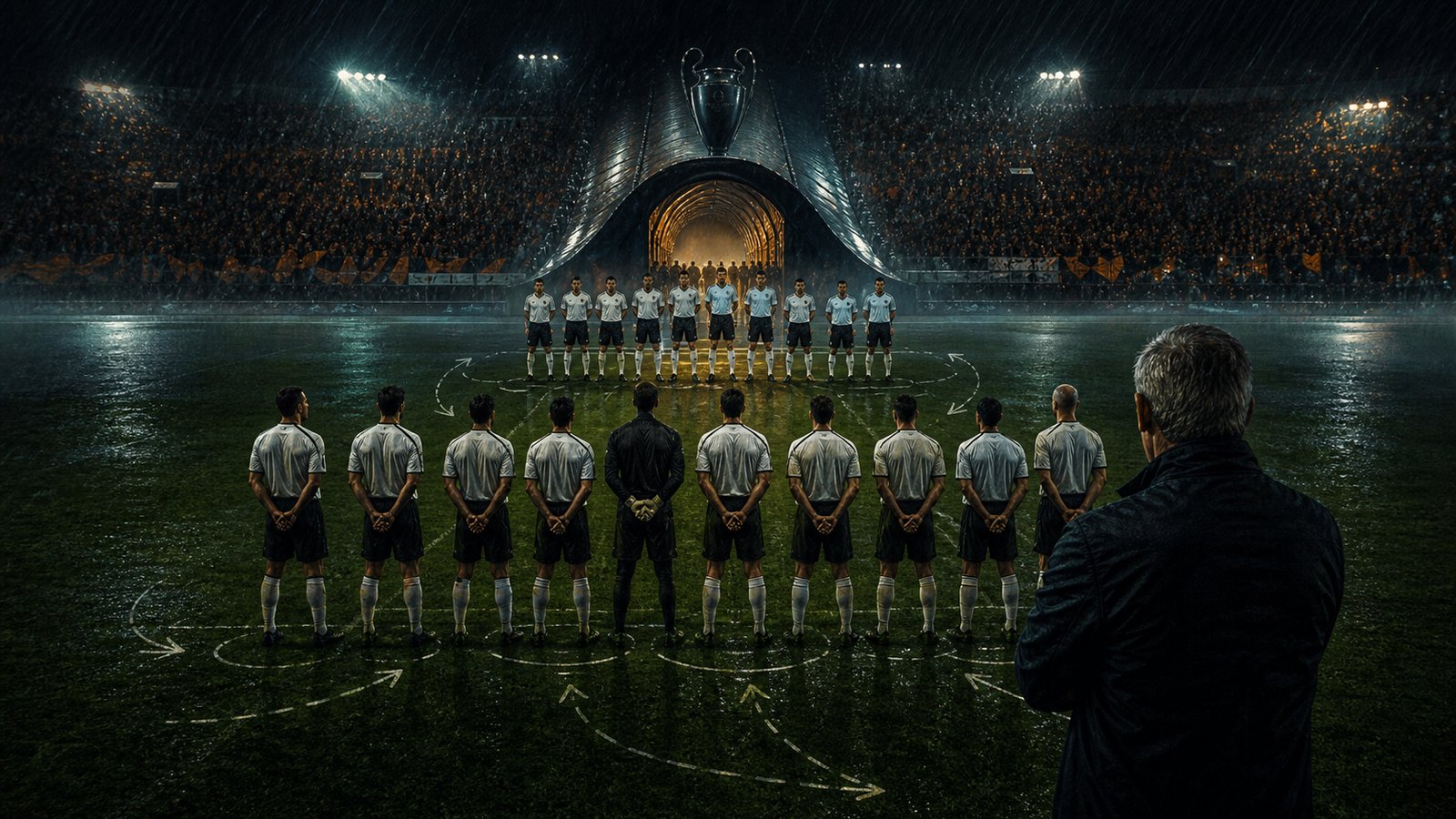
The club that learned to live without the ball
By the end of the 1990s, the Champions League was already becoming a different tournament. The old knockout mood still mattered, but the competition was filling with bigger television money, deeper squads, and clubs that could buy their way through mistakes. Valencia had good players, not a fantasy squad. Santiago Cañizares gave them a goalkeeper with command and theatrical reflexes. Mauricio Pellegrino, Miroslav Đukić, Jocelyn Angloma, Amedeo Carboni, and later Roberto Ayala gave the back line a hard edge. Gaizka Mendieta gave the midfield a captain who could run, pass, and suffer in the same match. Claudio López gave the attack a counterpunch that made high defensive lines feel unsafe.
Cúper’s contribution was not just telling them to defend. Plenty of teams defend. Valencia defended with a plan that made the opponent feel as if the pitch had narrowed. The two banks could slide without breaking. The full-backs were aggressive without turning the match into a track meet. Mendieta and the wide players did not merely chase; they managed the first pass after the tackle. That detail mattered because Valencia were not interested in heroic clearances. They wanted the first escape ball to become a real attack, not a pause before another wave.
This is why the team could look conservative and frightening at the same time. Opponents had possession, but often not comfort. They could circulate the ball around Valencia’s block, then discover that the obvious pass into midfield carried a trap. When the ball turned over, López or another runner could stretch the entire game in three touches. Valencia were not trying to win a beauty contest. They were trying to make each opponent pay tax on every ambitious pass.
The 2000 final run was a warning, not a fluke
The 1999-2000 Champions League run was the first warning. Valencia moved through the tournament with the air of a side that had worked out how to punish glamour. They beat Lazio heavily in the quarter-final first leg, a result that still feels like a small shock when read against the names in that Lazio squad. Then they handled Barcelona in an all-Spanish semi-final whose emotional stakes were larger than the score line alone. Spain’s domestic league had already shown how intense those matchups could be; Europe gave Valencia a stage where their compactness looked even more severe.
Against Barcelona, Valencia’s great weapon was not only the counterattack. It was their refusal to let the game become Barcelona’s preferred rhythm. They contested second balls, protected central zones, and forced Barcelona to make difficult decisions earlier than they wanted. Mendieta’s leadership is easy to sentimentalize now, but his real value was practical. He could carry pressure without turning it into panic. When Valencia needed tempo, he supplied it. When they needed the match to breathe, he slowed the pulse.
The final against Real Madrid in Paris revealed the ceiling of that first version. Madrid had the richer European vocabulary: Raúl, Fernando Morientes, Steve McManaman, Roberto Carlos, and a club identity built around finals. Valencia did not collapse because their model was fake. They lost because the final demanded a different kind of incision once Madrid scored and the game state tilted. Their structure was still visible, but their escape routes shortened. The 3-0 score made the night look like a mismatch. The season around it said something more complicated: Valencia had reached the edge of the elite by making football feel hostile to the elite.
Cúper’s second version was colder and more experienced
The next season could have broken the project. Losing a final often leaves a team carrying invisible damage: every big match becomes a referendum on the one that got away. Valencia did not disappear. Cúper’s side came back with a slightly different personality. Claudio López had moved on, and the squad evolved. John Carew offered a different forward reference point. Pablo Aimar arrived as a gifted creative presence, though his full Valencia mythology would deepen later. Ayala brought sharper authority to the defense. The team still had Mendieta, Cañizares, Kily González, and the old appetite for making talented opponents uncomfortable.
The 2000-01 run showed that the first final had not been a lucky draw with good weather. Valencia eliminated Arsenal, then Leeds United, two English opponents with very different profiles. Arsenal had Arsène Wenger’s technical modernization and a squad used to controlling Premier League space. Leeds had youth, speed, and a fearlessness that had carried them deep into Europe. Valencia made both series about discipline. They were not always expansive, but they were clear. They knew when to accept pressure, when to foul the tempo, when to turn a loose ball into a stadium-length sprint.
That clarity is the underrated part of Cúper’s Valencia. Football history often praises teams that impose their own possession style, but Valencia imposed a decision environment. They invited opponents to take risks in zones where Valencia had bodies waiting. They accepted long periods without glamour because the payoff was not applause. The payoff was one clean break, one set-piece, one moment when the opponent’s centre-backs were suddenly running toward their own goal with the crowd changing pitch.
The Bayern final turned control into a penalty drama
The 2001 final against Bayern Munich in Milan was almost designed to test nerves rather than systems. Valencia scored early through Mendieta’s penalty. Bayern equalized with a Stefan Effenberg penalty. The match became a long argument between two forms of control. Bayern had their own European wounds from the 1999 final against Manchester United. Valencia had Paris. Both teams carried recent pain into a match that refused to open naturally.
For Valencia, the night confirmed the strength and cruelty of their method. They could take Bayern to the edge. They could keep the match in the territory where one mistake, one save, or one penalty decided history. Cañizares had already saved a Mehmet Scholl penalty in normal time. Later, in the shootout, Oliver Kahn became the symbol of Bayern’s survival. Pellegrino’s missed penalty ended Valencia’s second straight final defeat, and the image of Cañizares in tears became the emotional shorthand for the entire era.
But tears can flatten analysis. Valencia did not fail because they lacked romance. They failed at the final step because the margins of their model were brutally thin. A team built to win by compression and transition can reach the last night, but once the match becomes a penalty shootout, the system has done nearly everything it can do. That does not make the system small. It makes the achievement more precise. They were close enough that chance could be mistaken for judgment.
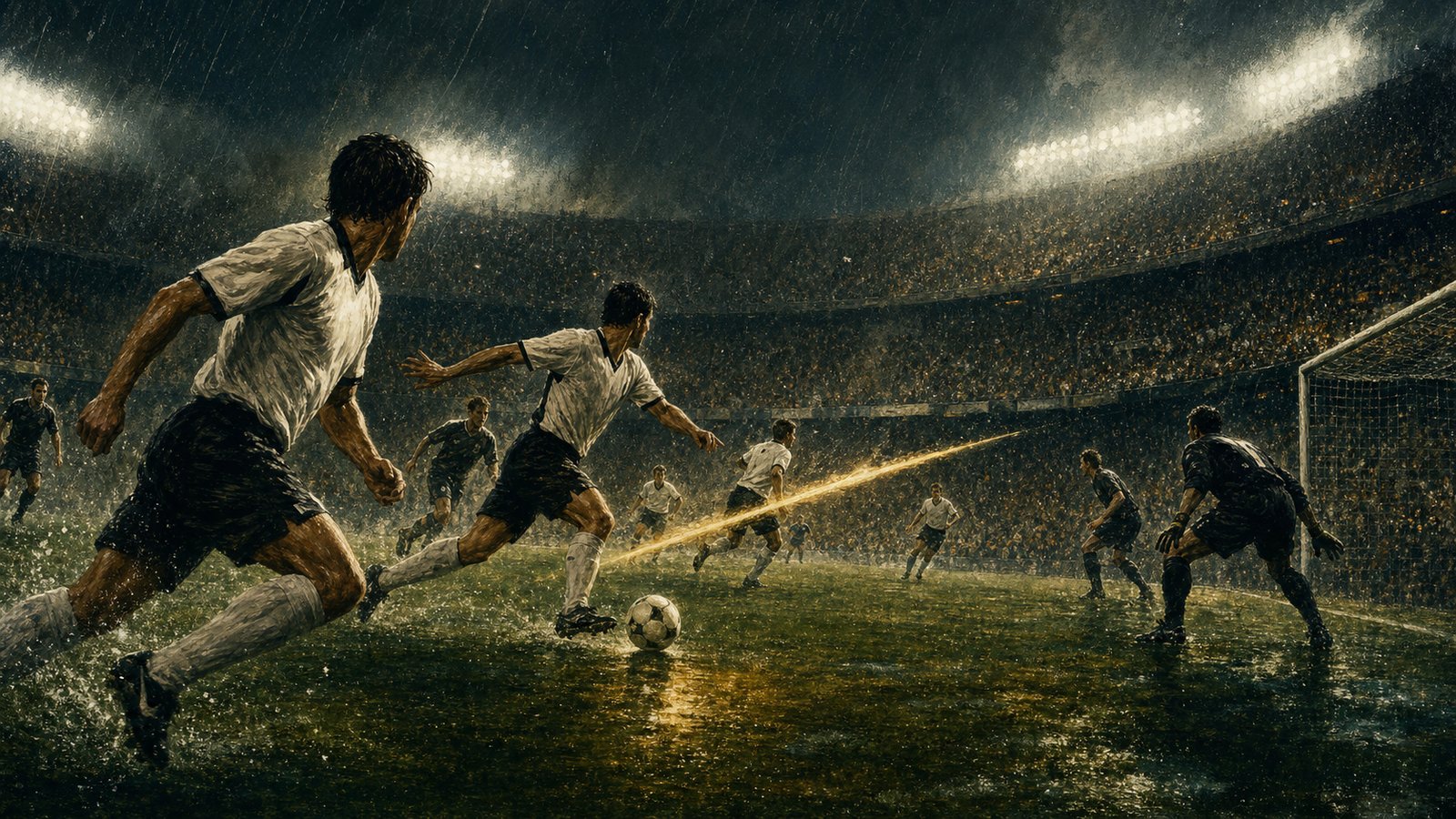
The hidden legacy is more useful than the heartbreak
Valencia’s two finals sit between eras. They were not a superclub in the Galáctico sense, and they were not a nostalgic underdog with no resources. They were a serious Spanish power operating just before the financial gap became even more difficult to bridge. Their lesson was that an ambitious club could build a European identity from tactical cohesion, recruitment fit, and shared tolerance for uncomfortable matches. That lesson did not vanish with the two final defeats.
The club’s later league titles under Rafael Benítez would belong to a different coach and a different tactical voice, but the Cúper years helped establish the idea that Valencia could be more than a talented disruption. They could be an institution capable of making elite opponents adjust. The emotional memory of Paris and Milan is heavy because finals decide reputations quickly. The football underneath deserves a slower reading. Valencia were not merely twice unlucky. They were one of the clearest demonstrations of how a club could use structure as a financial weapon before the Champions League became even more stratified.
That is why the story still matters. It is not only about Mendieta’s penalties, Cañizares’ saves, or Pellegrino’s miss. It is about a side that understood the early modern Champions League better than many richer teams did. Valencia saw that the tournament could be bent by organization, transition, and emotional stamina. They came within one match, twice, of turning that insight into the trophy. The defeats hurt because the machine was real.
Sources
UEFA Champions League records; RSSSF European Cup 1999-2000 and 2000-01 records; contemporary match reports from the 2000 and 2001 Champions League finals; club and player records for Valencia CF, Bayern Munich, Real Madrid, Arsenal, and Leeds United.