
Shakhtar Donetsk’s 2009 UEFA Cup win is easy to file as a one-night upset from the last year of the old competition. That reading is too small. The victory over Werder Bremen in Istanbul was the visible tip of a project that had been assembled through money, geography, coaching patience, and a recruitment idea that looked unusual in Eastern Europe at the time. Shakhtar were not simply a Ukrainian club having a good spring. They were building a football bridge between Donetsk and Brazil, then using that bridge to change what a post-Soviet club could look like in Europe.
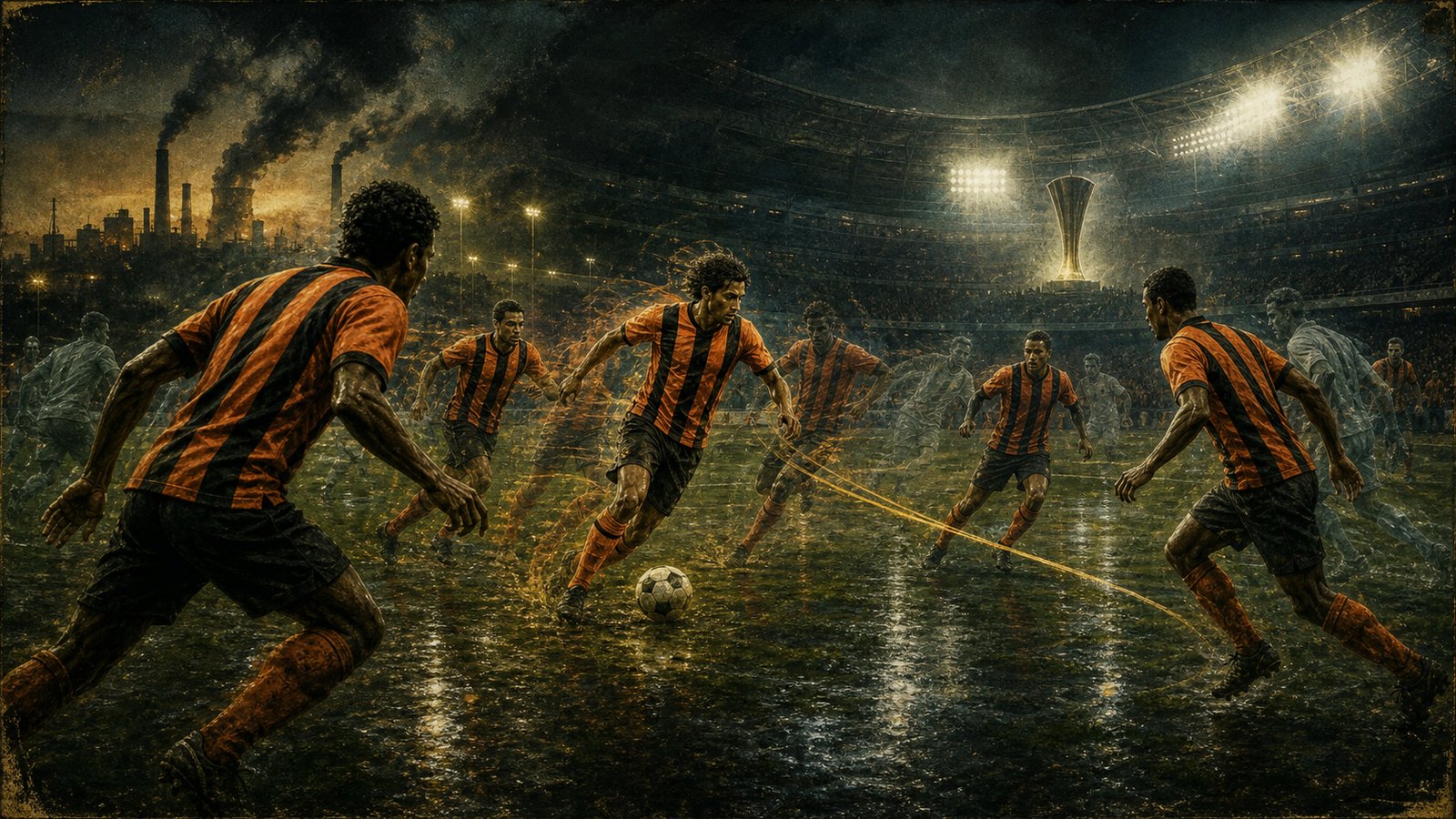
The last UEFA Cup was not a small prize
The 2008-09 UEFA Cup carried a strange historical weight. It was the final season before the competition became the Europa League, which means Shakhtar’s name sits at the end of one European lineage and the start of another. The tournament was also full of clubs with serious continental pedigree. CSKA Moscow, Tottenham Hotspur, Dynamo Kyiv, Marseille, Paris Saint-Germain, Hamburg, and Werder Bremen all appeared somewhere in the knockout landscape. Winning it required more than a lucky draw and one good goalkeeper.
Shakhtar entered that spring after dropping out of the Champions League group stage, a common route for ambitious clubs that were strong enough to trouble Europe but not yet stable enough to live with the biggest Champions League powers every season. The key was what they did after the drop. Some teams treat the UEFA Cup as consolation. Shakhtar treated it as a laboratory for status. Mircea Lucescu’s side had the tactical base to handle hard away legs and the attacking quality to punish teams who assumed a Ukrainian opponent would be direct, cautious, or physically simple.
The final result mattered for Ukrainian football because Dynamo Kyiv had long been the country’s default European reference point. Valeriy Lobanovskyi’s Dynamo had given Kyiv a scientific aura. Shakhtar’s rise came from a different city, a different ownership structure, and a different aesthetic. Donetsk was industrial, wealthy, ambitious, and increasingly international. The 2009 trophy did not erase Dynamo’s history. It announced that Ukrainian football’s European imagination no longer belonged to one club.
The Brazil pipeline changed the club’s ceiling
The most distinctive part of Shakhtar’s model was the Brazilian pipeline. The club did not merely sign one South American star as decoration. It built a recruitment habit. Fernandinho, Jádson, Ilsinho, Willian, Luiz Adriano, and other Brazilian players gave Shakhtar technical variety and attacking imagination that many opponents did not associate with a team from Donetsk. This was not random collecting. It was a way to buy talent before the richest Western European clubs took full control of the price.
The mechanism was powerful because it solved two problems at once. First, Shakhtar needed players with enough quality to alter European matches. Second, it needed a reason those players would accept Ukraine as a serious career step. Money mattered, but so did the promise of European competition, regular responsibility, and a club willing to make them central rather than ornamental. A young Brazilian attacker could arrive in Donetsk and actually play meaningful football. That mattered in a market where elite prospects often disappeared into benches, loans, or reserve teams after moving too quickly to a giant club.
Lucescu’s job was to turn the pipeline into a team rather than a showroom. That required balance. Brazilian flair without structure can become a highlight reel with no tournament life. Structure without imagination can become predictable. Shakhtar’s 2009 side lived between those poles. The defensive and midfield organization gave the Brazilians a platform. The Brazilian attackers gave the structure a surprise. Opponents could not prepare for Shakhtar as if they were only facing a compact Eastern European team. They had to account for dribbling, combinations, and sudden changes of tempo.
The all-Ukrainian semi-final raised the stakes
The semi-final against Dynamo Kyiv turned the run into something more than a club story. It was a national argument staged over two European legs. Dynamo carried the heavier historical name. Shakhtar carried the feeling of a new force with new money and a new route into Europe. Those matches were not simply about tactics; they were about who had the right to represent Ukrainian football’s next era.
Shakhtar advanced 3-2 on aggregate, with the tie decided in Donetsk. That detail mattered. The club’s home environment was not just scenery. It represented the idea that European nights could belong to the Donbas as well as the capital. The semi-final also showed the practical value of Shakhtar’s mix. They could handle the emotional weight of a derby-like European tie and still find enough attacking quality to separate the teams. For a club trying to reframe its status, beating Dynamo on the way to a European final was almost as symbolic as lifting the trophy.
The victory also sharpened the final. Shakhtar were not arriving in Istanbul as tourists. They had already passed through the kind of tie that tests identity. By the time they faced Werder Bremen, they were carrying Ukrainian rivalry, owner ambition, Brazilian recruitment, and Lucescu’s long coaching work into one match. That is why the final should not be remembered as an isolated upset. It was the last chapter of a run that had kept adding layers.
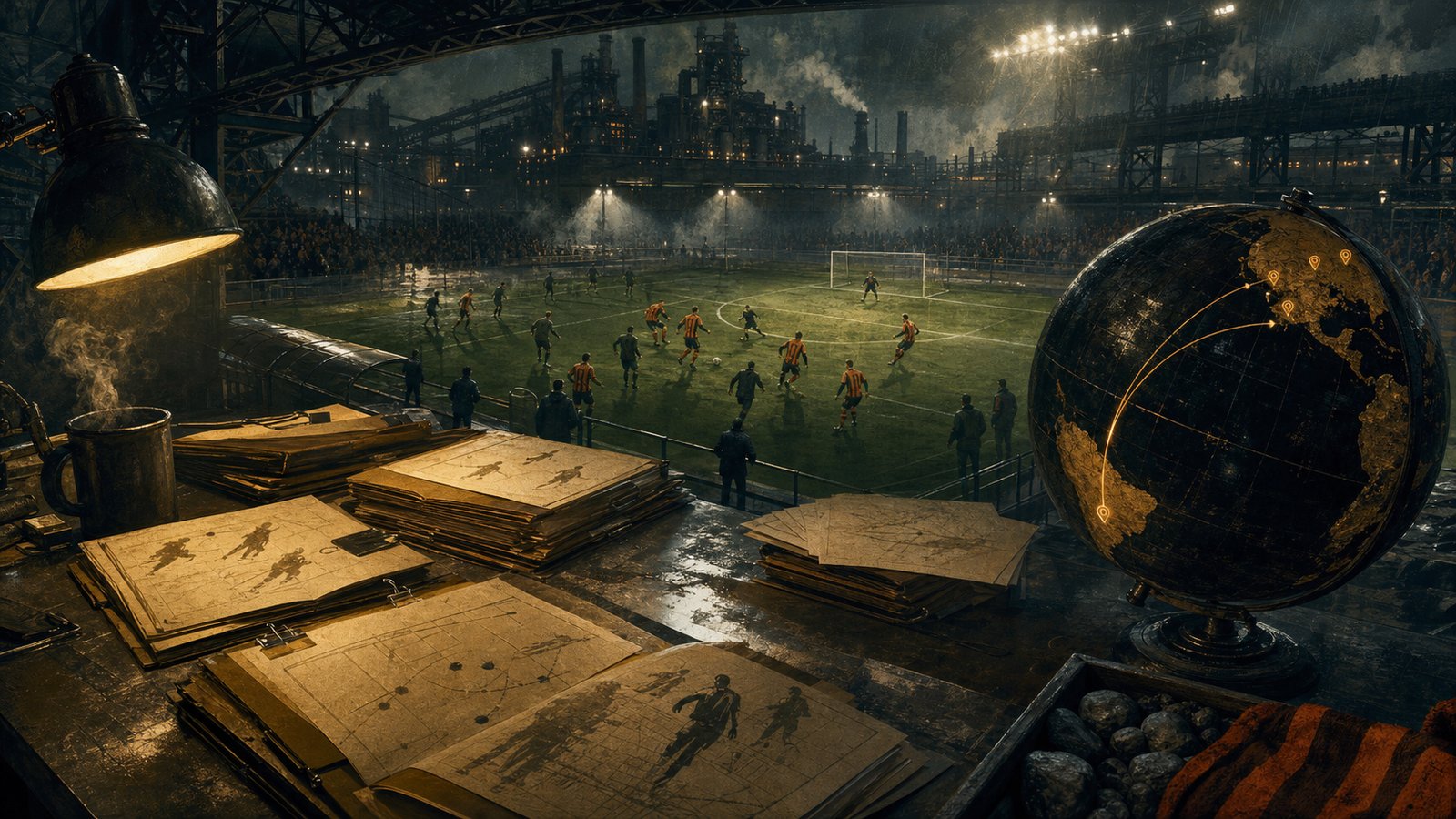
Istanbul was a recruitment model under pressure
The final against Werder Bremen was exactly the kind of match that could expose a glamorous idea. Werder had experience, attacking quality, and a Bundesliga rhythm that could punish hesitation. Diego was suspended, which changed Bremen’s creative profile, but the German side still had enough quality to make the final uncomfortable. Shakhtar took the lead through Luiz Adriano. Naldo equalized with a free kick that Cañizares-style folklore would have turned into a goalkeeper debate on another night. The match moved into extra time with the project still on trial.
Jádson scored the decisive goal in extra time, and the scorer mattered. A Brazilian midfielder winning a European final for a Ukrainian club was not an accident of nationality. It was the model announcing itself in the most public possible way. The moment also gave Shakhtar a different kind of credibility in the transfer market. The club could tell future signings that Donetsk was not a hidden corner of Europe. It was a place where a player could win a continental trophy, play in modern facilities, and become visible to the rest of the football world.
That does not mean the story was purely romantic. Shakhtar’s rise was funded by major private wealth, and the club’s growing power changed the competitive balance inside Ukraine. But football history becomes less useful when it pretends every interesting project must be morally simple. Shakhtar’s 2009 team was both a product of money and a product of sporting intelligence. The money opened the door. The recruitment and coaching decided what walked through it.
The legacy became larger and more complicated
After 2009, Shakhtar’s Brazilian strategy became one of the club’s defining signatures. Later teams would feature even more South American influence and would become regular Champions League irritants. Willian moved on to Chelsea. Fernandinho became a major figure at Manchester City. Henrikh Mkhitaryan, though Armenian rather than Brazilian, later fit the wider pattern of Shakhtar as a club that could develop and showcase international attacking talent before the biggest leagues absorbed it. The pipeline did not guarantee permanent European dominance, but it changed the club’s ceiling.
The later history of Shakhtar also makes 2009 feel more poignant. War and displacement would eventually alter the club’s relationship with Donetsk itself. Home matches, identity, and continuity became far more complicated than they were on that night in Istanbul. Looking back, the UEFA Cup win now carries a double meaning. It was a sporting breakthrough, and it was a snapshot of a club still rooted in a home that future seasons would make difficult to physically inhabit.
That is why the last UEFA Cup should not be treated as a footnote. It was a trophy, a market signal, a national power shift, and a tactical proof of concept. Shakhtar showed that a club outside Western Europe’s traditional center could build a distinctive recruitment lane, give it coaching structure, and win a continental final with that identity intact. The orange shirts in Istanbul were not just celebrating a result. They were celebrating a machine that had learned how to export Donetsk into Europe and import Brazil into Donetsk.
Sources
UEFA Cup 2008-09 records; UEFA final reports from Shakhtar Donetsk v Werder Bremen; RSSSF European competition records; club records for Shakhtar Donetsk, Dynamo Kyiv, and Werder Bremen; contemporary reports on Shakhtar’s Brazilian recruitment under Mircea Lucescu.