
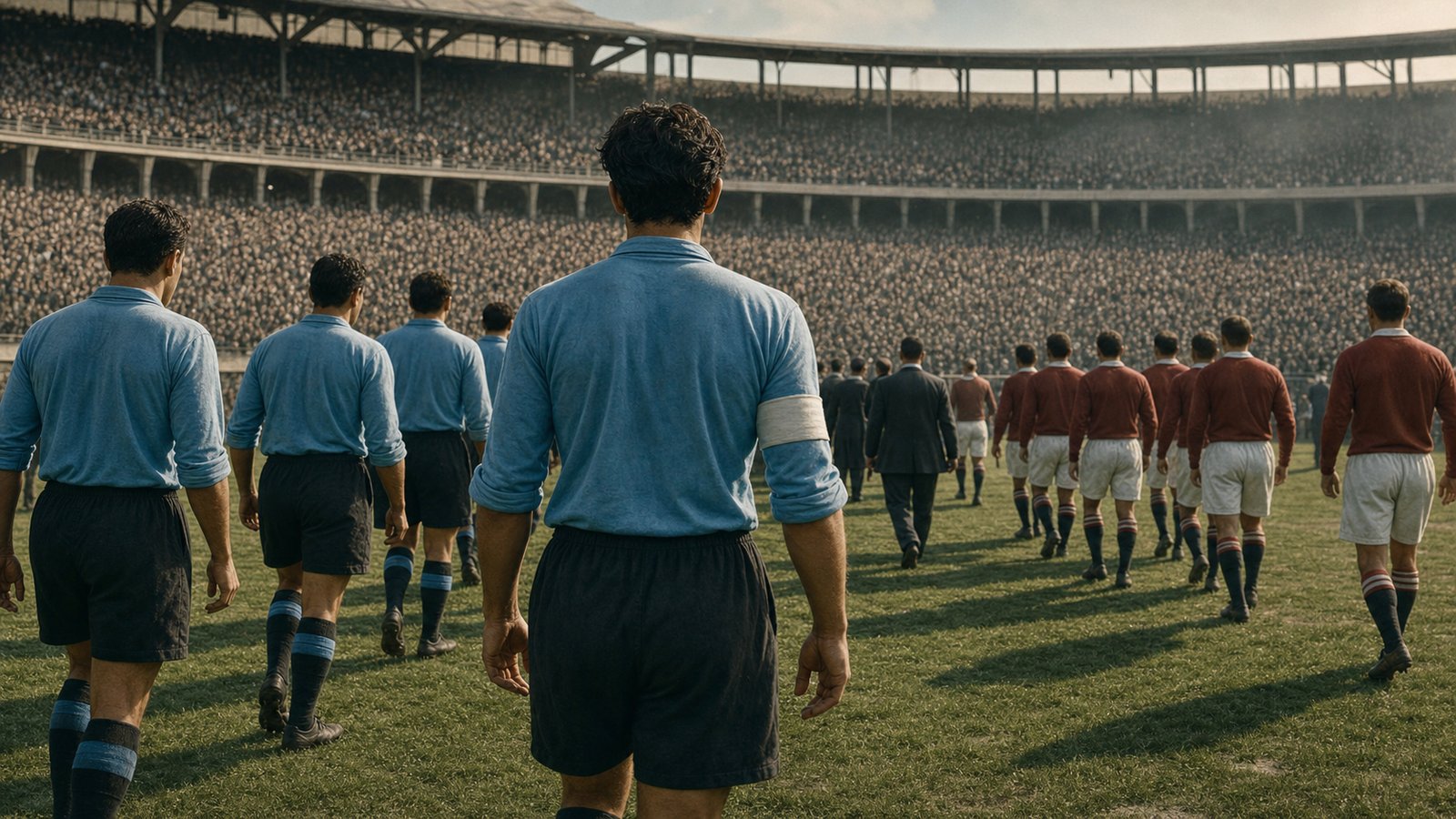
Only 3,025 people were recorded at Colombes on 26 May 1924 when Uruguay walked into an Olympic football tournament that Europe assumed it understood. Their opponents were Yugoslavia. The South Americans were making their first appearance in the competition, had crossed an ocean to get there, and carried none of the local familiarity attached to France, Sweden, Switzerland or the Netherlands.
Twenty minutes passed before José Vidal scored. Three minutes later Héctor Scarone added another. Pedro Petrone struck before half-time, then Pedro Cea, Ángel Romano, Petrone again and Cea again turned an obscure first-round fixture into a 7–0 announcement. The startling thing was not simply the margin. It was the speed with which a team few in Paris had seen made the old tournament feel suddenly larger.
Five games that kept changing the question
The Paris football event ran from 25 May to 9 June and was the most international football competition yet staged, according to Olympedia. Twenty-two teams started in a single-elimination format after Portugal withdrew. Matches were spread across four venues around Paris: Colombes, Bergeyre, Saint-Ouen and Pershing. Europe still supplied most of the field, but Uruguay, the United States, Egypt and Turkey gave the bracket a geographical reach no previous Olympic tournament had possessed.
After Yugoslavia, Uruguay met the United States at Bergeyre on 29 May. Petrone scored in the tenth minute, Scarone in the fifteenth and Petrone again in the forty-fourth. The 3–0 result was effectively settled by half-time. A side that had arrived as a curiosity was now a quarter-finalist with ten goals scored and none conceded.
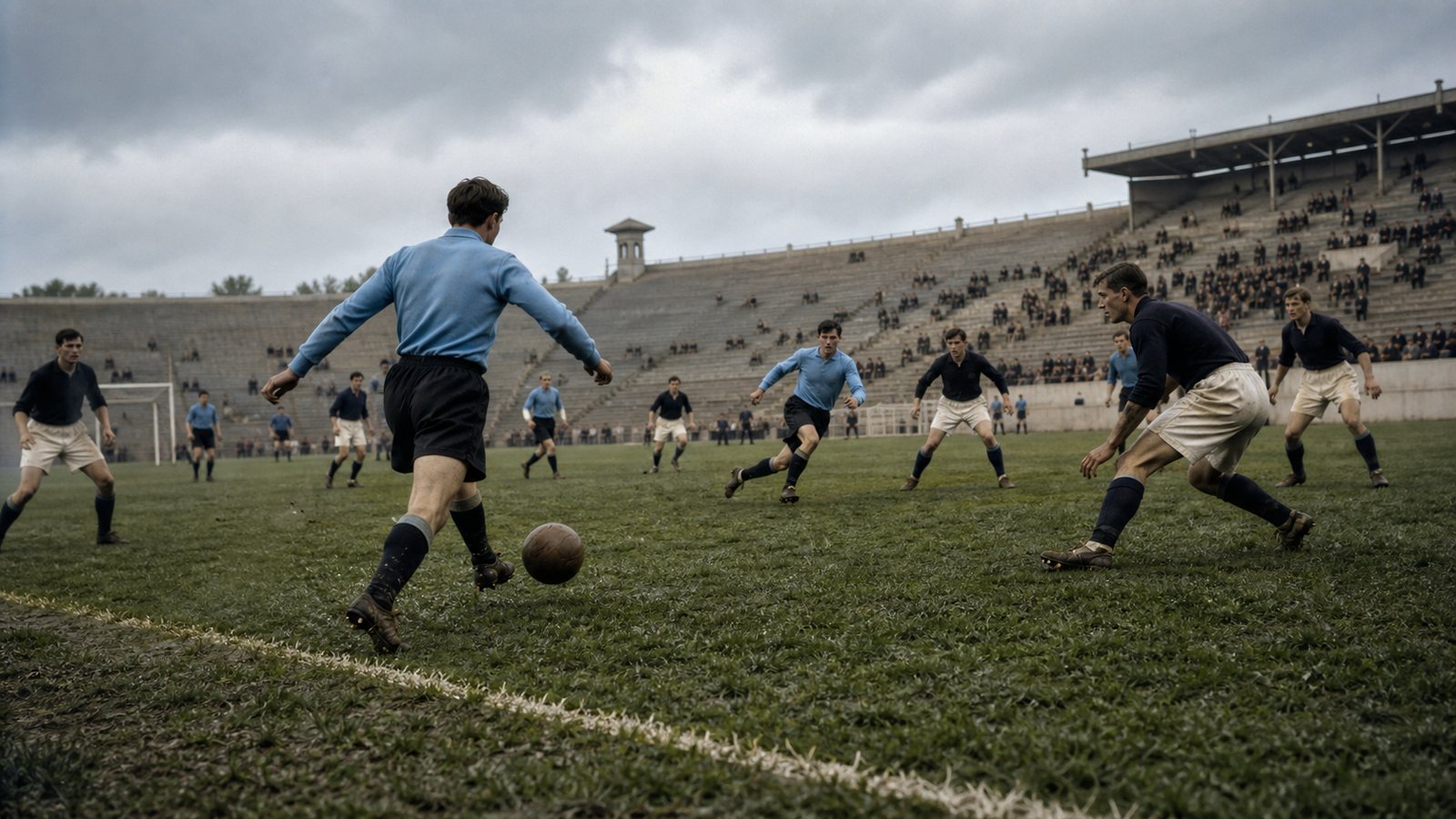
France brought the hosts, a larger stage and 30,868 spectators at Colombes on 1 June. Scarone scored after two minutes, but Paul Nicolas equalised ten minutes later. For the first time Uruguay had conceded and the match remained only 2–1 at the interval. That moment mattered. A seven-goal debut could be dismissed as one strange mismatch; control against the hosts under pressure was harder to explain away. Scarone scored again, Petrone twice, and Romano completed a 5–1 win.
The semi-final finally pushed back
The Netherlands presented a different problem on 6 June. Kees Pijl scored after 32 minutes, sending Uruguay into half-time behind for the first and only time in Paris. The match did not open into another avalanche. It tightened. Cea equalised in the 62nd minute, and Scarone converted a penalty in the 81st to make it 2–1. Uruguay had shown that it could overwhelm opponents; now it had survived a match that refused to follow the earlier pattern.
That comeback also brought captain José Nasazzi and his teammates to a final against Switzerland, the competition’s great European surprise. The Swiss had beaten Lithuania, Czechoslovakia, Italy and Sweden on their route to Colombes. Their path had required six matches because the Czechoslovakia tie went to a replay. Uruguay had played four. Neither finalist could now be treated as an accident of a friendly draw.
The Uruguay lineup changed in details through the tournament, yet a core kept appearing: Andrés Mazali in goal, Nasazzi organizing the defence, José Leandro Andrade in the half-back line, and Scarone, Petrone, Cea and Romano among the attacking names. Match records do not provide a modern tactical data set. They do show goals distributed across the forward line and a team that allowed only two in five games.
The defensive record is easier to overlook beside the twenty goals. Nicolas’s equaliser for France and Pijl’s semi-final opener were the only breaches. Yugoslavia, the United States and Switzerland were all held scoreless. In a knockout event, that gave Uruguay room for two very different responses: accelerating away from France after an early setback, then patiently reversing the Netherlands match across the final half-hour.
The figure in the middle of Europe’s fascination
Andrade became the player around whom much of the tournament’s later memory gathered. It is tempting to reduce that fascination to exoticism or one elegant individual, but the scores place him inside a collective performance. Uruguay could move through early rounds at speed, respond after France equalised, and recover from a half-time deficit against the Dutch. A half-back had to connect those phases rather than merely decorate them.
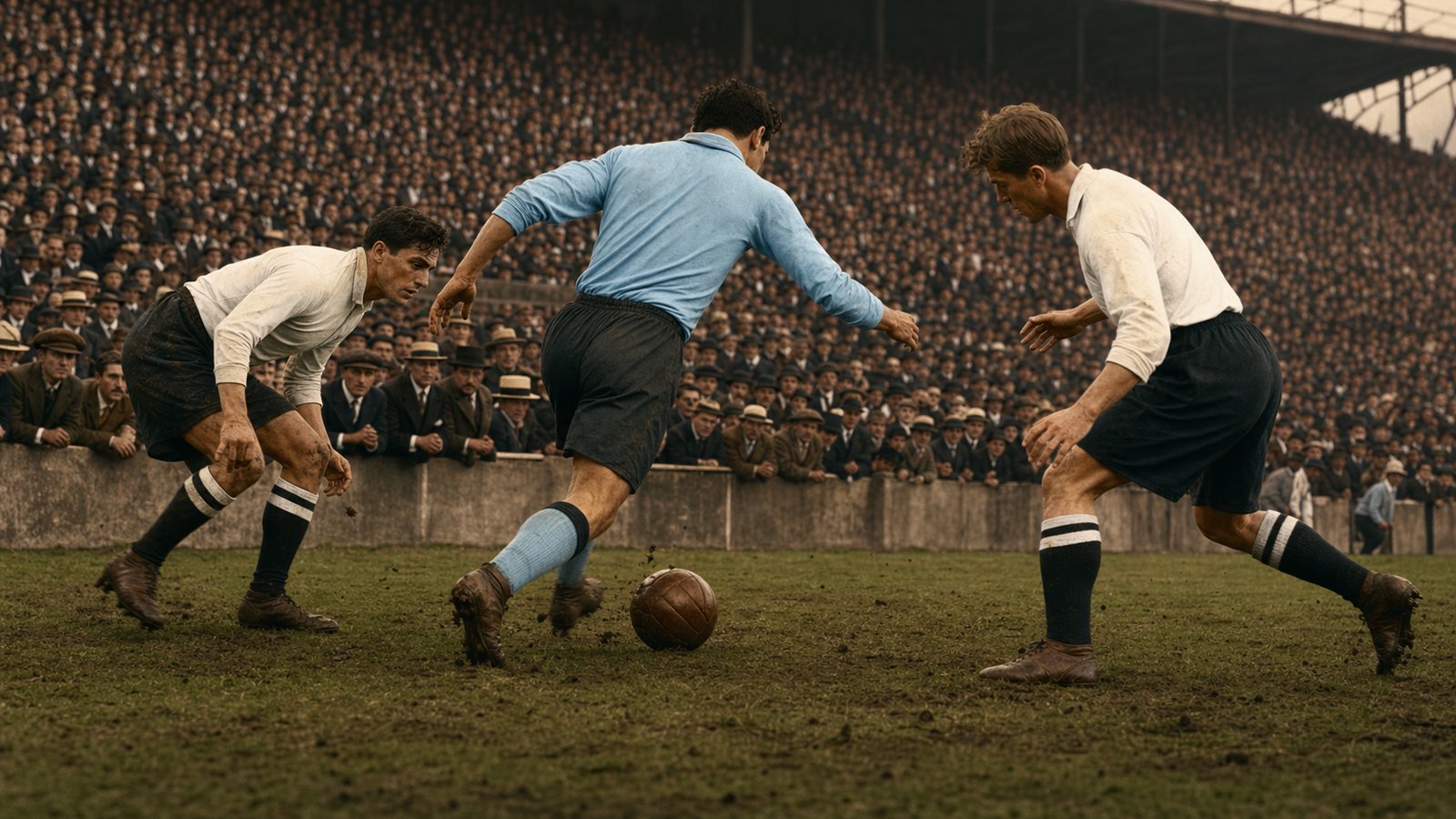
The names around Andrade prevent the story from becoming a solo myth. Petrone scored twice against Yugoslavia, twice against the United States, twice against France and once in the final. Scarone struck against Yugoslavia and the United States, scored twice against France, and supplied the late semi-final penalty. Cea scored twice in the opener, found the equaliser against the Netherlands and later scored in the final. Romano scored in three separate matches.
That distribution suggests why opponents struggled to isolate one threat. Stop one runner and another name arrived in the scoring record. The surviving lineups also show changes around a stable spine rather than a fixed eleven treated as untouchable. Uruguay’s football had personalities, but Paris saw those personalities operating as a connected side across five different tests.
Forty thousand people saw the answer
The final on 9 June shared a Colombes attendance of 40,522 with the replayed bronze-medal match. Switzerland had already proved its resilience. Uruguay removed uncertainty early when Petrone scored in the ninth minute. The score remained 1–0 at half-time, leaving the Swiss within one action of changing the final.
Cea scored in the 65th minute. Romano added the third in the 82nd. The official sequence says something more useful than a legend polished over a century: Uruguay did not need a frantic opening burst to finish the tournament. It took the lead, protected it through the interval, and widened the margin late. The final ended 3–0.
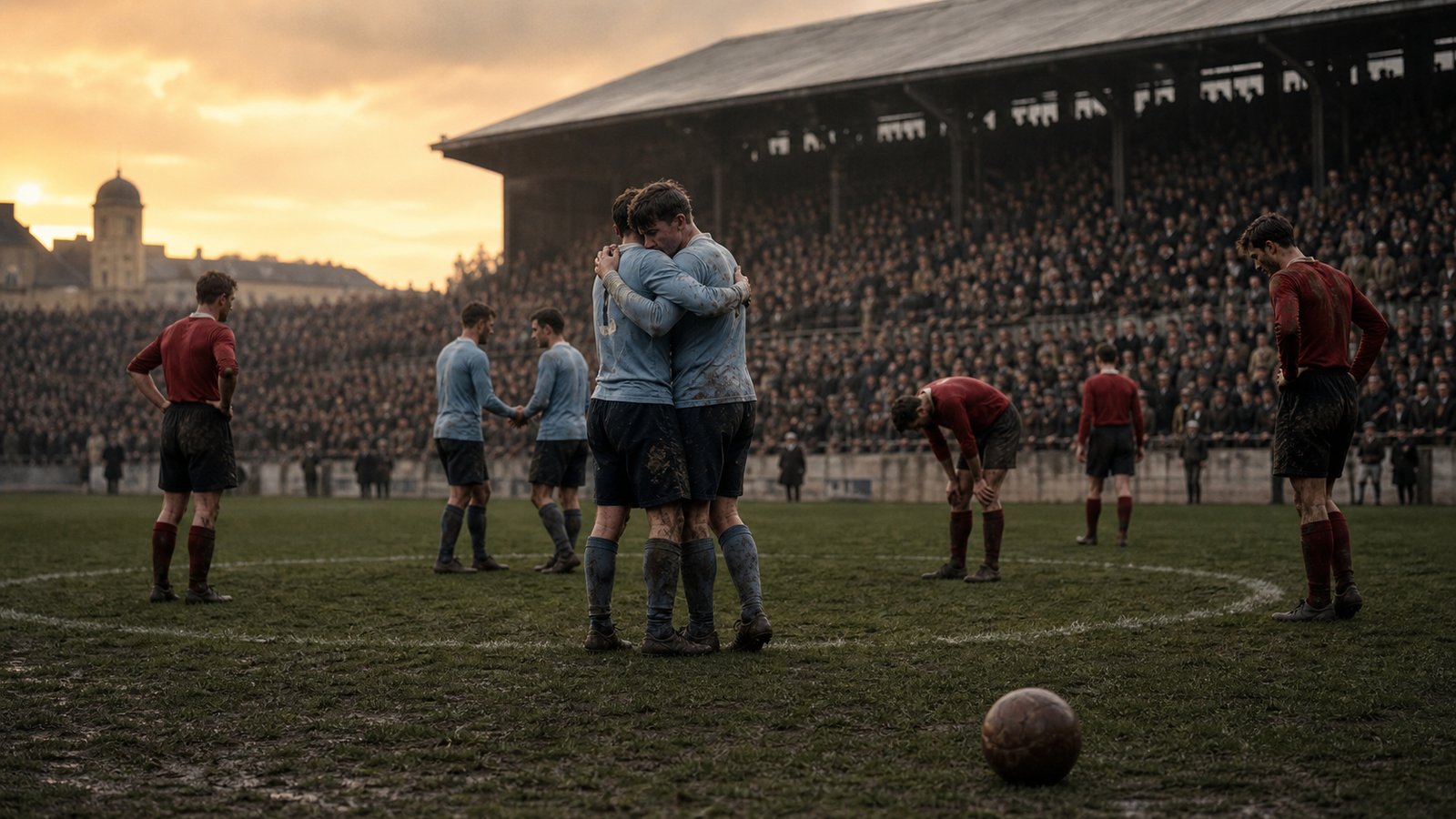
Across Paris, the champions had won five times, scored 20 and conceded two. Petrone finished as the tournament’s leading scorer with six goals in the standard competition summary, while detailed match records credit him with seven; the discrepancy is a reminder to distinguish contemporary statistical conventions and later reconstructions rather than flattening them. What is not disputed is the scale of Uruguay’s dominance: every opponent was beaten, four by at least three goals.
Paris became the beginning, not the peak
The gold medal was not a glorious isolated trip. Uruguay returned to the Olympics in 1928 and defended the title. Two years later it hosted and won the first FIFA World Cup. Several names from Paris belonged to that longer arc, including Nasazzi, Scarone, Cea and Andrade. The 1924 side therefore sits at the beginning of international football’s first sustained South American championship sequence.
Its wider consequence was imaginative. A tournament organized in Europe had produced a champion from across the Atlantic, not through one upset but through five victories over teams from Yugoslavia, the United States, France, the Netherlands and Switzerland. The route sampled different kinds of opposition and supplied no second-chance group stage. One bad afternoon would have ended the journey.
Paris did not prove that one continent possessed a permanent tactical secret. It proved that the football world Europeans could see from home was incomplete. The crowd grew from 3,025 at Uruguay’s opener to more than 40,000 on final day. That numerical curve captures the story cleanly: first an unknown entrant, then the attraction everyone needed to understand.
Sources
RSSSF, Olympic Football Tournament 1924 — Match Details
Olympedia, Football at the 1924 Summer Olympics
FIFA, Uruguay: 1924 Olympic Football Champions
Olympics, Paris 1924 Football Results
Wikipedia, Football at the 1924 Summer Olympics (used only for cross-checking)