
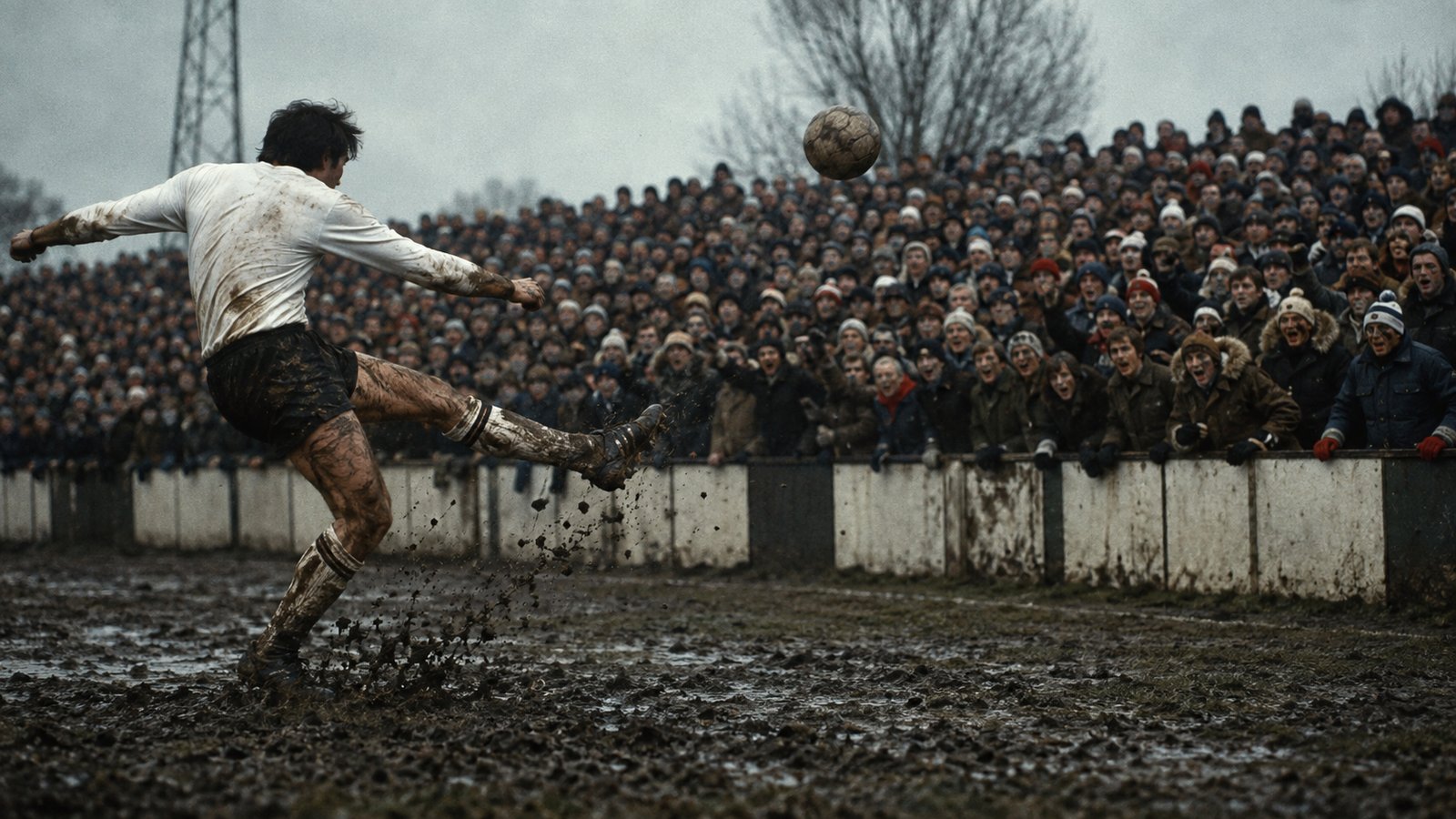
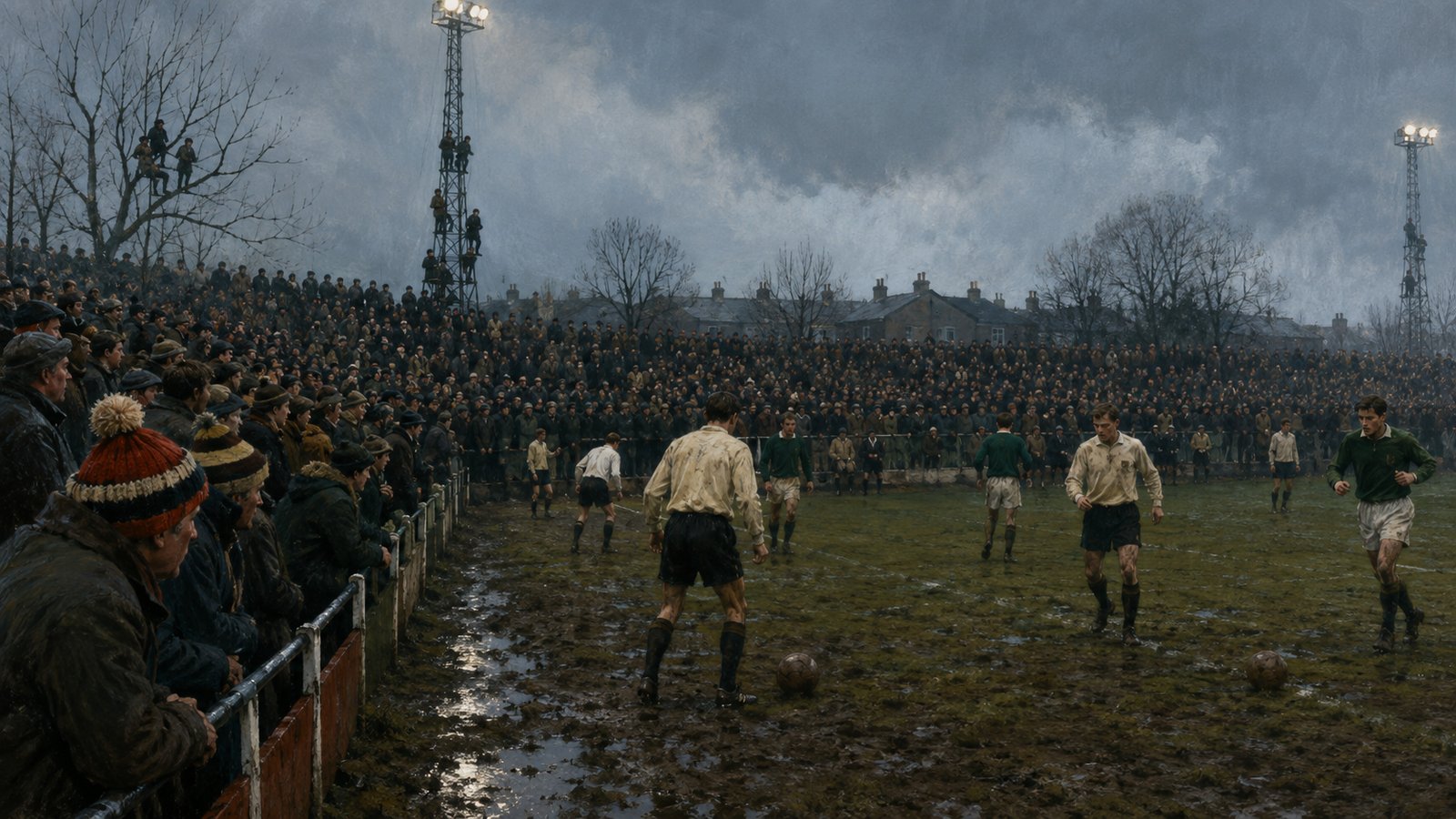
The television picture begins with mud. Players move through a brown surface at Edgar Street, the ball stopping and rising unpredictably, while spectators occupy every strip of space around the pitch. Some watch from trees, floodlight pylons and a nearby church steeple. Hereford United are a Southern League team. Newcastle United belong to the First Division and have an England striker at centre-forward. The scene looks improvised; the difference in status does not.
By the final minutes on 5 February 1972, Newcastle had finally imposed the expected score. Malcolm Macdonald headed them ahead in the 82nd minute. Three minutes later Ronnie Radford met a bouncing return pass roughly 35 yards from goal and struck it first time. His equaliser sent children in bobble hats and parkas onto the pitch, altered the running order of Match of the Day, and pushed the replay into extra time. Yet the famous shot was not the winner. Hereford’s afternoon survives because several smaller stories fitted around that one swing.
The third round had already required one escape
Hereford’s route began in the fourth qualifying round, long before television treated them as the embodiment of the FA Cup. They needed two matches to get past King’s Lynn and three to eliminate Northampton Town in the second round proper. The reward was a trip to St James’ Park against Newcastle, six-time winners of the competition.
The first meeting refused to follow its billing. Brian Owen put Hereford ahead after only 17 seconds. Newcastle recovered and led 2–1, but player-manager Colin Addison scored from distance to earn a 2–2 draw. Around 8,000 Hereford followers had travelled north on a special train, joining a crowd of roughly 39,000. They returned with a replay rather than a souvenir defeat.
That draw created a practical problem. Edgar Street could not comfortably absorb the demand. Club figures later estimated that its approximately 15,000 places could have been sold several times over. The replay was postponed repeatedly as rain and snow worked on the pitch. By the time it was played, the grass had become a sticky, churned surface that made clean control an achievement.
Newcastle brought names; Hereford brought working weeks
Newcastle’s side included Macdonald, Bobby Moncur and goalkeeper Willie McFaul. Hereford’s players were semi-professionals who organised football around ordinary employment. Radford had trained as a joiner. He had passed through Sheffield Wednesday and Leeds without making a first-team appearance, then played for Cheltenham, Rugby and Newport before John Charles signed him for Hereford in 1971.
Radford was not a visiting amateur enjoying one ceremonial afternoon. He was a regular midfielder in a team that had learned how to survive repeat ties and uneven pitches. Ricky George had also travelled through football’s less visible routes. He joined Hereford after spells including Barnet, while Addison had dropped from top-flight Sheffield United to become player-manager at 31.
The contrast shaped public memory, but it did not decide the tactics. Hereford matched Newcastle through the first half and kept the game goalless. The difficult centre of the pitch slowed combinations, reduced the value of polished possession and kept second balls alive. Newcastle still struck the woodwork, and Hereford goalkeeper David Icke had work to do. The underdogs were resisting rather than controlling.
At 82 minutes the expected goal arrived
Macdonald’s header came with eight minutes remaining. For Newcastle, it seemed like release from an increasingly awkward tie. For Hereford, it compressed the entire cup run into one final attempt to move through a surface that had frustrated both sides.
Radford recovered the ball in a challenge with John Tudor near halfway. He turned and found Owen, then continued forward for the return. The pass did not glide across the mud. It bounced and sat up. Radford later recalled that he did not calculate the distance; he simply felt he had to hit it. The strike travelled beyond McFaul and into the top corner.
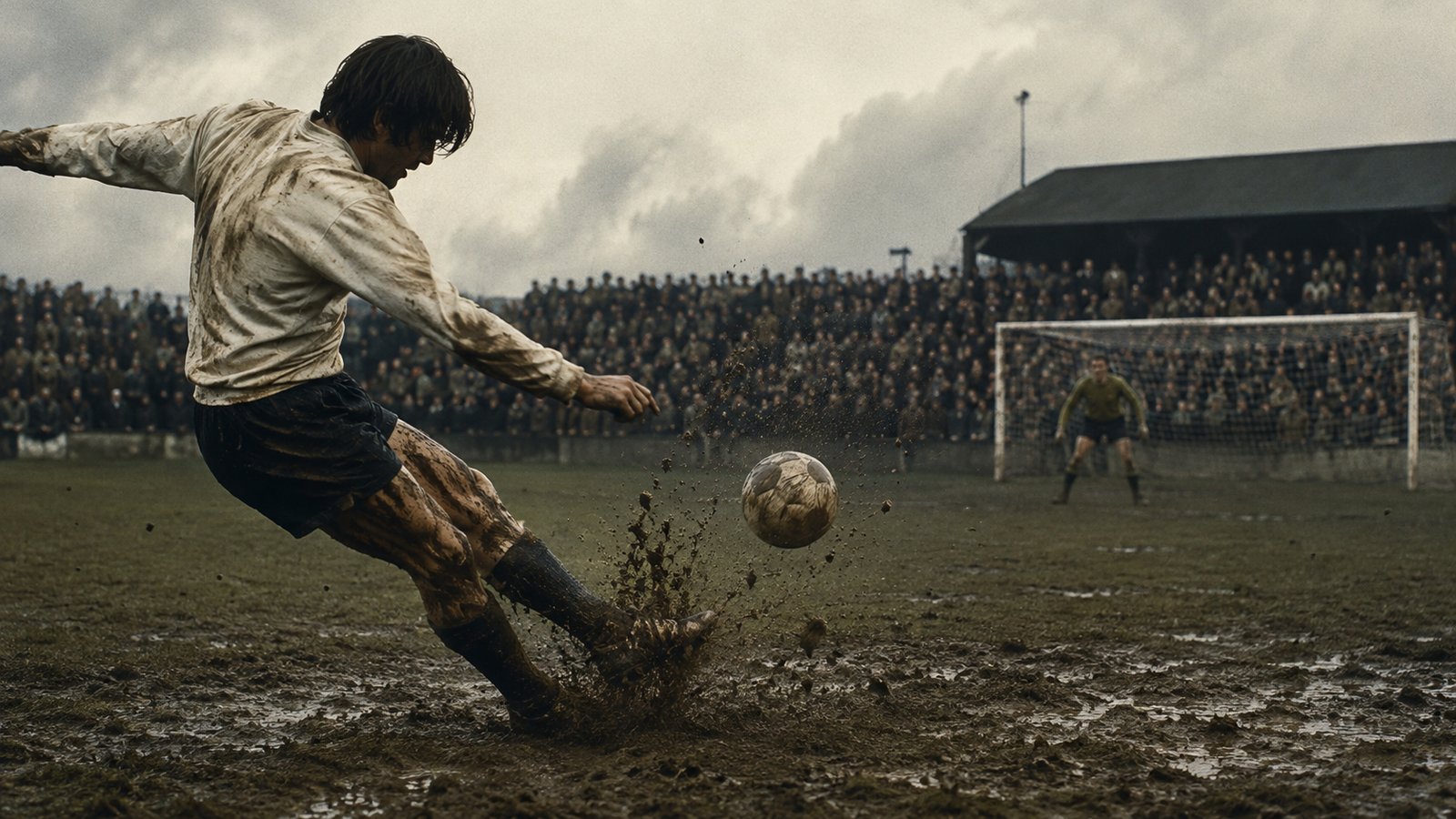
The famous image contains its own physical proof of place: Radford running with both arms raised, the pitch mottled dark behind him, spectators spilling over the barrier. It is easy to remember the invasion as pure celebration and overlook the score. Hereford had only equalised. The replay still had to pass through extra time.
The broadcast discovered its main match after the goal
The BBC had not arrived expecting its defining FA Cup film. A 26-year-old John Motson was commentating, and the fixture was intended for a short highlights segment. Radford’s strike and the crowd’s eruption changed that judgement. The game was promoted to the main match that evening.
Motson’s excited call became inseparable from the pictures. He later said the match helped establish his career and that he owed much to Hereford’s giant-killing. Radford’s own viewing experience was stranger. After a small amount of champagne in the dressing room, he travelled home with his wife Annie and their two sons. They stopped for fish and chips and watched Match of the Day. He had never previously seen himself play football and did not know what he looked like when he ran.
The replay therefore produced two breakthroughs at once. One belonged to a football team seeking election from the Southern League. The other belonged to a young broadcaster whose voice had been attached to the right pictures at precisely the right second. Neither would have existed in the same way if the BBC had kept the tie in its planned minor slot.
Ricky George finished what Radford reopened
Substitute Ricky George scored the decisive goal in extra time, driving a low shot beyond McFaul. Hereford’s 2–1 victory made them the first non-league club to beat a top-flight opponent since 1949. The distinction between equaliser and winner matters because Radford spent years uncomfortable with a memory that reduced the team to him.
He pointed to the other players and to the rounds that preceded Newcastle. George enjoyed correcting supporters who mistook him for the scorer of the 35-yard shot: he had, after all, scored only the winner. That joke restored the basic shape of the match. Radford supplied the image that television could repeat; George supplied the goal without which the image would have ended in gallant defeat.
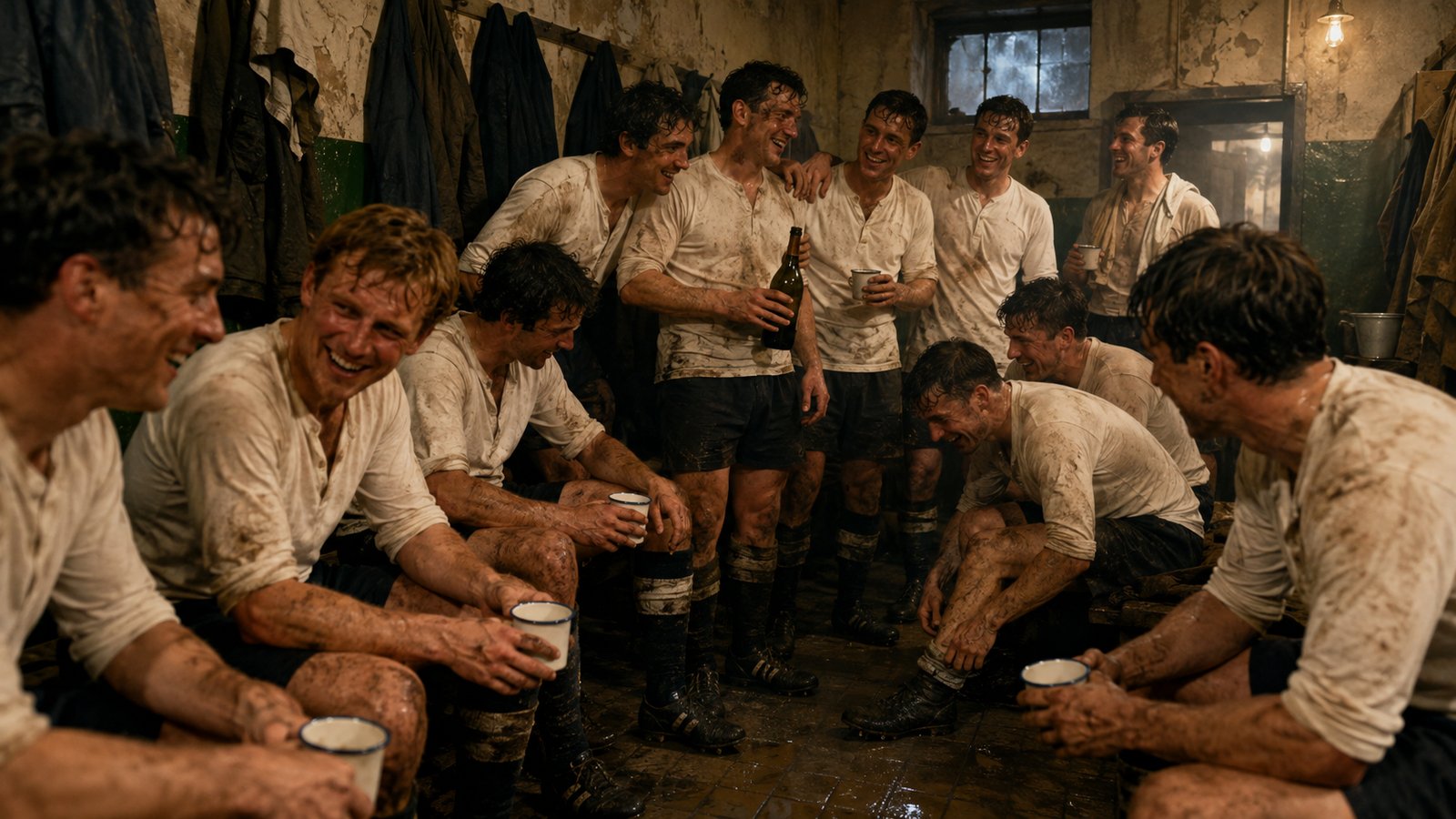
Hereford then held West Ham to a goalless draw before losing the fourth-round replay. Their larger achievement arrived at the end of the season, when they finished runners-up in the Southern League and were elected to the Football League. Like Accrington Stanley’s later return after 44 years, Hereford’s progress joined one famous match to the slower work of earning a league place.
Monday morning kept the story at human scale
Radford did not step from Edgar Street into a full-time celebrity life. On Monday he was fitting a roof rafter in Cheltenham. Some colleagues on the building site had not known he was playing until they saw the highlights. His preferred description remained plain: Ronnie Radford, the joiner.
That return to work explains part of the goal’s endurance without turning employment into sentiment. The 35-yard strike was an elite piece of technique produced by a footballer whose preparation time and public status were limited. The mud, the cramped ground and the working week did not make the shot lucky. They made the precision startling.
Radford’s goal has often been presented as the FA Cup reduced to a single perfect frame. The complete replay is richer. Owen returned the pass; George scored in extra time; Addison had first rescued the tie at St James’ Park; Motson’s commentary carried it into living rooms. A non-league club used that afternoon as part of its path into the Football League. The ball from 35 yards opened the door, but a team, a broadcaster and a town walked through it together.
Sources
- BBC Sport, “The FA Cup goal that made time stand still”
- BBC Sport, “Iconic FA Cup goalscorer dies aged 79”
- FourFourTwo, “The FA Cup’s greatest upset”
- The Northern Echo, Ronnie Radford obituary