
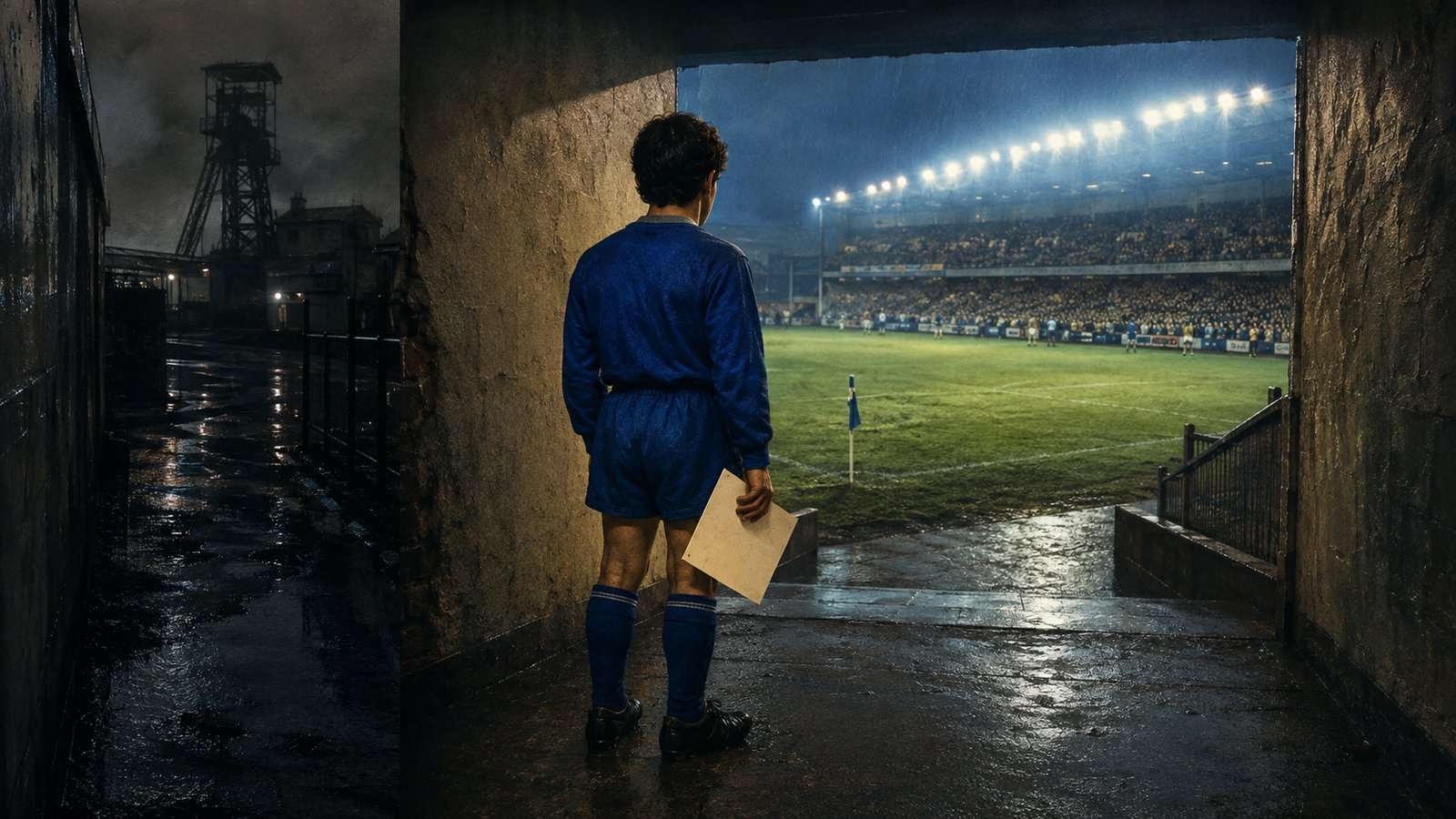
Raymond Kopa had reached the summit before he challenged the paperwork beneath it. By June 1963, the slight playmaker from a mining town had won three European Cups with Real Madrid, driven France to third place at a World Cup and become the first Frenchman to receive the Ballon d’Or. His medals gave him unusual protection. His contract still belonged to a world in which a professional could spend his entire career waiting for a club director to release him.
Kopa chose a word designed to break the polite silence. He said French footballers were treated as “slaves.” The comparison was deliberately severe, and the authorities answered with a six-month suspension, issued with reprieve. The punishment exposed the contradiction at the centre of his protest: one of Europe’s most decorated players could command a match at the Bernabéu, yet speaking about who controlled a footballer’s working life could place his own career before a disciplinary panel.
A miner’s son learned the price of an exit
Kopa was born Raymond Kopaszewski in Nœux-les-Mines, in the coal country of northern France. His family had Polish roots, and mining was not background scenery but the local route into adult work. He went below ground as a teenager. An accident cost him a finger, a physical detail that remained visible long after his football name had been shortened and placed on European scoreboards.
Football offered a way out, although not an immediate one. Kopa joined Angers at 17 and moved to Stade de Reims in 1951. There he became the organising intelligence of one of France’s finest sides. Reims won the French championship in 1953 and 1955, with Kopa receiving the ball between midfield and attack, changing direction in tight spaces and supplying runners before defenders could settle.

Madrid made him famous enough to be heard
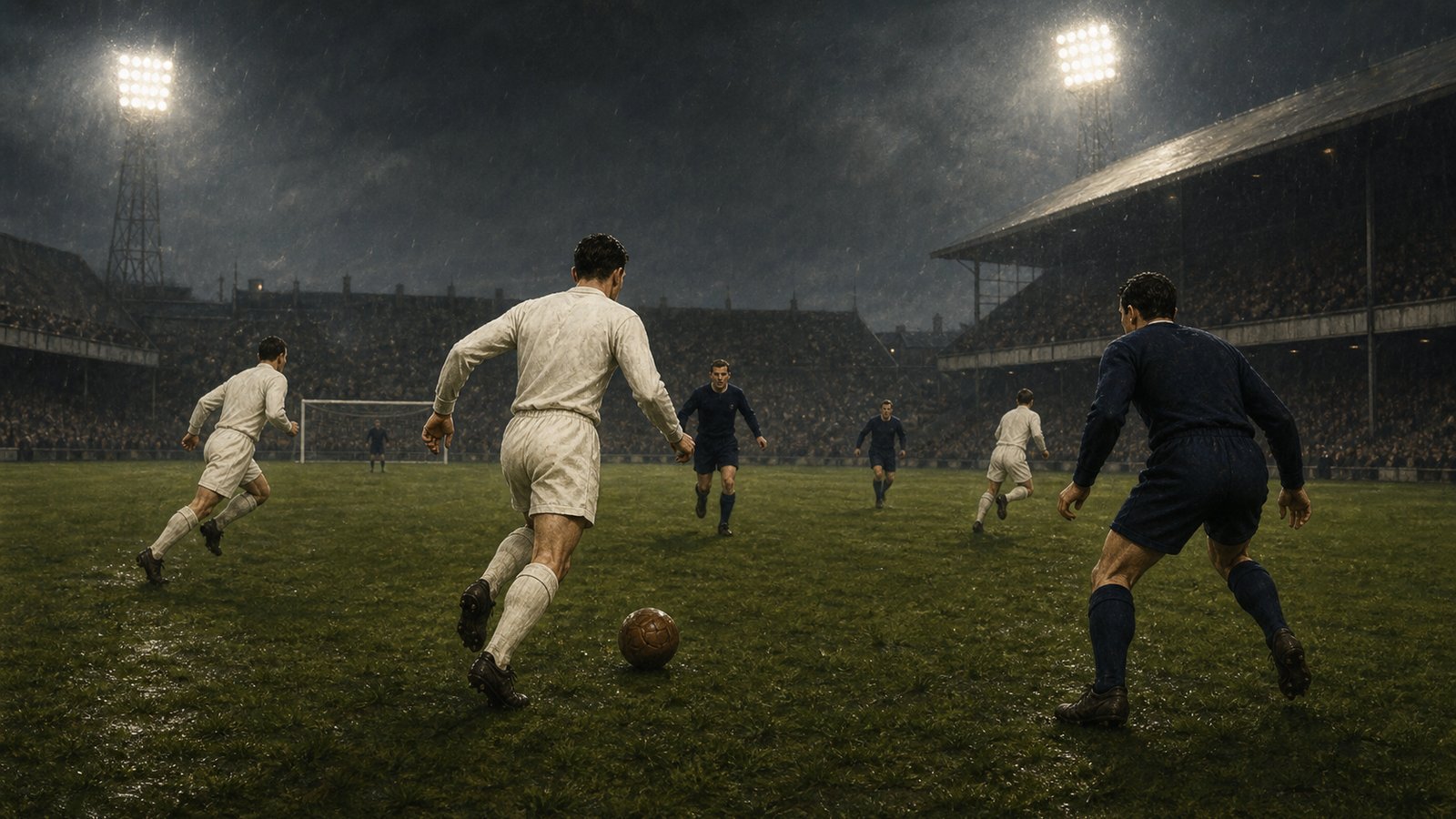
Reims met Real Madrid in the 1956 European Cup final in Paris. The French side led twice, but Madrid won 4–3. Kopa crossed to the club that had just beaten him and entered a dressing room built around Alfredo Di Stéfano and Paco Gento. He was not simply collected as another star. His balance, passing and movement let Madrid alter the angle of attacks without slowing them.
Over the next three seasons he won the European Cup three times. In the 1957 final against Fiorentina, he created the second goal for Gento. Victories over Milan in 1958 and Reims in 1959 followed, together with Spanish league titles in 1957 and 1958. A player from Nœux-les-Mines now operated inside the most visible club side in Europe.
His international peak arrived at the 1958 World Cup in Sweden. Kopa played deeper than Just Fontaine, drawing opponents and releasing passes into Fontaine’s runs. France scored freely, Fontaine finished the tournament with 13 goals, and Kopa’s own control of the attack helped carry the team to third place. Later that year, the Ballon d’Or made Kopa the first French winner of the award.
The contract could outlast the player’s choice
The central issue was duration and control. In the French professional game of the period, a footballer could be bound to his club through the effective span of his career. The club could retain him or transfer him for a fee. The player did not exercise the freedom that the language of a normal job contract might suggest.
Philippe Piat, who later led the French players’ union, supplied a stark example from his own career. He recalled signing for Strasbourg at 22 under terms that tied him to the club until he was 34. Twelve years covered almost all of a footballer’s prime. If the club preferred to keep the registration, a player’s desire to leave did not complete a transfer. If it preferred to sell, the fee flowed between clubs.
The arrangement was part of a wider European struggle over registrations, wages and freedom of movement. In England, George Eastham’s challenge to the retain-and-transfer rules had shown how a player could remain controlled even after asking to move. France had its own institutions and legal path, but the practical imbalance looked familiar: a short playing career was governed by people whose tenure in the boardroom could be much longer.
The Union Nationale des Footballeurs Professionnels had been formed in 1961, with Kopa’s Reims and France colleague Just Fontaine among its initiators. A young union needed more than a list of grievances. It needed professionals willing to attach their names to those grievances while still employed by clubs. That was the dangerous part. A right described privately in a dressing room was not yet a negotiating position.
One interview carried a six-month warning
In June 1963, Kopa made the conflict public. His language attacked the lifetime logic of the contract and the dependence it created on club directors. The declaration produced controversy precisely because it came from a celebrated active player, not a retired observer. The league imposed a six-month suspension with reprieve, leaving the sanction suspended over him rather than removing him from every match immediately.
The response turned an employment complaint into a test of authority. Kopa was not disputing an offside decision or a foul. He had questioned the terms under which professionals could choose where to work. By punishing the speech, football’s institutions demonstrated that contract control extended beyond the transfer office. It also shaped which players could discuss the arrangement without fearing for their place.
Piat later called Kopa’s intervention a trigger. The star’s standing allowed him to say what more vulnerable colleagues would not. His choice did not instantly rewrite the standard contract, and it would be misleading to give one interview sole credit for a reform achieved through years of organisation. It changed the scale of the argument. Supporters who knew Kopa as France’s creative centre could now connect his name to the restrictions experienced by ordinary professionals.
Six years separated the protest from reform
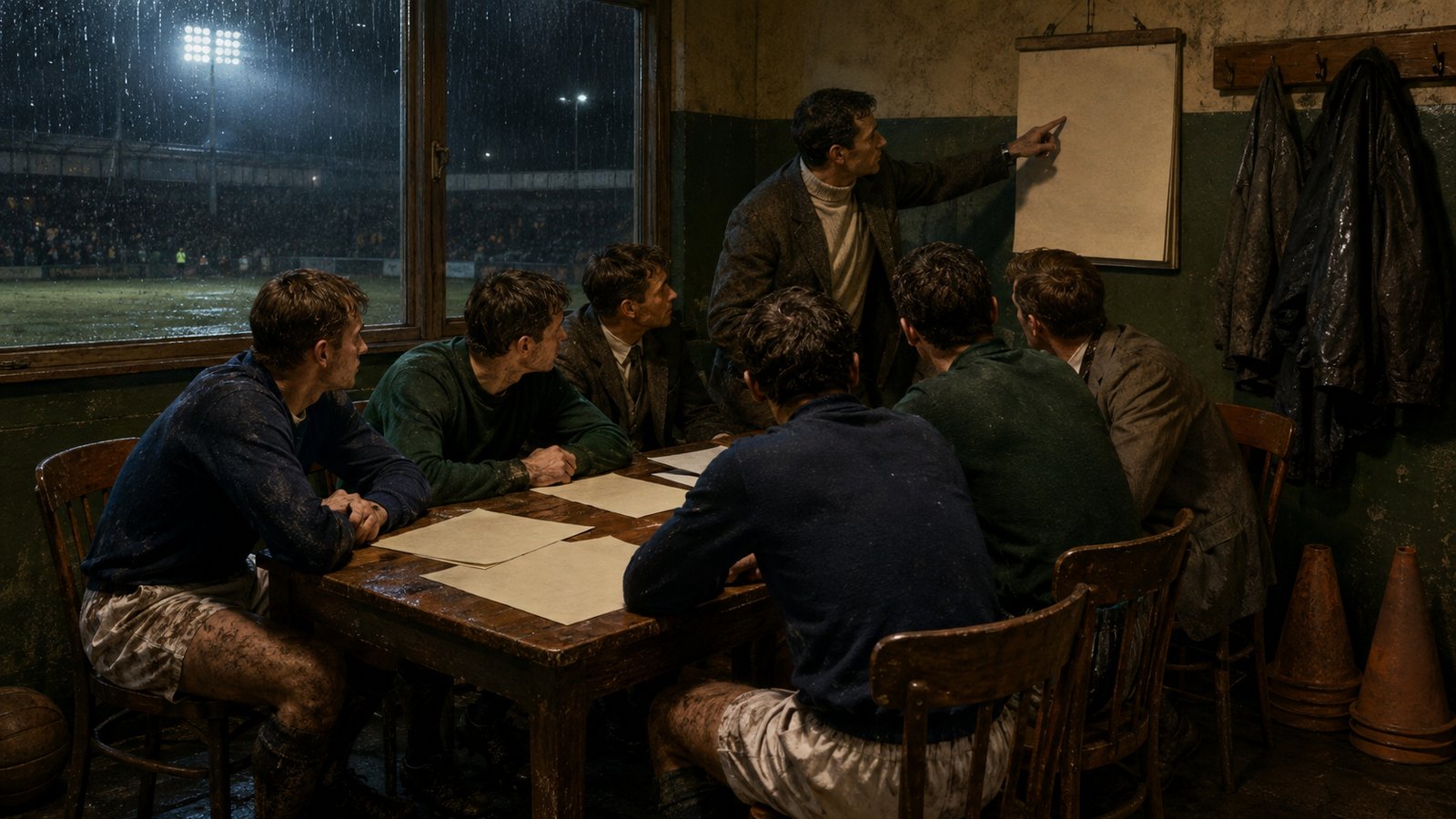
The calendar after 1963 prevents a heroic shortcut. Kopa spoke; the old arrangement remained. Players and the UNFP continued organising, and mobilization in 1968 pushed the dispute toward a negotiated result. In 1969, French professional football introduced the contrat à temps, a fixed-term contract with a duration to be agreed rather than a bond designed to last until the end of a career.
Even that settlement did not close the argument. Club directors resisted the principle, and players struck again at the end of 1972 to defend and confirm it. The sequence matters: declaration, punishment, union pressure, reform, resistance and another strike. Kopa supplied visibility at an early stage, while collective action supplied the force needed to make a different contract durable.
By then his playing career had ended. After returning from Madrid, he had helped Reims win further championships in 1960 and 1962, and he played his final club match in 1967. His international record stood at 45 appearances and 18 goals. In 1970 he became the first footballer awarded the Légion d’Honneur, recognition of a public stature extending beyond his work with the ball.
Kopa’s 1963 language remains uncomfortable because it borrowed from a history far more brutal than a professional sports contract. Its historical effect lies in the disturbance it caused, not in accepting the comparison without qualification. He forced a glamorous industry to describe the ordinary mechanics behind its transfers: who held the registration, how long the bond lasted, who received the fee and whether the worker could say no.
The medals explain why the challenge travelled. Three European Cups and a Ballon d’Or made Kopa difficult to silence quietly. The suspended punishment explains why other players had stayed quiet. French football’s move to fixed-term contracts came six years later and needed organised pressure to survive. Kopa’s role was to place the contract itself under the floodlights, where supporters could finally see that a star’s freedom on the pitch did not guarantee freedom at the office door.
Sources
- The Guardian, Raymond Kopa obituary
- FIFA, “Football bids farewell to French legend Raymond Kopa”
- UNFP, “L’UNFP pleure Raymond Kopa”
- Le Point / AFP, “Les joueurs sont des esclaves… Quand Kopa lançait la mobilisation”
- L’Express / AFP, “Les joueurs sont des esclaves… Quand Kopa lançait la mobilisation”
- Le Monde archive, “Raymond Kopa suspendu pour six mois bénéficie du sursis”