

On Friday 20 March 1992, Aldershot walked off the pitch at Ninian Park after a 2–0 defeat by Cardiff City. Nothing about the score looked historic. The visitors were bottom of the Fourth Division, their form had collapsed, and another loss fitted the season. Five days later, however, the High Court wound up the club. A fixture that had seemed merely bleak became the last match of a Football League member whose results would soon disappear from the table.
The disappearance exposed a distinction football usually hides. A club is at once a company, a competition entry, a set of records, a ground and a habit shared by supporters. In March 1992 those parts broke apart. The company and league entry vanished, yet football returned to the Recreation Ground within months.
The table recorded a team already coming apart
Aldershot had spent sixty years in the Football League. Elected to the Third Division South in 1932, the club became a founder member of the Fourth Division in 1958 and reached the Third Division again after promotion in 1973. Its highest league finish was eighth in that division in 1973–74. This was not a temporary entrant with no institutional roots. Generations had watched the same club at the Recreation Ground.
There had even been a sharp rise shortly before the end. In 1986–87, the first season of the Football League play-offs, Aldershot finished sixth in the Fourth Division and took the final play-off place. They beat Bolton Wanderers 3–2 on aggregate in the semi-final, then defeated Wolverhampton Wanderers 3–0 over two legs in the final. The first winners of a Football League play-off competition were promoted through a format that would become part of the English season.
The lift did not last. Aldershot survived one Third Division campaign and finished bottom in 1988–89, seventeen points from safety. Back in the fourth tier, they came twenty-second in 1989–90 and twenty-third in 1990–91. By 1991–92, the statistical shape was brutal: 36 league matches, three wins, eight draws and 25 defeats, with 21 goals scored and 63 conceded.
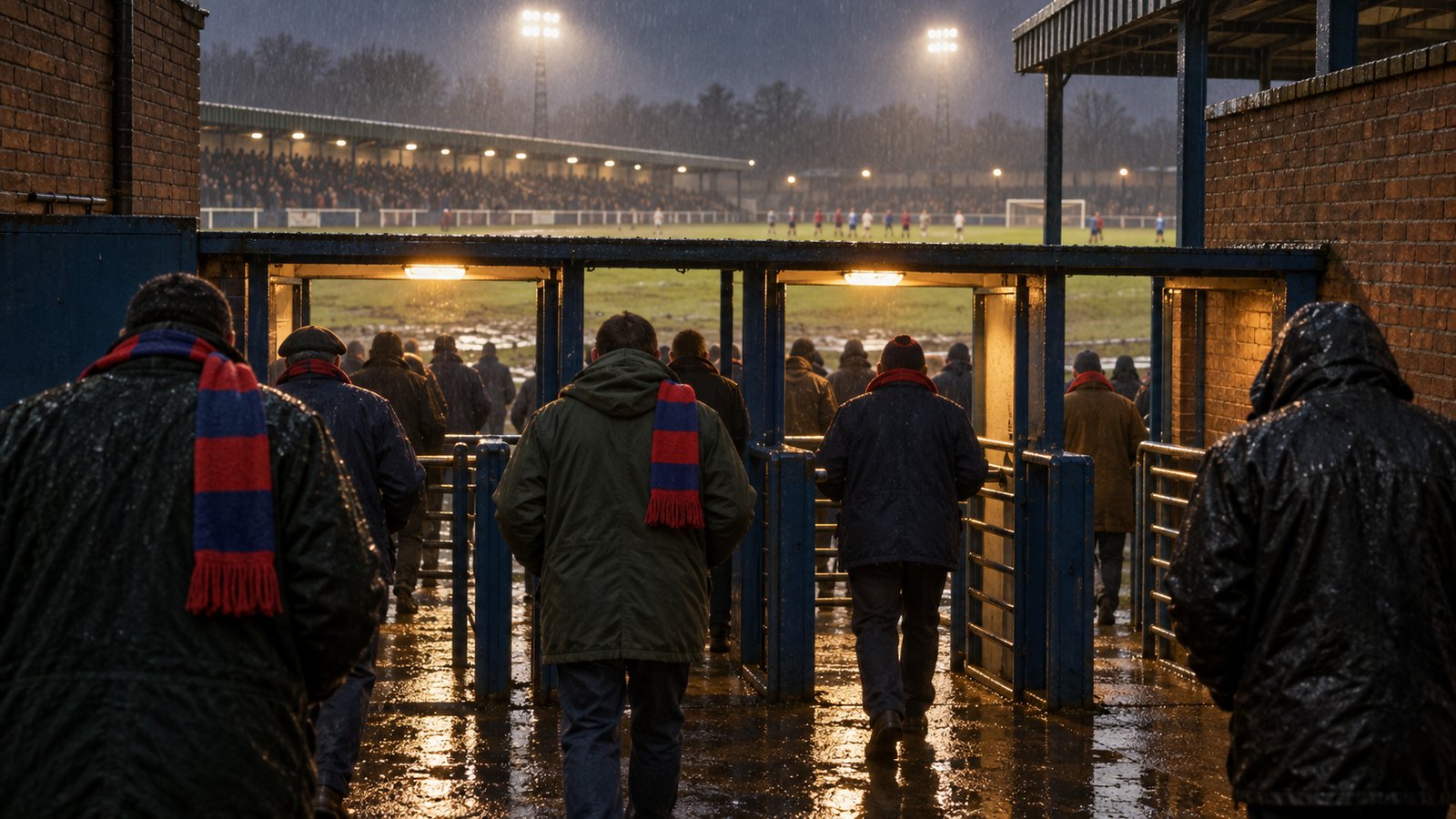
A rescue cheque bought a season, not stability
The financial emergency had become public before the final campaign. On 31 July 1990, the High Court wound up Aldershot after the Official Receiver described the club as “hopelessly insolvent”; reported debts stood at £495,000. A week later the order was lifted when Spencer Trethewy, a 19-year-old property developer, presented £200,000 and gave the club a route into the new season.
That intervention created the appearance of rescue without restoring dependable finances. Trethewy was removed from the board in November after it became clear that he did not have the resources required to sustain the club. The immediate legal danger had passed, but the underlying costs, debts and weak league position remained. Aldershot could keep fulfilling fixtures, which was not the same as being secure.
A football calendar encourages everyone to measure survival one Saturday at a time. If the turnstiles open and the referee starts the match, the club still feels present. Financial failure works on another clock. Bills and court petitions accumulate away from the touchline, then determine whether next Saturday exists.
Portsmouth’s 2010 cup run during administration offers a later version of the same divide between public sporting moments and an organisation under severe strain. Aldershot reached the point where fixtures could no longer disguise the balance sheet.
Three March dates became the closing sequence
The last home match arrived on 14 March 1992. Lincoln City won 3–0 at the Recreation Ground. Six days later Aldershot travelled to Cardiff and lost 2–0. Contemporary supporter records identify Tony Joyce’s earlier goal in a 4–1 defeat by Northampton Town on 7 March as the last Football League goal scored by the old club. The final eight competitive matches were all defeats, and the team had gone sixteen without a win.
Then came Wednesday 25 March. The High Court wound up Aldershot Football Club, and the club resigned from the Football League in mid-season. It was the first League member to disappear during a campaign since Accrington Stanley thirty years earlier. Players, staff and supporters were not given the emotional punctuation of a planned final home day. Cardiff had already happened. Only afterward did it acquire the weight of an ending.
The league had an administrative problem as well as an empty place. Aldershot had played 36 matches, and those results had affected opponents unevenly. Keeping them would leave clubs with different numbers of completed fixtures against a team that could play no more. The competition’s solution was to expunge the entire record: three wins, eight draws, 25 losses, 21 goals for and 63 against were removed from the official table.
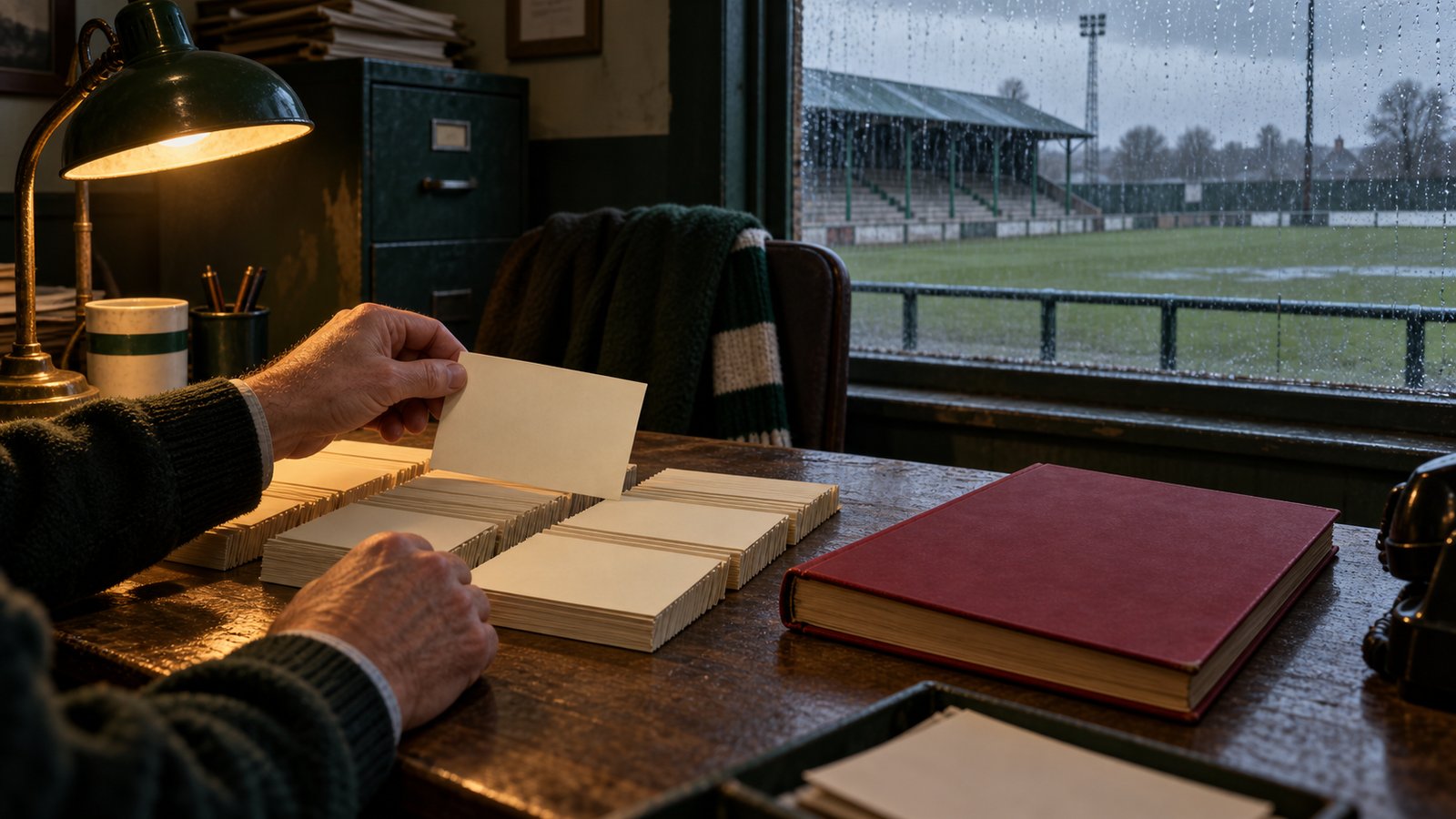
Expunging results changed more than one column
Erasure sounds clean, but it distributes consequences. Clubs that had beaten Aldershot lost points from the table; clubs that had dropped points against them lost less or potentially benefited relative to rivals. Goals scored in those fixtures ceased to count toward the official league standings. The players had still run, tackled and travelled. Supporters had still paid at the gate. Yet for the competition’s final arithmetic, the matches no longer existed.
That is what made the collapse different from ordinary relegation. Relegation preserves a season as evidence: the losses remain, the finishing position is printed, and the club starts again one level lower. Aldershot had no final position in 1991–92. The Football Club History Database records the campaign simply as “record expunged.” RSSSF’s final English tables contain no Aldershot line because the completed season had to be calculated without them.
The void also reveals why a club cannot be reduced to its league record. If the table were the whole institution, expungement would have ended the story completely. In Aldershot, the ground, the colours, the nickname and the community of spectators remained available to be reorganised. Those elements could not restore the failed company, but they could support a successor.
The Recreation Ground reopened with a different club
Supporters formed Aldershot Town in the spring of 1992. The new club began in the Isthmian League Third Division, five levels below the competition the old side had left. It played at the same Recreation Ground, but continuity of place did not mean legal or sporting continuity. Aldershot Town had to enter at the bottom of the non-League structure and earn each promotion.
The response was immediate. Aldershot Town won its division in its first season by an eighteen-point margin, then climbed again. It reached the Conference in 2003, lost one play-off final and another semi-final, and eventually won the Conference title in 2007–08 with 101 points. When promotion was secured at Exeter, 898 travelling supporters saw a return to the Football League sixteen years after the old club’s collapse.
A small ritual carried the span between the two eras. When Saturday Comes reported that a flagon of rum had been donated by the landlord of the Spotted Dog in Clapton when Aldershot Town was formed, to be opened if League football returned. It waited through the Isthmian divisions and the Conference years. The object made no claim that 1992 had been undone. It marked instead how long supporters had kept the destination in view.
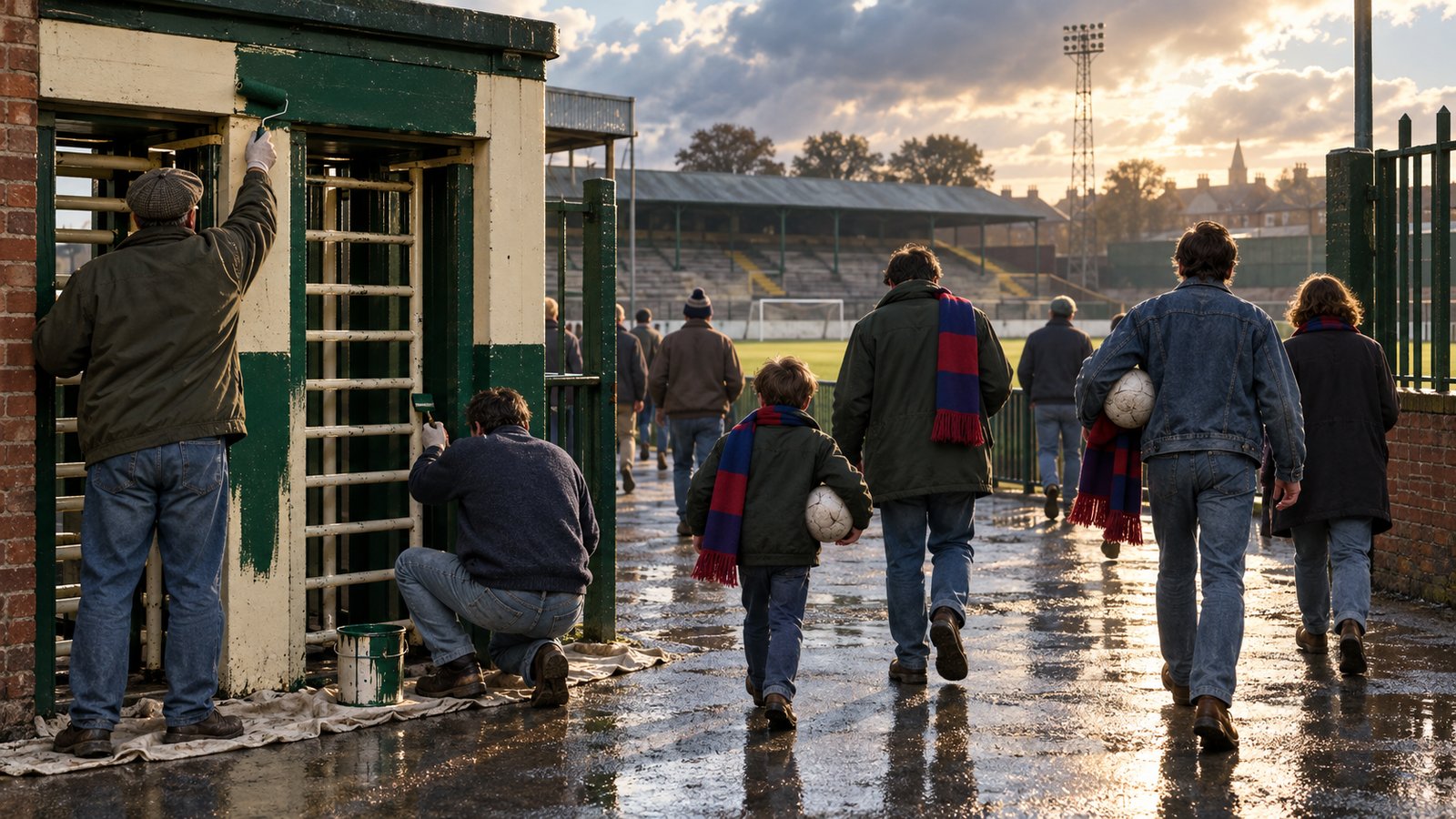
The erased season still explains what survived
Aldershot’s 1991–92 record is absent from the final table, but the absence is itself a historical fact. It records the point at which competition rules met corporate collapse. The league could rebalance its standings by removing 36 results. It could not erase the memory of the last home defeat, the trip to Cardiff or the shock of learning that the season had already ended.
The successor club’s rise should not soften what happened to employees, players and creditors, nor turn insolvency into a romantic reset button. Starting five levels down required years of work, and the new organisation later faced financial trouble of its own. What the return demonstrates is narrower and more durable: a failed football company and an enduring football community are related, but they are not identical.
Five days separated the final match from the court order. Sixteen years separated liquidation from a Football League return. Between them were people who kept going back to the same ground until a new line could be written.
Sources
Football Club History Database; Aldershot Football Club 1926–1992 supporter archive; RSSSF; When Saturday Comes; Wikipedia reference summaries for Aldershot F.C. and Aldershot Town F.C.