

Two clocks were running at Portsmouth in the spring of 2010. One belonged to administrators, creditors and a Premier League penalty. The other belonged to the FA Cup, where a team could still earn another Saturday.
They collided at Wembley. Portsmouth entered administration on 26 February and walked out for the Cup final on 15 May: a distance of 78 days. During that interval, the league campaign became a controlled descent while the knockout campaign produced two startling acts of resistance. The final was not an escape from the financial facts. It was the last place those facts and a functioning football team could be seen in the same frame.
The Club Entered a Different Kind of Competition
Administration changed what counted as a result. The BBC reported that Portsmouth became the first Premier League club to enter the process and owed at least about $90 million. The club had lifted the FA Cup in 2008, but that recent triumph sharpened the contrast. Spending on players the club could not afford had helped leave a balance sheet that no league position could repair.
The language around Portsmouth moved away from formations and points. There were creditors, proofs of funds and proposed owners whose identities had to be established. Administrator Andrew Andronikou demanded more information from a takeover group led by property developer Rob Lloyd: who stood behind it, and whether the money was actually available. Survival now depended on questions that could not be answered at the penalty spot.
On 17 March, the Premier League applied a nine-point deduction with immediate effect. Portsmouth fell to 10 points, 14 behind second-bottom Hull City. The league also said it would work with the administrator to help the club fulfil its remaining commitments. That phrase captured the reduced horizon. A season usually points toward ambition; Portsmouth first had to prove it could reach the next fixture.
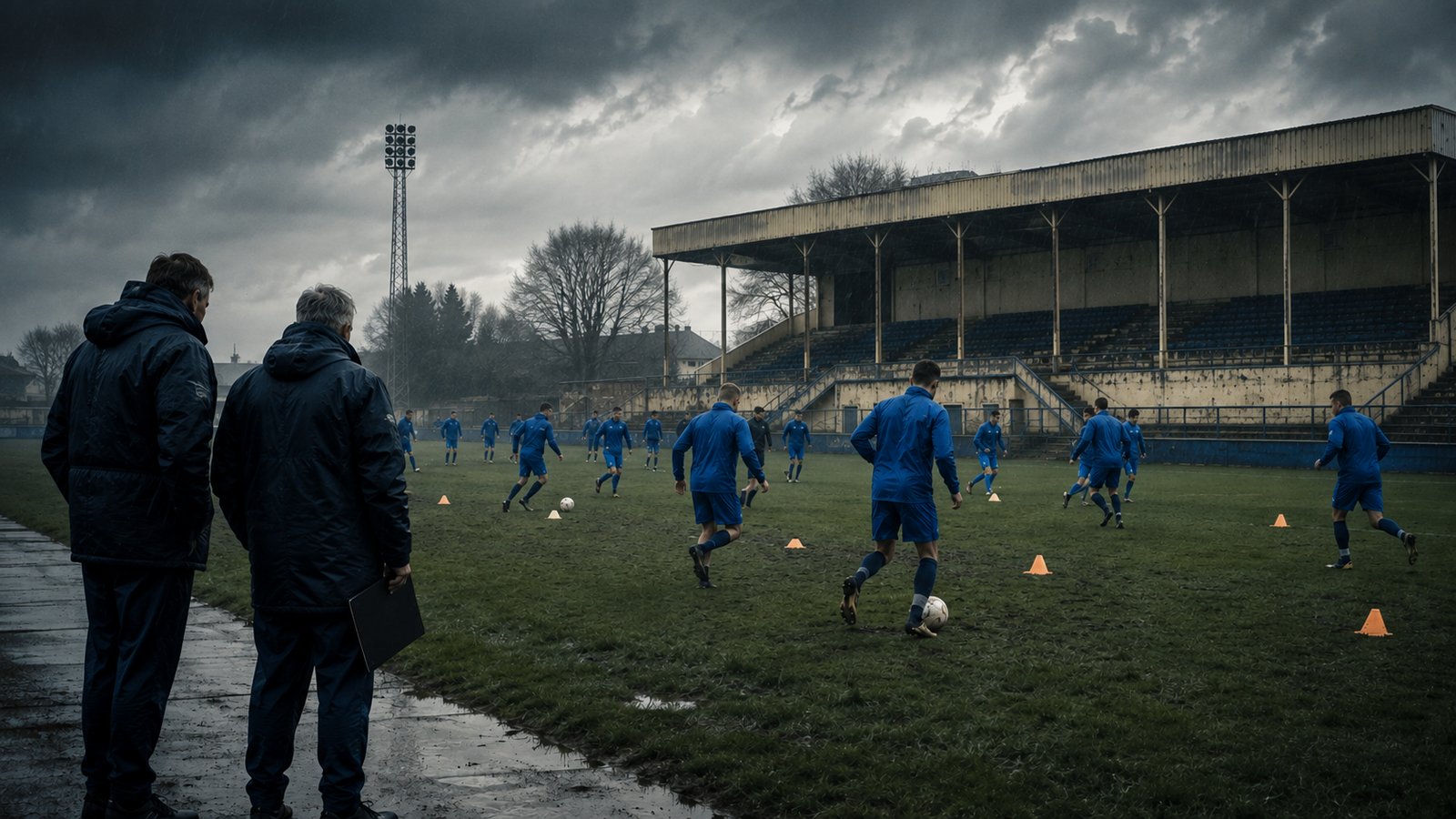
Wembley Offered a Separate Route Through the Wreckage
The Cup bracket remained open even as the table closed. On 10 April, Portsmouth’s relegation was confirmed. One day later, Avram Grant took his team to Wembley for a semi-final against Tottenham Hotspur. Spurs had former Portsmouth manager Harry Redknapp in the dugout and former Fratton Park players Jermain Defoe and Peter Crouch in their starting side. They also arrived as overwhelming favourites.
The pitch refused to provide a clean stage. Its unreliable surface disrupted both teams through a colourless first 90 minutes. Crouch repeatedly reached promising positions, but David James saved with his legs in the closing seconds to keep the match goalless. The oldest pressures on Portsmouth—money, ownership, relegation—had briefly narrowed into the oldest knockout requirement: remain level.
Nine minutes into extra time, Michael Dawson slipped while trying to clear. Frédéric Piquionne took the loose ball and finished from eight yards. Tottenham pushed forward, James blocked Vedran Ćorluka, and Wilson Palacios then brought down Aruna Dindane. Kevin-Prince Boateng drove in the penalty with three minutes left. Portsmouth had beaten Tottenham 2–0 less than 24 hours after relegation became certain.
This was not evidence that the crisis made the players stronger. It showed that financial collapse and sporting competence can occupy the same afternoon. The administrators could be reducing costs while a goalkeeper read a header. A squad could face dispersal and still understand where the second ball would fall. The Cup did not cancel the emergency; it gave the team a tightly bounded problem it could still solve.
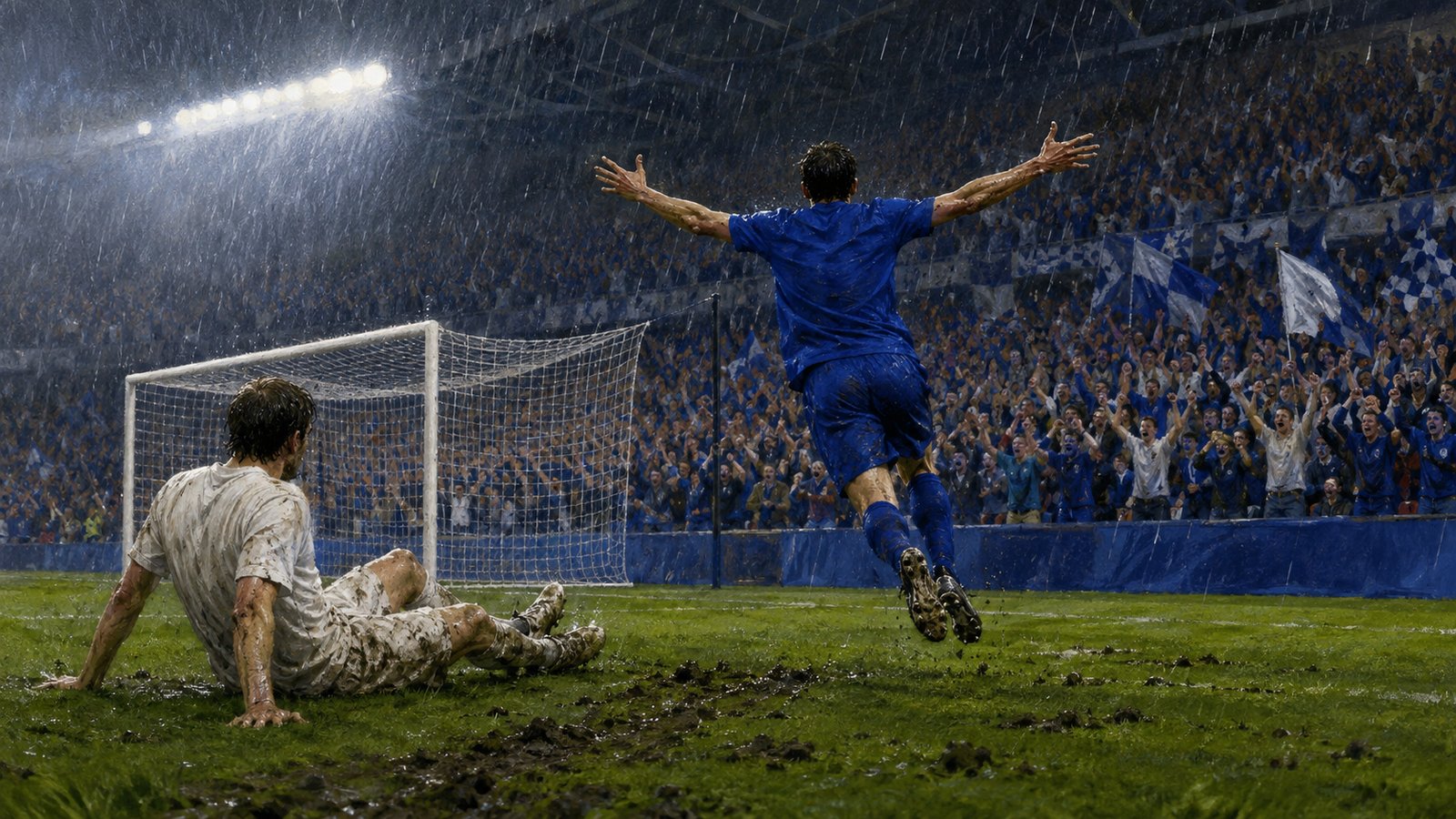
A Final Full of Chances, Posts and One Missed Penalty
Chelsea were the final opponent on 15 May. The mismatch looked severe, yet the match developed through repeated failures to score. Chelsea struck the woodwork five times before half-time. Frank Lampard glanced the outside of a post. John Terry headed against the bar. Salomon Kalou hit the bar from almost on the line. Didier Drogba hit the frame twice, including a free kick that James turned onto the bar and down near the goal-line.
Portsmouth had their own first-half opening. Boateng sent Aruna Dindane’s cross into the six-yard area, where Piquionne’s finish brought a reflex save from Petr Čech. James, aged 39 years and 287 days, kept producing interventions at the other end. Chelsea possessed more of the play and more routes to goal, but half-time arrived at 0–0.
Then Portsmouth received the moment that could have rewritten the afternoon. Juliano Belletti fouled Boateng after 54 minutes. Boateng took the penalty himself; Čech saved a weak effort. Five minutes later, Drogba bent a free kick low into the corner via the upright. Even Lampard later missed a Chelsea penalty, but Portsmouth found no equaliser. The final ended 1–0.
The narrow score did not mean the teams were equal. Chelsea’s pressure and the five first-half collisions with the goal frame tell the larger story. Portsmouth nevertheless remained one action from parity for most of the final. Their Cup run ended not with a symbolic financial verdict but with recognizable football details: a saved penalty, a precisely placed free kick and a goalkeeper’s position.
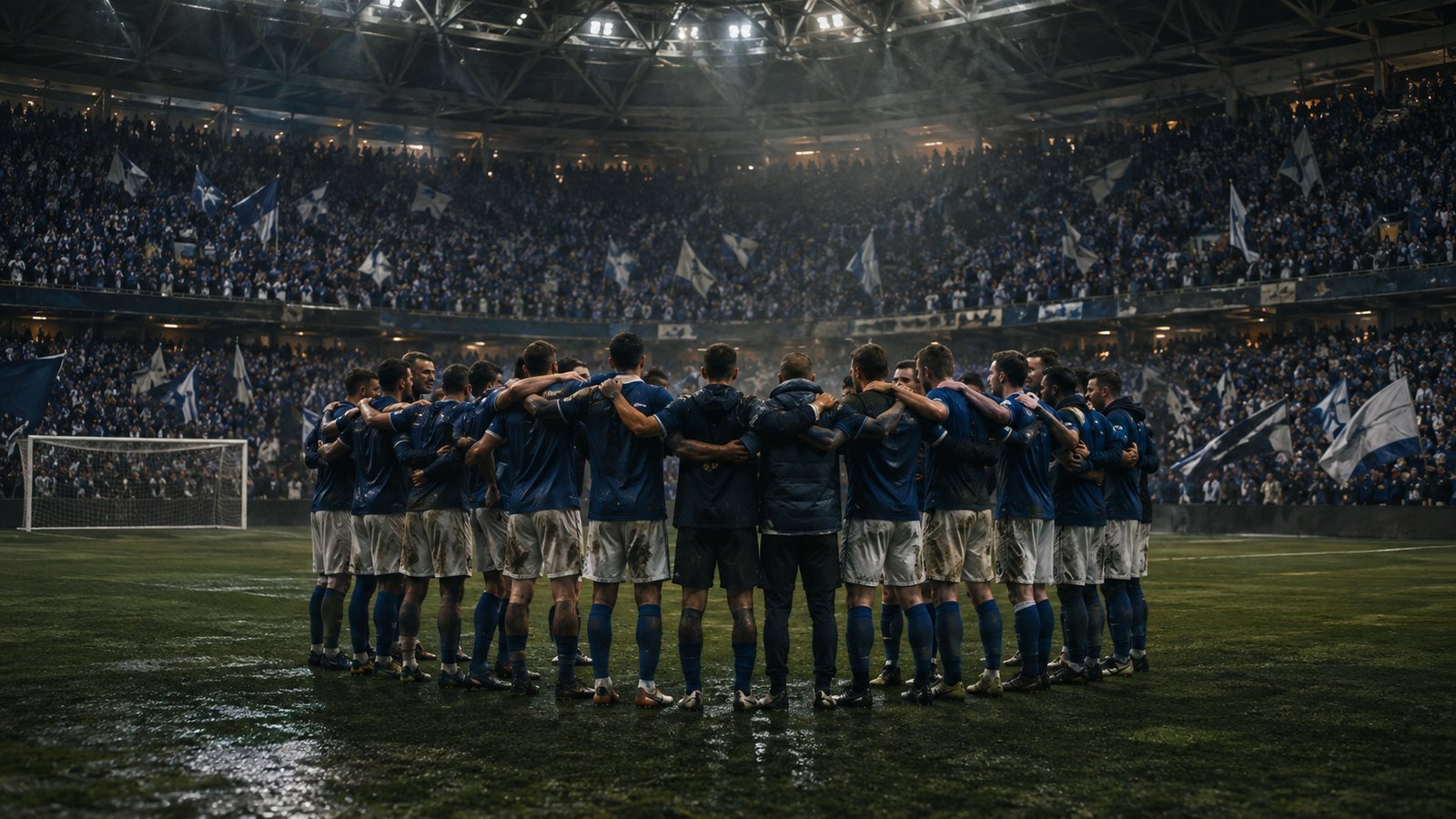
The Losing End Supplied the Clearest Balance Sheet
The accounts around the final were bleak. The Guardian reported debts of £140 million, wages paid late and a season that had passed through four owners plus administrators. Grant said the job had required him to be “a lawyer, a doctor, everything.” Players knew the squad would be broken up: loanees would return, veterans could be released, and anyone able to command a fee was vulnerable to sale.
Supporters travelled anyway. Their routes to London were disrupted by a boat that fell from a trailer across three lanes of the M3 and by vandalism on the railway to Waterloo. They still reached their seats early. Banners declared “against all odds” and “you’ll never break our spirit.” After the whistle, while Chelsea celebrated the Double, blue-and-white flags continued to move in the Portsmouth end. The players gathered in a ring with arms over shoulders.
Those scenes did not pay a creditor. They did reveal why a football company could not be understood only as a company. Owners and loans changed; the obligation felt by supporters did not. A Guardian recollection of Portsmouth’s 1998–99 administration made that distinction physical. With debts then at £7 million, cuts reached the players’ canteen, the substitutes’ bench and even reusable equipment. One unemployed supporter reportedly put his benefit money into the club’s fighting fund because Portsmouth mattered more to him than the cash.
The 2010 scale was vastly larger, but the emotional asset remained beyond the administrators’ spreadsheet. This resembles the attachment that later followed Bury through promotion and expulsion: a club’s legal vehicle can fail while the community’s claim on its history persists.
Seventy-Eight Days Exposed Football’s Split Reality
Portsmouth’s road from administration to Wembley is tempting to package as romance. That would make the Cup run too convenient. The final did not rescue the club, erase the debts or restore the nine points. It did not make four ownership changes less alarming. After Wembley, the difficult work remained and much of the squad would leave.
What the 78 days exposed was a split reality. Financial governance operates across contracts, taxes, wages, ownership and time. A cup tie operates through a fixed field, a referee and a result due that day. Portsmouth were failing in the first reality while remaining capable in the second. Their players could not solve the club’s financing, but they could survive Tottenham’s pressure, exploit Dawson’s slip and defend an extra-time lead.
That distinction matters when football collapse is told only through the last visible sanction. As with Third Lanark’s rapid fall after a 100-goal season, the pitch may continue producing coherent evidence after the institution behind it has begun to fail. Performance can delay recognition of danger because it supplies moments that look like health.
At Wembley, Portsmouth nearly found one more such moment. Boateng’s penalty offered a lead; Čech removed it. Drogba’s free kick then settled the final. The players’ ring and the flags behind them were not a happy ending. They were the final image of a Premier League season in which the team kept completing football’s tasks while the club around it ran out of ordinary ways to continue.
Sources
BBC World Service; BBC Sport match reports from 11 April and 15 May 2010; The Guardian; Sky Sports.