
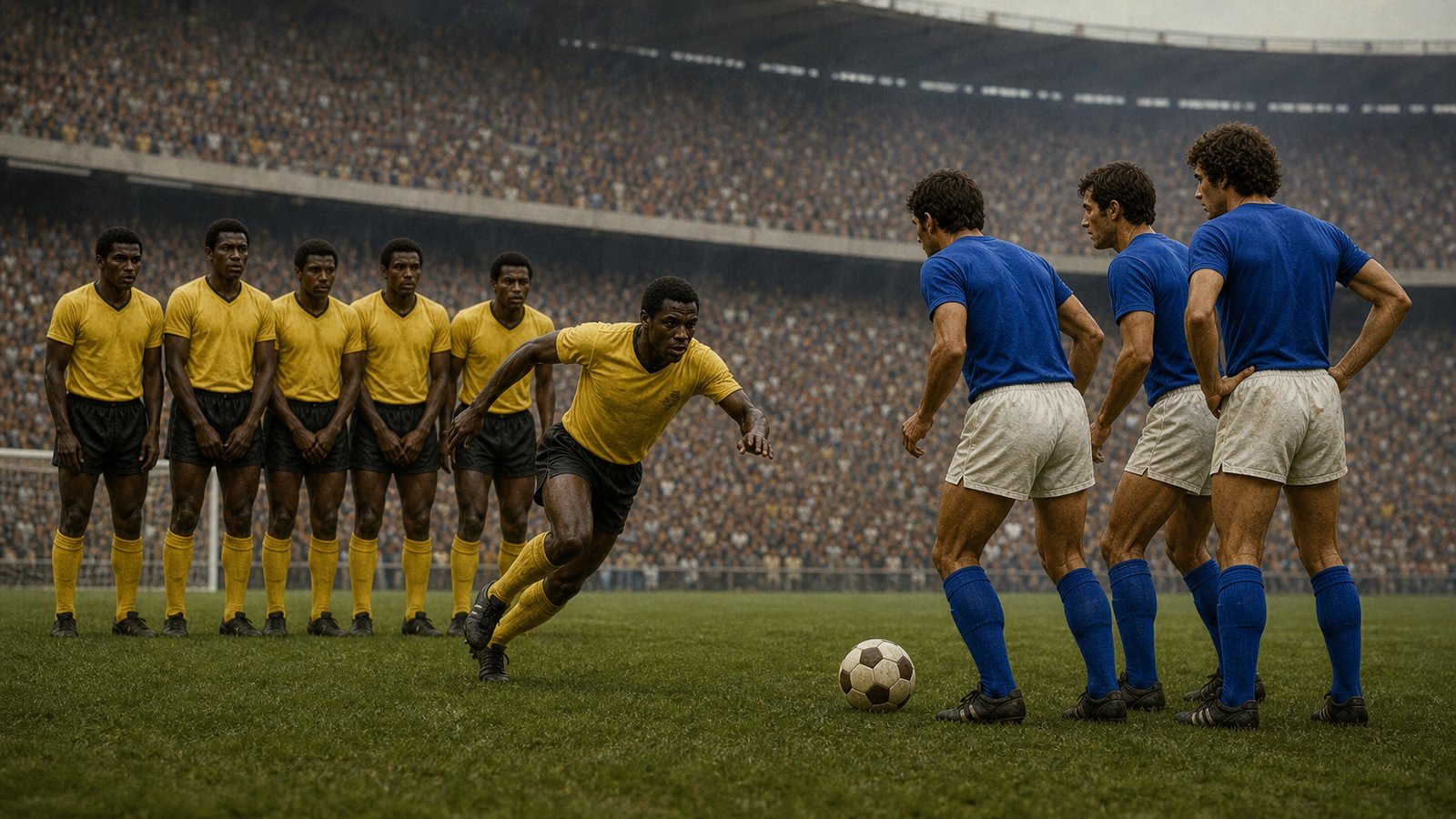
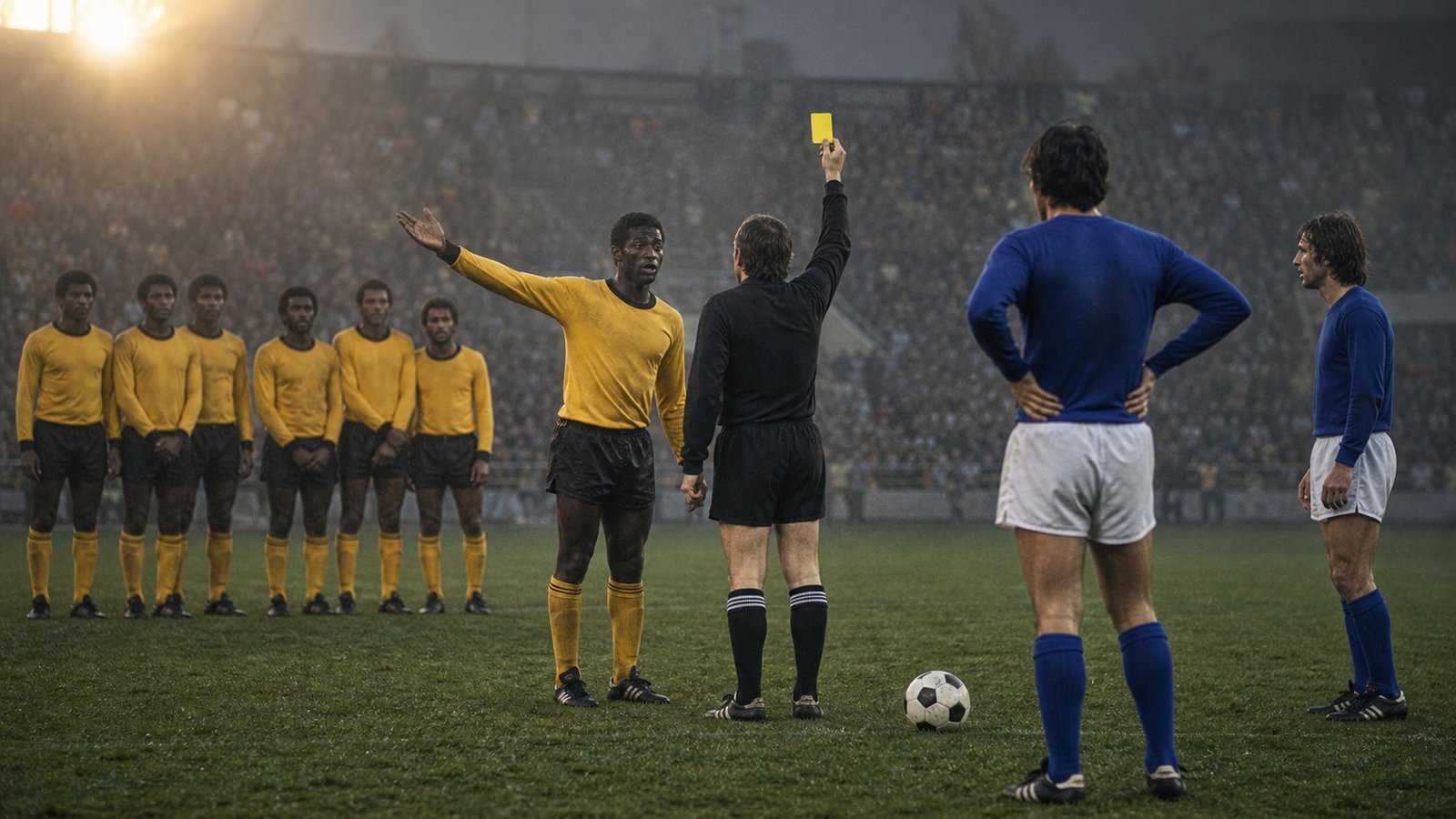
Brazil had a free kick about 25 yards from goal. Rivellino and two teammates stood over the ball while Zaire formed a wall. The referee whistled, but Brazil did not immediately take it. Then Mwepu Ilunga broke from the wall, ran straight at the stationary ball and drove it upfield. Nicolae Rainea showed him a yellow card.
That small sequence survived the 1974 World Cup better than almost anything else Zaire did. It migrated into blooper reels and comedy compilations, often stripped of the match, the score and the week that preceded it. The easy interpretation was that Ilunga did not know the rule. He did. The harder question is what an experienced African champion was trying to do when his team was already carrying a pay dispute, a 9–0 defeat and alleged threats from men connected to a dictatorship.
The surviving testimony does not offer one neat answer. Ilunga gave several explanations at different times, and some teammates questioned parts of them. That uncertainty matters. Replacing a cruel joke with an equally tidy heroic myth would flatten the story again.
The Leopards arrived as champions, not curiosities
Zaire reached West Germany with a continental title. The Leopards had won the Africa Cup of Nations earlier in 1974 and became the first team from sub-Saharan Africa to qualify for the World Cup. They were not tourists learning the sport in public. Ilunga had played international football since 1971 and had collected domestic and continental honours as well as that national-team title.
The tournament was also useful to President Mobutu Sese Seko. His state treated sport as international theatre, and the squad’s success could be folded into the regime’s image. According to later player accounts assembled by The Athletic, the team heard promises of cars, houses and cash before travelling. In West Germany, however, the players found themselves surrounded by officials while money and daily allowances they expected did not reach them.
The distinction is important because it changes the first frame of the story. Ilunga’s run from the wall was not the instinct of a novice confronted by an unfamiliar law. It came from a player whose team had been celebrated at home, carried abroad as a political exhibit and then left arguing over what it had been promised.
A respectable start gave way to nine unanswered goals
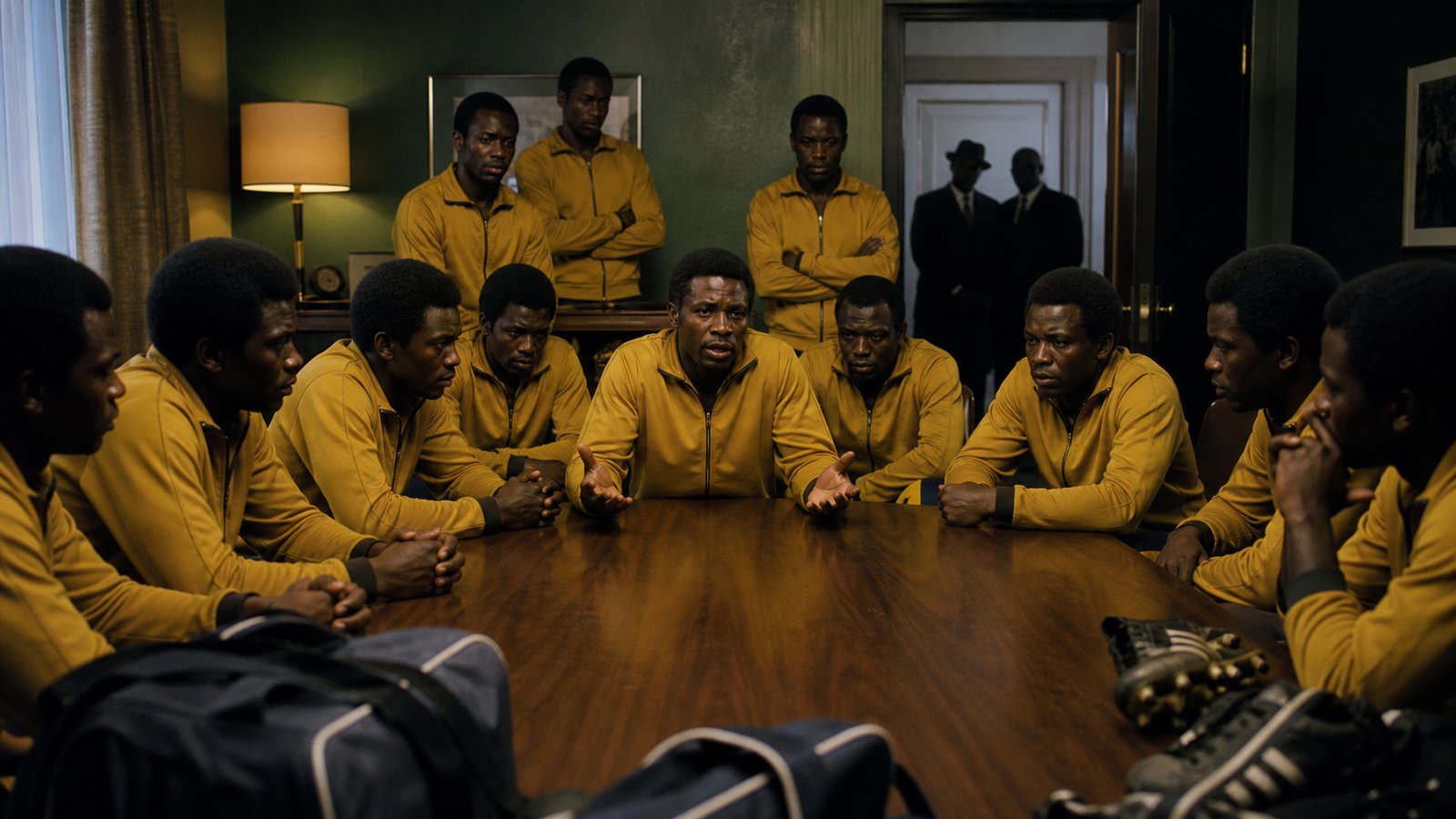
Zaire opened against Scotland and lost 2–0. It was a defeat, but not a collapse. Scotland’s side included established European players, and the Leopards could still leave the field believing they had competed. The Athletic’s reconstruction says the mood changed when the players concluded that money promised to them had been intercepted.
Before the second match, against Yugoslavia, the squad considered refusing to play. Ilunga later described threats and called what followed a kind of strike on the pitch. That was his retrospective account, not a fact every witness described in exactly the same way. What the scoreboard records is stark enough: Yugoslavia led 3–0 after 18 minutes and 6–0 by half-time. Zaire finished with ten men and lost 9–0.
The defeat placed the final group match under a different kind of pressure. Player accounts say officials delivered a warning tied to the margin against Brazil. The details vary. One version said more than three goals; another account reported more than five. The common element was fear that a second humiliation would carry consequences beyond elimination.
It is tempting to turn that warning into a perfectly documented command because it makes the later clip easier to explain. The evidence does not permit that certainty. Ilunga said the threat was real. Goalkeeper Mohamed Kalambay later questioned it. Responsible football history has to hold both statements in view.
The score was 2–0 when Ilunga left the wall
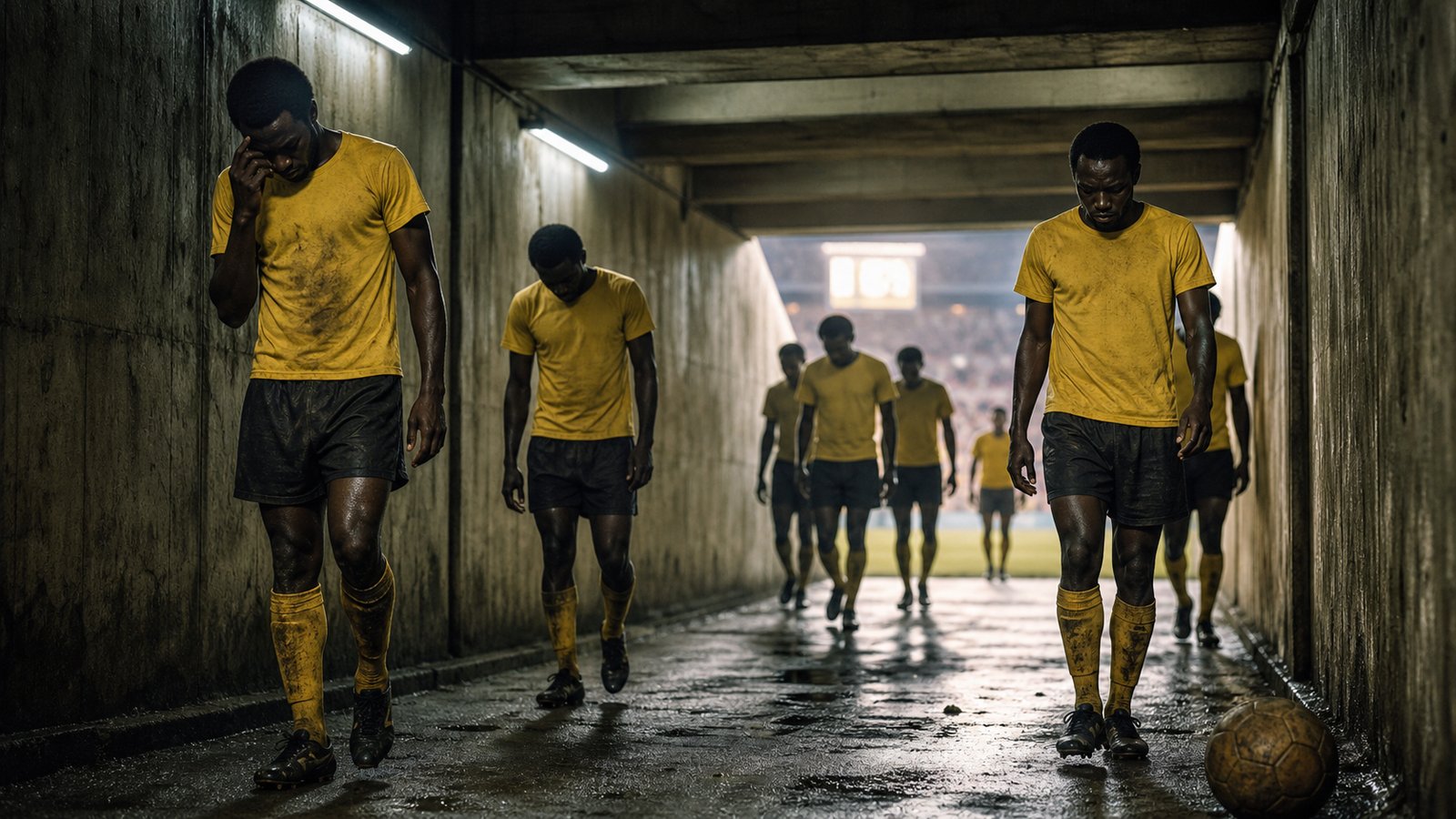
Zaire’s task against Brazil was already severe, but the match did not become another nine-goal rout. Brazil led 1–0 at half-time and added a second after the interval. Late in the game, with the score 2–0, the defending champions won the free kick that produced the famous sequence.
Look at the physical order of events. The ball was placed centrally outside the penalty area. Brazil gathered around it. Zaire’s wall stood at the required distance. Rainea’s whistle sounded. Ilunga accelerated forward before the kick and cleared the ball himself. The referee’s response was a caution, not the dismissal Ilunga later said he wanted.
Brazil eventually won 3–0. Zaire had lost all three matches without scoring and conceded 14 goals. Yet the image retained by global television was not the compact first half against Brazil, the African title that came before the tournament or the dispute inside the camp. It was a single defender apparently breaking a basic rule.
Football memory often works this way. A short clip travels because it needs no setup, while the setup is precisely what determines its meaning. The same process can turn a host city into part of a team’s legend, as happened when Middlesbrough adopted North Korea in 1966. In Ilunga’s case, circulation removed the people and pressures around the player until only the punchline remained.
Ilunga’s explanations overlap without becoming identical
In a 2010 BBC interview quoted by The Athletic, Ilunga was direct: he knew the regulations and acted deliberately. He connected the act to officials who, in his telling, had taken money intended for the players. He did not see why he should remain exposed to injury while those officials watched from the stands.
His 2014 account to L’Équipe, summarized by The Athletic, combined protest with escape. Ilunga said he wanted a red card. He was angry after months away from his family and furious over the missing money. If he could leave the pitch, he would no longer carry the risk attached to the match.
Other versions shifted the emphasis. He also described irritation at Brazil’s delay over the free kick. In a separate account, he said he panicked because Rivellino could score from that range and he wanted to waste time while Zaire remained within the allegedly permitted margin. These possibilities are not mutually exclusive. Anger, fear, protest and an impulsive attempt to interrupt play can coexist in a few seconds.
His teammates did not settle the matter. Kalambay remembered an abnormal reaction and doubted the threat story. Etepe Kakoko said Ilunga never fully explained the act to the squad. Their uncertainty prevents the incident from becoming a clean parable in the opposite direction. We can reject the claim that Ilunga was ignorant without pretending we can recover one uncontested thought from his mind.
The blooper concealed the power surrounding the pitch
The old comic framing depended on a hierarchy. European television audiences were invited to recognize the law that the African player supposedly could not. His football knowledge became the joke, while the officials, money and political coercion around his team disappeared from sight. A few seconds of footage could then be replayed without discomfort.
The record supports a different conclusion, though not a simple one. Ilunga understood the rule. Zaire’s players had a genuine dispute over promised payments. The 9–0 loss had produced extraordinary pressure. Multiple players remembered a camp marked by anger and uncertainty, even when they disagreed over exactly what was threatened and why Ilunga acted.
After the tournament, the promises attached to qualification did not produce the secure futures the squad had imagined. The Athletic’s reconstruction records how many players drifted into poverty after the rewards promised around qualification failed to materialize. The country had displayed them as champions and then allowed their World Cup identity to shrink to defeat and ridicule.
Ilunga’s clearance deserves to remain strange. It was a deliberate foul that surprised his own teammates and failed to earn the red card he later said he sought. But strangeness is not ignorance. The most honest reading leaves the incident unresolved at the level of motive while restoring what the blooper removed: an experienced player, a team in conflict with its officials, a frightening political environment and a match already shaped by the previous nine goals.
Sources
BBC Sporting Witness; The Guardian; The Athletic.