

Viv Anderson walked into Wembley on 29 November 1978 carrying two very different assignments. England had picked him to play right-back against Czechoslovakia. The country around the match understood that his selection made him the first Black footballer to represent England at senior level. Anderson narrowed the night to something smaller: find a teammate, make the pass, move forward, and give the selectors no reason to leave him out next time.
That concentration matters because it restores the footballer to a story that can easily become only a milestone. Anderson did not control the letters, telegrams or headlines that followed. He could control his first touch, his position beside England’s other defenders, and the decision he made when the ball arrived. The historic meaning was real. So was the professional calculation of a 22-year-old defender trying to keep his place.
The Call Arrived After Forest Had Already Tested Him
Anderson was no ceremonial selection. By November 1978 he was a mainstay in Brian Clough’s Nottingham Forest side, which had won the English league title and the League Cup. He had already spent school holidays training at Manchester United, where he saw George Best, Denis Law and Bobby Charlton at close range. His senior path ultimately opened at home: Nottingham Forest made him an apprentice and he turned professional in August 1974.
At Forest, a young full-back had to win the ball, support attacks and absorb Clough’s demands without hiding. By the time England manager Ron Greenwood called, Anderson had already been measured in a championship side. His selection belonged to the football evidence in front of the manager: a defender trusted by the best team in England was ready to be tested by the national side.
Even so, the England dressing room changed the scale. Anderson looked around at established internationals and wondered whether he belonged among them. Kevin Keegan gave him the useful answer: he had been selected because he was good enough. It was reassurance stripped of ceremony. Greenwood needed a right-back; Anderson’s work for Forest had put him there.
Clough Had Answered Abuse With Another Team Sheet
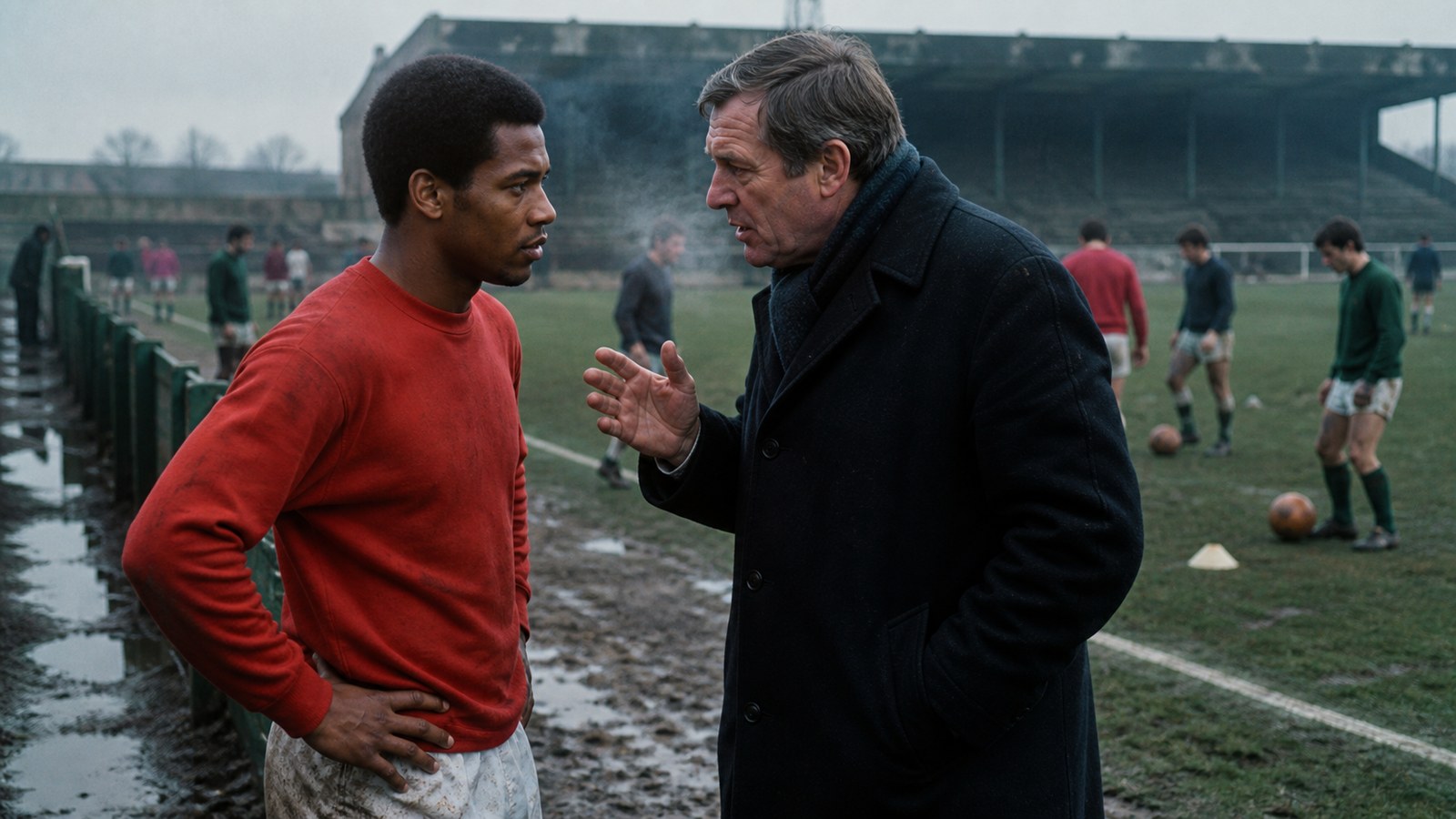
The calm football problem at Wembley followed experiences that had offered Anderson no calm at all. Anderson recalled that supporters at Carlisle United threw bananas and pears while he warmed up for Nottingham Forest in the mid-1970s. Clough’s response was blunt: if Anderson allowed people like that to dictate to him, he would be no good to his manager or himself. Anderson wanted desperately to be a footballer, so he kept playing.
Selection could not erase abuse, and it did not make English football welcoming. Black players remained rare in the top division, while Anderson, Laurie Cunningham, Cyrille Regis and Brendon Batson came through in what Anderson later called a very tough climate. Every appearance therefore carried an extra argument that the player had never volunteered to stage.
Clough’s insistence supplied a practical form of support. He did not ask Anderson to defeat racism in a speech. He put his name on the team sheet and required him to do the work. It was an imperfect but concrete protection: the manager refused to let an abusive crowd become a selector. Anderson’s answer was to keep developing into the defender Greenwood eventually chose.
The path also had a predecessor who deserves precision. Cunningham had represented England under-21s before Anderson’s senior debut. Anderson’s distinction on that November night was specific: he was the first at senior full-international level. That careful wording places him within a longer history rather than pretending the history began at Wembley.
Wembley Became a Sequence of Ordinary Decisions
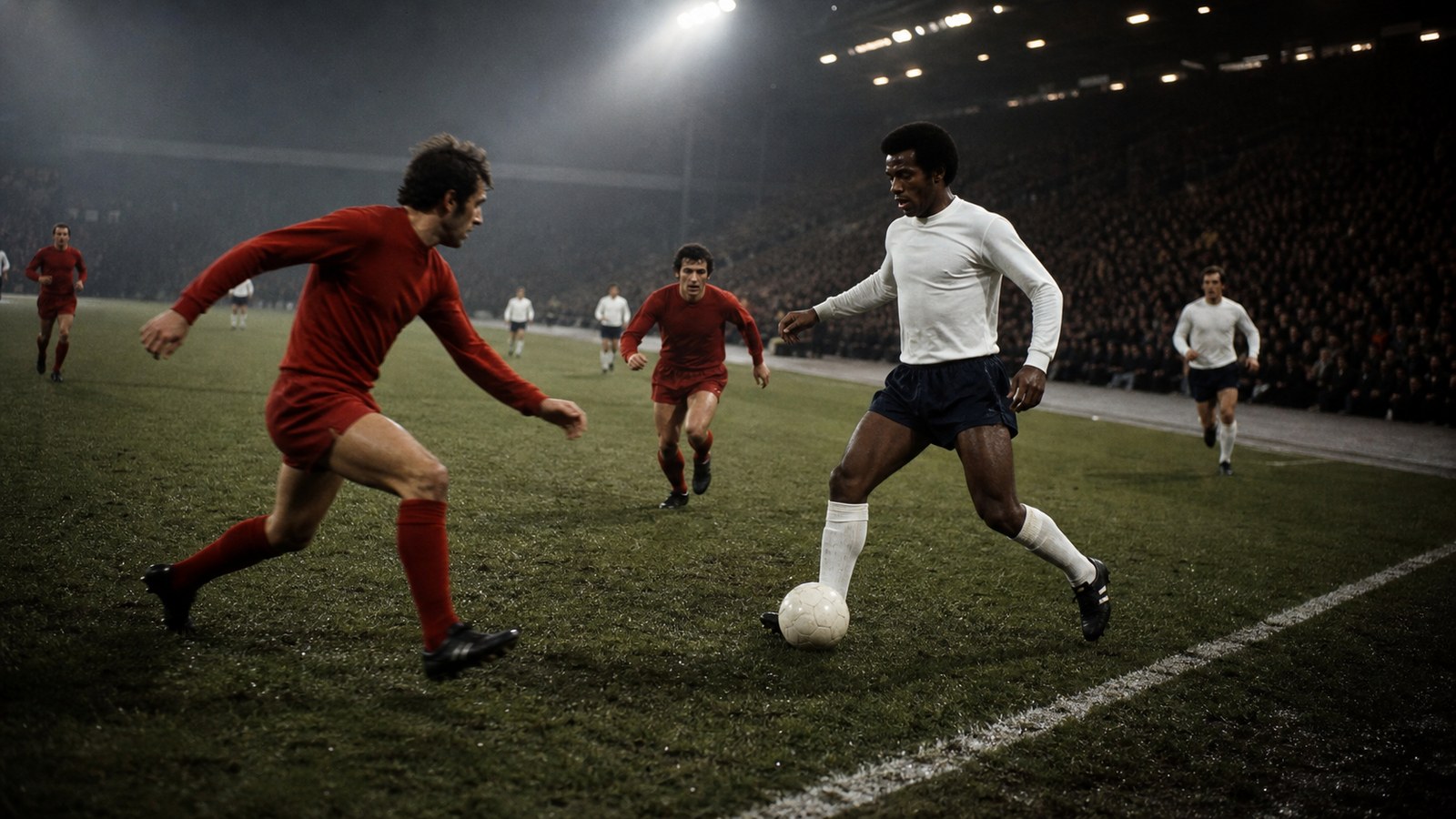
The match itself was a friendly and England won 1–0. Those facts can make the evening sound settled, but a debuting defender experiences a match in fragments: the runner outside him, the space behind him, the weight of a short pass, the temptation to force an ambitious one.
Anderson later told BBC Radio Nottingham that he was thinking about the actions that had earned his call-up. Pass to a teammate. Run forward and create something. Avoid mistakes so that he would remain in the next squad. The recollection is valuable because it refuses the polished hindsight of an anniversary. He knew the selection mattered, but his attention stayed inside the match.
That approach also explains the clean sheet without inventing a grand performance. Anderson did not need a theatrical moment to validate the choice. A right-back can succeed by closing a route before the pass is played, offering an outlet and returning to shape when possession turns. The less visible the emergency, the more completely the defender may have done his job.
The Telegrams Explained What the Match Could Not
Anderson remembered that the Queen sent him a telegram. Elton John sent one too. Those messages made the public scale of the event impossible to miss, even if the player had spent the game concentrating on football. The milestone almost overshadowed a win over the European champions because it answered a question that England should have resolved much earlier: whether a Black footballer could be trusted with the senior shirt.
The congratulations did not cancel what had happened at Carlisle. They showed instead how contradictory football could be. One crowd could throw fruit at a young player warming up; public figures could later salute his place in the England team. Anderson had to perform through both reactions without letting either define the whole of his game.
His debut also sits beside the careers of earlier Black pioneers. Arthur Wharton became a professional goalkeeper in the nineteenth century, while Walter Tull played in the Football League before the First World War. Their stories show that presence and acceptance never advanced in a straight line. Anderson’s 1978 cap was another opening in that unfinished sequence, one created by ability and made historic by the delay around it.
For readers following that wider history, our accounts of Arthur Wharton’s first professional contract and Walter Tull’s second football act provide two earlier points on the same long timeline.
Thirty Caps Made the Debut More Than a Single Night
Anderson earned another 29 England caps after Wembley. He scored in a World Cup qualifier against Turkey in 1984 and in a European Championship qualifier against Yugoslavia two years later. He appeared once at Euro 1980 and travelled with England’s squads to the 1982 and 1986 World Cups, although he never played in a World Cup match.
His club career kept accumulating its own proof. With Forest he collected back-to-back European Cup medals. He later represented Arsenal, Manchester United, Sheffield Wednesday, Barnsley and Middlesbrough. The list stretches the story well beyond one Wembley selection and across the changing landscape of English football.
Those years prevent the first cap from becoming a token appearance isolated from the player’s work. England did not choose Anderson once, mark the occasion and move on. He returned through changing squads and tournaments because he remained an international-level defender. The milestone opened the door; the 30 caps show how firmly he occupied the room.
The Smallest Thought Carried the Largest Night
By Anderson’s retirement, Black footballers were established across the Premier League and the England team. He never claimed that one selection completed that change. He said he hoped he had helped others reach the level they did. That measured language fits the way he remembered the debut itself: pride in hindsight, football thoughts in the moment.
England’s first Black senior international did not step onto the field with a slogan. He stepped out with instructions and nerves. The lasting power of the night comes from holding both scales together. Society saw a barrier break. Anderson saw the ball arriving and chose the reliable pass. History was carried forward by an ordinary decision made well.
Sources
England Football, “Viv Anderson’s journey to becoming England’s first Black player”; BBC Nottingham, “Viv Anderson on first England cap”; England Football Online, “Viv Anderson.”