
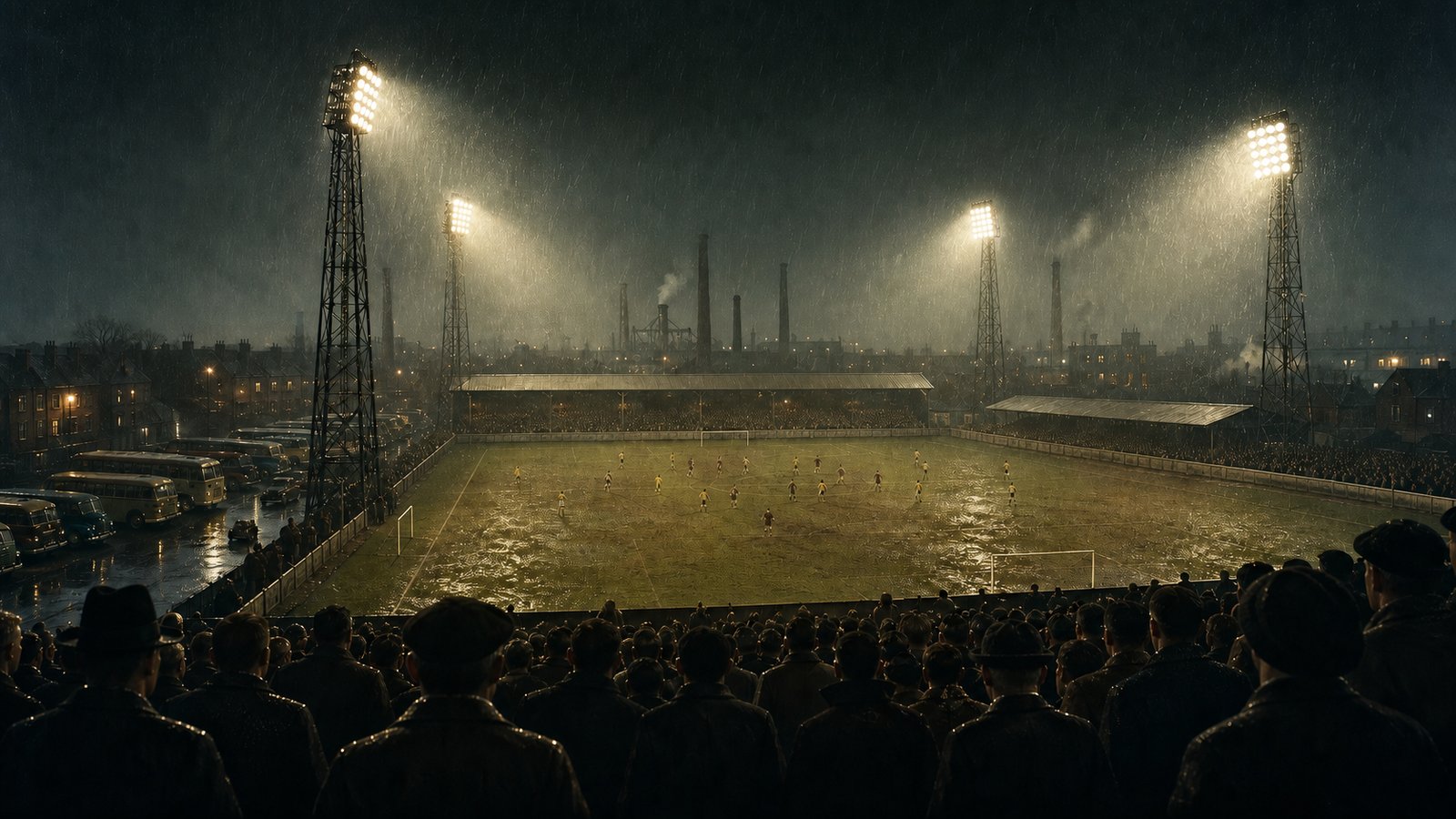
Beyond Molineux, coaches ringed West Park and the Black Country’s foundry glow had gone dark. Inside, nearly 55,000 people watched gold shirts flare beneath 60 lamps while television cameras waited for the second half. On 13 December 1954, a friendly between Wolverhampton Wanderers and Budapest Honvéd became larger than its status suggested.
The usual account jumps from Wolves’ 3–2 comeback to the birth of the European Cup. The more revealing story sits between those events. Floodlights created a new kind of midweek stage, the BBC gave millions the same evidence at once, and a dispute between English celebration and French scepticism demanded a competition capable of settling the argument. The match mattered because football could finally see, discuss and contest a claim across borders in real time.
Sixty Lamps Made a New Football Stage
Molineux had switched on its first floodlights only the previous year. Installed in the summer of 1953, the system used 60 lamps mounted on four huge corner towers and followed a pattern associated with Yankee Stadium in New York. The opening illuminated fixture came on 30 September, when Wolves beat a South African XI 3–1.
That began an ambitious run of 14 international floodlit friendlies over four years. Teams from Argentina, Austria, Israel, Scotland, South Africa and the Soviet Union came to Wolverhampton. First Vienna’s goalless draw was the early sequence’s only result that denied Wolves victory.
The lights altered more than visibility. League football was still overwhelmingly a Saturday-afternoon habit, but an evening fixture could attract workers after their shifts, visiting dignitaries and a television audience. Wolves also prepared special bright gold shirts for these nights so their players stood out beneath the lamps. Contemporary descriptions exaggerated them as chemically luminous; the surviving club account corrects the detail, but the visual effect was real. Gold figures moved across wet grass against a dark industrial sky.
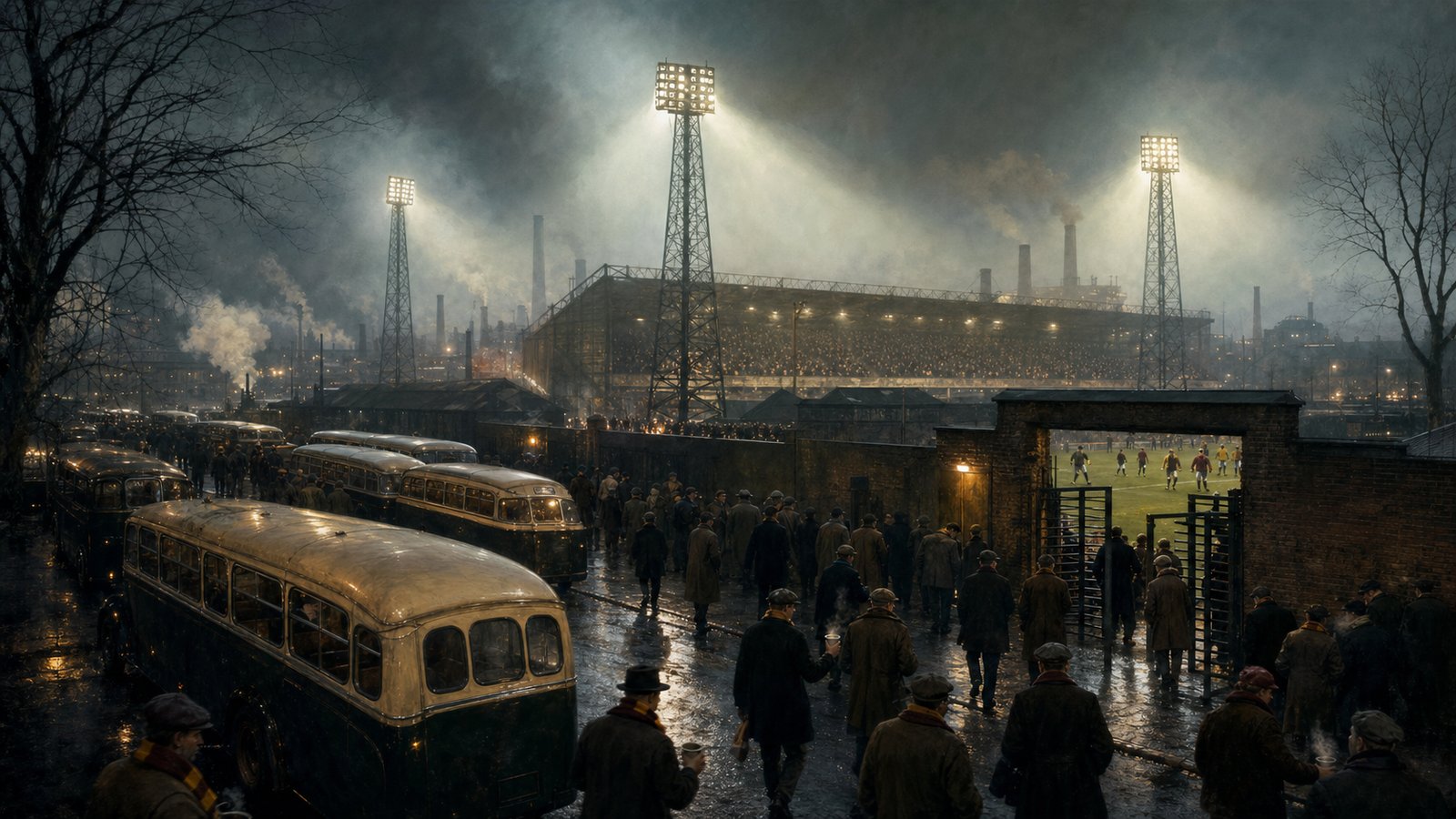
That theatre explains why Honvéd’s visit felt different from an ordinary friendly before a ball was kicked. Motor coaches arrived from counties far beyond the Midlands. Long-standing season-ticket holders in the Waterloo Road stand gave way to Football Association officials and foreign guests. Spectators carried hot Bovril and pork scratchings into the cold. The equipment, clothing, travel and darkness had assembled a national event inside a club ground.
Honvéd Brought Hungary’s Authority With Them
The visitors supplied the sporting credibility. Hungary had beaten England 6–3 at Wembley in November 1953 and then 7–1 in Budapest the following May. Honvéd contained much of the core behind those results: Ferenc Puskás, Sándor Kocsis, József Bozsik, Zoltán Czibor, Gyula Lóránt and László Budai. Several were Olympic champions and recent World Cup finalists. Kocsis and Puskás had combined for 54 goals during Honvéd’s Hungarian title season.
Wolves were not ceremonial hosts. Stan Cullis had led them to their first English league championship in 1953/54, with Billy Wright captaining a side that scored 96 league goals. They entered the Honvéd match top of the table again. English champions against the club base of the era’s most admired international team was exactly the sort of comparison domestic leagues could not provide.
Honvéd initially made the comparison look cruel. In the tenth minute Kocsis headed Puskás’s free-kick past Bert Williams. Four minutes later, Kocsis released Ferenc Machos for the second. Their changes of tempo and angle pulled Wolves between short combinations, wide attacks and direct passes. The hosts created chances, but Lajos Faragó kept them scoreless through half-time.
The margin carried the memory of England’s defeats. Only Wright among the Wolves players had appeared in both internationals, yet the crowd understood the association. Another Hungarian exhibition under English eyes seemed possible. Then the conditions and the timing of the broadcast changed the texture of the night.
The BBC Arrived for the Mud and the Comeback
Live televised club football was rare enough that the BBC’s presence was itself news. Its cameras showed the second half rather than the entire match. Millions therefore joined at precisely the point when Wolves began to reverse it. The national audience did not spend 45 minutes watching Honvéd establish control; it saw a compressed surge under white light.
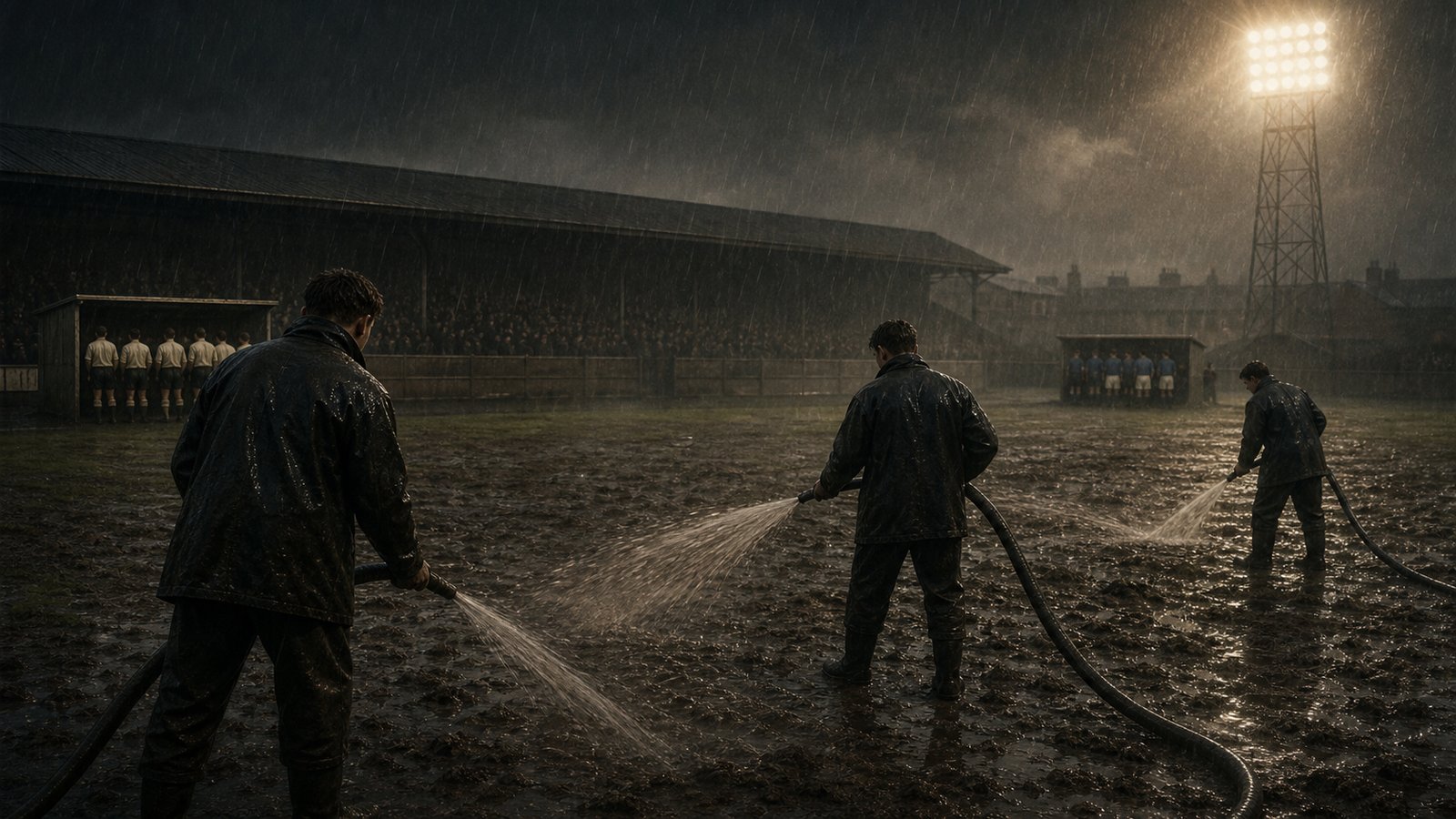
At half-time, with rain already falling heavily, Cullis ordered apprentices to water the pitch. A young Ron Atkinson later remembered the absurd physical detail: the rain was bucketing down, and the boys were still sent out with hoses. The intention was tactical. A softer, heavier surface would slow Honvéd’s intricate passing and favour Wolves’ more forceful play.
Four minutes after the restart, János Kovács fouled Johnny Hancocks. Hancocks converted the penalty. Molineux now offered television exactly what the technology promised—a clear, immediate drama shared by the stand and the sitting room. Wolves pressed toward a South Bank holding roughly 30,000 spectators, while Honvéd still threatened whenever Puskás, Kocsis or Czibor escaped.
With 14 minutes left, Bill Slater found Dennis Wilshaw, whose cross reached Roy Swinbourne for a header. Two minutes later Wilshaw helped release Les Smith on the left; Smith’s pass found Swinbourne running into the middle for his second goal. Wolves had moved from 0–2 to 3–2 in less than half an hour. They survived one late Czibor break when Williams smothered his shot.
A Friendly Produced a Continental Argument
The final whistle did not produce a universally accepted verdict. It produced rival interpretations, which proved more consequential. Cullis called his side champions of the world, and sections of the English press embraced the phrase. Peter Wilson of the Daily Mirror described a thriller so intense that seeing many more might shorten his life. The result fitted a comforting national conclusion: the champions of England had beaten the club carrying Hungary’s greatest names.
Yet the match itself contained reasons for caution. It was a one-off friendly at Molineux, on a pitch deliberately made heavier, with no return leg in Budapest. Honvéd had controlled the first half before conceding amid a furious home rally. A night designed as theatre could prove that Wolves belonged in elite company, but it could not rank every leading European club.
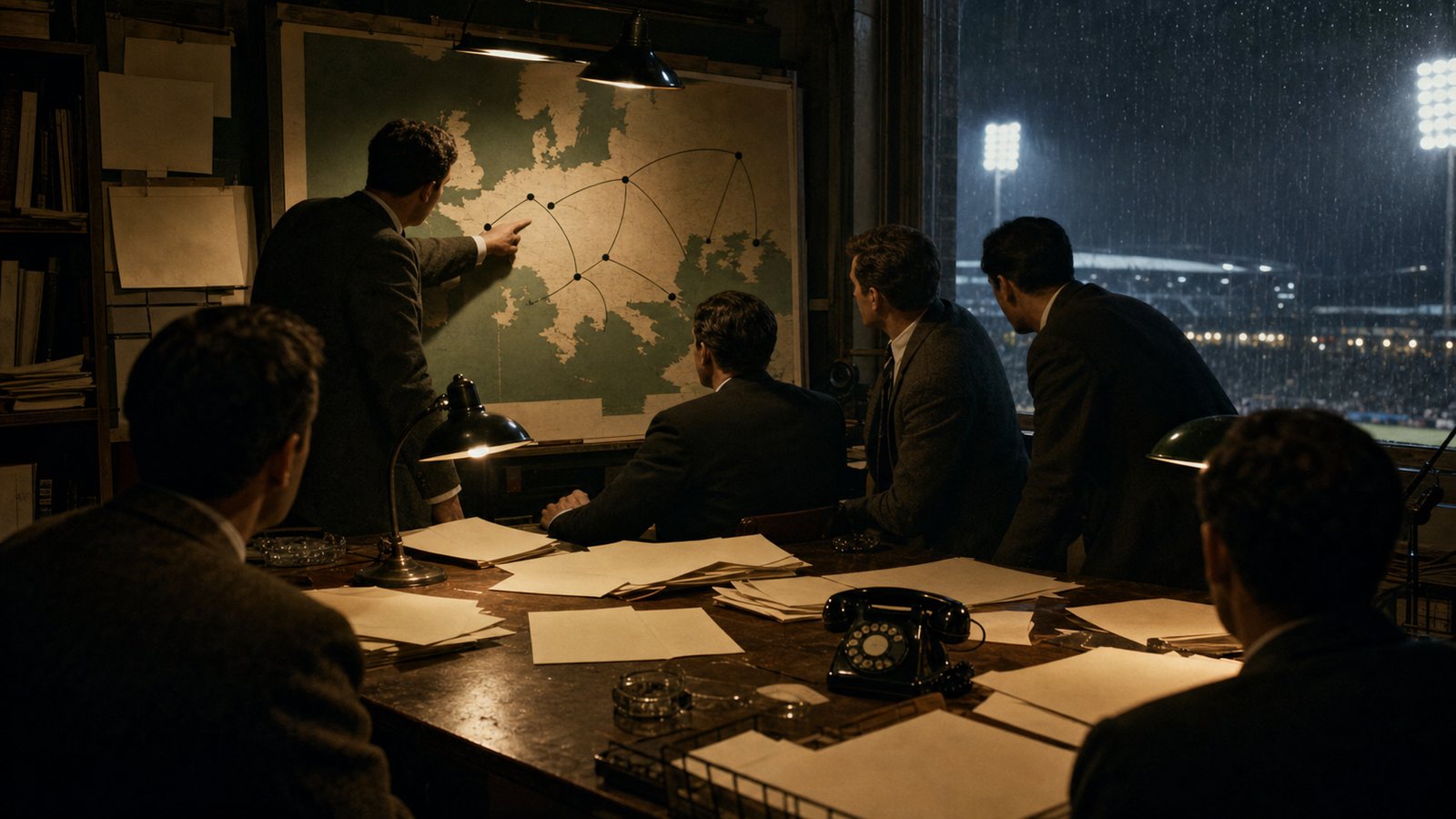
Gabriel Hanot of the French newspaper L’Équipe objected to the leap from local victory to global supremacy. He pointed toward Real Madrid and AC Milan and argued that Wolves should also have to travel to places such as Moscow and Budapest. His response was not simply that the English claim was wrong. It was that Europe lacked the procedure needed to judge it.
That distinction links Molineux to the competition that followed. A trophy required agreed invitations, home-and-away tests and a sequence long enough to remove the privileges of one ground and one night. Hanot had advocated a continental club event before Wolves met Honvéd, so the match did not create the idea from nothing. It gave the idea a vivid public dispute, a television image and an English headline that could be challenged.
Paris Supplied the Answer Three Months Later
In March 1955, three months after the match, a UEFA congress met in Paris and the European Champion Clubs’ Cup moved toward reality. The first tournament began in the 1955/56 season. Ironically, Chelsea rather than Wolves were the English champions invited to take part, and the Football League persuaded Chelsea to withdraw because of concern about the effect of midweek European matches on domestic attendances.
That resistance shows how novel the Molineux experiment had been. Floodlit evenings and live television threatened English football’s established rhythm while revealing a larger market. Cullis argued that facing overseas opposition on television could create revenue and that British football needed to accept the challenge from abroad.
The European Cup eventually provided the repeated competitive tests that a friendly could not. Wolves themselves later entered it, while clubs across the continent built their histories through journeys, return legs and nights under lights. The route from those early experiments to later European champions is not a straight institutional line, but the visual language is unmistakable. Our account of Feyenoord’s 1970 European Cup breakthrough belongs to the world that these midweek comparisons helped establish.
Molineux’s contribution was therefore neither myth nor sole authorship. The match joined infrastructure, spectacle, elite opponents, tactical improvisation, mass broadcasting and combative journalism in one winter evening. Wolves won 3–2. More importantly for the game’s future, millions could watch enough of the evidence to disagree about what the victory meant.
Sources
Wolverhampton Wanderers FC; BBC News; UEFA historical records; contemporary reports collected in the Wolves club history.