
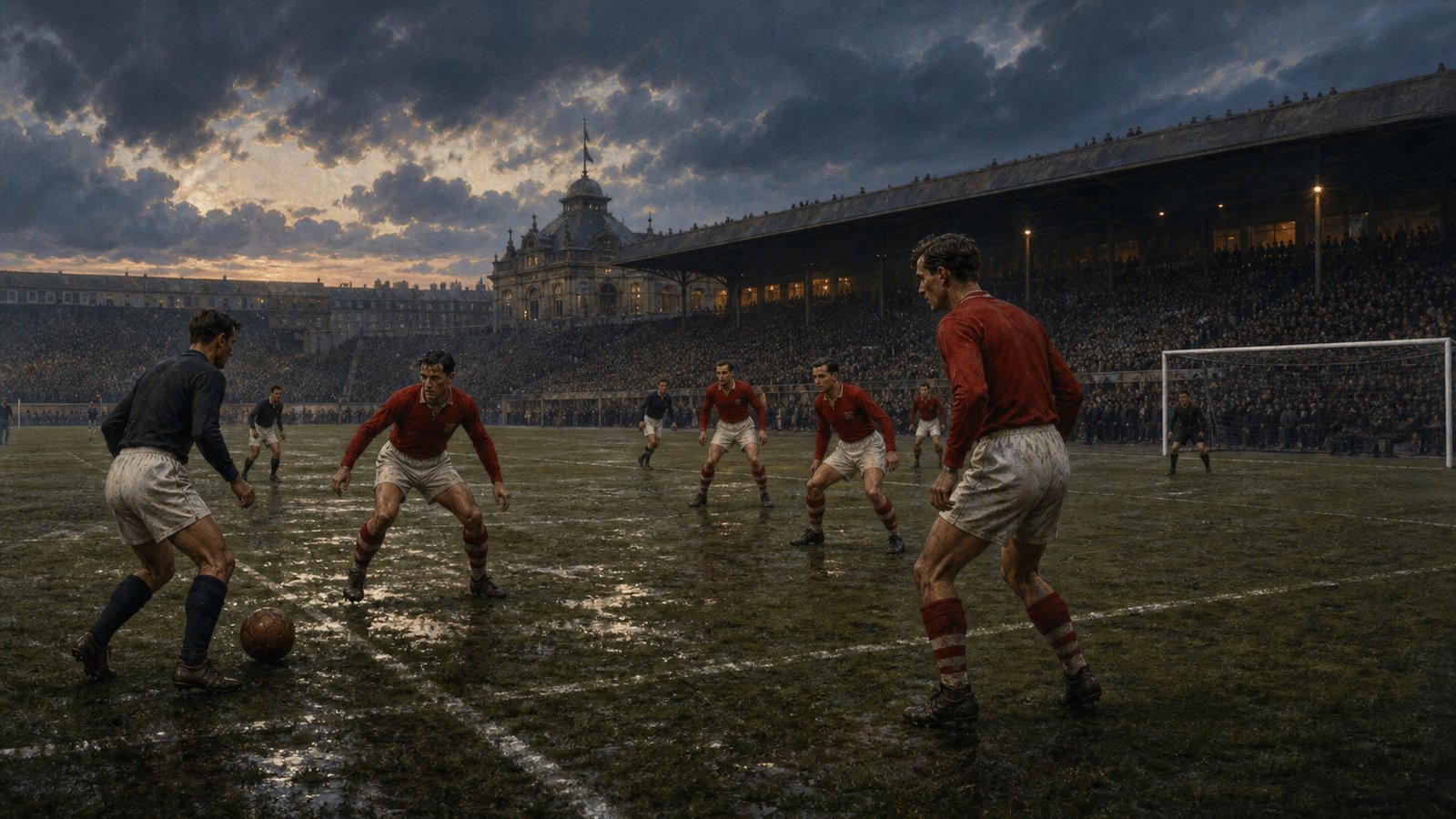
At the Parc des Princes on 9 June 1938, Switzerland were two goals down before the first half was half finished. Germany had scored through Wilhelm Hahnemann, then a Swiss own goal widened the gap. The knockout tie had already required one 1–1 draw and a replay. Another Swiss World Cup appeared to be folding under a stronger opponent.
Karl Rappan’s answer was not a shouted instruction invented beside the Paris touchline. It had been built over years in Swiss club football: retreat without losing shape, mark opponents where danger demanded it, protect the space behind the markers, then attack the gaps left by a team moving forward. Switzerland scored four times and won 4–2. The result supplied a vivid test for a defensive idea whose influence would travel much farther than its name.
A Viennese Coach Met a Swiss Constraint
Rappan arrived in Switzerland from Vienna in 1931. He had played as a half-back and forward, represented Austria twice, and won the Austrian league with Rapid Wien in 1929/30. At Servette he became a player-coach, won Swiss championships in 1933 and 1934, and began adjusting the formations he had inherited.
The dominant tactical conversation of the early 1930s centred on the WM. Its lines offered clearer marking responsibilities after the 1925 offside-law change, but it could demand superior players in decisive individual contests. Rappan was working in a football culture where many players were amateurs. He needed a plan that did not assume his side could win every duel or control midfield through greater technique.
His solution was called the verrou, the French word for a bolt or lock. The name suggests a door being shut, yet the important move was not simply adding bodies near goal. Rappan asked the team to change duties with the pattern of play. When the opponent advanced, Switzerland could yield midfield territory while preserving a compact defensive picture. When possession changed, the same withdrawal created room for a direct counterattack.
That approach placed collective coordination above the reputation of any one player. It also accepted an uncomfortable bargain. The opponent might have more of the ball and appear to control the match. Rappan’s team would judge control by where the ball could go next, not by how long it had been held.
The Fourth Defender Changed the Geometry
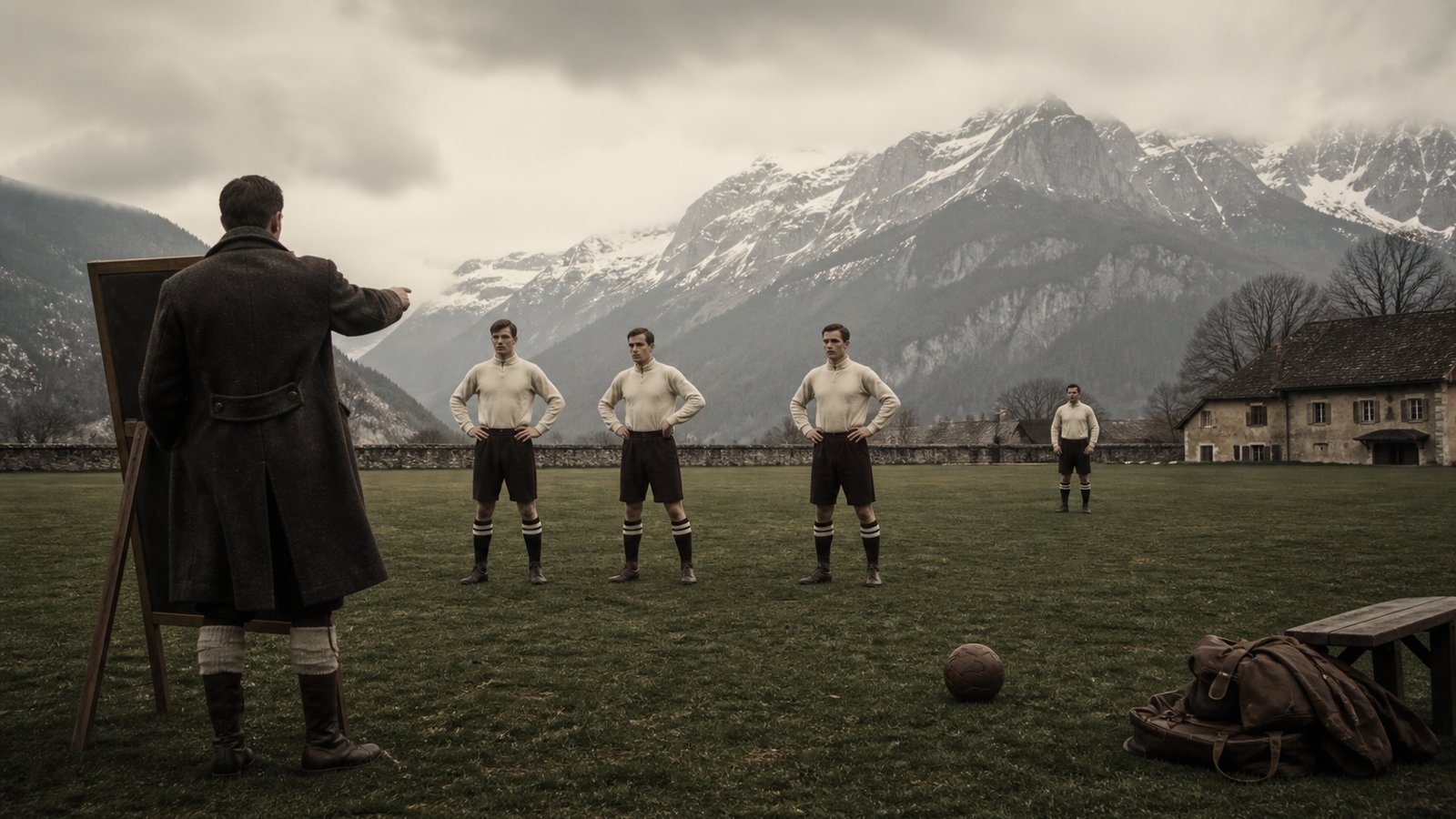
Tactical histories describe the verrou as an early system to use four defenders, with one serving as a “security bolt” behind the other three. That extra player did not begin as a modern centre-back in a flat line. He occupied the dangerous depth behind colleagues who were tracking opponents, ready to clear a pass that escaped them or confront a runner who had broken through.
The arrangement mixed man-marking and zonal responsibility. Three defenders could follow immediate threats; the spare man guarded the space their movements exposed. This was the crucial geometric change. A marker beaten by a dribble or a wall pass no longer opened a clean route to the goalkeeper. There was another decision and another body waiting behind him.
Rappan’s players also shifted positions according to the match. The system was less a fixed diagram than a set of relationships: drop when pressure arrived, cover the marker, stay connected, and release quickly when the ball was recovered. The forward pass after a clearance mattered because a side sitting deep could not afford to send possession straight back without purpose.
Critics saw surrender in the empty midfield and caution in the spare defender. Rappan saw a way to make different levels of individual talent compete on the same field. His amateurs did not have to imitate a technically richer opponent for ninety minutes. They had to keep distances, survive the first action and recognize the moment when the opponent’s attack had stretched itself.
England Gave the Plan Its Last Examination
Rappan took charge of Switzerland for the first of four spells in 1937. Two weeks before the 1938 World Cup, his side beat England in a friendly. England were still outside the World Cup, but defeating them carried enormous prestige and gave the Swiss a hard test against fast, direct attacking play.
The tournament in France then presented a politically charged opponent. Austria had been absorbed into Nazi Germany through the Anschluss, and several Austrian players were incorporated into the German squad. Germany had finished third at the 1934 World Cup. Switzerland entered the first-round tie against a team with deeper expectations and a far heavier public identity.
The first meeting on 4 June ended 1–1 after extra time. There were no penalty shootouts to separate teams, so the countries returned five days later for a replay. Repetition mattered tactically. Germany had already spent 120 minutes feeling the Swiss distances and looking for seams around the covering defender. Rappan had the same evidence about where his shape bent.
The replay began badly enough to make theory look irrelevant. Hahnemann scored in the eighth minute. In the 22nd, Ernst Lörtscher put the ball into his own goal. At 0–2, a cautious team could easily have become a trapped one, forced to chase while abandoning the protection it had been built to preserve.
Four Goals Came From Refusing to Lose Shape
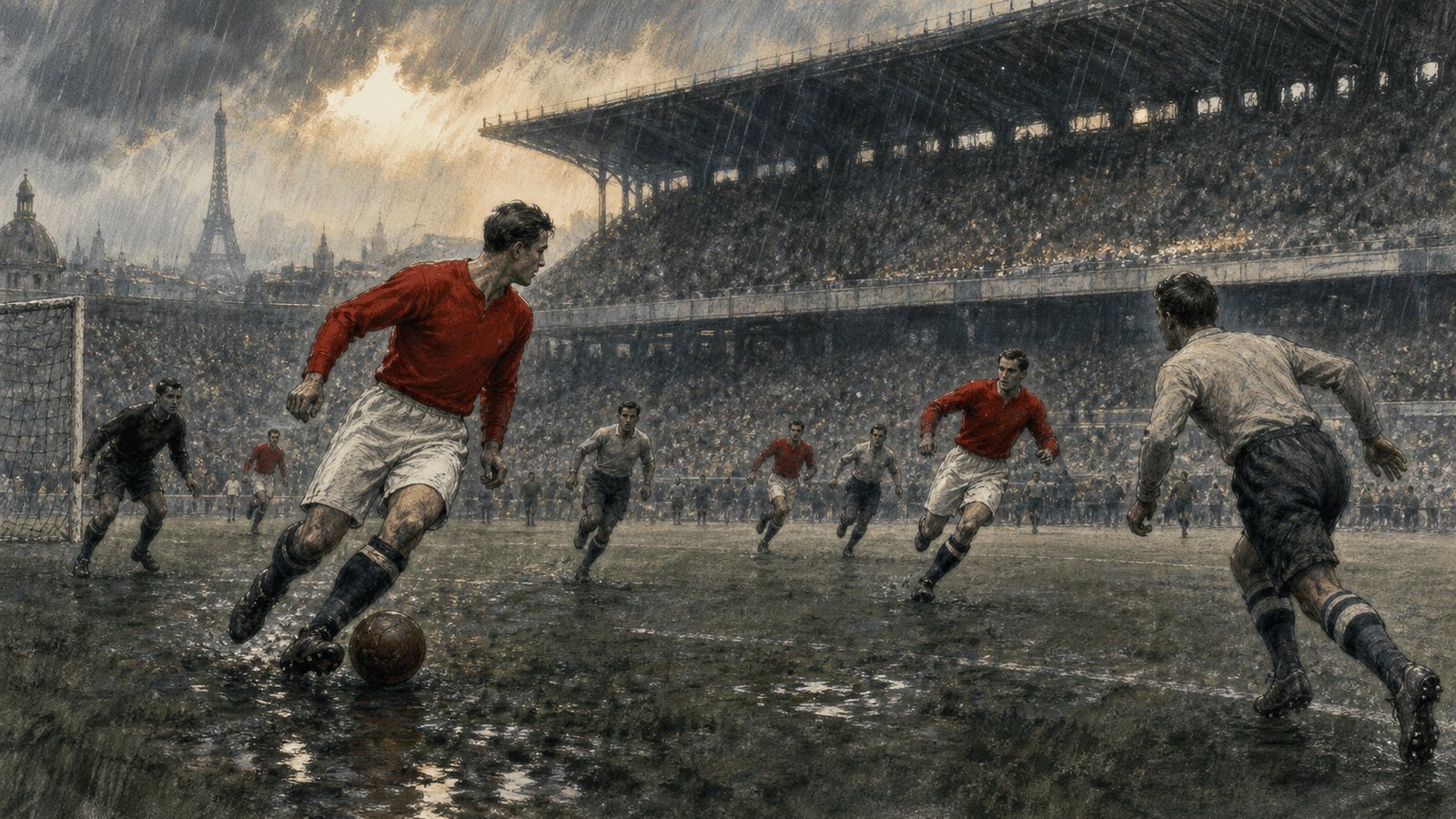
Switzerland did not wait until half-time to answer. Eugen Walaschek scored in the 42nd minute, cutting the deficit before the interval. That timing changed the second half. Rappan’s side needed one goal rather than a reckless rescue, and Germany still had to decide how many players to commit against opponents who wanted space behind an advance.
Alfred Bickel equalized in the 64th minute. André Abegglen then scored twice, in the 75th and 78th. From two goals behind, Switzerland had produced four unanswered goals in 36 minutes. The sequence is a useful correction to the idea that the verrou’s only product was a low score. Its defensive insurance could support attack because recovery positions and counterattacking routes had been planned together.
The names also make the comeback concrete. Willy Huber was in goal. August Lehmann and Severino Minelli operated among the defenders around the covering arrangement. Bickel and Walaschek contributed the first two Swiss goals before Abegglen completed the turn. Rappan’s concept required players to make repeated practical judgments; it was not a coach’s chalkboard moving pieces by itself.
Switzerland’s run ended three days later with a 2–0 quarter-final defeat by Hungary. The bolt had not made them invulnerable. It had helped a small football nation reach the last eight and remove Germany after a replay. RTS records 1938 as one of three World Cups in which Rappan led Switzerland to the quarter-finals, alongside 1934 and 1954.
The Sweeper Outlived the Swiss Bolt
Rappan returned to the national job several times and eventually managed Switzerland in 77 internationals, winning 29. Across club football he collected titles with Servette, Grasshopper and Lausanne-Sport. Yet his broadest legacy sits in the defender positioned behind other defenders.
The verrou helped initiate the role later called the libero or sweeper. Italian football developed its own versions of the covering defender and made catenaccio—Italian for bolt—a famous and frequently misunderstood term. The line from one scheme to another was not a photocopy. Different coaches changed the marking, the attacking release and the freedom given to the spare man. The family resemblance remained: protection behind direct markers could alter the risk of every duel in front.
That is also where our account of Helenio Herrera’s Inter and catenaccio continues the story. By the 1960s, the spare defender could be part of a highly organized elite club rather than an accommodation for Swiss amateurs. What began as a response to limited individual resources became a platform for teams with championship ambitions.
Rappan rarely explained the bolt in a way that removed all mystery, and observers disagreed about its beauty. The underlying bargain remains recognizable. A team can concede possession without conceding every useful space. A defender can be freed from an immediate opponent to solve the danger created by everybody else’s marking.
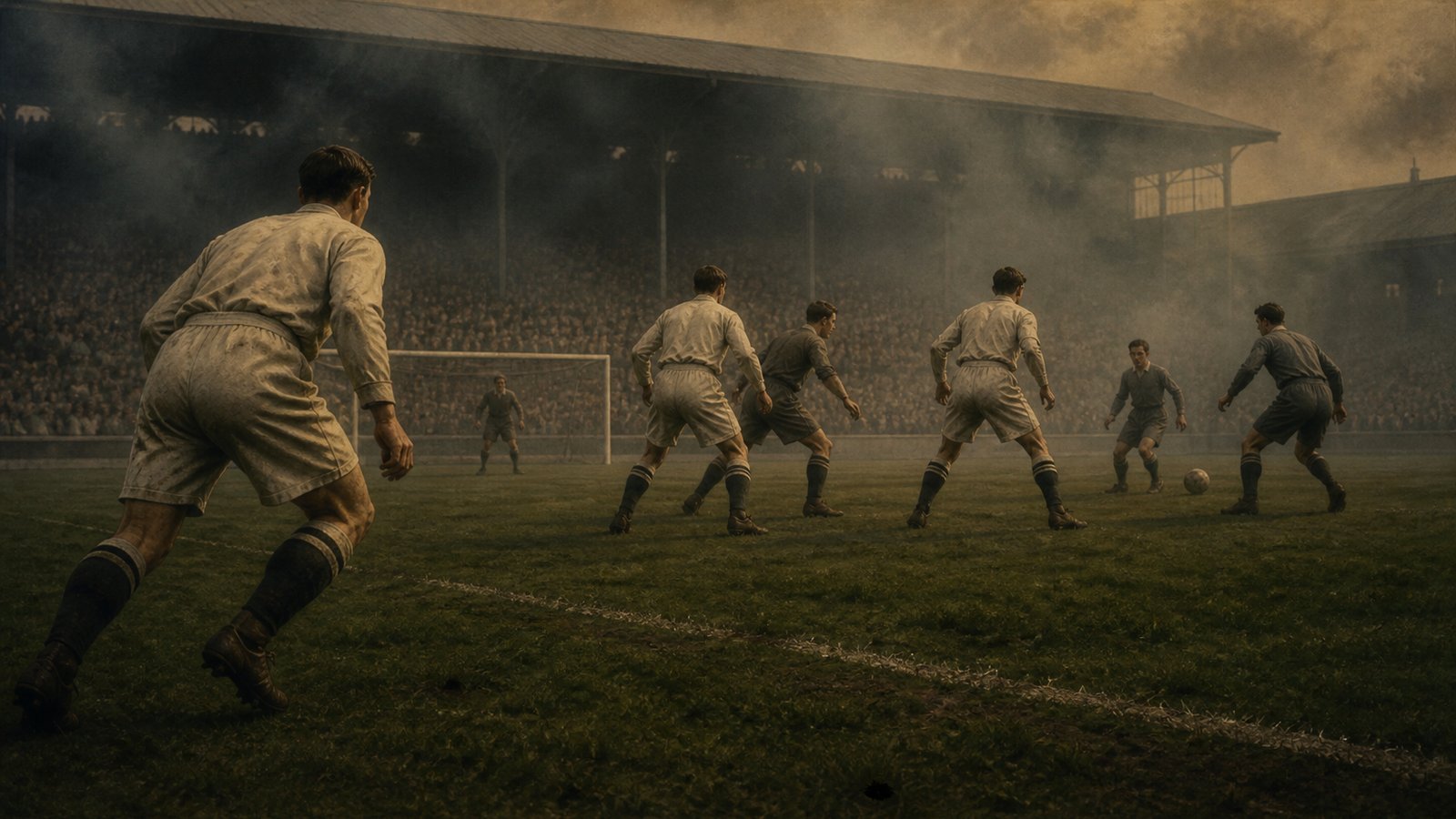
Paris provided the perfect demonstration. Switzerland fell 0–2 behind, which should have destroyed a plan caricatured as simple resistance. Instead, the team recovered without discarding its spacing, found the counterattacking room it had prepared for and scored four. The Swiss bolt entered football history because its lock included a release.
Sources
RTS Archives; FIFA historical records; World Cup History Archive; football tactical and career histories.