
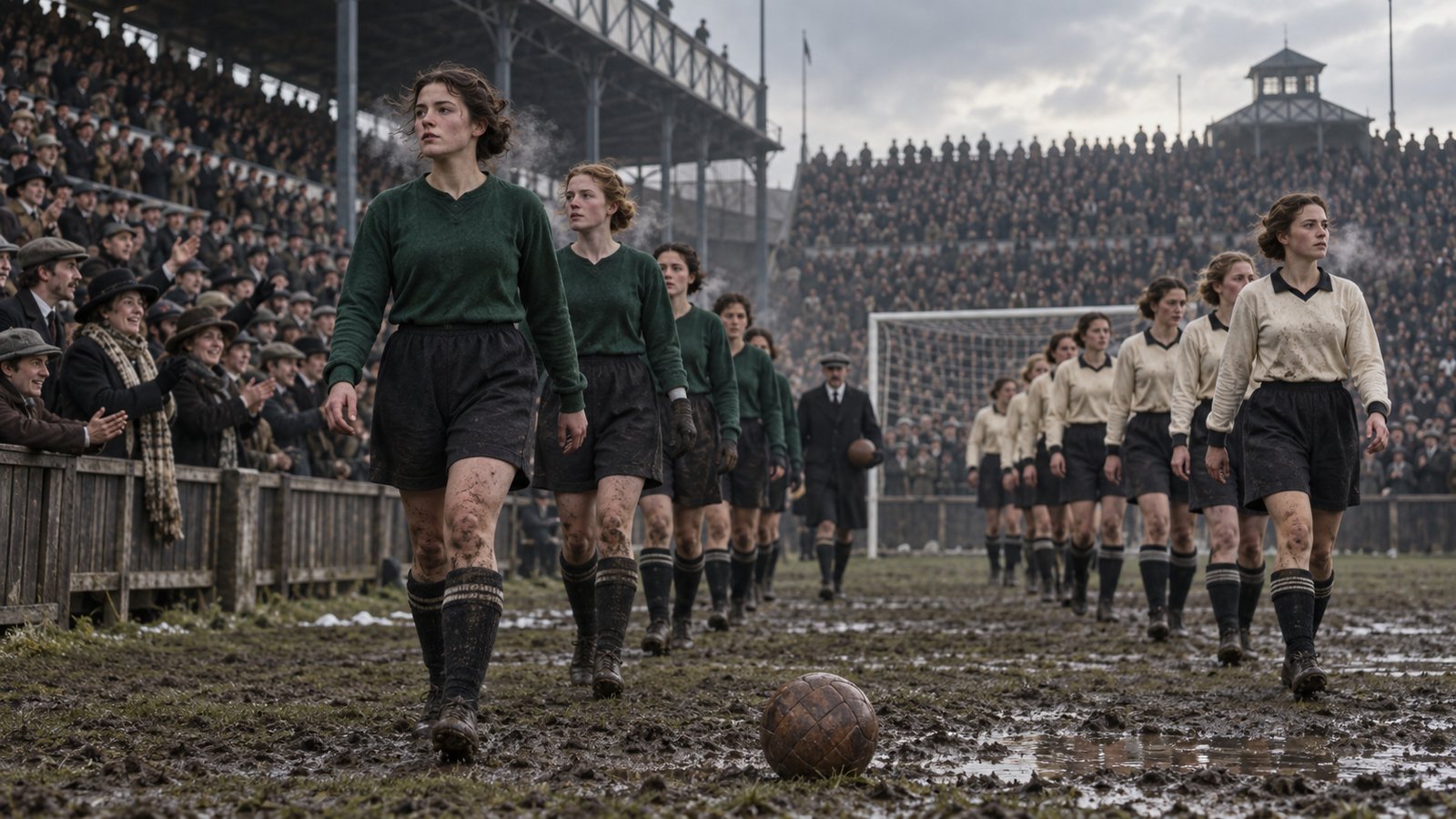
Goodison Park had staged Everton against Arsenal on Christmas Day 1920. Twenty-four hours later, the turnstiles were busy again. This time the players arriving on Boxing Day were Dick, Kerr Ladies and St Helens Ladies, two teams rooted in the industrial towns of north-west England.
The official crowd was 53,000. Player Alice Stanley recorded that thousands more could not get in. At a moment when women’s football is often imagined as marginal or makeshift, the scene says something harder: the audience already existed, and a major stadium gave it somewhere to gather.
Dick, Kerr won 4–0 and raised £3,115 for an ex-servicemen’s fund. Less than twelve months later, the Football Association told its affiliated clubs not to provide grounds for women’s matches. The contrast between those two dates reveals how the decision worked. It did not stop women from kicking a ball. It separated them from the turnstiles, stands and urban visibility that had made Goodison possible.
A Factory Team Learned to Fill League Grounds
Dick, Kerr Ladies began during the First World War at the Dick, Kerr & Co works in Preston. Women employed in wartime industry formed teams while the men’s professional game had been disrupted. The Preston side appeared in 1917 with a charitable purpose: matches could support injured servicemen while offering a public event during years of strain.
The crowds arrived quickly. On Christmas Day 1917, Dick, Kerr beat Arundel Coulthard Factory 4–0 at Deepdale before 10,000 people. A contemporary Daily Post report, later quoted by the Guardian, noticed their composure and combination play. This was not merely novelty holding an audience for ninety minutes. Spectators were watching a strong team.
Alfred Frankland managed the side, and the works-team label soon described an organisation more ambitious than a lunch-break eleven. Dick, Kerr recruited talent, arranged major fixtures and travelled. In 1920 a French side visited England, then the Preston team crossed the Channel for matches in Paris, Roubaix, Le Havre and Rouen. The four dates drew more than 62,000 spectators in total, according to ABC’s historical account.
That tour mattered to the Goodison crowd. It gave the team an international story and names that spectators recognised. It also showed organisers that women’s matches could move from factory recreation to large public occasions without losing their charitable identity.
Boxing Day Produced a 53,000-Person Answer
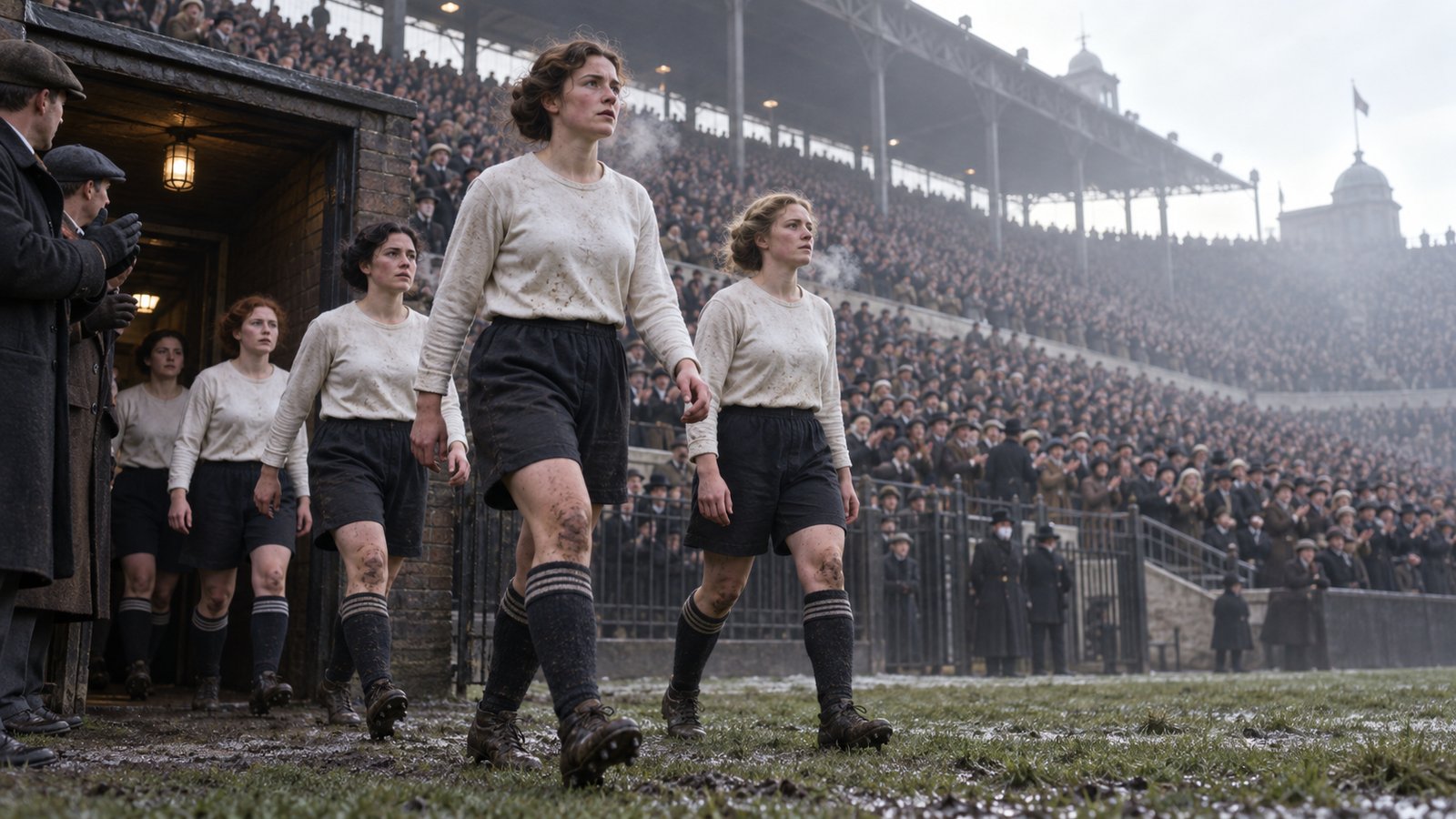
Dick, Kerr Ladies met St Helens Ladies on 26 December 1920. The official attendance of 53,000 filled Goodison Park. Alice Stanley’s diary put the number left outside between 10,000 and 15,000; the Guardian’s account gives 14,000 locked out. Even the most cautious reading leaves a striking fact: demand exceeded the capacity made available.
The match justified the queue. Dick, Kerr won 4–0, with captain Alice Kell scoring a second-half hat-trick. The gate also produced £3,115 for the Unemployed Ex-Servicemen’s Distress Fund. A team created during wartime industry had become capable of filling one of the country’s best-known football grounds while directing the receipts toward people living with the war’s aftermath.
The number survived as a women’s club-match record for almost a century. It was not surpassed until March 2019, when 60,739 watched Atlético Madrid host Barcelona. Comparisons across eras are imperfect, but the endurance of the record gives the Goodison afternoon its proper scale. It was exceptional even after women’s club football acquired leagues, broadcasters and professional players.
Goodison also prevents the history from being told as a simple tale of public disinterest. The public had voted with its feet. The bottleneck came from control of football’s spaces: who owned the grounds, who could sanction their use and which fixtures could benefit from the capacity and legitimacy of a league stadium.
The Charity Calendar Kept Expanding
The success was not a single holiday accident. ABC records that Dick, Kerr Ladies played 67 matches during 1921, all for charity. The schedule suggests a functioning circuit of invitations, host grounds, local organisers and spectators. Each fixture connected football to hospitals, former servicemen and community funds.
That charitable role made the later dispute more complicated than a disagreement over whether women should play. The FA referred both to its view that football was unsuitable for women and to concerns about the administration of charitable receipts. Players and later historians offered a different interpretation: the women’s popularity, large gates and public profile had made football’s authorities uncomfortable.
The surviving evidence does not reduce every official motive to one emotion. It does show why the argument over money carried such force. A large ground could create a large gate; a large gate could raise serious charitable revenue; and repeated successful events gave teams a public authority that did not depend on the FA’s enthusiasm. Goodison had displayed all three relationships in one afternoon.
The team’s prominence also rested on football quality and recognisable players. Lily Parr became one of its central attractions, but the Goodison story is larger than any one career. The separate history of how Parr kept playing after the FA decision shows the personal endurance involved. Goodison shows the infrastructure that was about to be taken away.
The FA Used Access to Grounds as Its Lever
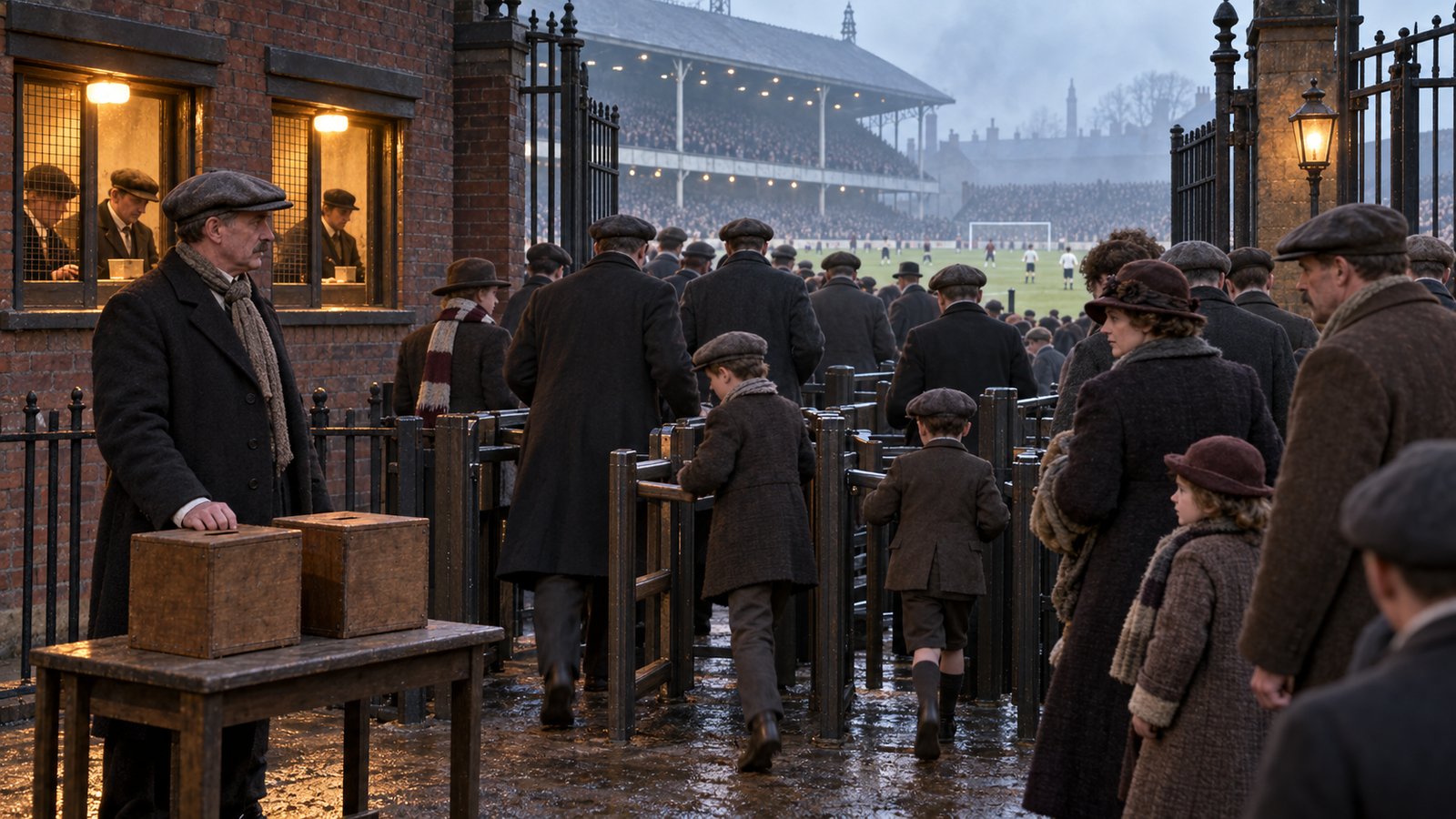
On 5 December 1921, the FA declared that football was “quite unsuitable for females” and “ought not to be encouraged.” Its practical instruction was directed at affiliated clubs: their grounds should not be used for women’s matches.
This distinction matters. Women were not arrested for playing, and Dick, Kerr Ladies did not dissolve that afternoon. The restriction instead narrowed the map on which the game could operate. Football League grounds offered enclosed pitches, substantial stands, established transport routes, ticketing systems and the familiarity that told a casual spectator an event was worth attending. Losing those venues meant losing more than grass.
The Goodison crowd makes the material effect measurable. A smaller field could not admit 53,000 people or turn that demand into the same charitable receipt. A remote or improvised venue could not offer the same transport, press attention or civic status. The decision pushed women’s football toward rugby grounds, greyhound tracks and other spaces outside the affiliated game. Play continued, but the route from curiosity to mass audience became much steeper.
Former player Alice Barlow later remembered the announcement as a shock. She believed jealousy lay behind it because the women were popular and their large gates served charity. Her recollection is testimony, not a complete record of the FA council’s private reasoning. Yet it captures the experience from inside the team: success had not secured access. It seemed to have made that access vulnerable.
Continuing to Play Was Not the Same as Keeping the Stage
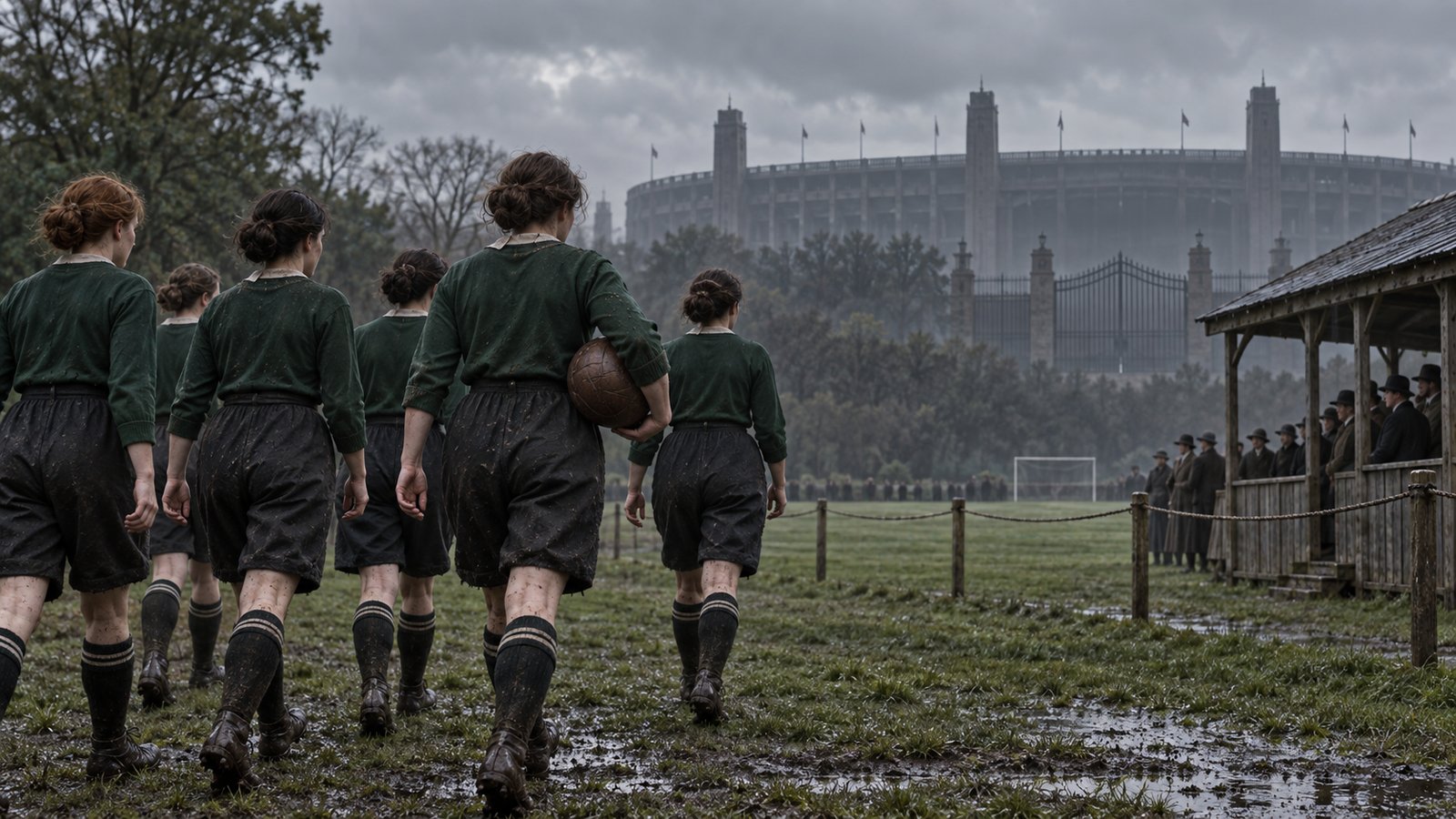
Dick, Kerr Ladies found ways to continue. Their company had a modest ground available, and the team accepted fixtures beyond the FA’s network. In 1922 they travelled to the United States and played men’s teams. Later, after a break with the company, they competed as Preston Ladies and survived until 1965.
Survival can disguise the scale of loss. A club that keeps playing may look like evidence that a restriction failed. In this case, continuity and damage existed together. The team retained players, opponents and determination; women’s football lost routine access to the venues that could convert those assets into mass public culture.
The 1920 Goodison match therefore deserves to be remembered as more than a crowd record before a ban. It was a demonstration of a complete football economy. Skilled players supplied the contest. A major stadium concentrated demand. Tens of thousands paid at the gate. A community fund received the proceeds. Newspapers and diaries preserved the event because its scale was impossible to ignore.
Eleven months later, the controlling body did not need to erase the score or forbid every future match. It could act through property and affiliation. Remove the largest grounds, and the crowd that had already proved itself would be harder to assemble, count and remember.
Sources
BBC Sport; ABC News Australia; The Guardian; Dick, Kerr Ladies historical record.