
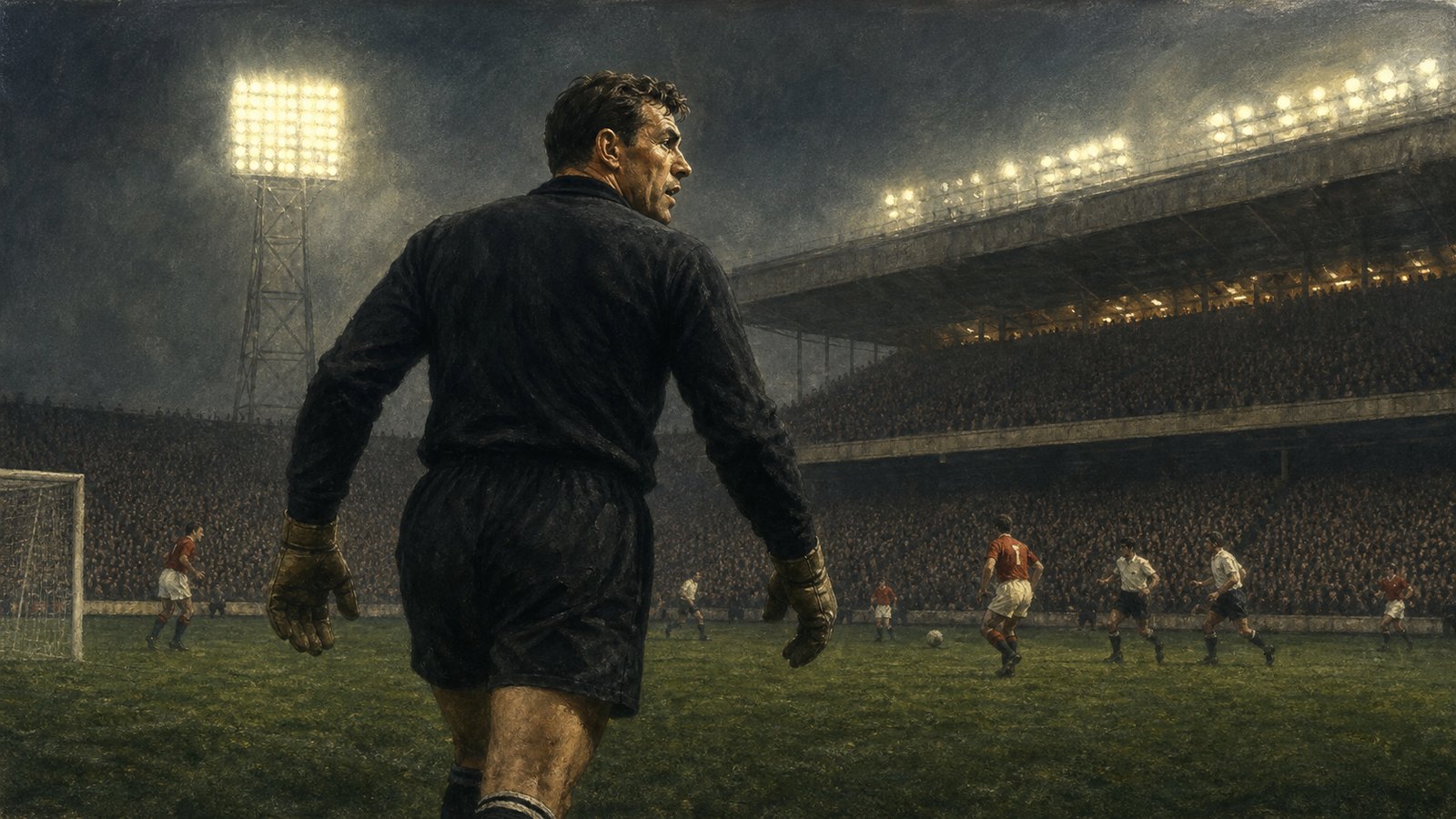
Wembley offered Lev Yashin only 45 minutes, which was enough to alter the temperature of an exhibition. On 23 October 1963, England marked the Football Association’s centenary by facing a Rest of the World side filled with famous names. Yashin started in goal dressed in the dark kit that had helped produce the Black Spider nickname. The score remained 0–0 until half-time. He then left the field, and England eventually won 2–1.
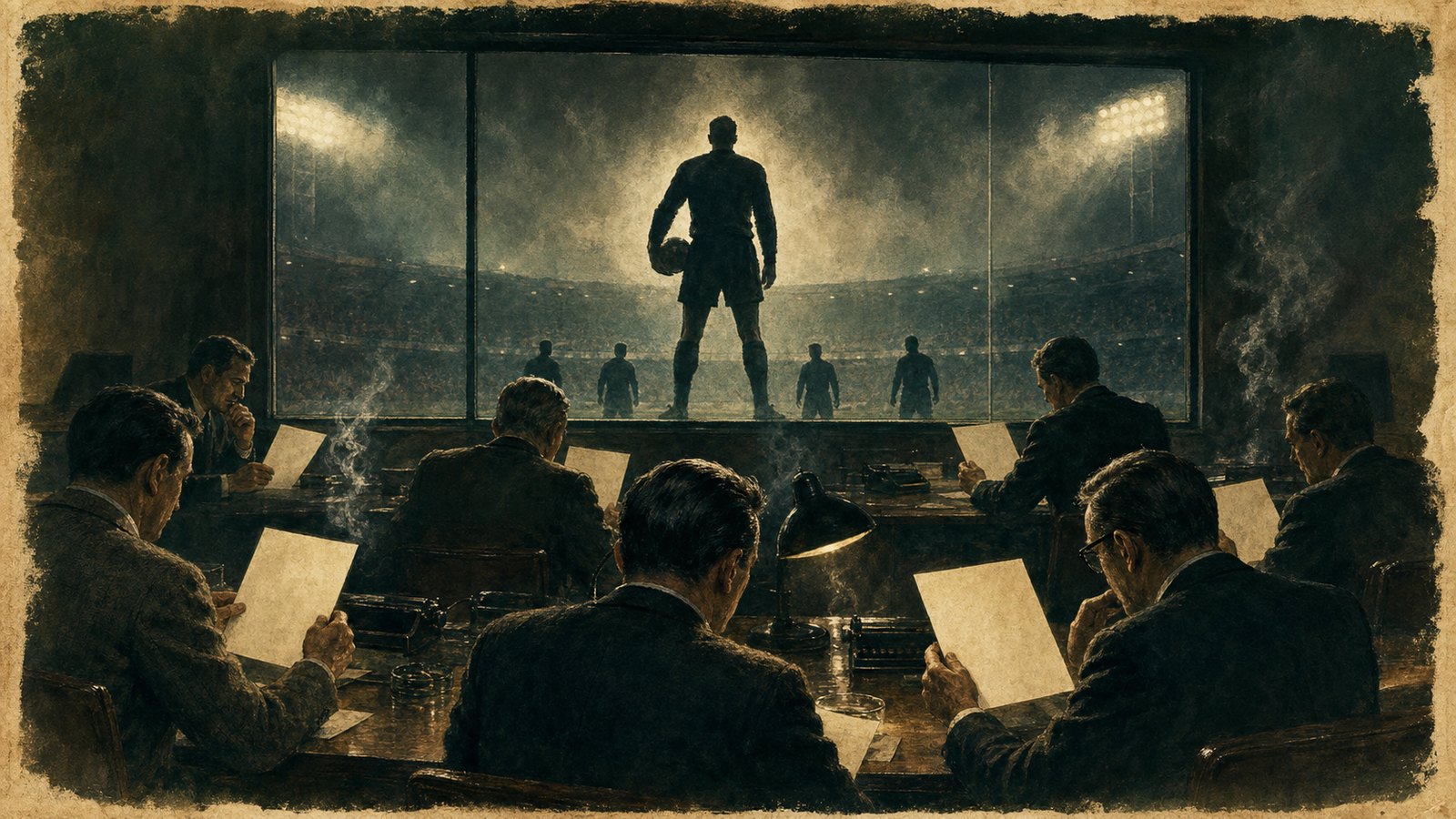
An exhibition did not decide the Ballon d’Or, but that half gave western European voters a concentrated view of what Soviet audiences had watched for years. Yashin did more than wait for shots. He moved into traffic, collected crosses, ordered the space in front of him and treated possession as the beginning of an attack. On 17 December, the journalists voting for France Football placed him above Gianni Rivera and Jimmy Greaves. A goalkeeper had won Europe’s premier individual prize.
The result still stands alone. Its significance is not a mystical claim that Yashin never made a mistake. His career included bad days, difficult beginnings and public criticism. The ballot mattered because voters recognized a position through the influence one player exerted beyond the goal line. They rewarded command, anticipation and recovery as parts of football’s central drama.
A factory teenager found two paths into Dynamo
Yashin was born in Moscow on 22 October 1929. War disrupted his childhood, and he worked in a factory as a teenager before entering the Dynamo sporting organization. His route was unusually broad even for an era in which clubs contained several sports. He played both football and ice hockey, winning the Soviet hockey cup in 1953 before concentrating on the grass game.
That detail matters because his football ascent was hardly preordained. One notorious early senior appearance included an opposing goalkeeper’s long clearance carrying all the way into Yashin’s net. Such a beginning could reduce a young keeper to caution. Yashin instead developed a style based on decisions made early and visibly. He would leave the line for a cross, confront a forward before the shot, or throw the ball rapidly toward a teammate while opponents were still turning.
Dynamo Moscow gave him continuity. He spent his senior club career there and won five Soviet league championships. Familiarity with defenders helped, but longevity also exposed every weakness. A forward can disappear for part of a match and still score. A goalkeeper’s single error may become the entire story. Yashin’s authority grew because teammates repeatedly accepted the risks attached to his wider range.
His territory extended beyond the six-yard box
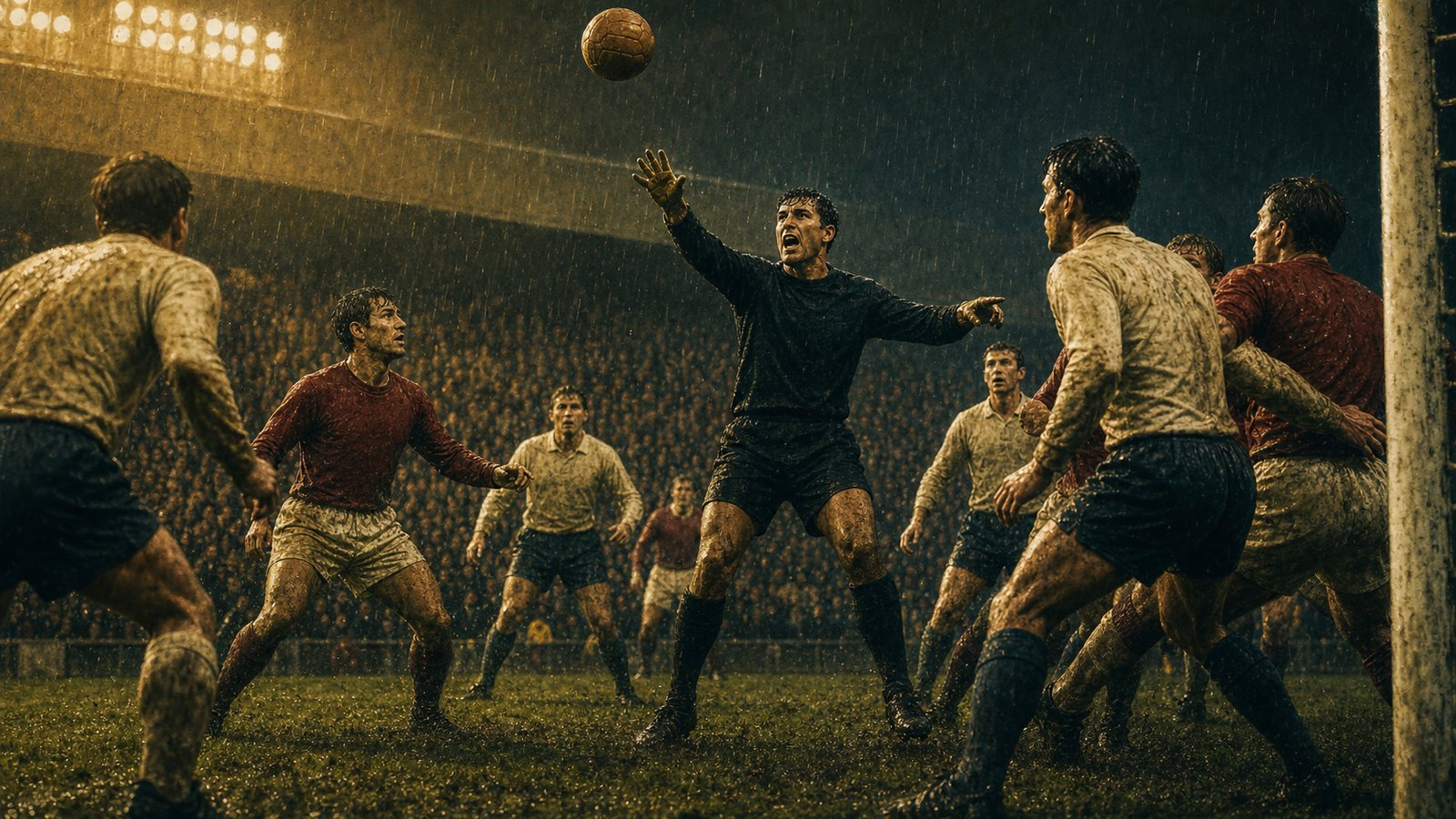
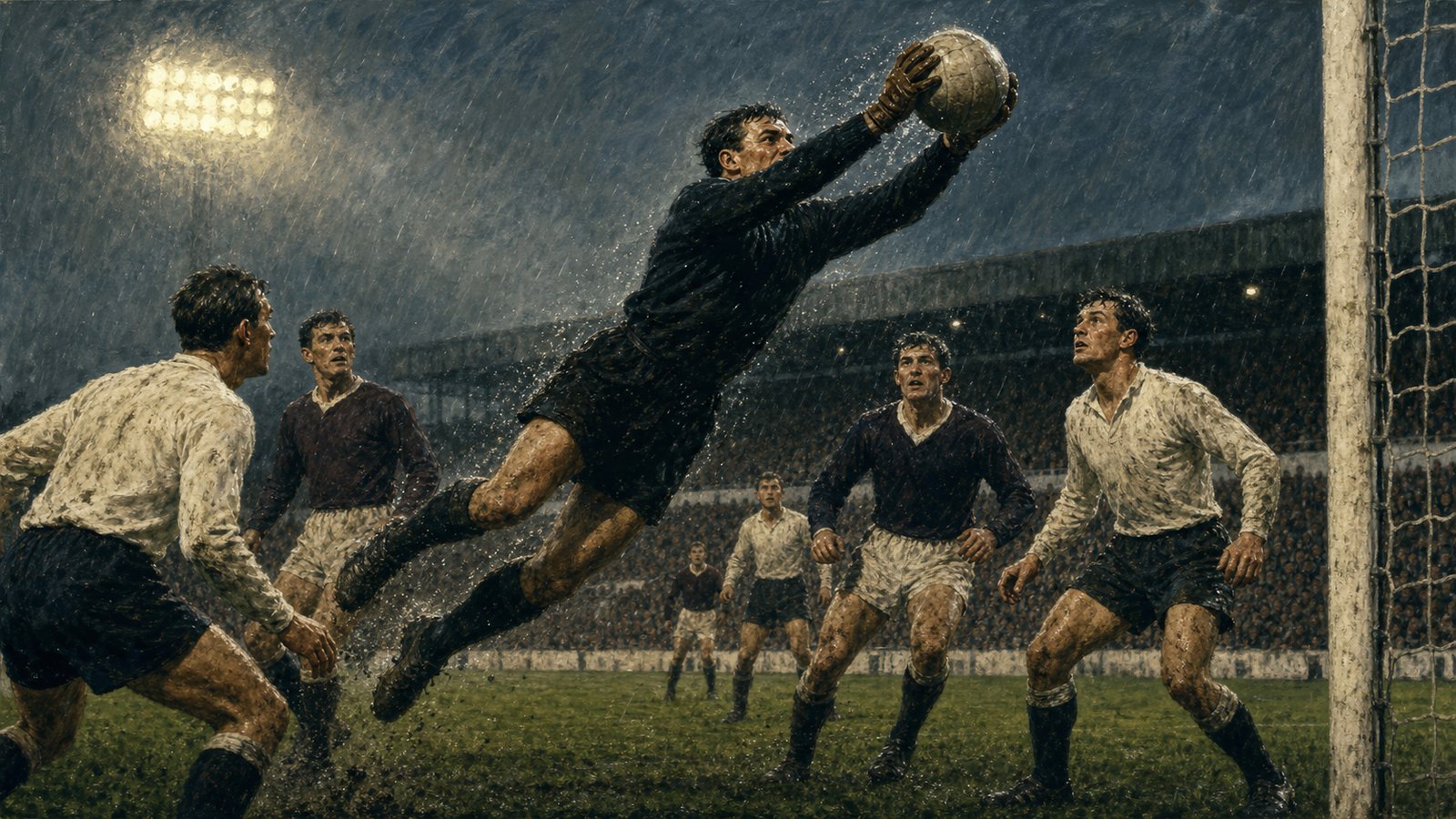
The familiar image of Yashin is a black-clad figure flying across goal. The more consequential picture begins a second earlier. He read the delivery, stepped through bodies and attempted to end an attack before it became a close-range chance. When he held the ball, he looked for a fast release rather than allowing the match to reset around him.
This was not modern sweeping in a twenty-first-century tactical structure. The pitches, ball, boots and interpretation of contact were different. Yet the underlying change is recognizable: the goalkeeper could manage space, not merely defend a rectangle. Claiming a cross removed a second ball. Calling sharply allowed a defender to leave a pass. A throw into the flank converted a save into transition. Each action altered what the ten outfield players could attempt.
Dark clothing made the movement more memorable. The Black Spider and Black Panther nicknames suggested impossible reach, but they can hide the practical habits beneath the theatre. Positioning reduced the distance of a dive. Repetition built timing. Communication transferred information to defenders whose eyes were fixed on the ball. His style looked dramatic because the interventions were decisive; it worked because many of the decisions had been made before the crowd understood the danger.
Melbourne and Paris made the case before the ballot
By 1963, voters were not responding to one evening in London. Yashin had been the Soviet Union’s goalkeeper during the gold-medal run at the 1956 Melbourne Olympics. Four years later, he anchored the side that won the inaugural European Championship. The 1960 final against Yugoslavia went beyond 90 minutes before the Soviet Union won 2–1.
Those tournaments placed a goalkeeper at the center of a team representing a football culture many western spectators encountered only intermittently. Yashin also appeared at the 1958 and 1962 World Cups. International exposure made his silhouette famous, but it did not provide an uninterrupted rise. The Soviet exit in 1962 brought criticism, and goalkeeping made an easy target. The reaction to him was therefore not a smooth legend manufactured after victory.
His response gave the 1963 award additional weight. He returned to prominent form rather than retreating into safety. The Wembley centenary match then assembled a Rest of the World team as a showcase. For one half, Yashin faced the host nation in its most symbolic stadium and left without conceding. It was a short scene, but a powerful one for journalists comparing players across leagues they could not watch every week.
The sequence also explains why the award cannot be reduced to novelty. Olympic gold, a European title, domestic championships and years of international work preceded it. Wembley supplied a vivid final exhibit. The ballot recognized accumulated authority.
Seventy-three points broke the position’s ceiling
The 1963 Ballon d’Or vote gave Yashin 73 points. AC Milan playmaker Gianni Rivera received 56, while Tottenham and England striker Jimmy Greaves collected 51. The margin is striking because individual football awards naturally lean toward creators and scorers. Their contributions end in visible numbers. Goalkeepers are often noticed most when something has gone wrong.
Yashin’s victory required voters to value prevented events. A claimed cross leaves no shot for a highlight reel. An instruction that fixes a marking error produces no entry in a match report. A quick throw may matter several passes before a goal. The 73 points implied that journalists could see those actions as positive authorship rather than emergency repair.
It also changed the symbolic hierarchy of the pitch. The goalkeeper had usually been framed as the final specialist, separated by gloves and rules from the rest of the team. Yashin made the role look connected to every phase: defensive spacing, aerial control, tempo and the first forward pass. The prize did not make all future voters position-neutral, but it established that the office was not automatically disqualified.
No goalkeeper has repeated the Ballon d’Or win. That fact should not be used to pretend the position stopped evolving after Yashin. Dino Zoff, Peter Schmeichel, Oliver Kahn, Gianluigi Buffon, Iker Casillas, Manuel Neuer and others expanded different parts of the craft. The enduring point is narrower: in 1963, enough voters judged a goalkeeper’s total influence to be greater than that of every celebrated forward and midfielder available to them.
The clean-sheet myth is smaller than the legacy
Yashin later reached the 1964 European Championship final and was part of the Soviet team that finished fourth at the 1966 World Cup. His career therefore continued after the famous vote, adding evidence without making him flawless. The useful legacy is not a claim that every save belonged to a superhuman figure in black. It is the expanded job description he made legible.
Football’s institutions eventually attached his name to goalkeeping honors. FIFA’s award for the leading goalkeeper at the World Cup carried the Yashin name from 1994 through 2006 before the competition adopted the Golden Glove title. France Football introduced the Yashin Trophy in 2019. Both gestures convert memory into an award category, but they also reveal an unresolved separation: the best goalkeeper is usually honored apart from the ballot for the best player.
That makes the 1963 result feel less like an old statistical curiosity and more like a challenge. Voters had to imagine the match from behind the defense. They had to count the danger ended before a shot, the confidence transferred through a shout and the attack accelerated by a throw. Yashin’s dark jersey supplied the icon. His real achievement was persuading observers to notice all the football happening around it.
Sources
FC Dynamo Moscow, Lev Yashin club biography; Dynamo Museum, Lev Yashin; FIFA, The Impregnable Spider; Olympics.com, Lev Yashin athlete profile; UEFA, 1960 European Championship history; Encyclopaedia Britannica, Lev Ivanovich Yashin; England Football Online, England v Rest of the World 1963 match record; France Football, Ballon d’Or and Yashin Trophy records.