
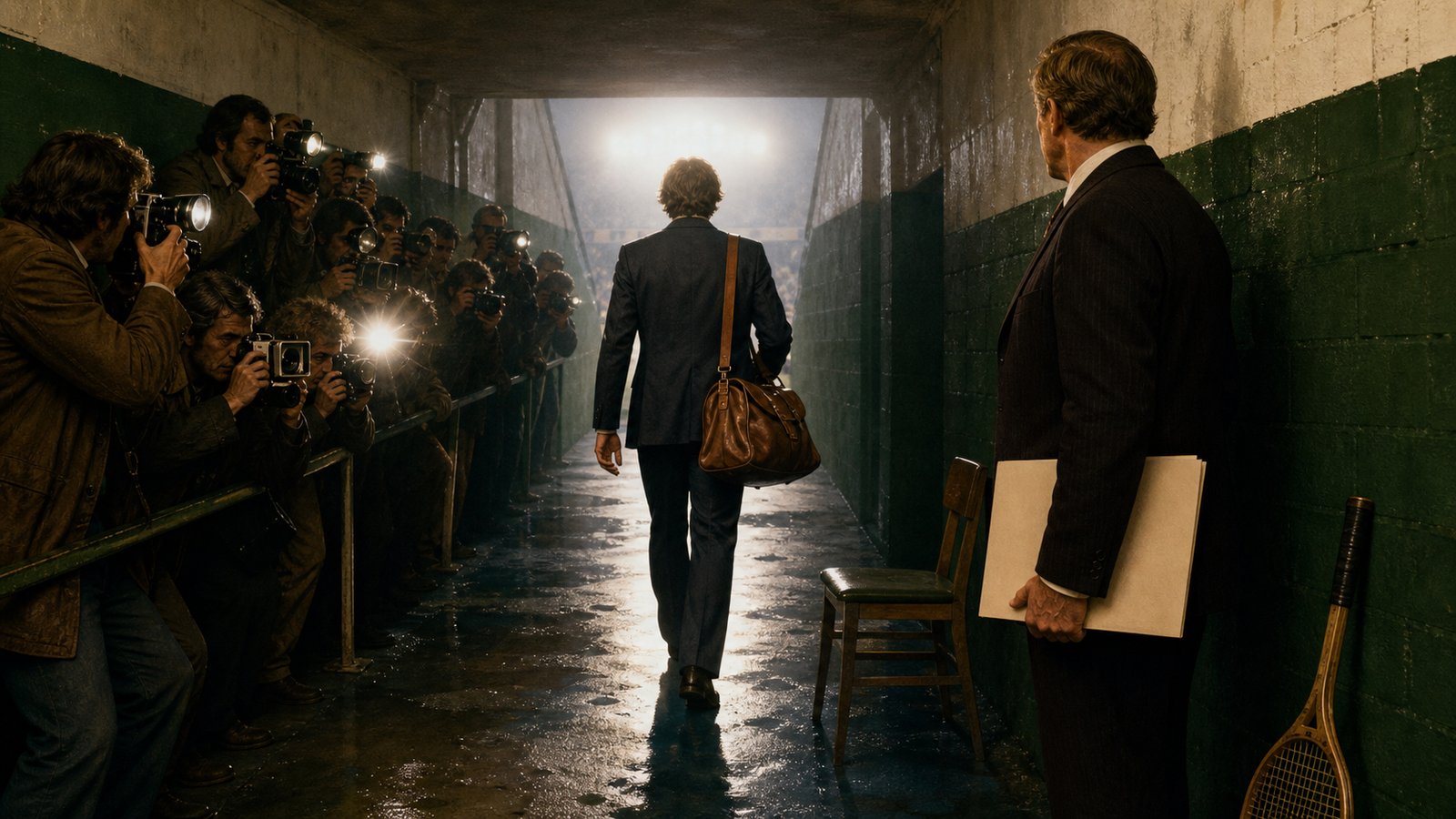
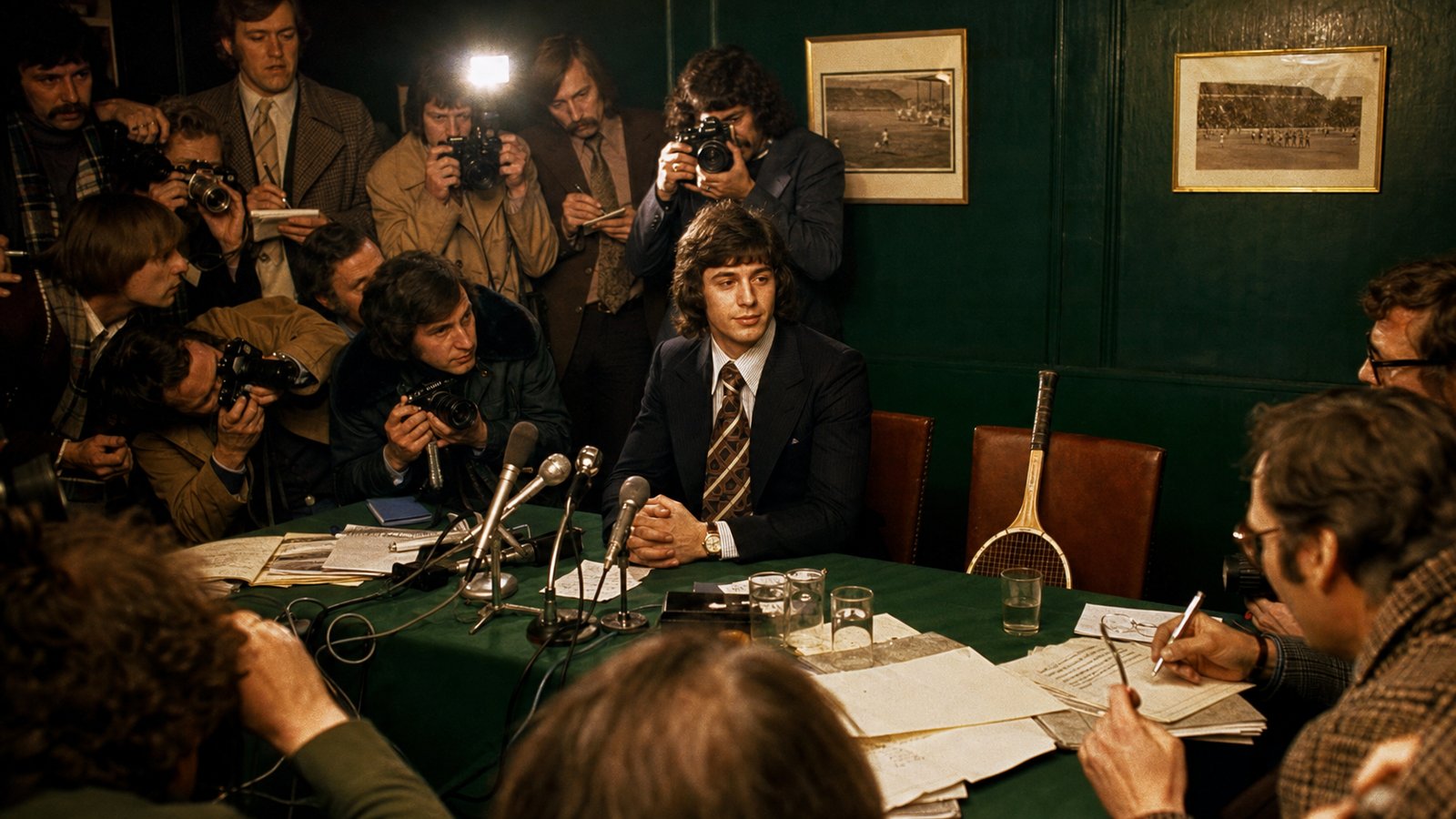
At lunchtime on 9 February 1979, English football acquired a new unit of measurement. Trevor Francis sat in Nottingham wearing a suit and a broad patterned tie, while the man buying him arrived in a tracksuit with a squash racket. The contrast made the photograph work: a record fee presented as both national theatre and a routine interruption to Brian Clough’s day.
The shorthand has survived for nearly half a century. Francis was “the first £1 million footballer.” Yet the deal mattered because it bundled several different football worlds into one transfer: Birmingham City’s need to price its finest asset, Nottingham Forest’s sudden power as league champion, the North American summer season Francis refused to surrender, and a European competition whose registration rules made the new star wait. The seven-digit headline was only the outer wrapping.
A Number Designed for the Front Page
Britain’s previous record had stood at £500,000, paid by West Bromwich Albion to Middlesbrough for David Mills in December 1978. Forest’s agreement therefore appeared to double the ceiling in one jump. The BBC’s contemporary account calculated the total cost at £1.18 million once VAT and five-percent payments to Francis and the League Provident Fund were included. It was a fee large enough to demand arithmetic as well as adjectives.
Clough later encouraged the story that the basic price was £999,999, supposedly to keep the psychological weight of seven figures away from Francis. Whatever version one preferred, Birmingham had secured a valuation that other bidders would not match. Coventry City, linked through manager Jimmy Hill’s co-ownership of the Detroit Express, stopped at £900,000. Forest crossed the line.
Peter Taylor gave the least romantic explanation. Forest could pay such a price, he said, because of good management in the past. The club’s average league gate was around 30,000, and this was not a speculative rescue attempt by a drifting giant. Forest were the reigning First Division champions and League Cup holders. The money announced what their improbable rise had produced: the ability to buy the most discussed English forward of his generation.
Birmingham’s Asset Had Already Crossed an Ocean
Francis was only 24, but he had spent eight seasons in Birmingham City’s first team. He had debuted at 16 years and 139 days, then scored four times against Bolton Wanderers before his seventeenth birthday. In his second season, 12 league goals helped Birmingham win promotion. By the time Forest negotiated, he had made roughly 300 league appearances and had been Birmingham’s leading scorer for three consecutive seasons.
His game was less easy to label than the record fee. Francis had the speed to attack space, the balance to carry the ball at defenders and the passing range to operate away from the centre-forward’s lane. He could finish, but he was not merely a penalty-box reference point. That versatility made the purchase useful to Clough and Taylor; it also explained why the forward could thrive in a very different football environment during English summers.
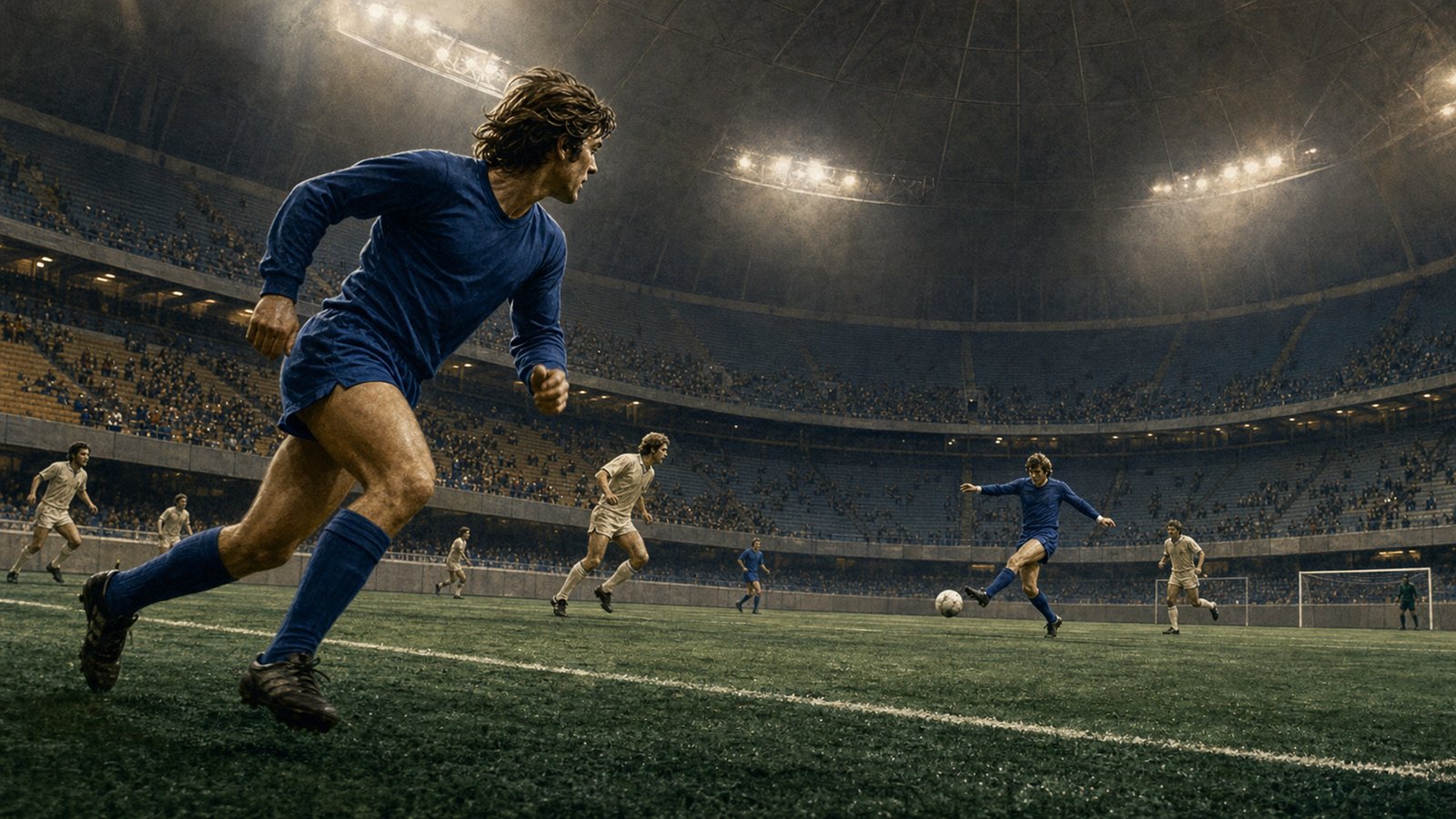
In 1978, Francis played for the Detroit Express in the North American Soccer League. He missed a third of the season and still scored 22 goals, alongside Alan Brazil in a prolific attack. Detroit won its division before losing 1–0 to the Fort Lauderdale Strikers in the conference semi-final. The setting could hardly have looked more distant from St Andrew’s: the vast indoor Pontiac Silverdome, artificial turf and crowds of 10,000 to 15,000 scattered through an 80,000-seat building.
That American commitment became part of the Nottingham negotiation. The BBC reported that Francis would receive £80,000 from Detroit for the closed season within a three-year package worth £200,000. Clough had objected to the arrangement, then withdrew his resistance after five hours of talks. Forest were not simply acquiring a player registration. They were accepting that their record signing already had a second football calendar.
Clough Arrived Carrying a Squash Racket
The unveiling condensed the transfer into one unforgettable image. Clough appeared late, dressed for exercise and carrying his racket. Francis faced the cameras more formally. The manager’s performance has usually been read as an attempt to make the sum look less terrifying: if the buyer behaved as though the press conference had interrupted a normal afternoon, perhaps the player would not be crushed by becoming a national economic symbol.
The pressure was real. Francis later recalled trying to justify the million and feeling relief only when he scored his first Forest goal, against Bolton. The fee could describe everything except the next touch. Every missed chance invited a calculation; every goal became an instalment repaid.
Europe Made Him Wait
The record signing could not immediately enter Forest’s European Cup campaign. Because he joined in mid-season, competition eligibility rules kept him out until the final. The delay changed the emotional shape of the transfer. Domestic appearances allowed Francis to learn the side, while Europe advanced without him. He was both the most conspicuous new player in Britain and a spectator to Forest’s largest objective.
Forest reached the final in Munich against Malmö on 30 May 1979. Clough used Francis from a deeper position on the right rather than fixing him as the central striker. It was a role that could exploit his pace and late arrival, and it placed him opposite Robertson, Forest’s chief creator on the left.
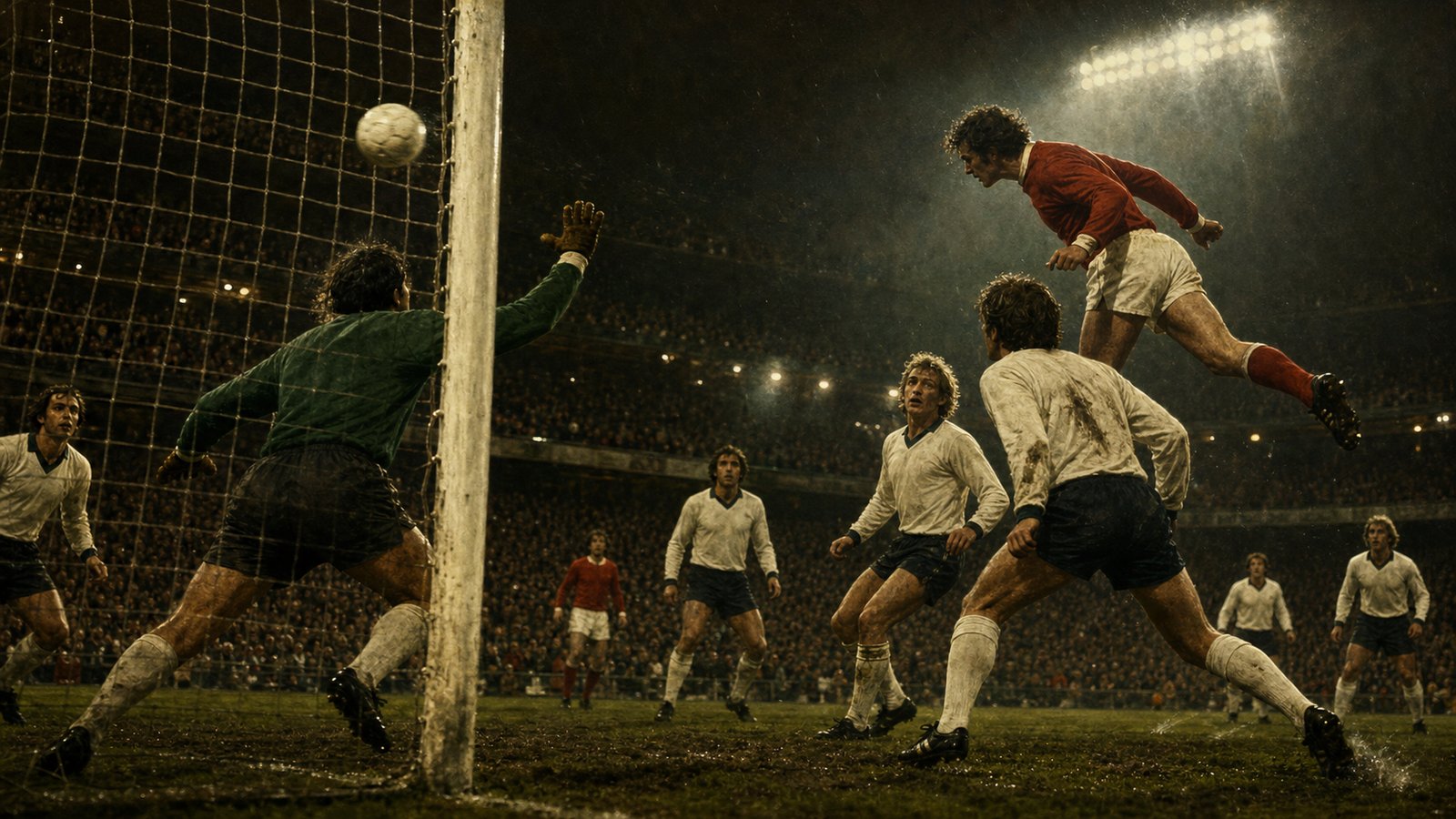
Just before half-time, Robertson worked near the byline and lifted a cross beyond the central traffic. Francis attacked the far post and headed in from a tight angle. Forest won 1–0. Four months after the transfer, on his European debut for the club, the first British million-pound player scored the goal that delivered Forest’s first European Cup.
The sequence felt written for retrospective myth: record purchase, enforced wait, one night, one goal. But its football logic was clean. Francis had not been asked to dominate possession or wrestle with the centre-backs for ninety minutes. Starting to the right gave him room to arrive where Malmö’s defenders were looking away. The decisive action was a winger’s cross met by another attacker’s timing.
The Far Post Changed the Meaning of the Fee
A transfer record usually predicts the future. It asks supporters to believe that unprecedented spending will eventually create unprecedented value. Francis compressed that waiting period into months. His Munich header did not prove that every expensive signing would succeed, and it did not erase the strain he had felt. It did something more particular: it attached the price to an outcome no Forest supporter needed explained.
He remained part of the team that retained the European Cup in 1980, although injury prevented him from playing in the final. His wider career later included Manchester City, Sampdoria, Rangers, Queens Park Rangers and Sheffield Wednesday. For England he won 52 caps and scored 12 goals, including goals against Czechoslovakia and Kuwait at the 1982 World Cup. The record transfer was a hinge in a long career, not its whole definition.
What Nottingham Forest Actually Purchased
The cleanest version of the Francis story is a receipt followed by a winning header. The fuller version is more revealing. Forest bought a forward shaped by eight senior seasons before the age of 25, a player comfortable enough to score heavily on the Silverdome’s artificial surface, and an attacker flexible enough to begin a European final from the right. They also bought around an existing summer contract and accepted that eligibility rules would postpone his largest stage.
Birmingham sold at the moment its academy prodigy had become a national star. Forest spent from a position of strength. Clough managed the spectacle with costume and timing, but the recruitment itself was not a joke. Taylor’s blunt phrase about past management carried the real logic of the deal: the champions had earned enough sporting and financial power to make one precise extravagance.
That is the durable tension inside Britain’s first £1 million transfer. The number was loud, but the success came from details that were quieter: Robertson reaching the byline, Francis attacking from the blind side, and a settled team giving a versatile newcomer one clear job. The price created the audience. The far-post run gave the audience something worth remembering.
Sources: BBC On This Day; Nottingham Forest Football Club; The Guardian; England Football; North American Soccer League; Sporting News.