

On 5 December 1921, the Football Association met at its headquarters in London and converted an argument about women playing football into an instruction about gates. Its resolution declared the game ‘quite unsuitable for females’ and asked clubs belonging to the FA to refuse their grounds for women’s matches. The wording sounded like an opinion. The force came from control of the places where a large audience could gather.
That distinction shaped the next half-century. Women were not physically prevented from kicking a ball, and several teams refused to disappear. They were pushed away from professional grounds, registered officials and the visibility those things supplied. The decision arrived when women’s football had clubs, crowds and charitable purpose. Its reversal also required more than a sentence saying the old prejudice had been wrong: committees had to change rules, recognize an independent women’s association and reopen the game’s infrastructure.
Goodison had already proved there was an audience
The FA acted after women’s football had demonstrated that it could command substantial public attention. During and after the First World War, factory teams played charity matches for injured servicemen and other causes. Dick, Kerr Ladies of Preston became the best-known side. The FA’s own heritage history records that the players received ten shillings to cover expenses and that, by 1921, England had about 150 women’s clubs. Some matches attracted crowds as large as 45,000.
The most startling evidence came on Boxing Day 1920. Dick, Kerr Ladies met St Helens Ladies at Goodison Park in Liverpool in aid of the Unemployed Ex-Servicemen’s Distress Fund. The recorded attendance was 53,000, with thousands more reportedly unable to enter a full ground. Lily Parr and Alice Woods were among the players who had become recognizable attractions, while the team’s games appeared in newsreels. This was no private pastime waiting for permission to matter. It had already found spectators and a place in the public football calendar.
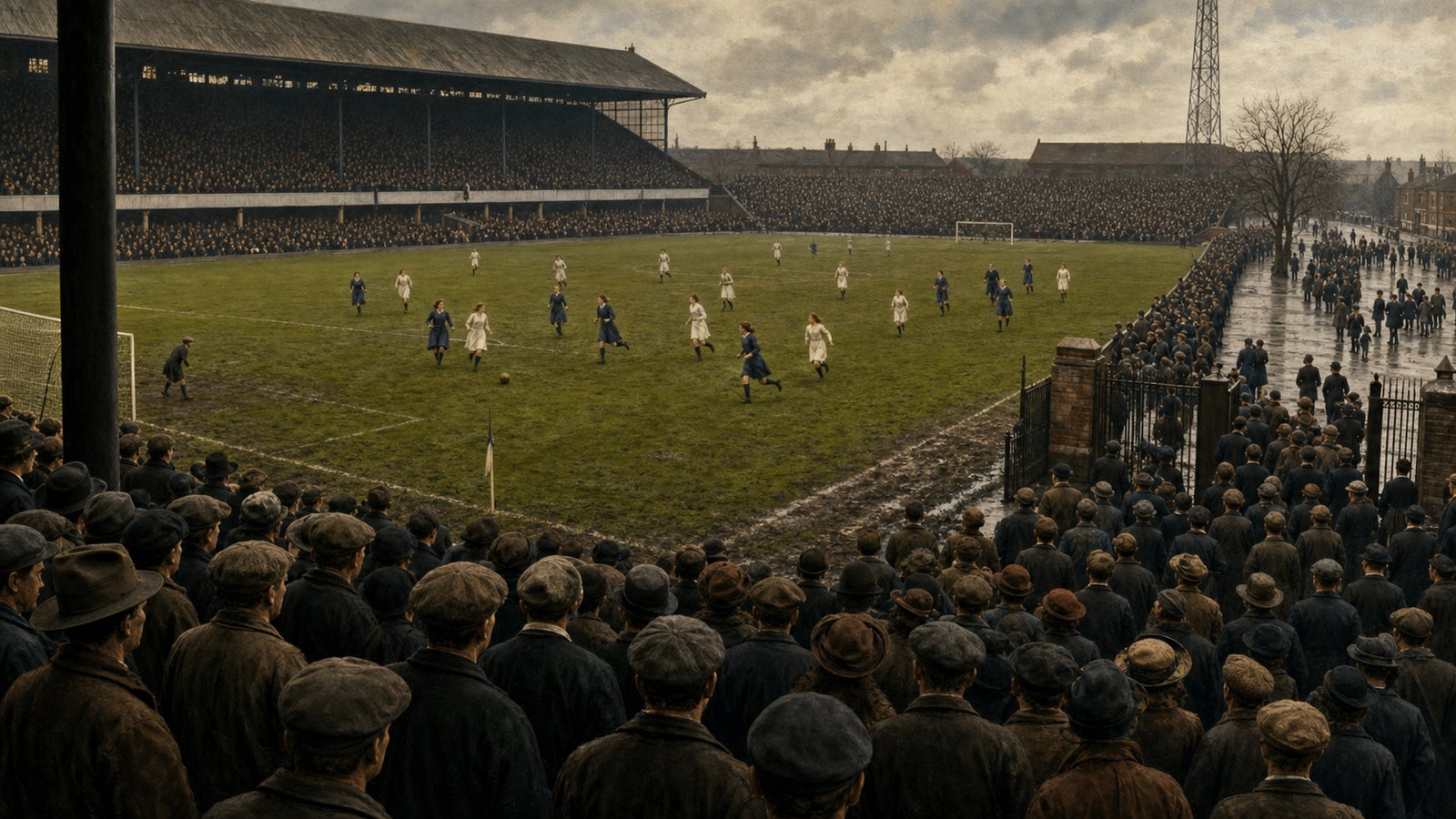
Success did not remove hostility. Medical claims about women’s bodies circulated alongside suspicion about expenses and the handling of charitable receipts. Dr Mary Scharlieb described football as too much for a woman’s physical frame. Those arguments treated popularity as a problem to be controlled rather than evidence to be accommodated. The people assessing the women’s game were also the people who controlled the men’s game’s best stages.
The resolution worked by closing the best gates
The December resolution did not need to outlaw every match to cause damage. It asked FA-affiliated clubs to deny women access to their grounds and said registered referees should not officiate. Large enclosed grounds offered turnstiles, changing facilities, organized staffing and the capacity to convert curiosity into a sustainable audience. Remove them and even a popular team faced a smaller ceiling.
The wording also placed an institutional judgment over the players’ own experience. The FA pronounced the sport unsuitable while women had been completing demanding schedules and raising money through their gates. Allegations about expenses were folded into a broader condemnation of the game. No comparable remedy was offered that would regulate accounts while preserving access. The practical answer was exclusion.
Dick, Kerr player Alice Barlow later remembered the players attributing the decision to jealousy because their crowds were larger and their gates supported charity. That was her explanation, not a documented confession from the FA, but it captures how the ruling looked from the pitch: a successful spectacle had not earned a path into the institution. It had provoked the institution to withdraw the ground beneath it.
Five days later, the players organized without the FA
The response was remarkably quick. On 10 December 1921, around 30 teams met in Liverpool to formalize the English Ladies Football Association. Its stated aims included popularizing football among girls and helping charity. The new body could not restore access to FA grounds, but it could arrange competition and insist that women’s football had its own administrative voice.
The ELFA staged its Challenge Cup the following year. Stoke Ladies beat Doncaster and Bentley Ladies 3–1 in the June 1922 final. It proved that a competition could be organized, but organization alone could not replace lost infrastructure. Public parks, rugby venues and smaller independent grounds generally offered less capacity and fewer resources. Many clubs disappeared; those that survived had to work around a map drawn by somebody else.
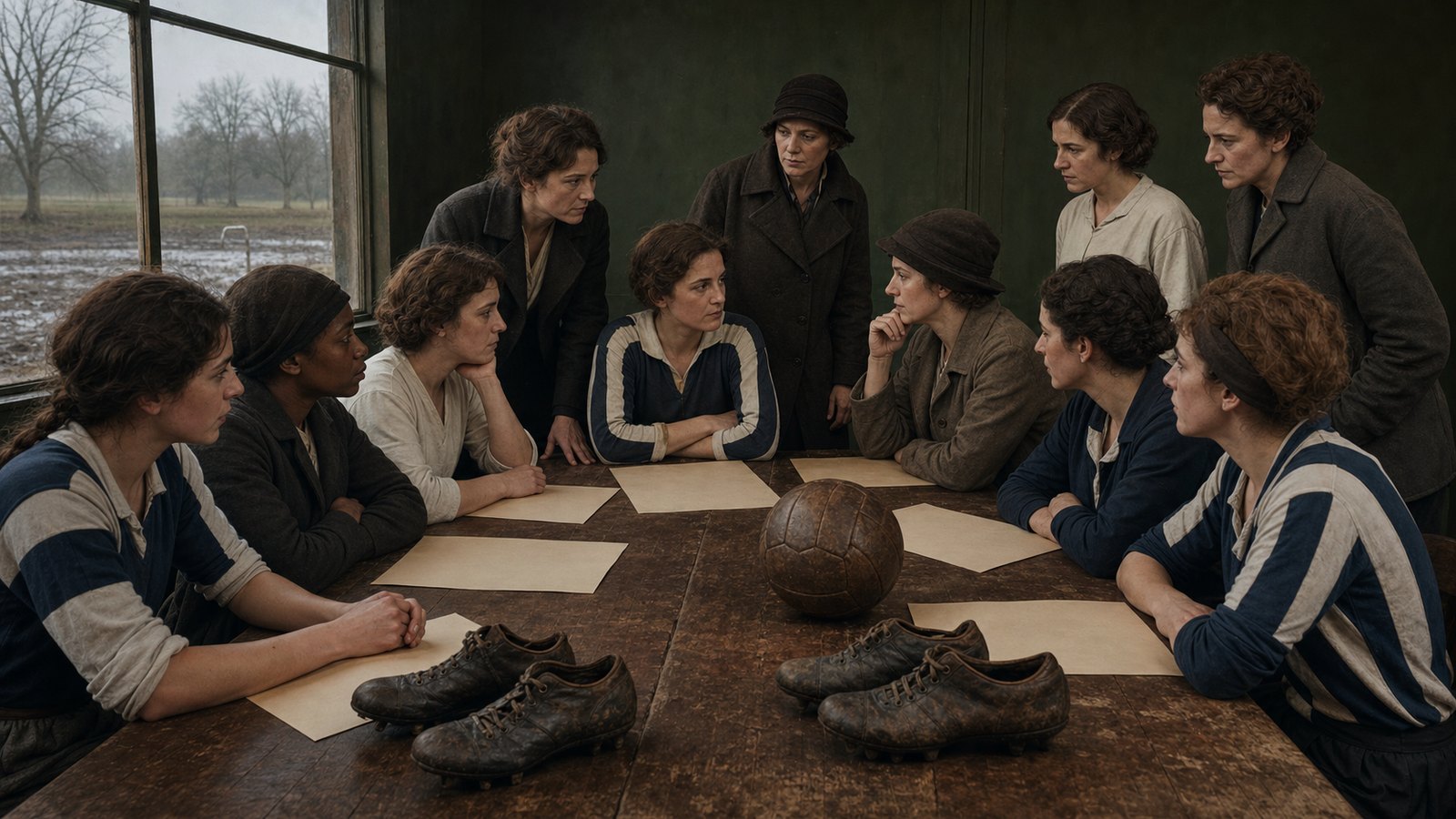
Dick, Kerr Ladies kept travelling. In late 1922 they crossed the Atlantic after Canada’s Dominion Football Association prevented them from playing there, then faced men’s teams in the United States. Manager Alfred Frankland said the side would continue if organizers could find grounds, even ploughed fields. The line was defiant, but it also revealed the new reality. A team that had filled Goodison was being asked to prove its existence venue by venue.
Women continued playing through the 1930s, 1940s, 1950s and 1960s. Persistence kept the sport alive, but survival should not be confused with an undamaged parallel history. Smaller crowds meant less revenue and publicity. Limited facilities narrowed recruitment and competition. The resolution did not erase every team; it made continuity harder and growth exceptional.
The road back passed through another association
Momentum changed in the late 1960s. The Women’s Football Association was established in 1969, with Arthur Hobbs as honorary secretary and Pat Dunn as its first chair. Hobbs had organized a tournament at Deal in Kent two years earlier with support from miners at Betteshanger Colliery. Patricia Gregory, who founded and played for White Ribbon, helped establish the WFA and later served on UEFA’s Women’s Football Committee.
This work mattered because the end of exclusion was not simply bestowed from above. Women had built teams, tournaments and governance while the FA treated their football as unaffiliated. In December 1969, the FA Executive Committee recommended that ‘ladies’ football’ should no longer carry that classification. On 19 January 1970, the FA Council voted to rescind the 1921 resolution.
Even that vote did not immediately open every gate. The relevant FA rule still had to be amended. The Rules Revision Committee considered the change in August, and the formal amendment had to wait for the next annual general meeting. This procedural interval shows how institutional exclusion persists: a principle can be withdrawn before the machinery that enforced it has been dismantled.
Paddington changed the rule, then football had to use it
The decisive AGM took place at the Great Western Royal Hotel in Paddington on 24 June 1971. After the amendment, women’s matches could again be played on FA-affiliated grounds and registered referees could officiate. UEFA also recommended in 1971 that national associations govern the women’s game. Recognition of the WFA followed on 29 February 1972.
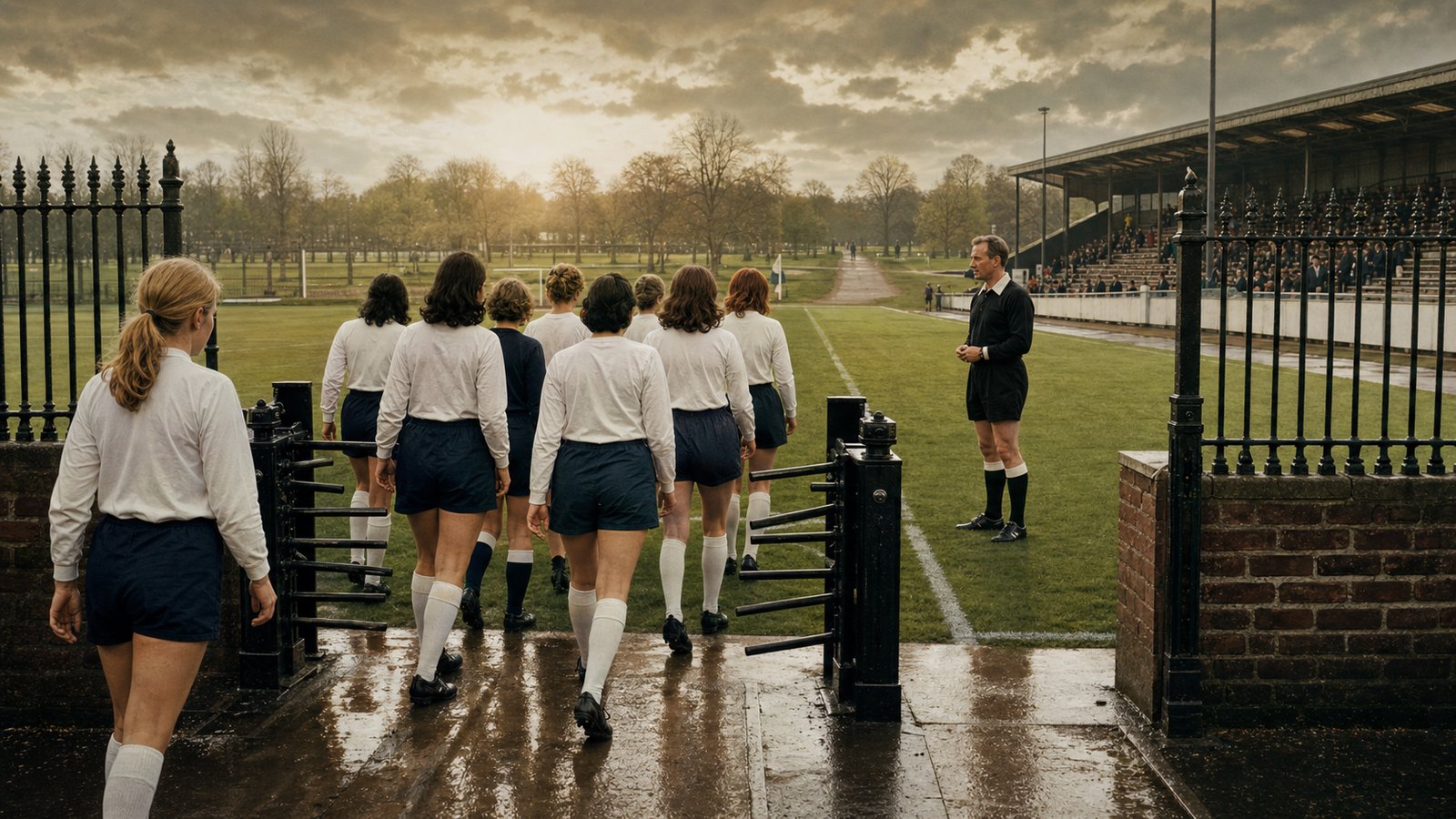
Competition and representation followed quickly. Southampton won the first women’s national cup final in 1971 and would take eight of the first eleven editions. In November 1972, an official WFA England team travelled to Scotland. England fell two goals behind in Greenock, then won 3–2 through goals by Sylvia Gore, Lynda Hale and Jeannie Allott. The match came a century after the first recognized men’s international between the same countries.
The symmetry is tempting, but the dates should not be made too neat. Fifty years without normal access had consequences that one AGM could not reverse. Between 1972 and 1978, England women played only 25 internationals. The WFA continued to depend heavily on volunteers, opening its own administrative office only in 1981. It gained affiliation with the status of a county FA in 1984, while the FA did not take direct control of the women’s game until 1993.
The central event of this story is therefore neither a vanished game nor a sudden rescue. It is the use of governance to determine where football could be seen, who could officiate and which organization carried legitimacy. In 1921, an administrative resolution separated a thriving game from the country’s main football infrastructure. From 1969 to 1972, organizers and players forced each part of that separation back onto the agenda. The reopened turnstiles mattered because women had kept a game ready to walk through them.
Sources
The Football Association, Kicking Down Barriers; National Football Museum, Lily Parr and the FA ban; Women’s Football Association historical records; FIFA, history of women’s football; contemporary FA Council and competition records.