
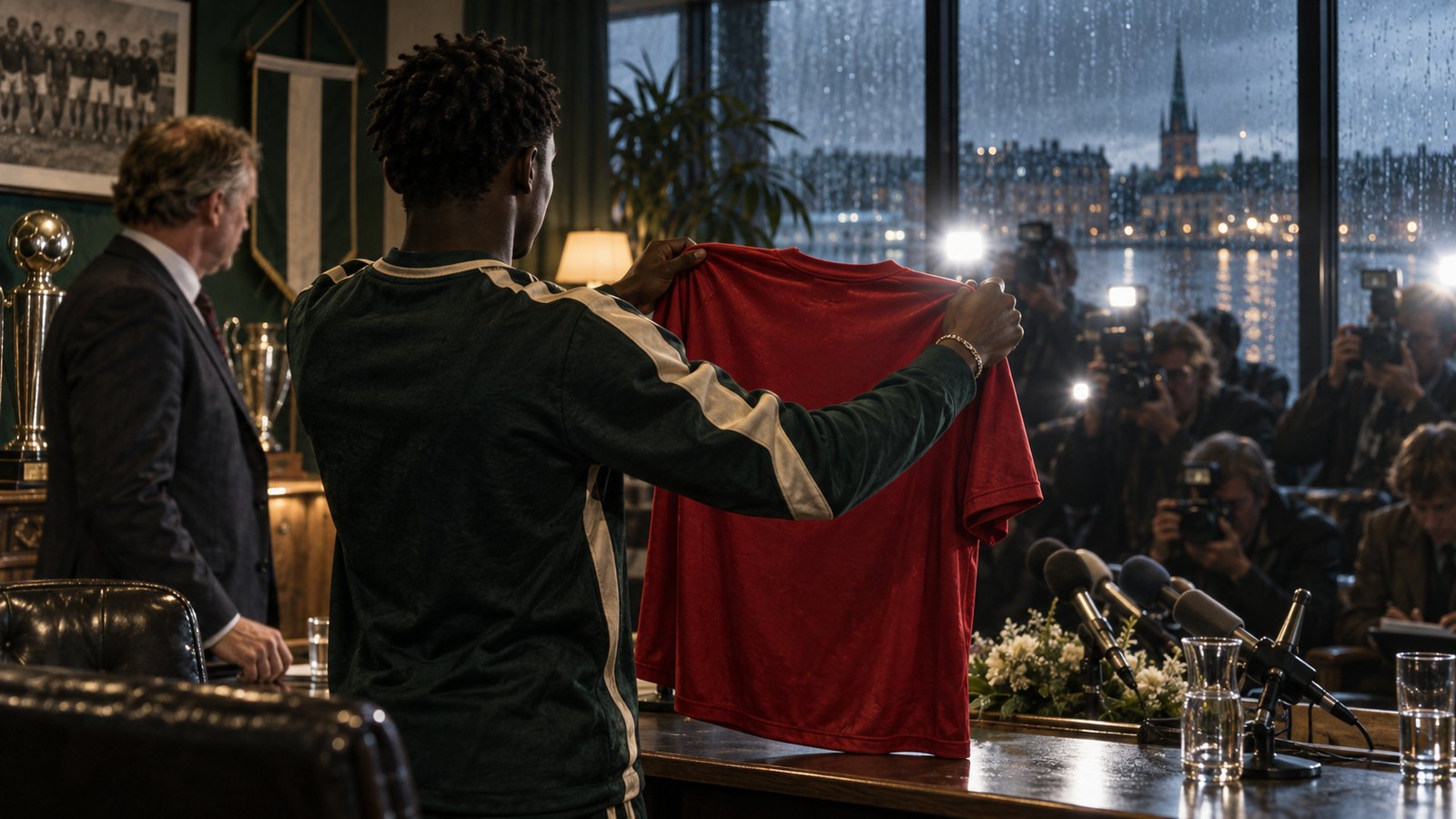
On 29 April 2005, Manchester United presented an 18-year-old midfielder who had played only a handful of senior matches in Norway. John Obi Mikel held up a red shirt with number 21 on the back. United said they had agreements with both the player and Lyn Oslo. The photograph looked like the end of a transfer.
It was the beginning of a dispute that moved through a missing-person report, competing contracts, a FIFA ruling, three clubs and a later fraud conviction. Within two weeks, Mikel had disappeared from the stands during a Norwegian Cup tie. Nine days after that, he appeared in London and said he had been pressured to sign for United without his representative. He wanted Chelsea.
The destination was eventually settled in June 2006, but not by proving that the unveiling had made Mikel a United player. Chelsea paid £12 million to Manchester United and £4 million to Lyn. The arrangement cleared the registration while allowing every side to withdraw its claims. A teenager’s career could finally continue because the clubs bought an exit from a case whose paperwork was still contested.
A Red Shirt Arrived Before the Arguments
Mikel had joined Lyn as a teenager after developing at Plateau United in Nigeria and appearing at the 2003 FIFA Under-17 World Championship. He was still only 18 when United announced on 29 April 2005 that they had secured him. The proposed transfer was initially reported at £4 million, with a move to Old Trafford planned for January 2006.
The public ritual was unusually definite. Mikel smiled beside Lyn director Morgan Andersen and held the number 21 United shirt at a hurried press conference. United’s position was that it had an agreement with Lyn and a four-year agreement with the player. Chelsea’s response made the same image unstable: the London club said it already had an understanding with Mikel and his representatives, and had helped arrange his route to Europe.
At the centre was representation. Mikel later said his agent had not been present when he signed the United papers. Lyn and United rejected the suggestion that he had been coerced. The disagreement was therefore not a normal auction in which two bids waited for a selling club’s choice. It concerned which promises existed, who had authority to make them and whether the player’s apparent consent at the unveiling could be trusted.
An Empty Seat Changed the Story
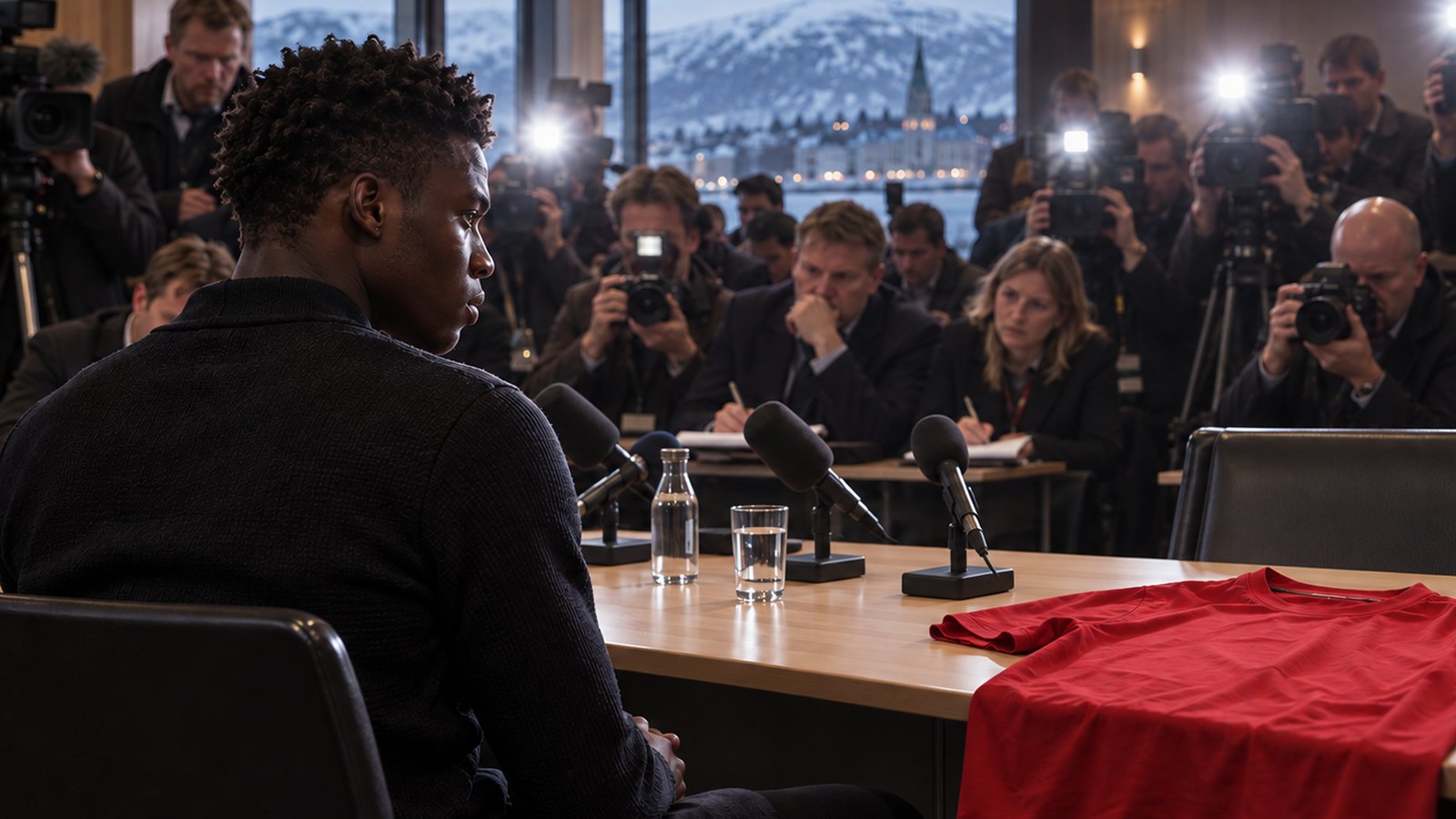
On 11 May, Mikel attended Lyn’s Norwegian Cup match against Klemetsrud but was not selected to play. During the game he left the stands with agent John Shittu. Andersen reported him missing, and the affair became described in the language of disappearance and kidnapping rather than negotiation. United assistant manager Carlos Queiroz publicly demanded an investigation.
Mikel’s later account was less cinematic. He said he had not been kidnapped; he was keeping out of public view while United and Lyn tried to locate him. Contemporary reporting placed him in a London hotel. Nine days after he left the cup tie, he told Sky Sports News that he had signed without his agent under pressure and that Chelsea was the club he genuinely wanted to join.
That interview overturned the meaning of the press-conference photograph without cancelling any document. United asked FIFA to investigate Chelsea and the agents involved. Mikel’s location was no longer the central uncertainty. His legal attachment was. He could say where he wished to play, but that preference did not by itself decide whether Lyn held his registration or whether United’s option could be enforced.
The episode also exposed how vulnerable a young international could become once clubs, intermediaries and public statements moved faster than adjudication. Mikel was a valuable player, but he was also an 18-year-old whose face was being used as evidence by opposing sides. Every photograph and interview appeared to settle the question for a day. None could clear the registration.
FIFA Sent Mikel Back to the Starting Point
The case did not produce an immediate order sending Mikel to either English club. After he failed to return to Lyn, the Norwegian club complained to FIFA. On 12 August 2005, FIFA ordered him to go back to Oslo and fulfil his Lyn contract while the larger dispute remained unresolved. He returned in early September after roughly three months away.
That ruling separated two questions that headlines had merged. One concerned Mikel’s existing obligation to Lyn. The other concerned the validity of the proposed move to United. Restoring him to the Norwegian club preserved the current registration while officials considered the rival English claims. It did not transform his stated preference for Chelsea into a contract, nor did it make United’s unveiling conclusive.
The pause stretched across a season. Mikel remained caught between an employment relationship in Norway and a future claimed in England. For the clubs, waiting for a definitive ruling carried risk. United could win a legal argument yet inherit a player who had publicly rejected the move. Chelsea could continue challenging the deal but leave the player unable to begin the career it had planned for him.

Three Payments Replaced One Verdict
On 2 June 2006, Chelsea, Manchester United and Lyn announced a negotiated settlement. Mikel’s registration would pass from Lyn to Chelsea. United would terminate its option agreement. Chelsea would pay United £12 million and Lyn £4 million, with each amount split into two instalments. The combined £16 million was the price of making all claims disappear together.
The structure mattered. United received three quarters of the total despite Mikel never playing for the club. Lyn received payment as the club holding his registration. Chelsea obtained the player and a route through the conflicting paperwork. No party had to wait for FIFA or a court to produce a sweeping declaration about every signature, conversation and agency relationship.
Mikel received a work permit the following month and began an 11-year Chelsea career. He would make 249 Premier League appearances and win major honours, but those achievements can make the transfer look more inevitable than it was. The decisive act was not Chelsea simply outbidding United for a willing seller. It was a settlement designed to neutralize rights that remained dangerous even after the player had made his preference public.
The distinction echoes other football contract disputes, including Ahn Jung-hwan’s rupture with Perugia: a player’s sporting future can turn on the gap between a club’s declaration and an enforceable registration. In Mikel’s case, money closed that gap before a final ruling could define it.
The Contract Case Outlived the Transfer
The settlement let Mikel play, but it did not make the underlying documents clean. In March 2008, an Oslo court convicted former Lyn director Morgan Andersen of fraud and making false accusations. The case included findings that contracts had been altered to make them appear signed on Mikel’s 18th birthday, strengthening Lyn’s claim to profit from the proposed United transfer. Andersen received a one-year suspended sentence and was ordered to pay 20,000 Norwegian kroner in costs; he appealed.
Chelsea then sought the return of its £16 million, arguing that the 2006 settlement had rested on fraudulent misrepresentation about Lyn’s employment contract with Mikel. That claim was directed at Lyn and Andersen, not at Manchester United. The clubs later resolved the matter out of court.
This aftermath changes the shape of the original saga. It was not merely a young player changing his mind after posing with the wrong shirt. The dispute involved uncertain representation, papers later examined by a criminal court, and a registration that several powerful parties could not safely use until they compensated one another. Mikel’s public wish mattered, but it operated inside a market where documents could hold a career still.
The number 21 shirt remains the perfect opening image because it promised certainty. It showed a club, a player and a future in one frame. The following year proved that a presentation could announce only one party’s version of events. Chelsea did not reverse the photograph with another photograph. It paid United and Lyn for the legal space in which Mikel could become a Chelsea player.
Sources
BBC Sport; The Independent; Chelsea FC archive; Sky Sports.