
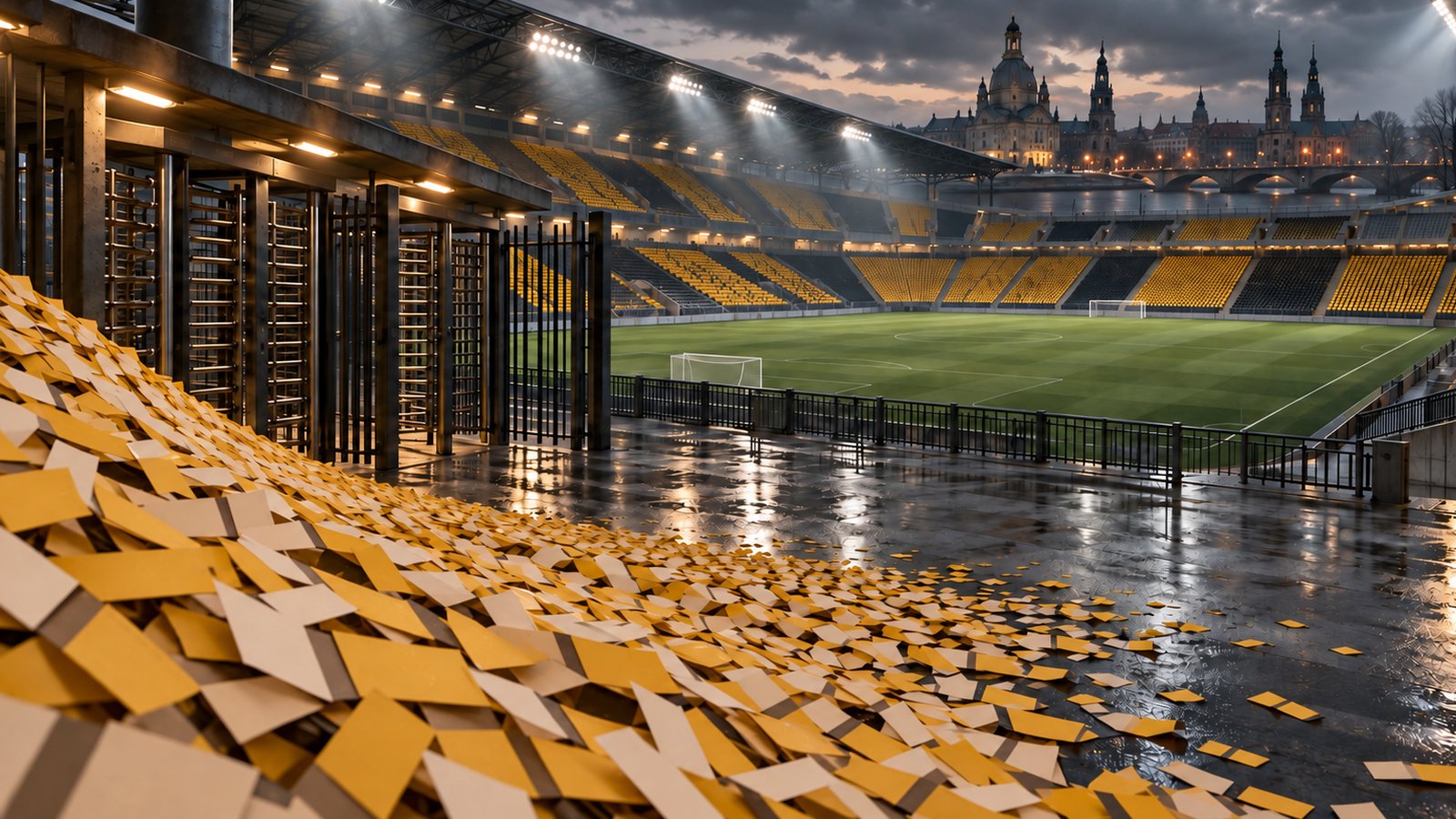
The turnstiles in Dresden stayed locked on 11 March 2012. Dynamo’s home match against FC Ingolstadt had been placed behind closed doors, part of a punishment following disorder at a cup tie in Dortmund. No chant could roll down from the yellow stands. No queue could form at the kiosks. Yet by the evening before kick-off, the club announced a sellout.
Supporters had purchased 32,066 virtual tickets, one for every place in the stadium. The buyers knew that the tickets would admit nobody. Some paid from as far away as Australia. Prices ranged from €5 to €20, and the point was not to pretend the ban had vanished. It was to replace part of the money that an absent crowd could no longer spend and to make the size of that support countable.
The result was a peculiar football spectacle: full capacity on the sales ledger and empty seats in every photograph. Dresden’s supporters had found a way to obey the physical restriction while refusing the economic silence it was meant to create.
The Punishment Removed a Matchday
Dynamo’s sanction came from trouble at a DFB-Pokal match away to Borussia Dortmund in October 2011. The German federation initially threatened a more severe consequence: exclusion from the following season’s cup. On appeal, that prospect was replaced by a €100,000 fine, a home match without spectators and a ban on Dynamo supporters travelling to the league game at Eintracht Frankfurt.
The empty home fixture was not an abstract penalty. Gate receipts, food sales and other matchday income disappear together when the doors close. Contemporary reporting estimated that the judgment exposed Dynamo to losses of about €500,000. For a second-division club, that was a material hole rather than a public-relations inconvenience.
There was also an internal argument hidden inside the sanction. Coach Ralf Loose spoke about the peaceful majority needing to protect Dynamo from the people whose conduct produced such judgments. The club had to acknowledge why the punishment existed without treating every supporter as interchangeable with those responsible for the disorder.
The match against Ingolstadt would therefore test two things at once. It would measure the sporting team in an unfamiliar, silent ground, but it would also measure whether the wider support could respond collectively without breaching the order that kept them outside.
A Ticket Became a Donation With a Seat Number
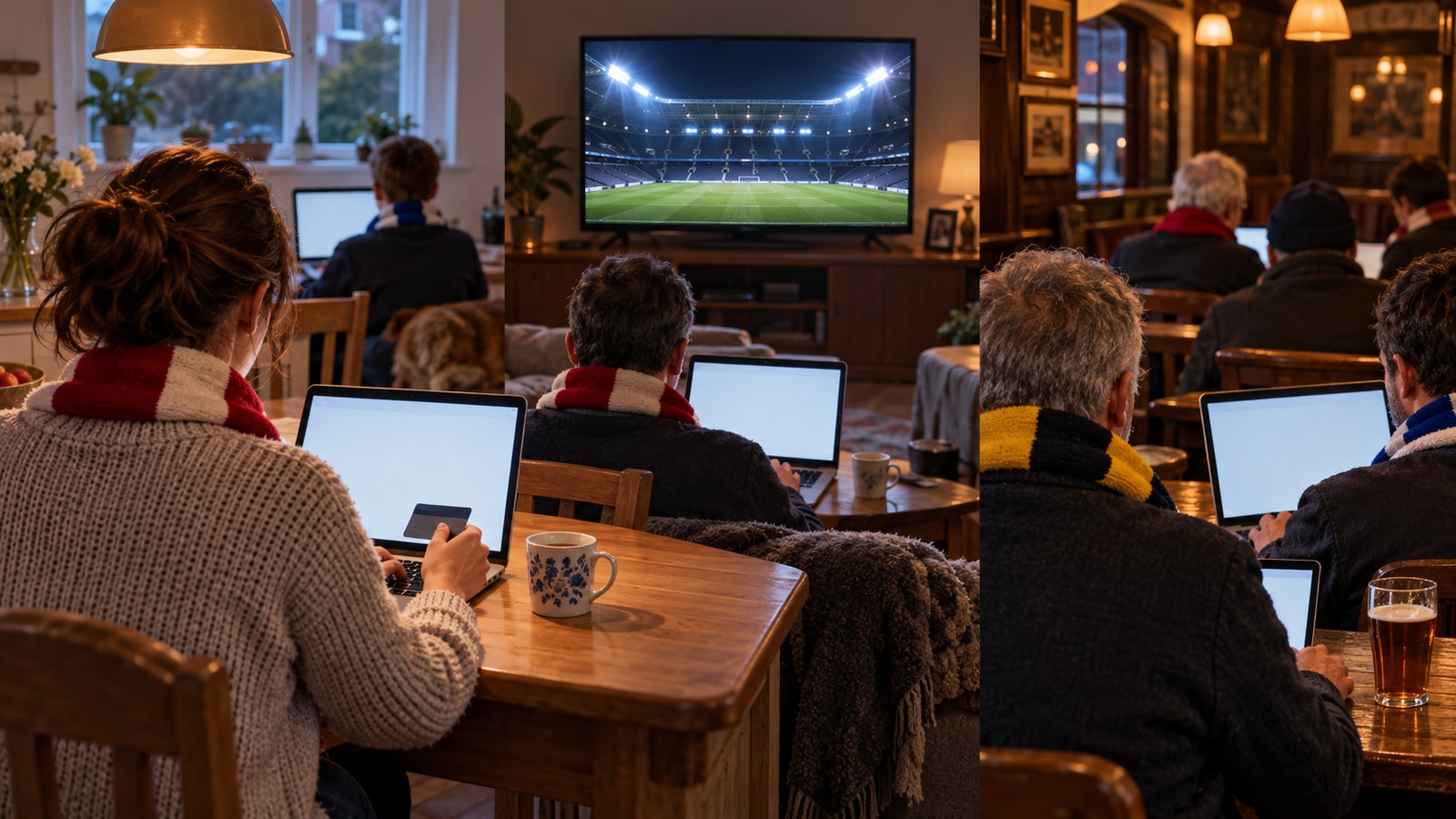
The ghost-ticket campaign kept the language of matchgoing while changing what a purchase actually bought. A normal ticket exchanges money for access to a particular place at a particular time. This one offered no access at all. Its value came from the buyer accepting that limitation in advance.
That made the campaign more legible than a general appeal for donations. Each purchase corresponded to the familiar unit of football support: a ticket. The running total could be compared with the stadium’s capacity, and the approaching sellout created its own momentum. At 25,500, reports already described orders arriving from Australia. When sale number 32,066 landed, every physical place had acquired a virtual occupant.
The club leaned into the paradox with dry humour. Seats in the south stand were notionally converted into standing places. Ghost-ticket holders were asked to leave their seat bottoms folded after not entering the ground and, emphatically, not sitting down. The joke worked because everyone understood the practical facts. It did not disguise the empty stadium; it made the emptiness part of the ritual. Even the normal argument about sitting or standing could be staged in absentia. Supporters were invited to imagine their exact place while accepting that the terrace itself had to remain untouched.
Dynamo did not publish a final revenue figure, so the exact amount recovered cannot be stated. What can be said is that the €5-to-€20 purchases limited the expected financial damage. The crowd had been removed as a body, but thousands of individual decisions rebuilt part of its economic footprint.
Thirty-Two Thousand Choices Produced One Image
Supporter campaigns often depend on visibility: a banner across a stand, a march to a ground, a minute of noise. Dresden’s response had almost none of that at the match itself. The strongest image was an absence. Rows of folded seats represented people who had paid while agreeing to remain elsewhere.
President Andreas Ritter said nobody could have predicted the wave of support. Loose described himself as deeply moved by it. Those reactions reveal why the final total mattered beyond money. A club facing a punishment caused by part of its following could see a different majority act in a coordinated and peaceful way.
The purchase also crossed distance. Local supporters lost their weekend routine; remote buyers could never have attended easily in the first place. The virtual ticket placed both groups in the same count. Geography mattered less than the shared decision to absorb a small part of the loss.
This was distinct from the physical labour through which Union Berlin supporters helped their club and rebuilt a stadium. Dresden’s intervention required no access to the ground. It worked precisely because access had been prohibited. The commodity that usually opened the gate became a receipt for staying outside.
The Match Could Not Carry the Whole Meaning
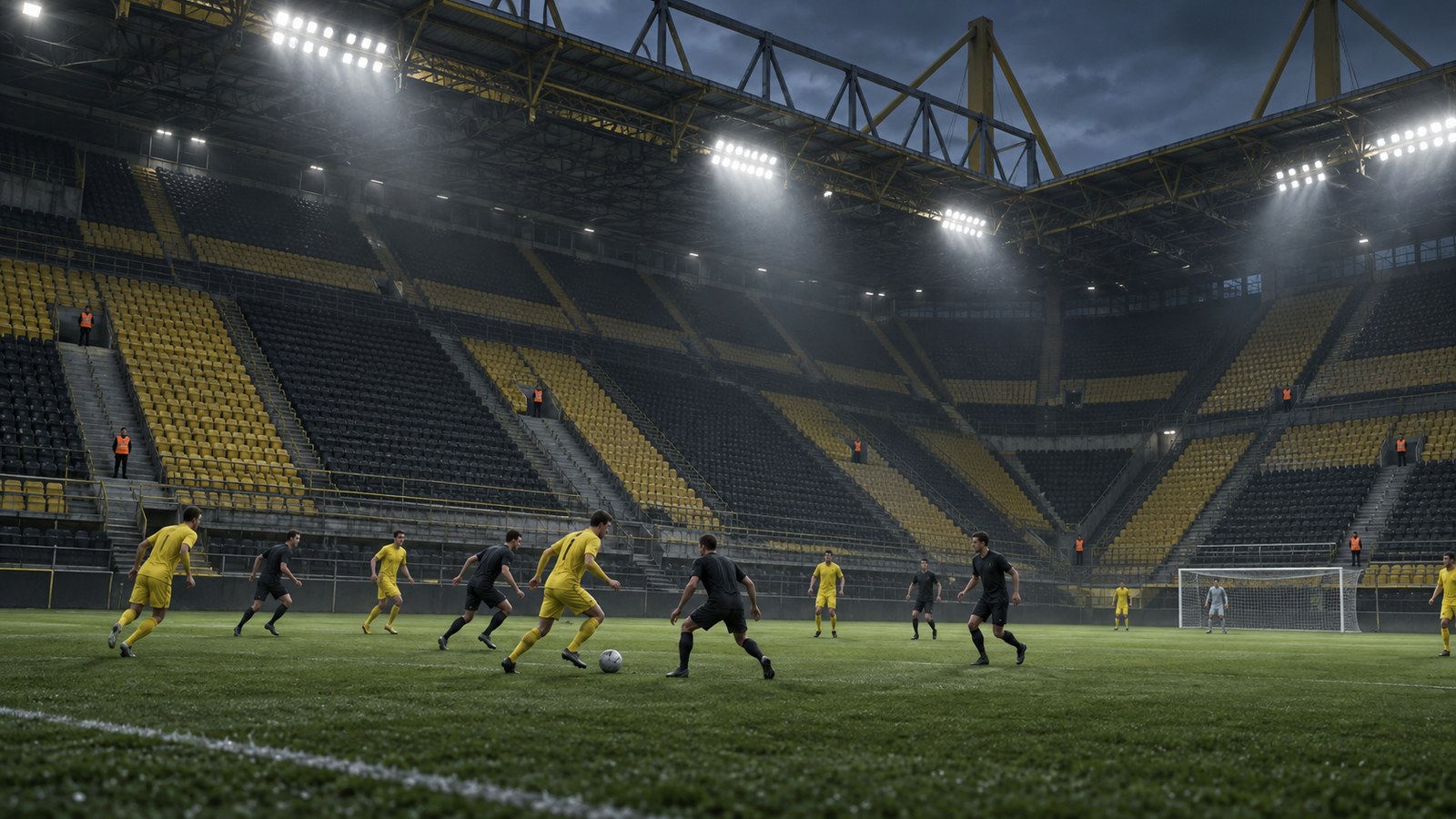
On the pitch, the fixture remained a league contest played under abnormal acoustic conditions. Dynamo already had some experience of that atmosphere: a closed-door match at Hansa Rostock in December had ended 2–2. Against Ingolstadt, players could hear instructions that a normal crowd would swallow. Every contact and shout travelled around the empty bowl.
But the campaign did not depend on the score for validation. Its objective was set before kick-off, when the 32,066th purchase completed the symbolic capacity. That is an important distinction. Supporters were not buying a promise of victory or even a spectacle they could watch from a seat. They were underwriting continuity during a matchday from which they had been formally removed.
The sellout also did not erase the conduct that caused the sanction. A financial response cannot convert disorder into innocence. What it could do was keep the punishment from defining the whole relationship between club and crowd. The ban identified a failure; the ghost tickets supplied separate evidence about the scale and behaviour of the wider community.
That tension gave the campaign its force. It neither broke the lock nor argued that the stadium should be opened. It accepted the empty ground and filled the ledger instead.
Eight Years Later, the Number More Than Doubled
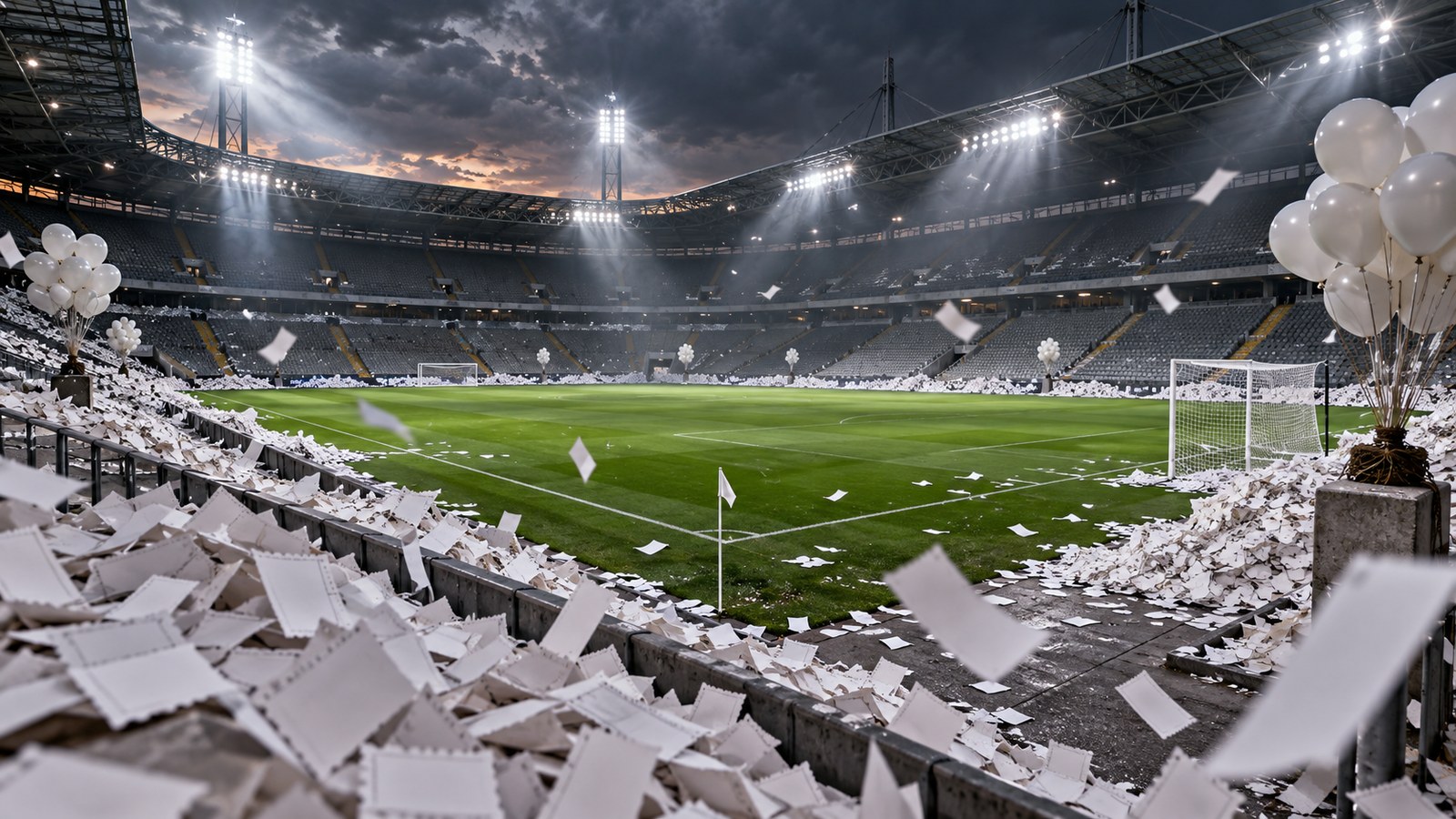
In December 2020, Dresden returned to the same idea under very different circumstances. Covid-19 restrictions had emptied grounds across Germany. For a cup tie at home to Darmstadt, the third-tier club offered €5 ghost tickets and asked supporters to buy in solidarity. This time, the final number was 72,112.
That was nearly three times Dynamo’s average attendance from the previous season and more than twice the stadium’s capacity. The club said it would have ranked as the third-largest crowd in its history. A device created around a disciplinary sanction had become part of the supporter’s vocabulary for a public-health shutdown.
The later night supplied its own sharp details. Dresden lost 3–0. A planned display involving 30,000 biodegradable balloons had to be cancelled because high winds made it unsafe. Again, the sporting and visual plans refused to cooperate with the scale of the ticket campaign.
Yet the repetition showed what Dresden had established in 2012. Attendance is physical, but support can be organized through other mechanisms when bodies are barred from the stand. The ghost ticket was useful because it preserved the familiar grammar of a matchday—ticket, capacity, sellout—while changing the transaction underneath. Nobody entered. The club still saw exactly how many people chose to stand with it.
Sources
Süddeutsche Zeitung; tz; The Guardian.