
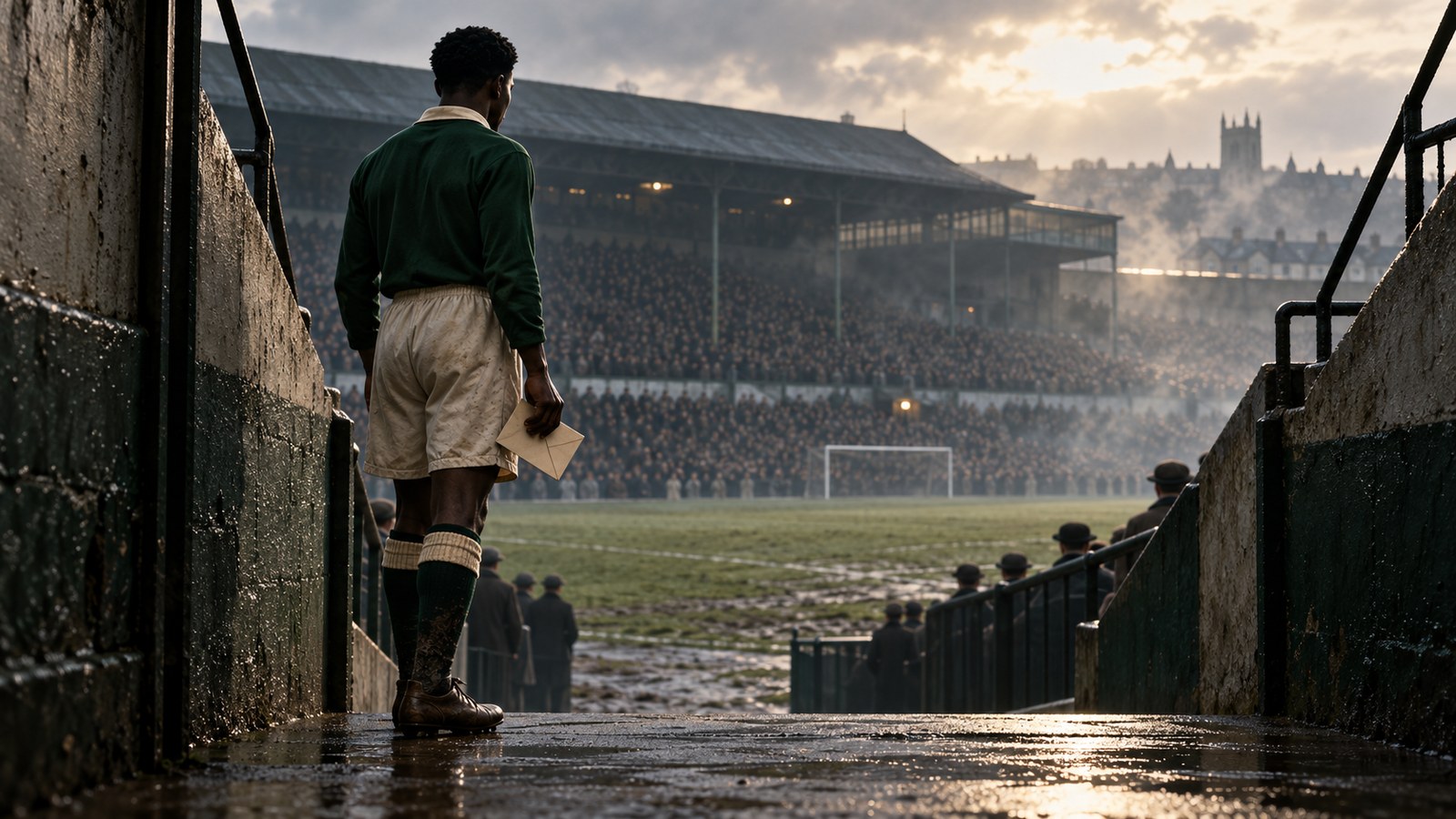
In 1925, Jack Leslie was playing the best football of a career that would eventually stretch across fourteen seasons at Plymouth Argyle. He was an inside-left with the balance to create chances and the appetite to finish them. According to the account preserved by his family and later reported by the BBC, word reached Home Park that Leslie had been chosen for England against Ireland. Then the invitation vanished.
There was no injury to explain it and no collapse in form. The account handed down around Leslie was harsher: the selectors discovered that the Plymouth forward was Black. His name disappeared before the team took the field. England would wait another 53 years before Viv Anderson became the first Black player to win a senior cap.
That missing appearance can make Leslie seem like a man defined by one exclusion. His actual football story is much larger. It runs from Canning Town to a prolific partnership on Plymouth’s left, from promotion celebrations to a boot room in east London, and finally to a bronze figure outside Home Park. The cap mattered because the career underneath it had already earned attention.
A telegram that never became a cap
International selection in the 1920s did not arrive through television graphics or a social-media announcement. A footballer could hear by telegram or through his club that the selectors wanted him. Leslie’s family remembered exactly that kind of message in 1925: England had chosen him for a Home International against Ireland. The expectation reached Plymouth, but the final summons did not.
The surviving story needs careful language. There is no surviving selection card carrying an official explanation. What remains is Leslie’s own account, repeated by relatives and campaigners: his name was removed once the selectors became aware of his heritage. That testimony sits beside the visible outcome. A forward known well beyond Devon never played the match, and England fielded no Black senior international for more than half a century afterward.
Leslie was born in Canning Town on 17 August 1901. His Jamaican father, also named John, worked as a boilermaker; his English mother, Annie, was a seamstress. Race was not an incidental detail in the way his career was viewed. A 1930 Football Herald profile described him as known throughout England for both his skill and his complexion. The newspaper’s phrasing captures the barrier plainly: observers could recognise the footballer and still mark him as an exception.
Home Park saw the player England missed
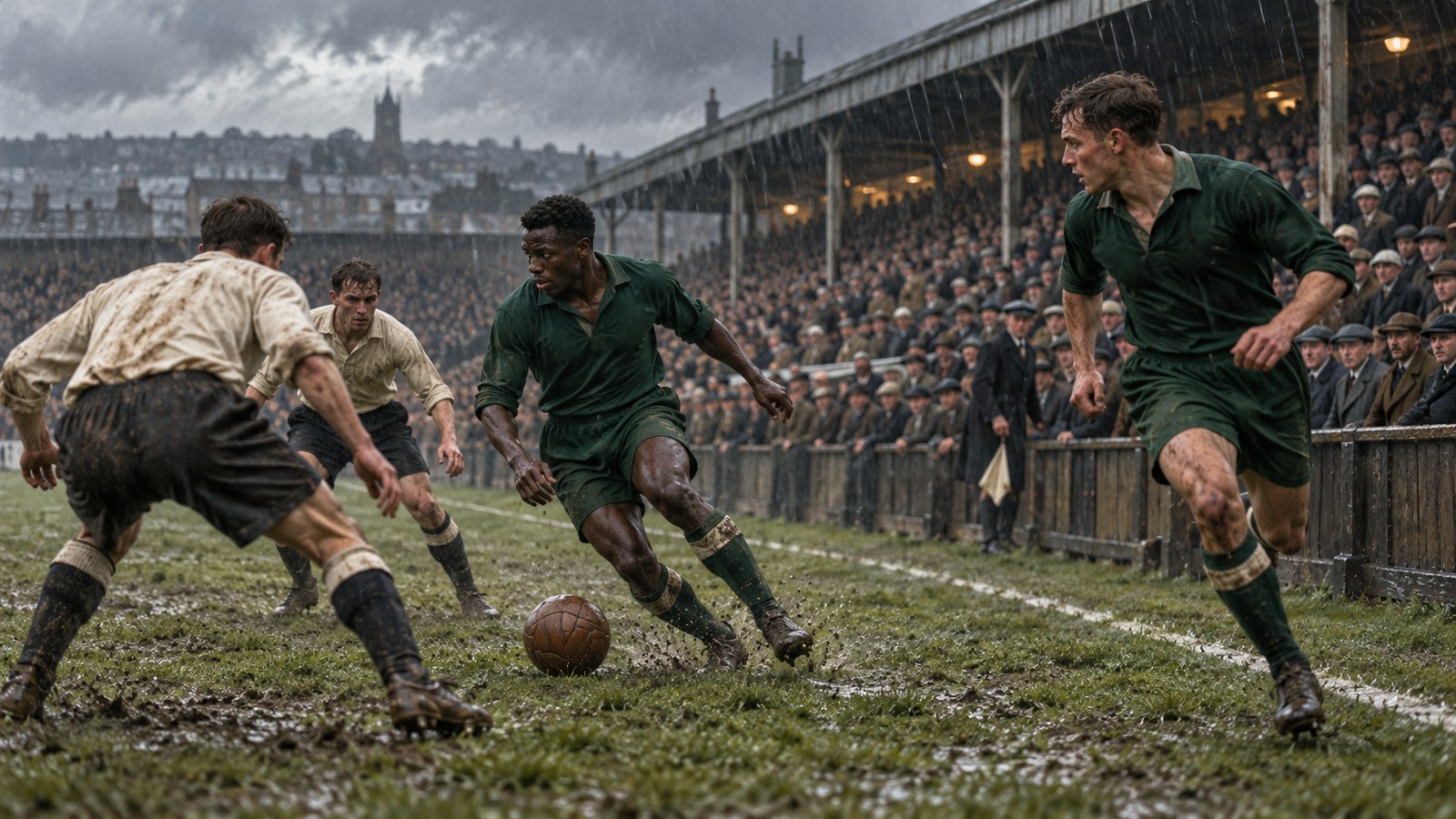
Leslie reached Plymouth Argyle from Barking Town in 1921. He could operate at centre-forward, but inside-left became his defining station. In the old five-forward line, the role demanded more than waiting for chances. He had to receive between opponents, combine with the outside-left, carry the ball into shooting range and arrive beside the centre-forward when an attack tightened.
His first Argyle goal did not come until his eleventh appearance, in a 2–0 win over Gillingham in April 1923. Once established, however, he produced the kind of long record that makes a single lost cap impossible to dismiss as a speculative footnote. Leslie made 384 Football League appearances for Plymouth and scored 133 league goals. Across all competitions his total reached 137.
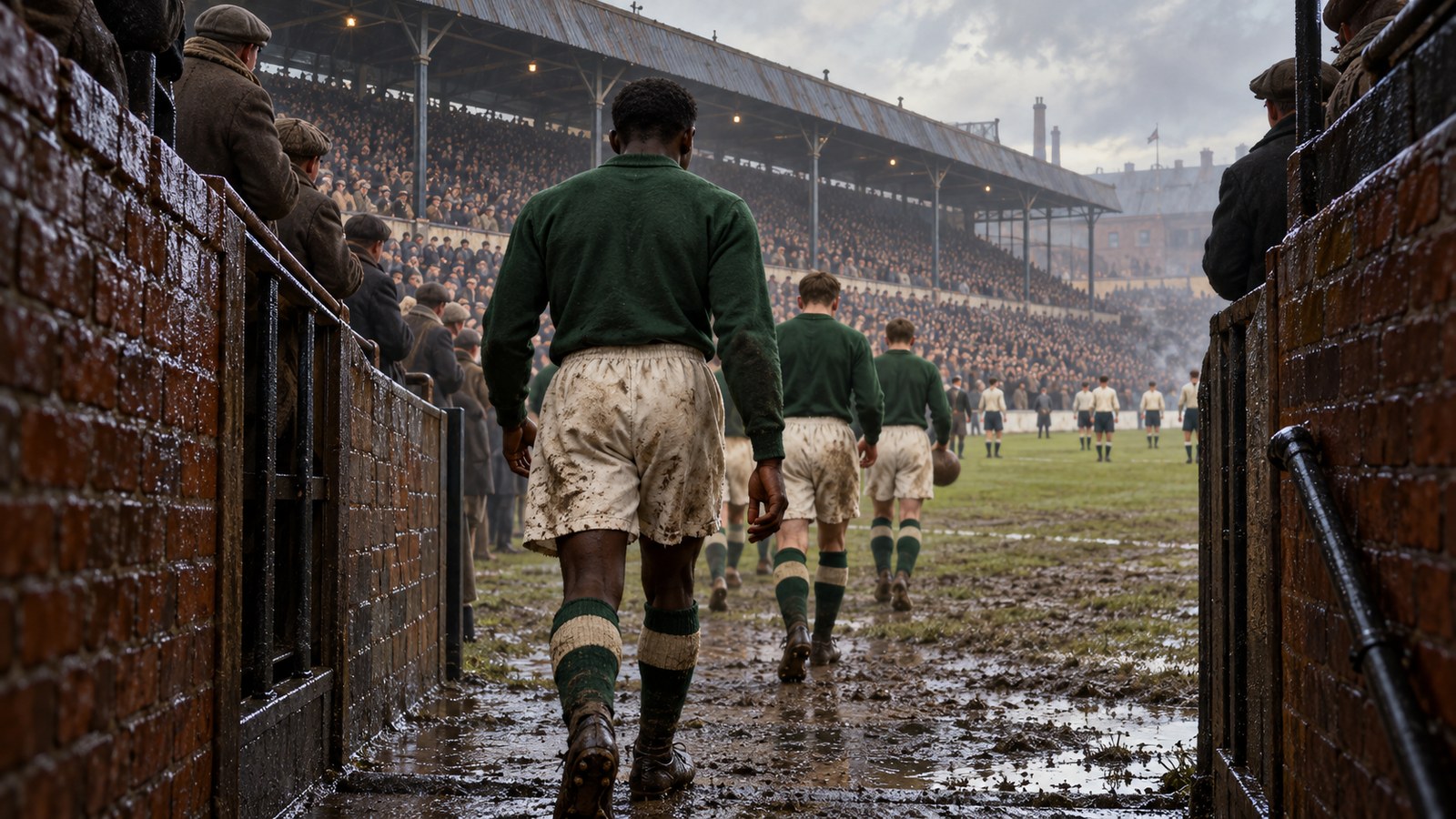
The numbers also describe reliability. He stayed at Home Park from 1921 until 1935, through fourteen seasons of travel, heavy pitches and little protection for attacking players. Plymouth supporters did not encounter him as a brief curiosity. They watched him become part of the weekly architecture of the team.
The left-side partnership behind the totals
Leslie’s career becomes more vivid when placed beside Sammy Black, Plymouth’s outside-left. The pair played together 327 times. Across those appearances they scored 319 goals between them in all competitions, with Leslie contributing the inside movement and Black supplying width from the flank.
That partnership is a better guide to Leslie than the idea of a lone pioneer isolated from his team. Their jobs depended on repetition. Black needed to recognise when Leslie would come short and when he would run beyond. Leslie had to judge whether a pass should release the winger or whether the gap inside had opened for his own shot. Hundreds of matches allowed those choices to become instinctive.
Plymouth won promotion from the Third Division South in 1929–30. Leslie was no ceremonial figure in that rise; he was an experienced attacker in the side. His endurance and output belong in the same football conversation as the players whose England appearances made their names easier to preserve.
The contrast with Arthur Wharton’s pioneering professional career is instructive. Wharton broke an earlier boundary and was later recovered from neglect. Leslie played deeper into the Football League era, in front of selectors who knew his work, yet the international door still closed. Progress did not move in a straight line from one pioneer to the next.
Fifty-three years in the space after 1925
What happened after the missing selection gives the episode its scale. Leslie continued playing. Plymouth continued to value him. England continued without a Black senior international until 1978, when Viv Anderson started against Czechoslovakia at Wembley.
Anderson’s debut was its own event, with its own pressure and its own player at the centre. It should not be reduced to a correction of Leslie’s story. Yet the 53-year interval reveals how thoroughly an institution can postpone a change while club football offers abundant evidence that the talent is already present.
Leslie’s exclusion and Anderson’s first England night therefore frame different moments. One player waited for a call that was withdrawn. The other had to concentrate on one pass at a time while history gathered around his debut. Reading the two careers together shows the distance between being visible in league football and being trusted with the national shirt.
After retiring as a player, Leslie returned to east London and later worked in West Ham United’s boot room. It is an almost painfully modest final football setting for someone who had scored 137 Plymouth goals. Boots, studs and kit replaced the noise of Home Park, while the England appearance remained absent from the record.
A statue, an honorary cap and the limits of repair
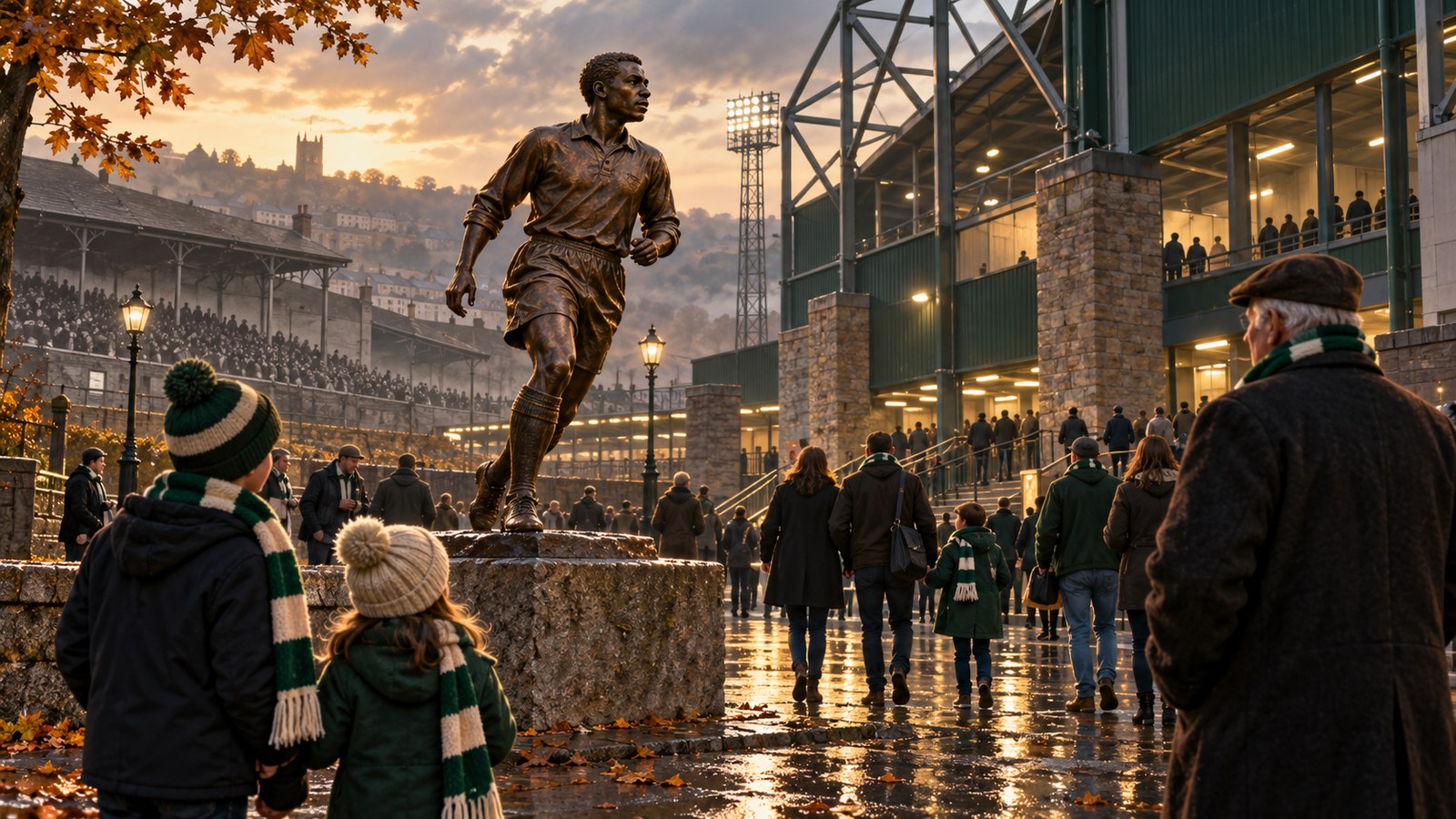
Recognition arrived long after Leslie died in 1988. Supporters and campaigners raised more than £100,000 for a statue outside Home Park. Unveiled in October 2022, it placed him where match-going crowds would have to encounter the scale of his career rather than only the injustice attached to it.
In March 2023, the Football Association presented Leslie’s family with a posthumous honorary England cap. His granddaughters received an object that represented what their grandfather had been denied. The gesture did not alter the 1925 team sheet, and it could not give Leslie the experience of walking out as an international. It did make the exclusion part of England’s acknowledged football history rather than a story left solely to family memory.
The strongest way to remember Leslie is not to imagine the honorary cap completing an unfinished career. His career was already complete in its labour: 384 league appearances, 133 league goals, promotion, and a partnership sustained across 327 matches. The cap changes how institutions describe that work. It does not create its value.
That distinction matters. A missed selection can be recorded in one sentence, while the football that justified it took fourteen seasons. Jack Leslie’s place in the game rests on both truths: England shut a door in 1925, and Plymouth supporters had already seen enough to know the player standing outside it.
Sources
- BBC News, “Jack Leslie: Cap for first black player picked for England”
- BBC News, “Jack Leslie statue unveiled at Plymouth Argyle”
- The Football Association, “Jack Leslie awarded posthumous honorary cap”
- Jack Leslie career record and contemporary profile references