
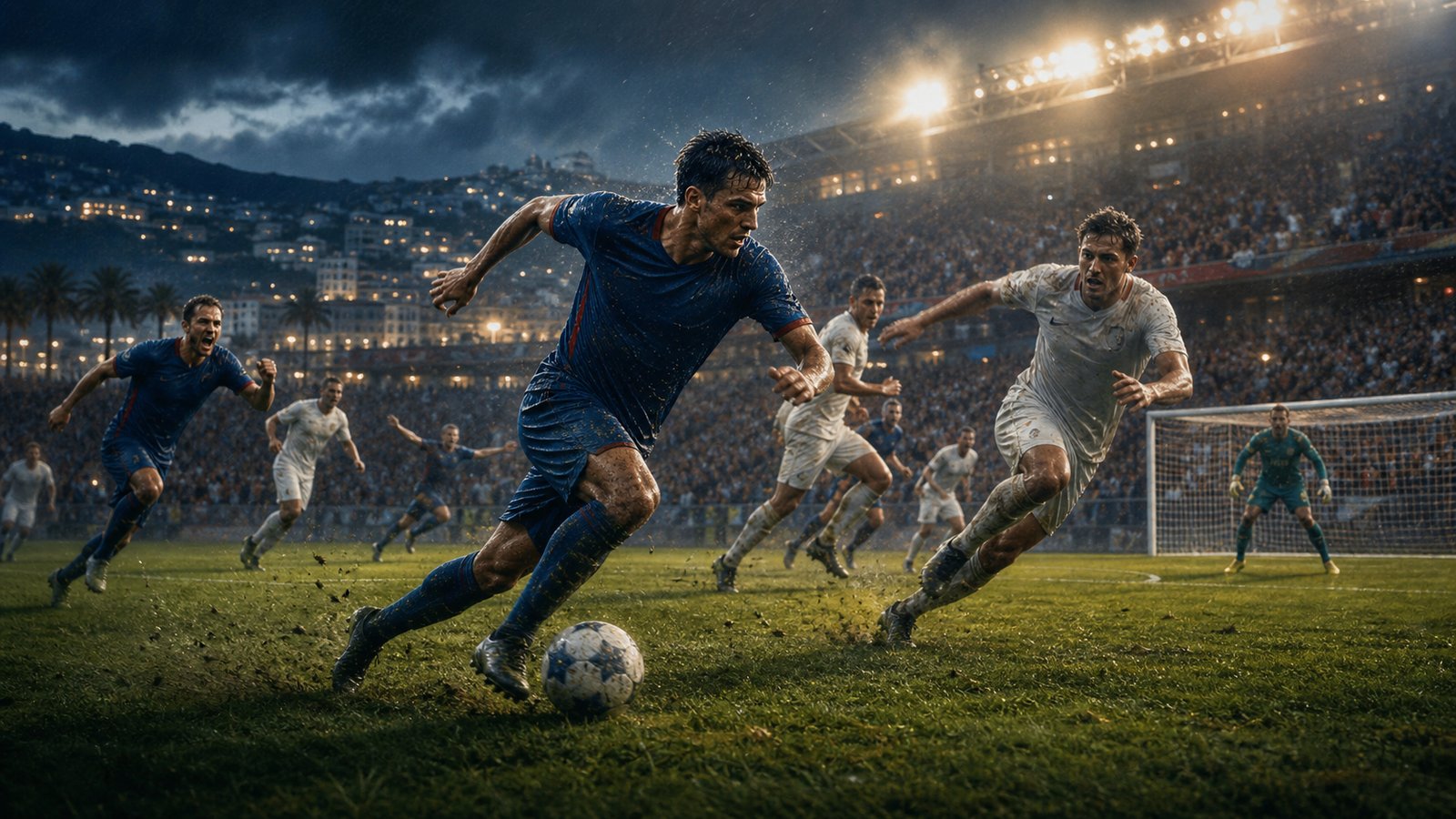
England had been ahead for less time than it takes to settle into a seat. Raheem Sterling chased Daniel Sturridge’s pass into Iceland’s penalty area, Hannes Halldórsson brought him down, and Wayne Rooney drove the fourth-minute penalty low to the goalkeeper’s right. For the favourite, it looked like the ideal release: an early goal, an opponent forced out of its shell, a route into the Euro 2016 quarter-finals opening before the match had developed any friction.
Nine minutes later, the whole emotional balance had reversed. Iceland had equalised with a long-throw routine England said it had prepared for. Then Kolbeinn Sigþórsson finished a compact passing move from the edge of the area, with Joe Hart unable to keep the shot out. The final 72 minutes became a study in what happens when a celebrated side is given possession but loses clarity. Iceland’s upset was secured by two goals, but it was shaped by the speed with which the underdog made England doubt every assumption it had brought to Nice.
A fourth-minute penalty created the wrong kind of comfort
The round-of-16 match on 27 June 2016 was Iceland’s first knockout game at a major tournament. England arrived with decades of tournament experience, a Premier League-heavy squad and an expectation that a quarter-final was the minimum acceptable return. Iceland had a population of roughly 330,000 and had been ranked 133rd in the world only four years earlier. By the time the teams met, however, that old ranking described history rather than the side in front of England.
Iceland had already drawn with Portugal and Hungary before beating Austria in the group stage. Their tournament was not built on one freak result. Joint coaches Lars Lagerbäck and Heimir Hallgrímsson had assembled a repeatable game: narrow distances, relentless support around the ball, direct restarts and two forwards who gave clear targets when possession changed. The players understood where the next duel would occur. Their famous togetherness mattered because it had a football shape.
Rooney’s penalty should have forced Iceland to abandon that shape. Instead, the early timing helped preserve it. There was no long chase and no need for speculative changes. Iceland could return immediately to a planned weapon, attack a familiar zone and make the favourite defend before it had established control.
The throw-in was familiar, but England still lost the sequence
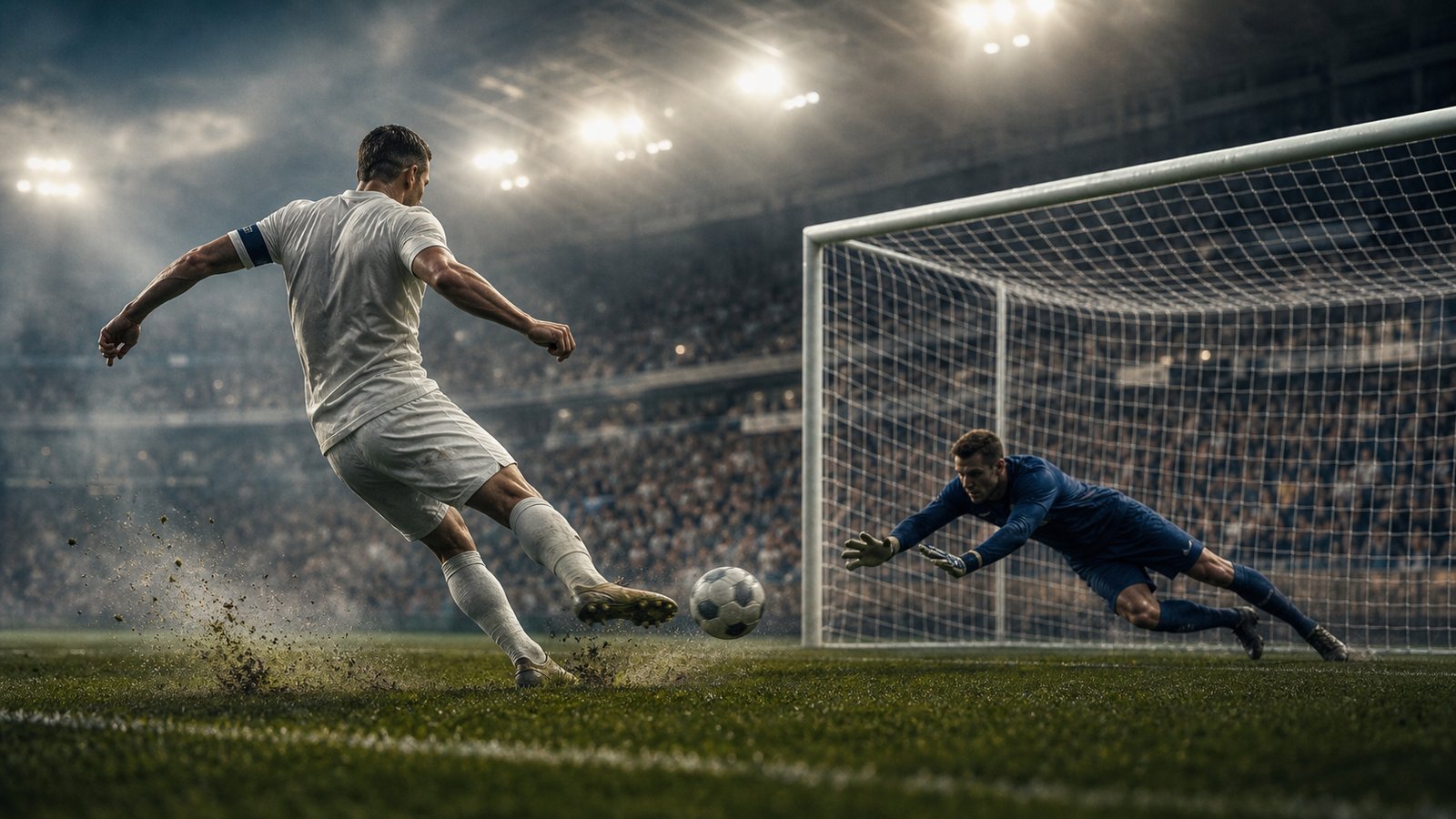
Aron Gunnarsson’s long throw arrived in the sixth minute. This was not a hidden trick. Roy Hodgson had said England knew about the routine and had worked on defending it. The danger came from the choreography: the flat, forceful delivery; Kári Árnason attacking the first contact; Ragnar Sigurðsson continuing his run into the six-yard area. Rooney was beaten to the flick, and Kyle Walker did not cover Sigurðsson’s movement. The defender bundled the ball in from close range.
The equaliser mattered beyond the score. Iceland had taken a restart from the touchline and turned it into an action that looked more settled than England’s defending. Preparation was no longer an abstract promise from the favourite. It was visible in one team’s timing and absent from the other’s spacing.
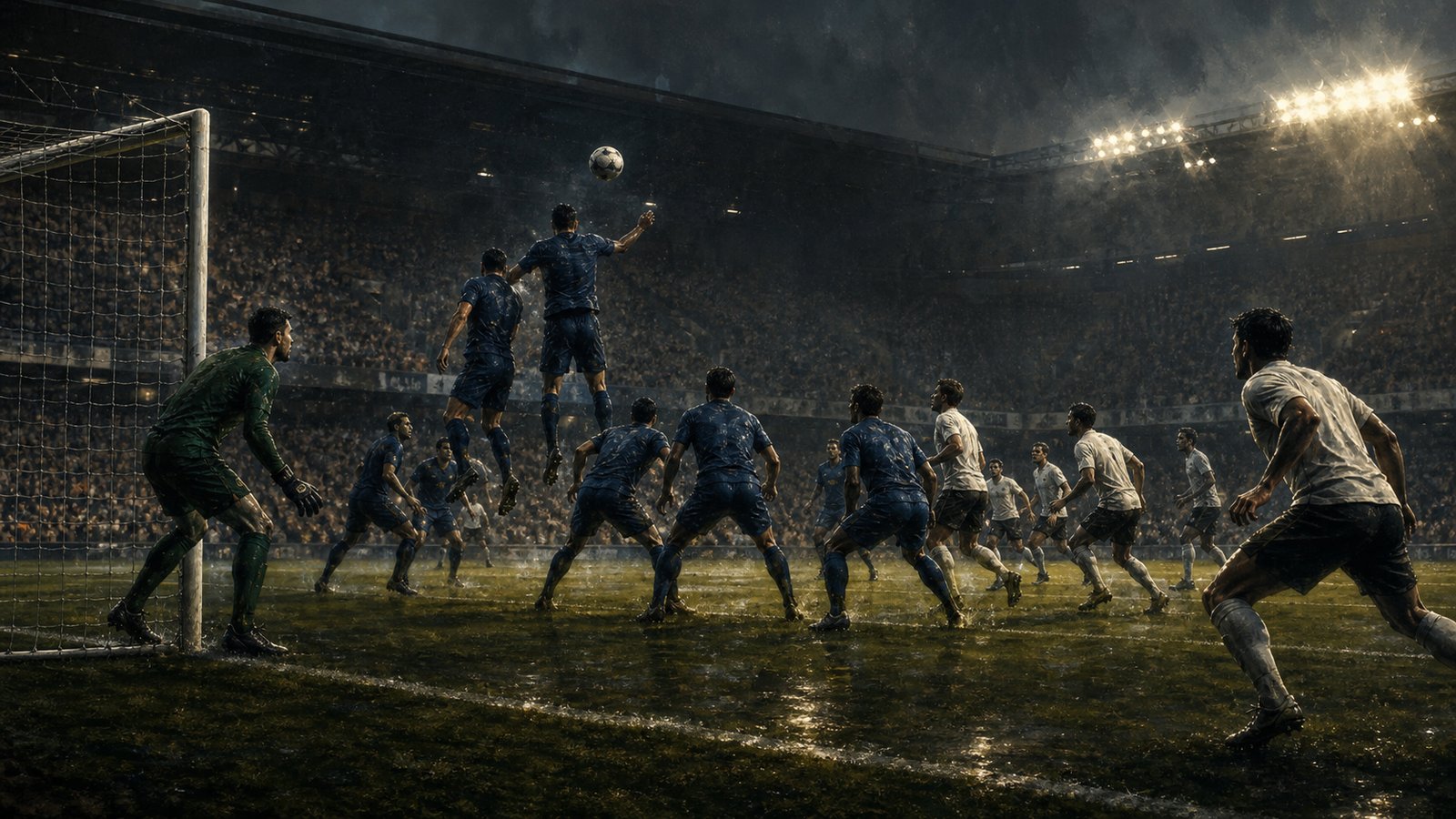
Long throws are often treated as crude football, a shortcut used when a team cannot construct attacks. Iceland’s version punished that lazy distinction. The throw was a set piece with assigned runs and a specific first contact. It compressed the pitch, removed the need to circulate through England’s midfield and created a second-ball contest close to goal. England knew the delivery was coming. Knowing the headline did not solve the details.
The second goal came from combination play, not another heave
In the 18th minute, Iceland challenged the next comforting explanation. The winner did not come from a throw, a corner or a chaotic ricochet. Gylfi Sigurðsson, Jón Daði Böðvarsson and Kolbeinn Sigþórsson exchanged passes around the edge of England’s penalty area. The striker moved between Gary Cahill and Chris Smalling, struck right-footed and watched the ball pass through Hart’s hand.
Hart was criticised for the goal, and the shot was one he should have stopped. But reducing the move to a goalkeeper’s error misses the access Iceland created. England’s centre-backs stood off. Iceland’s front players combined in a tight central channel, using short passes rather than the direct ball their opponent expected. The underdog had scored through a rehearsed restart and then through a small passing triangle. Two different routes had reached the same vulnerable space.
The mini-scene lasted seconds: the ball moved from Gylfi to Böðvarsson, then into Sigþórsson’s path; the blue shirts advanced while England’s white line retreated; Hart dived left and got a hand to the low shot without stopping it. By 18 minutes, England had not merely lost a lead. It had been shown that Iceland could pose more than one problem.
Possession became a burden as the favourite lost its distances
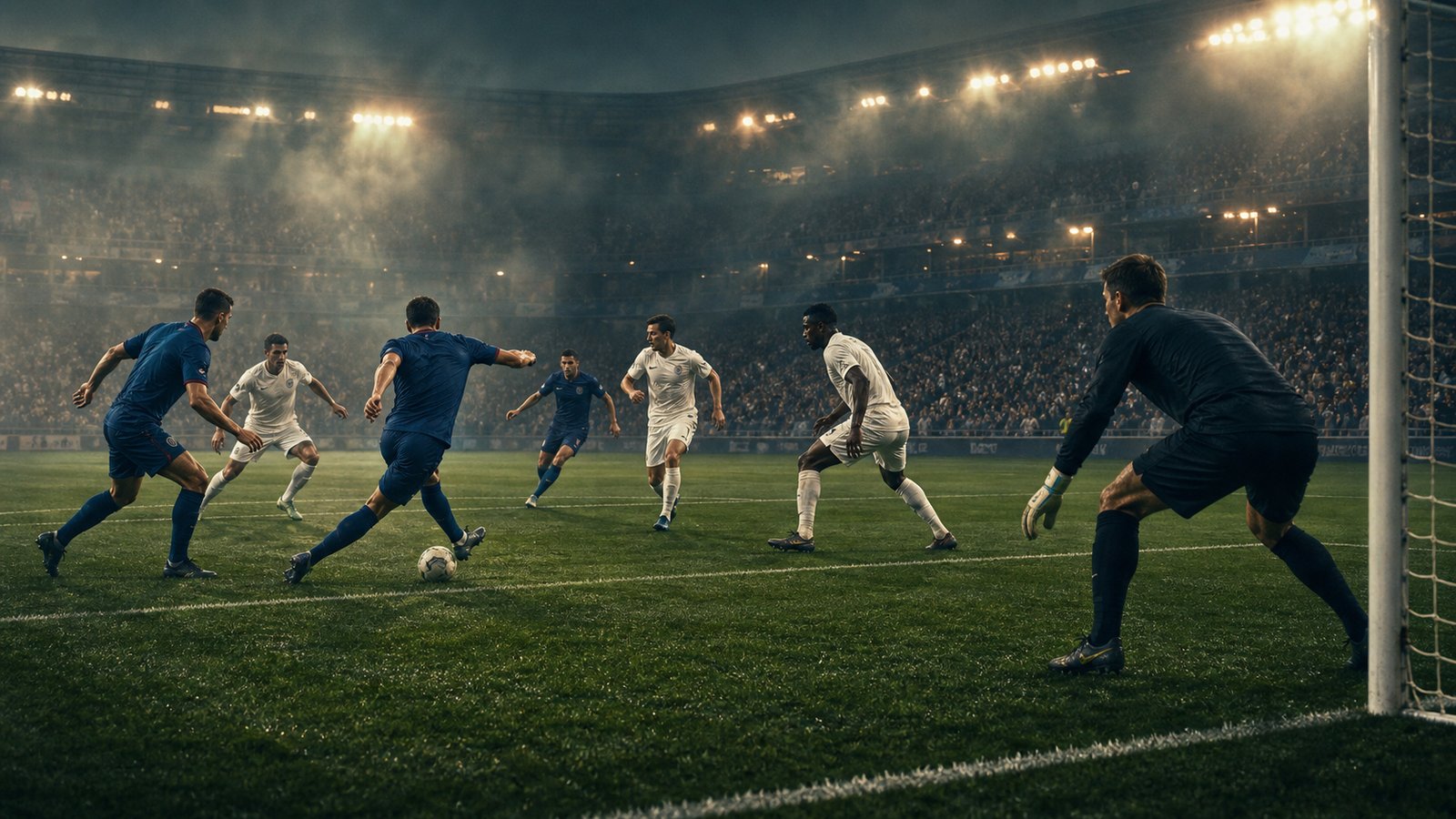
The obvious response was for England to dominate the remaining time. It had more recognised attackers and a bench filled with options. Yet Iceland did not spend 72 minutes clinging to the penalty area. The BBC report noted that the underdogs created as many chances as England. When space appeared, Iceland still advanced with confidence; when England built slowly, the two compact banks narrowed the useful lanes.
England’s technical errors multiplied. Rooney slashed at a volley. Passes went astray. Harry Kane, the previous season’s leading Premier League scorer, overhit deliveries and misdirected shots. The team’s problem was not simply effort. It was that possession lacked a stable reference point. Iceland could keep the centre crowded, contest crosses and ask England to solve the same patient problem while the clock made every decision feel heavier.
Hodgson changed personnel without restoring order. Jack Wilshere replaced Eric Dier at half-time. Jamie Vardy came on for Sterling. Marcus Rashford entered in the 87th minute and completed three dribbles in his brief appearance, more than any other England player managed across the match according to the Guardian report. The statistic is striking because it measures both Rashford’s directness and how late a different question was finally asked.
Iceland’s calm had its own physical texture. Defenders met crosses, midfielders arrived for second balls, and Halldórsson held his position as England’s shooting became hurried. This was not a team waiting for the final whistle to rescue it. It was a team repeatedly returning the match to the distances it trusted.
The upset was finished by refusing to become the occasion
As the final minutes passed, England’s shape deteriorated. Cahill moved forward as an emergency attacker. Supporters directed angry chants at the players. Hart raised an apologetic arm after the whistle, while others fell to their knees or covered their faces on the turf. Hodgson announced his resignation after four years in charge. The result was immediately compared with England’s 1–0 World Cup loss to the United States in 1950.
Iceland’s reaction pointed in the other direction. Ragnar Sigurðsson, scorer of the equaliser and central to the defensive work that followed, was named man of the match. The team advanced to face host nation France in what the BBC called the biggest game in Iceland’s history. The quarter-final would end in a 5–2 defeat, but that later score did not turn the night in Nice into an accident. Iceland had reached the knockout stage through three unbeaten group matches and eliminated England by executing more cleanly when the match changed state.
Nine minutes exposed a gap between reputation and readiness
The popular memory of England 1–2 Iceland is humiliation: a powerful football nation beaten by the smallest country ever to reach that European Championship stage. That contrast is real, but it can hide the mechanism. Iceland did not win because population ceased to matter for one enchanted evening. It won because one team handled a rapid sequence of tactical and emotional changes better.
After conceding a fourth-minute penalty, Iceland used a known restart precisely. After equalising, it found a second route through short central combination play. Once ahead, it protected the spaces England wanted without surrendering all attacking intent. Every phase gave the players another piece of evidence that the plan worked. England received the opposite message: the early lead had not established control, the preparation for long throws had not survived first contact, and the supposed advantage in attacking options produced less coherence with every substitution.
The decisive period ran from Rooney’s penalty in the fourth minute to Sigþórsson’s winner in the 18th. In that span, Iceland turned the favourite’s comfort into urgency and its own underdog status into a practical advantage. For the rest of the night, England played the reputation of the opponent. Iceland played the match.
Sources
- BBC Sport — “Euro 2016: Roy Hodgson resigns after England lose to Iceland”
- The Guardian — “England humiliated as Iceland knock them out of Euro 2016”
- England v Iceland, UEFA Euro 2016 match record