

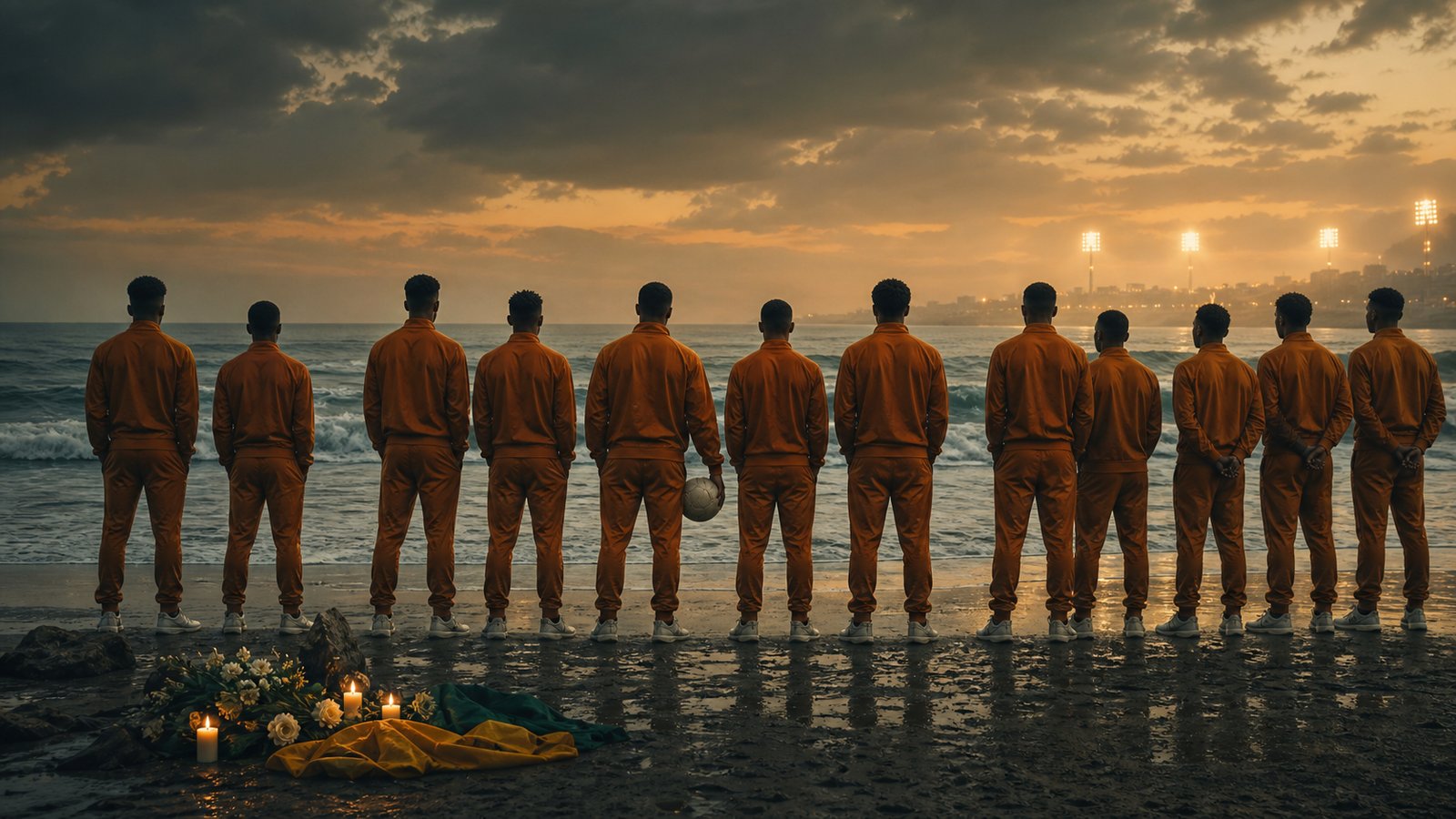
Before Zambia could play the 2012 Africa Cup of Nations final, the team had to return to a place where football and grief had been joined for nineteen years. Libreville was not merely the neutral city printed beside a fixture. In April 1993, a military aircraft carrying most of Zambia’s national side had crashed into the Atlantic shortly after refuelling there. Eighteen players died while travelling to a World Cup qualifier in Senegal. The rebuilt side reached the following year’s continental final, but Zambia still began 2012 without the African title it had chased through the loss.
This history makes the final sound pre-written. It was not. Zambia entered the tournament as a 40–1 outsider, with an unglamorous squad and a recently returned coach. Ivory Coast brought Didier Drogba, Yaya Touré, Kolo Touré and a defence that had not conceded. Memory gave the occasion emotional force; it did not block shots, organise two banks of four or survive a shootout that reached 18 kicks. The remarkable part of Zambia’s victory is how a team carrying an enormous story still had to solve a football match.
The only route back to Gabon ran through the final
The tournament was co-hosted by Gabon and Equatorial Guinea, and Zambia’s group was based in the latter. The draw created a stark piece of geography: the team would not play in Gabon unless it reached the final. Even that path began with an echo. Zambia’s first opponent was Senegal, the destination of the 1993 flight. Kalusha Bwalya, who had missed that flight because he was travelling separately from Europe, now led the national federation’s delegation.
Zambia did not approach the group as a travelling memorial. Against a fancied Senegal side containing Demba Ba, Papiss Cissé and Mamadou Niang, the Copper Bullets attacked quickly and won 2–1. Chris Katongo, Rainford Kalaba and Emmanuel Mayuka supplied a direct, mobile front line. A 2–2 draw with Libya followed, then a 1–0 victory over co-host Equatorial Guinea. Seven points put Zambia top of Group A and moved Ivory Coast, the tournament favourite, onto the other side of the knockout bracket.
Hervé Renard built a team for the squad he actually had
Hervé Renard’s Zambia was not disguised as a possession superpower. Opta’s retrospective records a 4-4-2 in five of the six tournament matches, with a 4-2-3-1 used for the Libya draw. The structure gave Katongo and Mayuka partners near goal, kept Kalaba close enough to influence attacks and asked the wide and central midfielders to travel together. Zambia could compress space without abandoning the channels it wanted to attack.
The numbers show a practical side rather than a passive one. Twenty-six of Zambia’s 42 group-stage shots came from outside the penalty area. Against Libya, the ball was in play for only 44 minutes and 48 seconds, and Zambia completed 53 percent of its passes. Those figures were not a manifesto for beautiful control. They were evidence that Renard accepted ugly phases, second balls and broken rhythm when the opponent or the pitch demanded them. The plan was simple enough to repeat under pressure and flexible enough to release the forwards quickly.
The knockout run kept changing the kind of test
Winning the group earned Zambia a quarter-final against Sudan rather than an early meeting with Ivory Coast. This was the tournament’s most comfortable Zambian performance: a 3–0 win in which Sudan managed five shots while Zambia put nine efforts on target. The semi-final against Ghana reversed the pressure. Ghana took 18 shots and earned a first-half penalty, but Kennedy Mweene saved Asamoah Gyan’s attempt. Renard then introduced Mayuka from the bench, and the striker scored with 12 minutes remaining.
Mayuka’s goal made him one of seven players to finish the competition with three goals, and he received the Golden Boot. More importantly, it completed a route through three different problems: outscoring Senegal’s celebrated attack, controlling a quarter-final as favourite, then absorbing Ghana’s pressure without becoming inert. Only after that 1–0 semi-final could Zambia fly to Gabon. Soon after arriving, the delegation held a remembrance ceremony on the mainland near the 1993 crash site.
Ivory Coast brought stars and a perfect defensive record
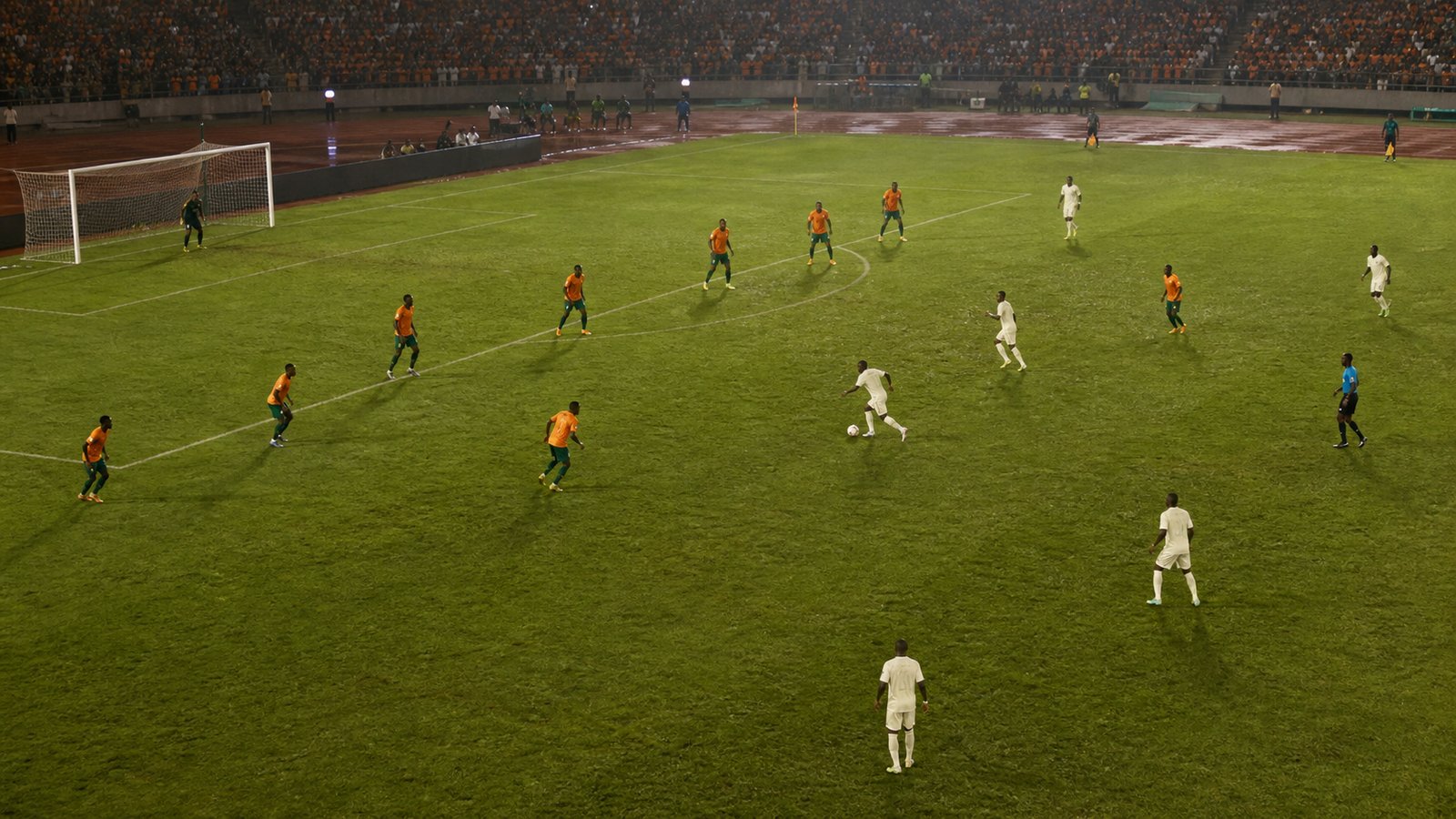
The final was not framed as an even contest. Ivory Coast had won all five matches and had not conceded. Drogba had three tournament goals, matching Katongo and Mayuka, while the Ivorian squad drew heavily on elite European clubs. Zambia’s group included five domestic-based players, eight from South Africa’s top flight and five from TP Mazembe. Mayuka was the lone Europe-based member identified in Opta’s squad breakdown.
Yet the gap in reputation did not become a gap on the field. Zambia created a rehearsed corner chance for Nathan Sinkala early, forcing Boubacar Barry into a save. Ivory Coast had the match’s clearest opening after Gervinho was fouled in the area, but Drogba drove the penalty over the bar. Chris Katongo later hit the post in extra time after Barry’s touch. Across 120 minutes, the final produced 33 shots but only seven on target. Zambia’s pass completion rose to 76.1 percent, its second-highest mark of the tournament, suggesting composure rather than a desperate siege.
The shootout demanded one decision after another
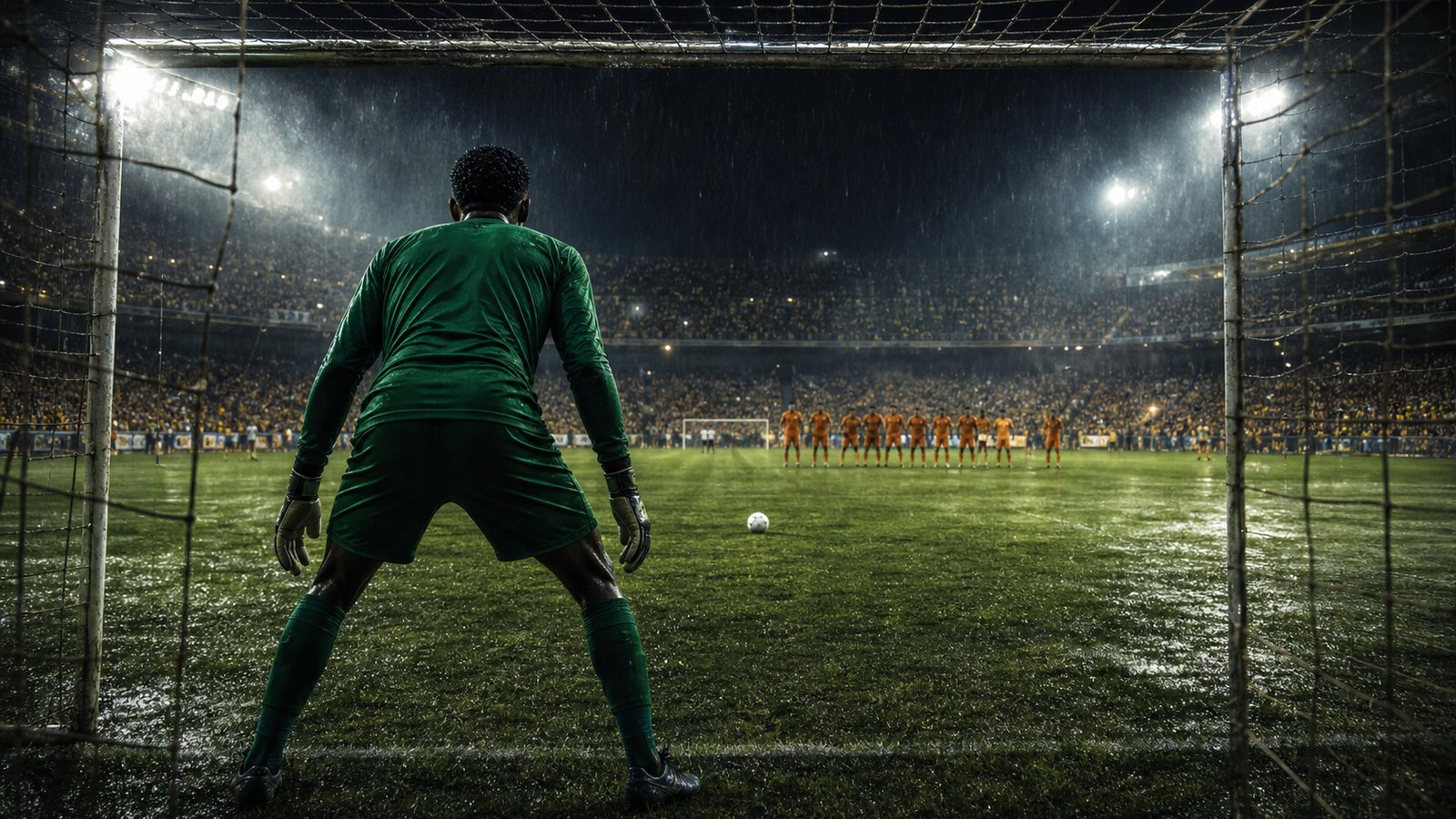
The final remained 0–0, the tournament’s only goalless draw, and moved into a shootout. The first 14 kicks were converted. Mweene, the Zambian goalkeeper, took and scored one himself. Ivory Coast’s Souleymane Bamba initially missed, but the kick was retaken because Mweene had moved early; Bamba converted the second attempt. At 7–7, Kolo Touré missed, giving Rainford Kalaba a chance to finish it. Kalaba sent his effort over.
That miss could have emptied Zambia’s nerve. Instead, the sequence continued. Gervinho failed with Ivory Coast’s ninth kick. Stoppila Sunzu, a central defender, walked forward with another chance to end it and scored. The 8–7 result gave Zambia its first Africa Cup of Nations title after previous final defeats in 1974 and 1994. It also meant Ivory Coast completed the tournament without conceding a goal in open play or extra time and still went home without the trophy.
Memory explains the weight, but football explains the win
Renard called the sequence “written in the sky,” and it is easy to understand why. The 1993 team had been flying toward Senegal; the 2012 side opened against Senegal. The crash occurred after departure from Libreville; the title was won in Libreville. Bwalya had escaped the disaster through travel arrangements and returned as the senior figure around the victorious delegation. Players spoke openly about honouring those who died.
But turning the victory into destiny alone makes the living team smaller. Zambia topped its group, scored eight goals before the final, beat Senegal, Sudan and Ghana, and forced a vastly more famous Ivory Coast side through 120 scoreless minutes. Mweene saved a semi-final penalty and scored in the final shootout. Renard’s compact structure gave the squad repeatable answers. Sunzu still had to strike the last kick cleanly.
The achievement holds two truths at once. Zambia carried the memory of a lost generation into a city that could never feel ordinary, and Zambia won because its 2012 players were organised, resilient and technically calm at the decisive moments. The story did not remove the work. It made every piece of that work visible.
Sources
- BBC Sport — “Africa Cup of Nations: Zambia win dramatic shoot-out”
- BBC — “Zambia’s Nations Cup triumph ‘written in the sky’”
- Opta Analyst — “Copper-Bottomed Heroes: The Story of Zambia 2012”
- 2012 Africa Cup of Nations final match record