
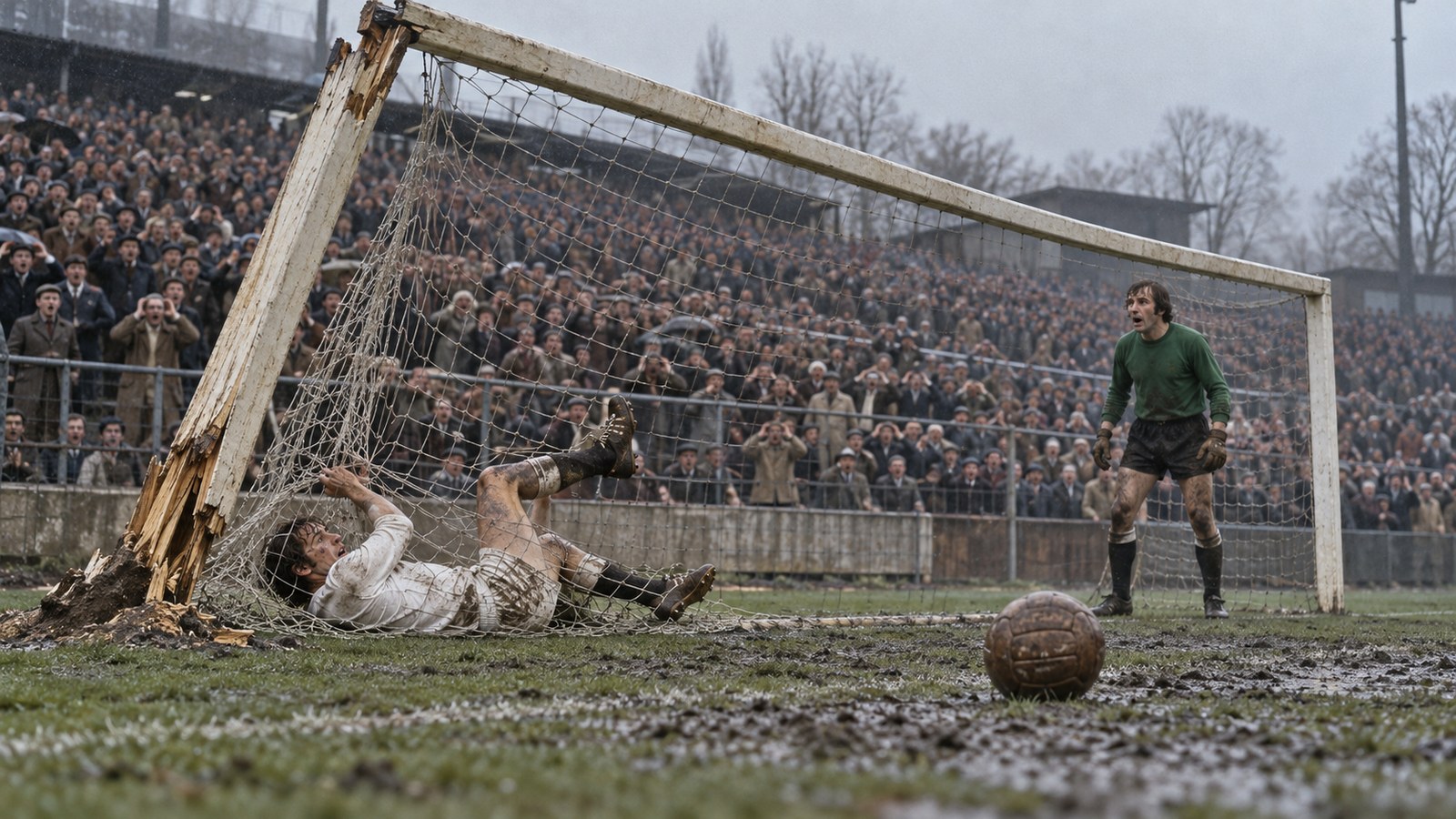
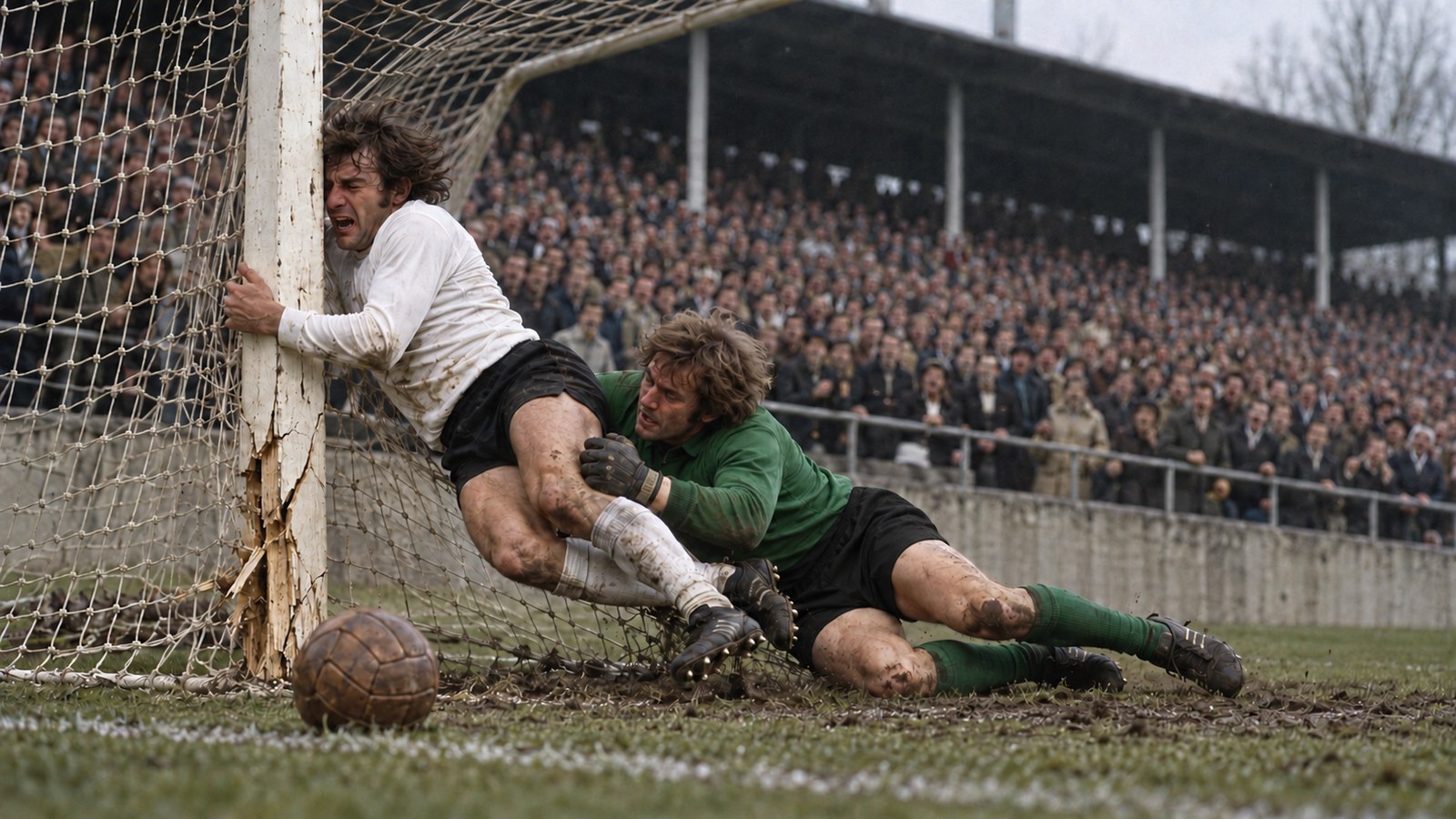
With two minutes left at the Bökelbergstadion on 3 April 1971, Borussia Mönchengladbach and Werder Bremen were level at 1–1. Herbert Laumen chased the ball into the six-yard area, collided with Bremen goalkeeper Günter Bernard and carried his momentum into the net. Then the left goalpost gave way.
Laumen landed tangled in the netting as the wooden frame folded beside him. Players lifted the crossbar. Groundsmen looked for a repair. The crowd waited for a match that had almost reached its ordinary conclusion, but Borussia could not produce a replacement goal. The referee abandoned the game in the 88th minute.
The final result was decided away from the grass. The German football authorities recorded a 2–0 victory for Werder because the home club had failed to provide usable equipment. Mönchengladbach lost a point it had nearly secured, yet survived the punishment and became the first Bundesliga side to defend the championship. A broken post had exposed a simple truth: even the league’s most adventurous team depended on the least glamorous object in the ground.
An ordinary draw reached an impossible final scene
The fixture belonged to matchday 27 of the 1970–71 Bundesliga season. Mönchengladbach were defending the first league title in their history, won under Hennes Weisweiler with a young, attacking side built around players such as Günter Netzer, Berti Vogts, Jupp Heynckes and Herbert Wimmer. Bayern Munich were close enough that every point carried weight.
Werder were not visiting as stage furniture. The match was tied when the decisive collision arrived. Laumen, a forward who would finish the league season with 20 goals, followed the attack toward Bremen’s goal. Bernard came out. Their meeting sent Laumen into the structure rather than producing a shot, save or foul that could be placed neatly in a match report.
The physical detail changed the category of the afternoon. A goalpost is supposed to define the contest, not enter it. Once the upright broke, nobody could tell the teams simply to play around it. The dimensions and stability of both goals had to be trustworthy for the same laws to apply at each end.
Der Spiegel’s later chronicle fixes the essentials: 3 April 1971, the 88th minute, a 1–1 score and a broken post at the Bökelberg. Those details explain why the incident still feels absurd. Had it happened early, the missing replacement would have stopped almost an entire match. Instead, ninety minutes were close enough to touch, and still unreachable.
The repair attempt could not restore a regulation goal
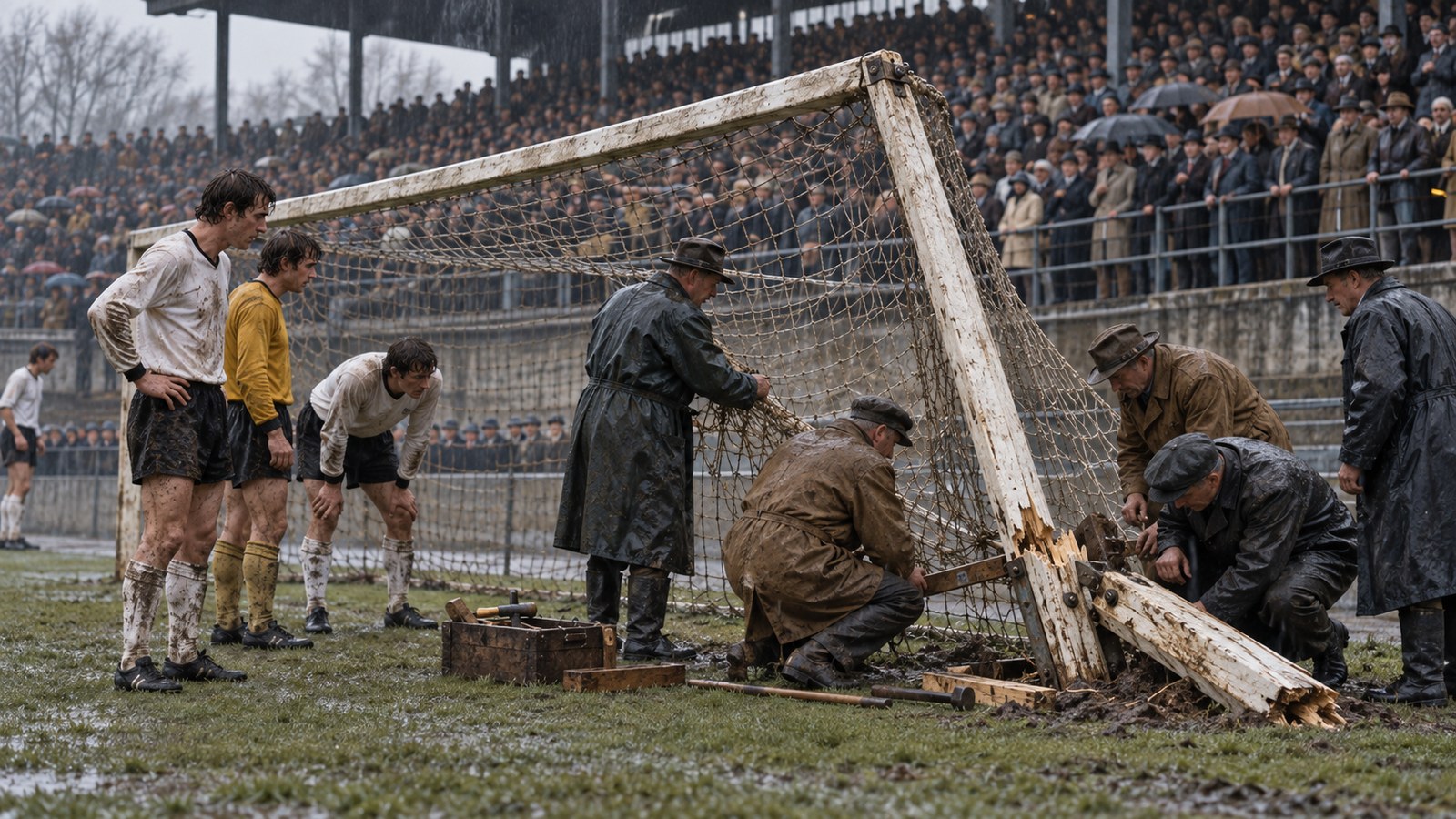
Players and staff gathered around the damaged goal and attempted a repair. The crossbar, net and detached upright had to become one safe frame again, not merely look upright from the stand. Every minute spent examining the damage reduced the chance that the remaining play could begin before the referee’s patience expired.
Borussia could not install a replacement goal. That absence ended the referee’s options. The match could not continue with one sound goal and one improvised frame at the other end. Nor could the last two minutes be treated as irrelevant because neither side had scored recently. At 1–1, one attack could still decide the point distribution and the championship race.
There was no neutral way to shorten the pitch or exchange ends. Both teams had begun under the same dimensions, and the closing minutes required the same conditions. The repair therefore had to restore the actual goal, not create a symbolic target for one last passage of play.
The abandonment separated what spectators had watched from what the competition could certify. On the pitch, the sides had played 88 minutes and scored once each. In the table, that incomplete performance could not simply become a draw. Responsibility for the ground belonged to the home club, and the failed equipment became Borussia’s failure to stage the whole fixture.
Football had seen weather, crowd disorder and darkness interrupt matches. This stoppage was stranger because the obstacle was built into the field itself. The ball, players and crowd remained. One piece of timber made the contest legally unfinished.
A tribunal converted 1–1 on grass into 0–2 in the table
The DFB sports court awarded the match to Werder Bremen by a 2–0 score. The ruling did not pretend that Werder had scored twice before the abandonment. It supplied the administrative result attached to Borussia’s inability to complete the game under proper conditions.
That distinction matters. The match was not replayed, and the 1–1 score was not allowed to stand. Mönchengladbach therefore received no point from a fixture in which it had been level with only two minutes remaining. Werder received the win. The table recorded responsibility rather than the unfinished action.
The outcome belongs beside other moments when competition rules determine more than the ball alone. the World Cup’s introduction of substitutes in 1970 altered what teams could do after injury or fatigue; the Bökelberg decision showed that infrastructure could also trigger a result. Rules are most visible when the expected physical conditions disappear.
The punishment also avoided a dangerous incentive. If a home team could retain a favourable score after its equipment failed, maintaining the field would become negotiable. Awarding the match to the visitor placed the risk where the organisers could control it. The wooden post was accidental; responsibility for having another usable goal was not.
The missing spare changed Bundesliga ground rules
The practical lesson outlived the score. Historical accounts of Borussia’s golden decade record that the DFB subsequently required clubs to keep replacements available for both goals. The response was concrete because the failure had been concrete. No new tactical interpretation was needed. Grounds had to be capable of restoring the basic frame of the match.
Modern metal goals and professional stadium operations can make the 1971 scene look remote. Yet the incident explains why apparently mundane checks matter. Uprights, crossbars, anchors, nets and spare parts sit below the level of team selection, but they determine whether selection has a legal field on which to operate.
Mönchengladbach’s identity at the time makes the contrast sharper. The side were called the Foals for their youth and lively football. Netzer could control tempo, Heynckes could finish and Vogts could defend across space. On this afternoon, none of those qualities could solve the loss of a vertical post.
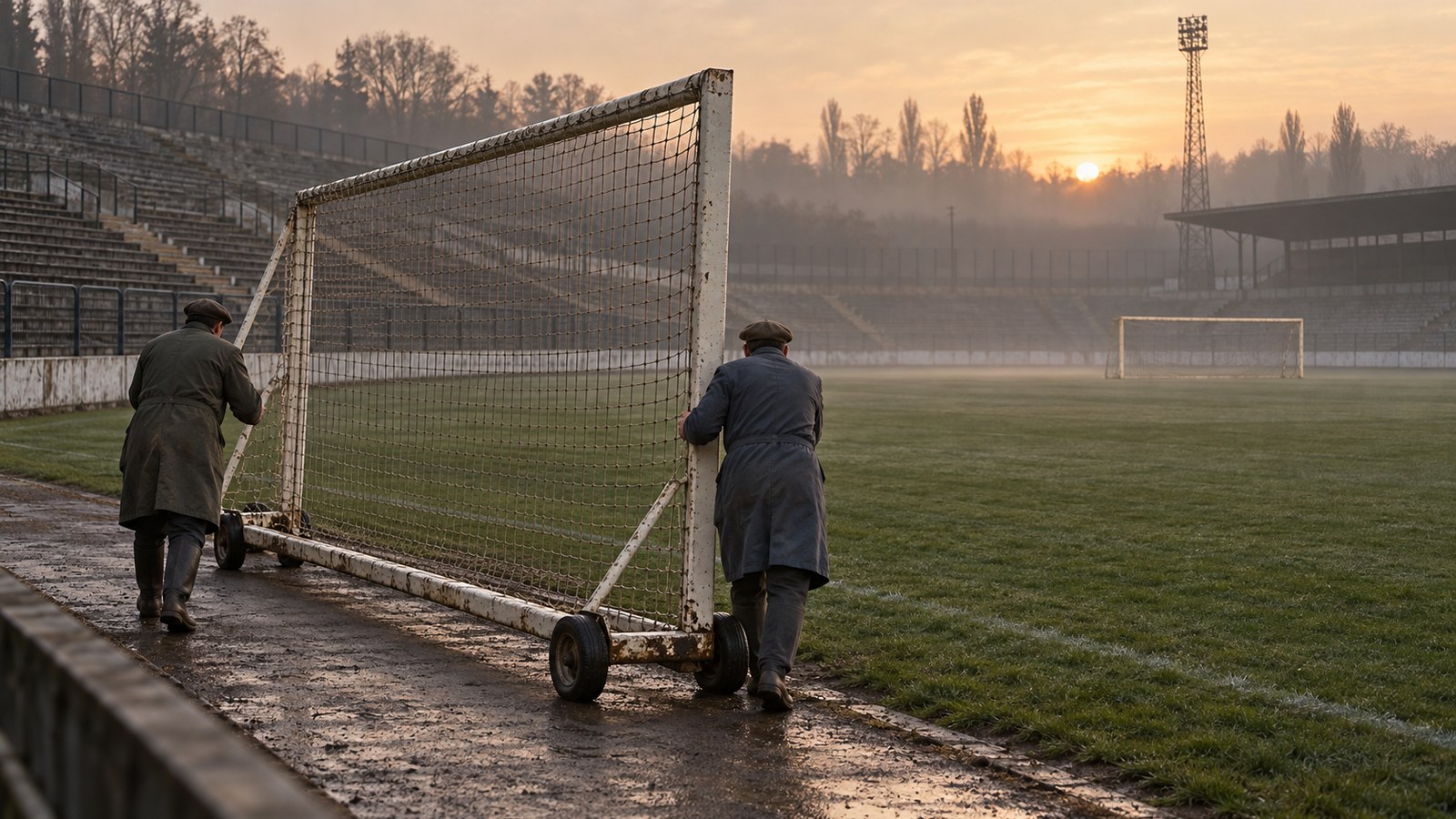
The same club later became associated with European nights, rapid attacks and a decade of trophies. The regulation that followed this match remembered something quieter: the league needed redundancy. A spare goal was not decoration. It was part of completing the competition.
Borussia lost the match and still defended the title
The administrative defeat could have become decisive. Bayern Munich and Mönchengladbach remained locked in a close race, and Borussia had surrendered a point that the field had almost delivered. Instead, the champions recovered across the remaining fixtures.
On 5 June, nine weeks after the collapse, Mönchengladbach won at Eintracht Frankfurt and secured the title. The final table placed Borussia first with 50 points, two ahead of Bayern. They had scored 77 league goals and conceded 35. The broken-post defeat survived in their record, but not as the result that denied them the championship.
That ending keeps the story from becoming a parable about one freak accident ruining a season. It did not. Borussia absorbed the ruling and became the Bundesliga’s first successful title defenders. Their response resembles the pressure described in Bologna’s one-match championship playoff against Inter in 1964: an unusual competition event tightened the margin, and the title still had to be won afterward.
The incident endures because it connects three scales at once. One forward’s momentum broke a post. One club lacked a replacement and lost a match in court. One league changed its expectations for every ground. The Foals’ attacking football won the championship, but their most durable procedural legacy from that season came from the object that failed in the 88th minute.
Sources
DFB season archive; Der Spiegel; Borussia Mönchengladbach club history; Bundesliga historical record.