

At Ipurua on 25 May 2014, Eibar’s promotion depended on a ball dropping outside the Alavés penalty area. Capa won it in the air. Jota Peleteiro controlled, struck left-footed and found the corner in the 60th minute. The small ground held 5,129 people, with more unable to get in. When Raúl Navas was dismissed in the 83rd minute, the home side protected the lead with ten men. Goalkeeper Xabi Iruretagoiena made one last save in stoppage time. The whistle confirmed a first season in Spain’s top division.
Then another contest continued. Eibar had won promotion while carrying no debt, yet an administrative capital formula could still send the club to Segunda División B. Before 6 August, it needed to raise more than €1.7 million through new shares. The problem was no longer how to hold a lead. It was how a town of fewer than 30,000 people could finance compliance quickly without surrendering the careful ownership culture that had made the rise possible.
The Promotion Created a Second Countdown
The result against Alavés completed two consecutive promotions under Gaizka Garitano. Fourteen months earlier, Eibar had been in the regionalised third tier. They climbed into the Segunda División, operated with its lowest budget and then finished above clubs built for a longer stay. The rise was startling because it had not been purchased through a reckless wager on future income.
Spain’s sporting-company rules measured something different. Clubs structured as sociedades anónimas deportivas had to meet a minimum share-capital figure. For Eibar, the calculation was tied to 25% of the average expenses of Segunda División clubs after the two largest and two smallest were removed. That produced a required capital level of €2,146,525. Eibar’s existing capital was far below it.
The distinction mattered. Debt asks whether an organisation owes more than it can safely carry. The rule asked whether enough money had been formally placed into shares. A club could therefore pay its bills, avoid borrowing and still fail the test. President Alex Aranzabal called Eibar’s economic position solid, but solidity did not alter the formula. Failure would not merely cancel promotion. It threatened relegation to the third tier, two levels below the place the players had earned.

Solvency Could Not Satisfy the Formula
On the night of promotion, the numbers remained severe. El País reported that €656,450 had been covered, 38.07% of the required increase. The club still had to find roughly €1.7 million by 6 August. Its future television income did not provide an immediate bridge: promoted Spanish clubs waited for that money, and the distribution of broadcast revenue heavily favoured Real Madrid and Barcelona.
Eibar could have treated the deadline as permission to seek one dominant investor. Instead, the club chose a broad share issue. Purchases were capped at €100,000, a ceiling designed to reduce the danger of a speculator converting an emergency into control. That made the campaign slower and harder, but it kept the method aligned with the institution it was supposed to save.
This was the part that distinguished Eibar’s story from familiar tales of a benefactor funding a climb. The sporting rise had come from continuity, loans, free transfers and players developed in modest surroundings. The capital drive asked thousands of people to underwrite access to a league whose financial scale dwarfed the club. For a related contrast, Rushden & Diamonds’ rapid ascent showed how differently a club could be exposed when its structure depended on concentrated private support.
A Share Issue Became a Global Roll Call
The campaign escaped the valley through football networks and social media. Former Eibar loanees David Silva and Xabi Alonso supported it. Shops became shareholders. Supporters bought small stakes not because a dividend promised riches, but because a correctly recorded share purchase helped lift the legal total.
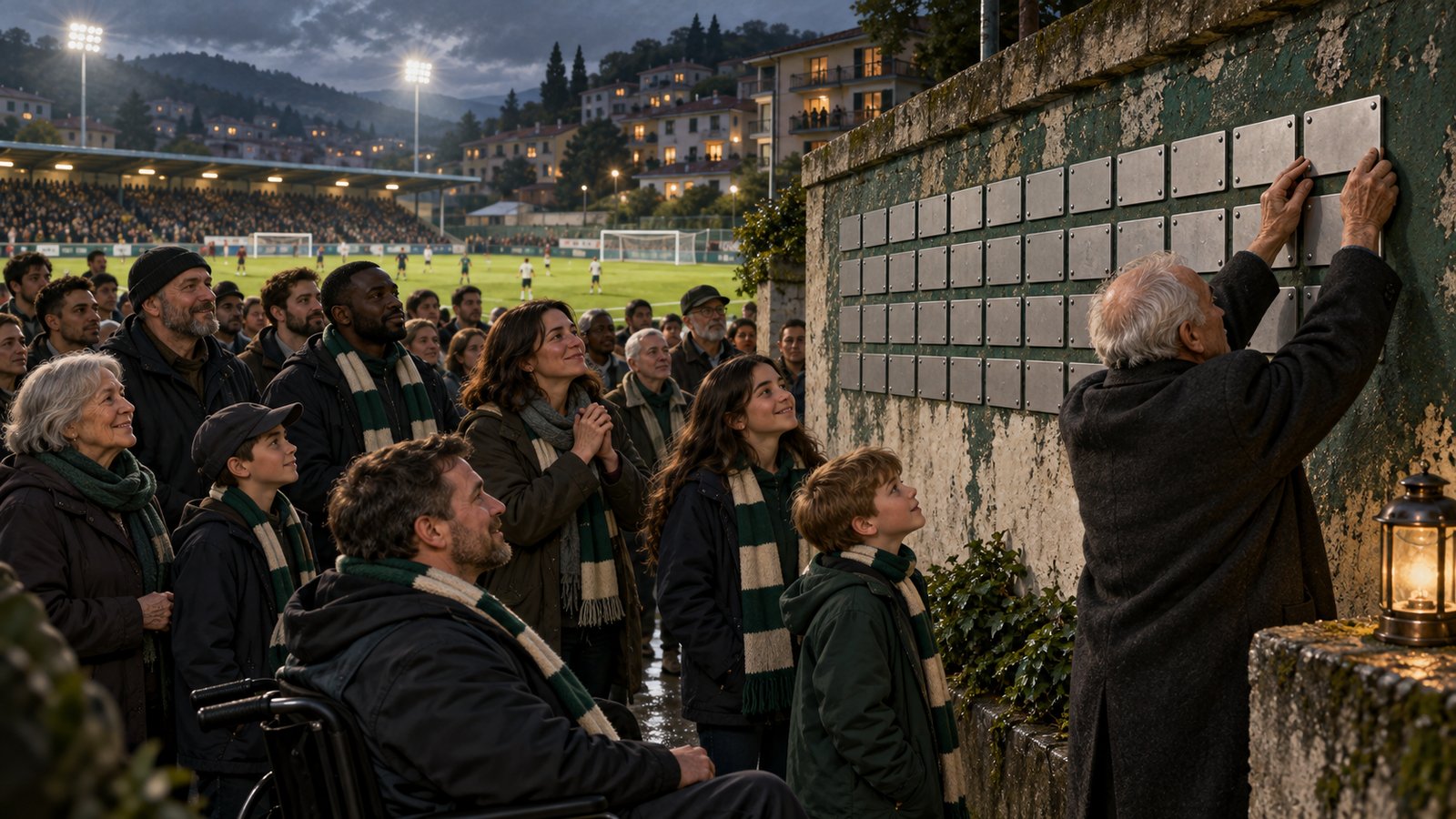
About 10,000 buyers eventually came from 50 countries. That geographical spread was not a decorative statistic. Every distant purchase converted attention into capital while preventing the answer from resting on a single cheque. The names later appeared on a wall at Ipurua: Basque surnames beside supporters who might never have walked the steep streets around the ground.
The campaign also changed the meaning of the deadline. At first it was a threat produced by an average-expenses equation. With each subscription, it became an ownership register assembled in public. Eibar could see precisely how many people wanted this unusual promotion to survive. Unlike the one-member, one-vote structure built into FC United’s supporter model, these were company shares. Yet both cases made governance visible through many individual acts rather than one distant owner.
The Threshold Share Came From a 90-Year-Old Member
Luis María Cendoya had been an Eibar member since 1945, five years after the club’s foundation. In July 2014, aged 90, he bought the share that carried the issue over the required threshold. The moment condensed the campaign neatly: the buyer belonged to the club’s earliest generation, while the purchase confirmed entry into a competition of global reach.
Cendoya did not personally supply the missing €1.7 million. His share mattered because thousands before it had accumulated to within one purchase of the line. The decisive act was ordinary in size and extraordinary in sequence. A legal minimum built from league-wide expense figures was met by a chain of supporters, former players, businesses and strangers.
That outcome did not prove the rule fair. Eibar had been forced to raise capital precisely when its debt-free management offered evidence of restraint. Nor did crowdfunding erase the future cost of top-flight wages, stadium work and squad building. What it did was separate compliance from surrender. The club entered La Liga with a small surplus and without handing emergency control to one rescuer.
Ipurua Opened La Liga With the Same Core
On 24 August, the administrative story returned to grass. Real Sociedad came to Ipurua for Eibar’s first top-flight match. The ground sat against the hillside, with apartment balconies looking into stands that held 5,173 spectators. Eight players in Eibar’s starting eleven had played in the second division the previous season; seven remained from the third-tier squad.
Just before half-time, Javi Lara took a free kick from the left. The ball bent and dipped beyond goalkeeper Eñaut Zubikarai. It was Eibar’s first goal in La Liga and the only goal of the match. The promoted club began by beating a larger Basque neighbour with much of the group that had carried it upward.
The victory did not cause the share campaign, but it revealed what the shares had protected: a place where sporting continuity still had time to matter. Eibar’s route differed from Mechelen’s rapid arrival among European winners. There was no major trophy at the end of this first night, only proof that the smallest ground could host the division on competitive terms.

The Capital Rule Made Ownership Part of the Sporting Result
Eibar’s 2014 season is often remembered as a small-club fairytale, but the administrative interval is what gives the rise its harder edge. Promotion settled who had won enough matches. The capital test decided whether that answer would be honoured. A club with no debt was required to demonstrate financial weight against an average shaped by much larger competitors.
The response did not abolish the rule or rebalance Spanish football. It created a narrow passage through it. Ten thousand buyers across 50 countries supplied the amount, the €100,000 cap limited concentration, and a 90-year-old member completed the total. The campaign preserved more than a line in the league table. It kept Eibar’s careful habits attached to the reward those habits had helped earn.
That is the lasting significance of the deadline between Jota’s shot and Lara’s free kick. Eibar had already shown that a low-budget squad could rise without financial recklessness. The share issue forced the club to prove that responsible management and sufficient capital were not the same thing. By meeting the formula collectively, supporters ensured the law did not rewrite a promotion won collectively on the pitch.
Sources
BBC Sport; The Guardian; El País; Marca.