
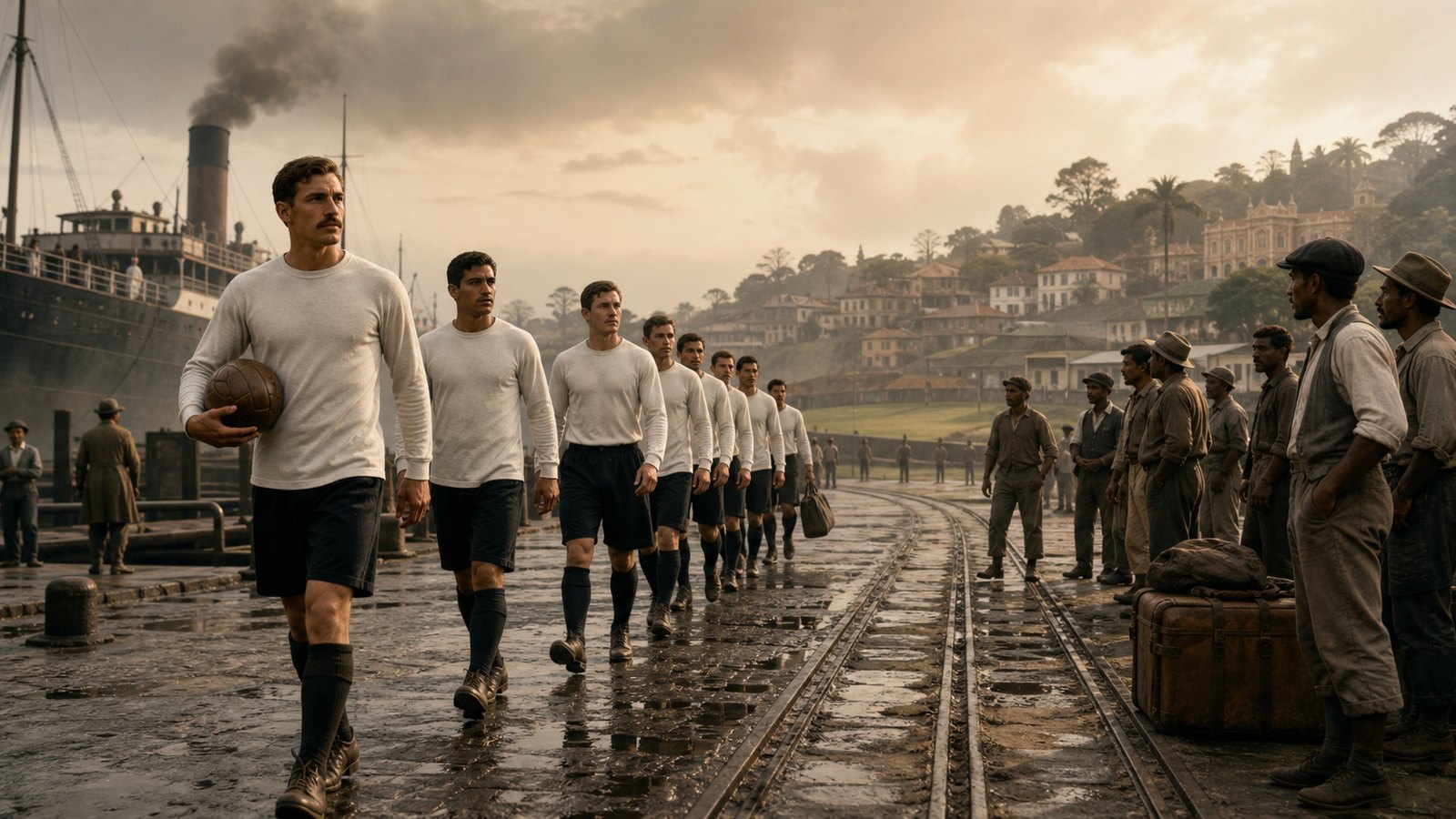
On 26 December 1904, Manchester United conceded eleven goals in Leyton. The team that scored them did not play in the Football League, had no permanent home ground and had originally written into its constitution that it would compete for no cup or prize. Corinthian Football Club could demolish professional opposition and then leave the season’s official honours to somebody else.
That apparent contradiction was the point. Corinthian had been assembled to improve English international football, not to build a conventional club business. Its players treated amateur freedom as an advantage: they could gather for selected fixtures, borrow major grounds and travel wherever an invitation carried them. Results such as the 11–3 win made the visitors credible. The journeys that followed carried their name and their version of football much farther than a league campaign could have done.
Pa Jackson built a club to answer Scotland
Nicholas Lane “Pa” Jackson, then an assistant secretary of the Football Association, founded Corinthian in 1882. England’s problem was Scotland. Scottish players had more chances to develop combinations together, while England often assembled talent without the same shared practice. Jackson’s answer was a club drawn from leading amateurs who could meet outside their other commitments and learn to operate as a unit.
The arrangement was unusual from the beginning. Many members also represented another club, so Corinthian avoided Saturdays when those players were likely to be occupied. “Wednesday Club” was considered as a name before England international Harry Swepstone suggested Corinthian. The side used venues including Queen’s Club, the Oval and Crystal Palace rather than building its identity around one neighbourhood ground.
The experiment quickly reached the national team. In two matches against Wales, in 1894 and 1895, all eleven England players were Corinthian members. No other club has supplied an entire England side in that way. The feat also explains why Corinthian cannot be understood through an ordinary league table. It was part elite training group, part invitation side and part expression of how the late-Victorian amateur establishment believed football should be played.
The strongest evidence arrived without a trophy
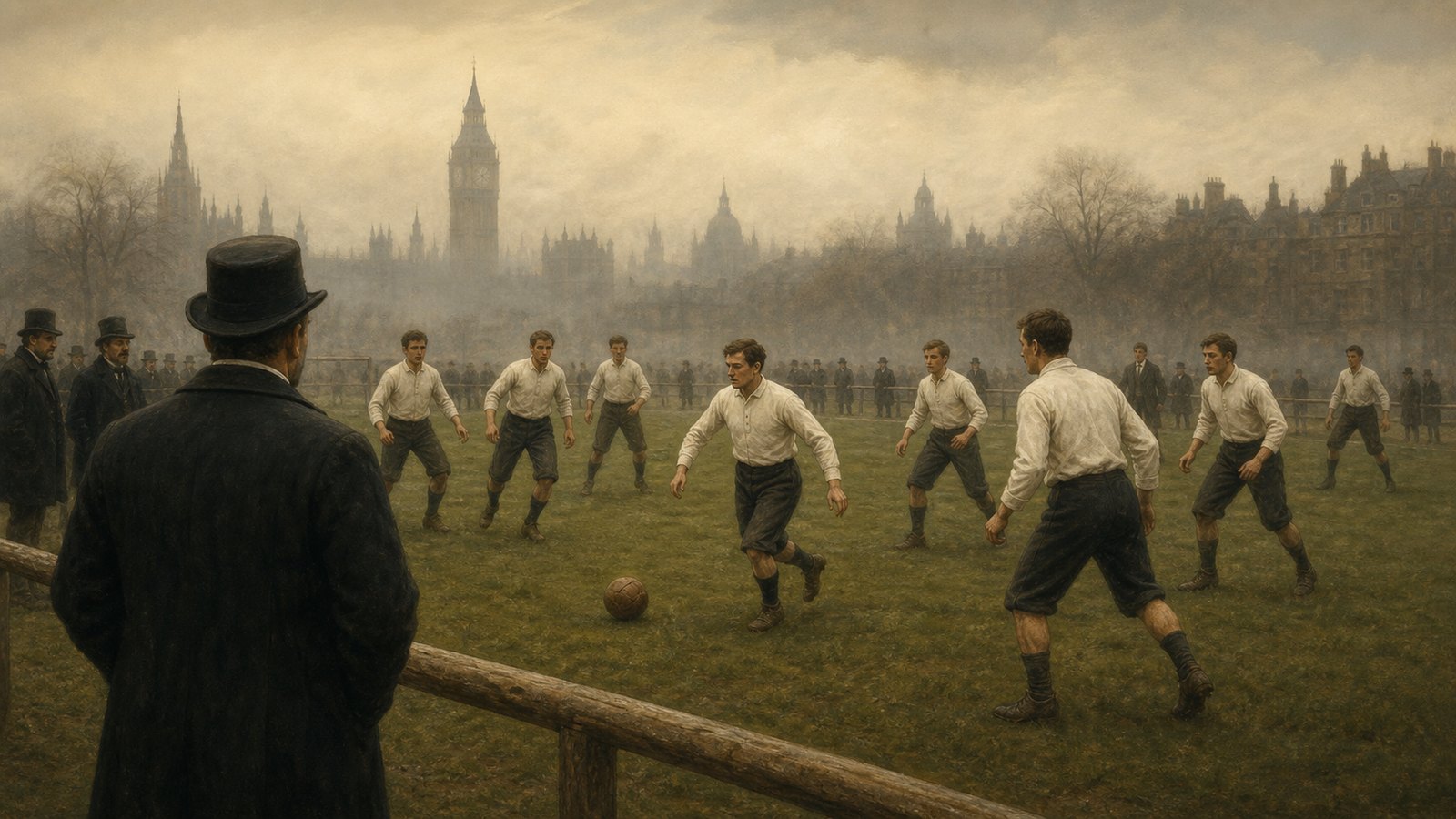
Corinthian’s constitution initially rejected challenge cups and prizes. That choice denied the club the clearest route into the record book, but friendly results kept showing what it might have done in formal competition. Soon after Blackburn Rovers won the 1884 FA Cup, Corinthian beat Blackburn 8–1. In 1904 it defeated Bury 10–3 in the Sheriff of London Charity Shield; Bury had won the previous year’s FA Cup final 6–0.
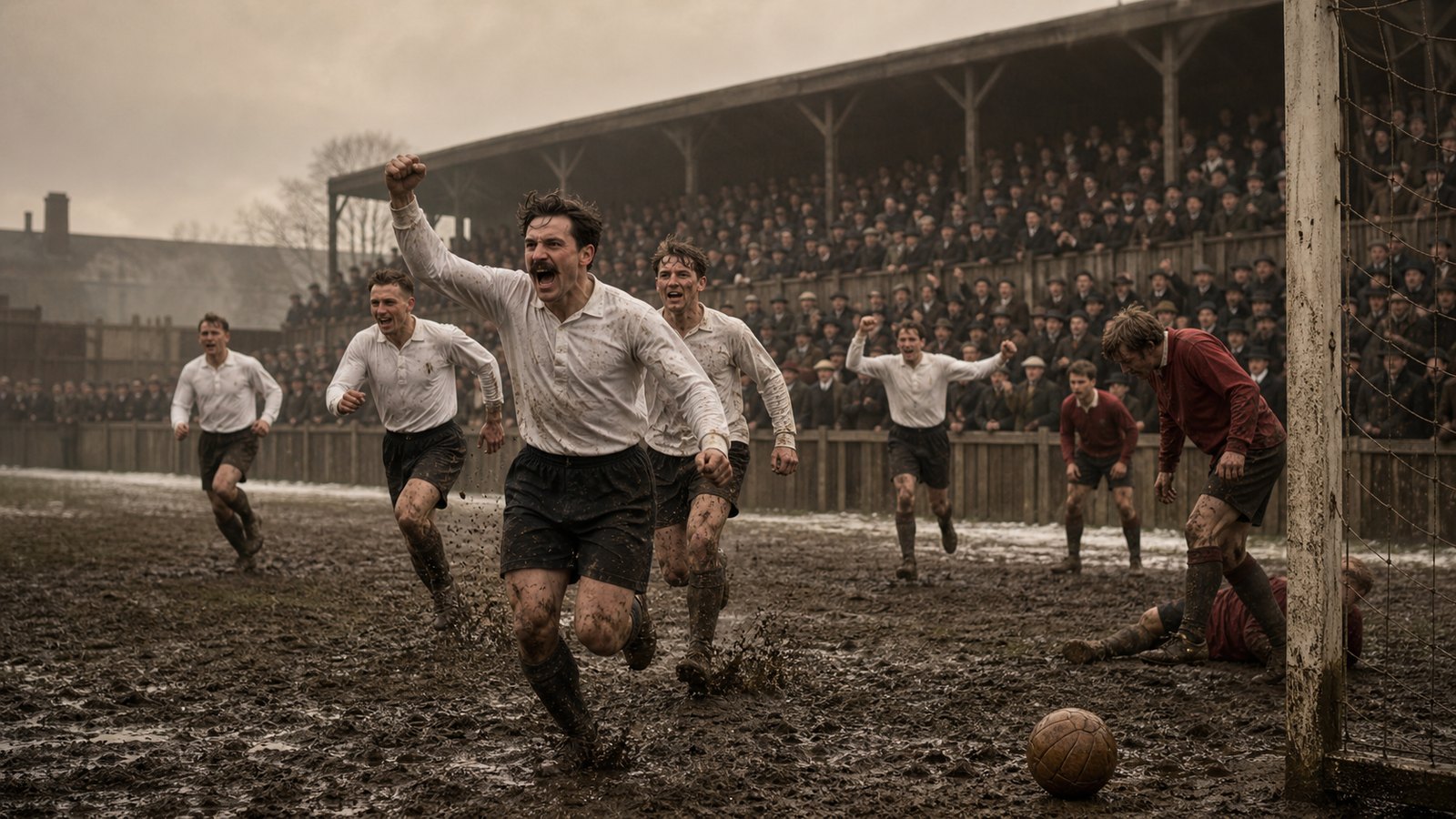
Then came Manchester United at Leyton on Boxing Day 1904. Corinthian won 11–3, a margin that remains United’s heaviest defeat. The score is startling even in an era of more open football. It also complicates the easy picture of amateurism as a polite refuge from serious competition. These players could be devastating precisely because the selected calendar concentrated elite talent into a few occasions.
The club’s sporting code could be theatrical. Corinthian became associated with the belief that a gentleman would not deliberately foul, and with the practice of treating penalty kicks as an affront to that assumption. Such gestures are difficult to separate from the class world that produced the club. Yet the scorelines were not manners performed at walking pace. Corinthian’s authority abroad depended on opponents believing the visitors represented football at a very high level.
A missing player connected Southampton to São Paulo
One of Corinthian’s most consequential encounters began with an incomplete team. In 1892 the club travelled to Southampton for a match against a Hampshire representative side but arrived with ten players. A schoolboy from Banister Court was recruited to fill the vacancy. His name was Charles Miller, born in São Paulo and studying in England. He played on the left wing and impressed the visitors.
When Miller returned to Brazil in 1894, he carried two footballs and the Hampshire FA’s rules. The familiar claim that Corinthian personally presented the balls to him is part of club tradition, but the BBC notes that rigorous biographies do not confirm that detail. The firmer sequence is powerful enough: Miller had played with Corinthian, went home equipped to organize the game, and staged what is regarded as Brazil’s first official football match on 14 April 1895.
That match took place on an improvised pitch at Várzea do Carmo after grazing cattle had been moved away. São Paulo Railway beat São Paulo Gas Company 4–2, with Miller scoring twice. He then helped establish football within São Paulo Athletic Club and, in 1901, helped found the Liga Paulista de Football with four other clubs. One borrowed place in an English team had become part of a durable sporting institution.
Six victories in 1910 left a name behind
Miller’s connection returned in 1910 when he arranged a Corinthian tour of Brazil. The English visitors played six matches and won all six, scoring 38 goals and conceding six. Their 8–2 victory over Miller’s São Paulo Athletic Club placed the old substitute on the opposite side from the team he had once helped complete.
Five railway workers who watched the tourists decided to create a club of their own. Miller suggested that they name it after the English side. Sport Club Corinthians Paulista grew from that choice into one of Brazil’s largest clubs, twice winning the FIFA Club World Cup. The London amateurs had refused the usual domestic route to permanence, yet a professional giant in São Paulo carried their name into a different century.
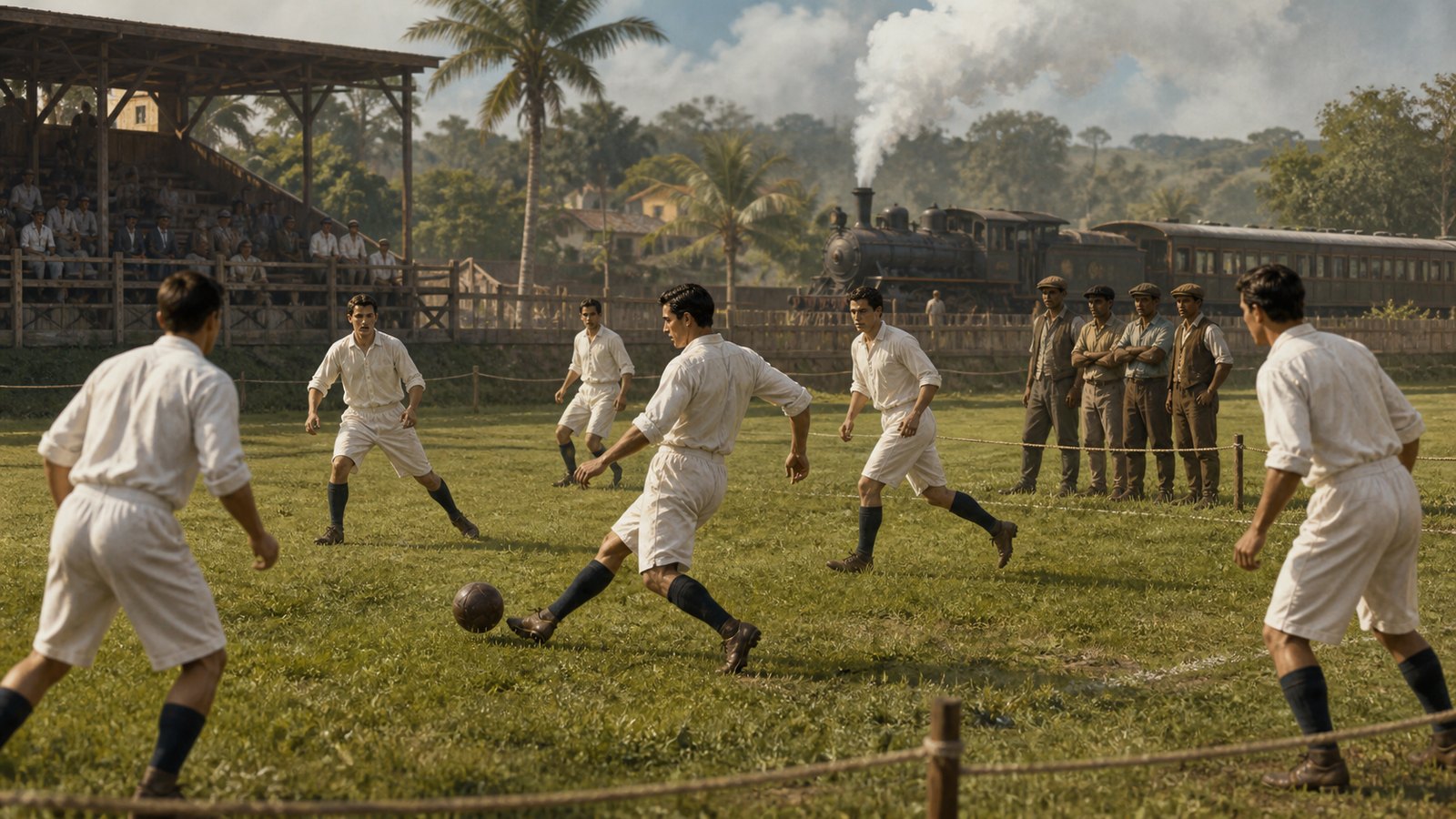
The influence was not confined to Brazil. Corinthian toured across Europe, North America, South Africa and the Caribbean. During the dispute known as “The Split,” when its allegiance to the amateur authorities restricted access to leading English opposition, foreign fixtures became still more important. Of 131 matches played before the dispute ended in January 1914, 72 were abroad. Exclusion at home accelerated the club’s role as a travelling demonstration side.
The journey outlasted the original club
The First World War damaged the world that had sustained Corinthian, and the club eventually entered the FA Cup from 1922–23. Its final match came on 12 April 1939. Later that year it merged with Casuals, another great amateur side, to form Corinthian-Casuals. The new club preserved a name whose most visible legacy was now spread across several countries.
That inheritance periodically became literal. Corinthian-Casuals returned to Brazil in 1988 for a match billed as a father-and-son reunion. Brazilian great Sócrates played part of the second half for the English visitors, while the São Paulo side won 1–0. In 2015, the amateurs returned again to face Corinthians Paulista at the Brazilian club’s new stadium and were welcomed as historical relatives rather than strangers.
Corinthian’s story therefore runs on a different measure from championships. The club was founded because England wanted combinations strong enough to answer Scotland; our account of the first England–Scotland international shows how early that rivalry shaped the sport. Corinthian then proved its quality against cup winners and Manchester United, used travel as a playing programme, and met the young man who would organize football in São Paulo.
The refusal of prizes did not make results irrelevant. The 8–1, 10–3 and 11–3 victories supplied the reputation that made invitations matter. But the club’s strangest victory never appeared on its own fixture list. It happened when five spectators in Brazil borrowed a name, attached it to a new institution and ensured that an English team without a league or permanent ground would never be entirely confined to England.
Sources
Corinthian-Casuals Football Club, History; BBC News Brasil, The ‘father of Brazilian football’ had Scottish roots; Rob Cavallini, Play Up Corinth; B. O. Corbett, Annals of the Corinthian Football Club.